
Hidden Gems: Eight Quiet Tampa Bay Spots Locals Share Kindly
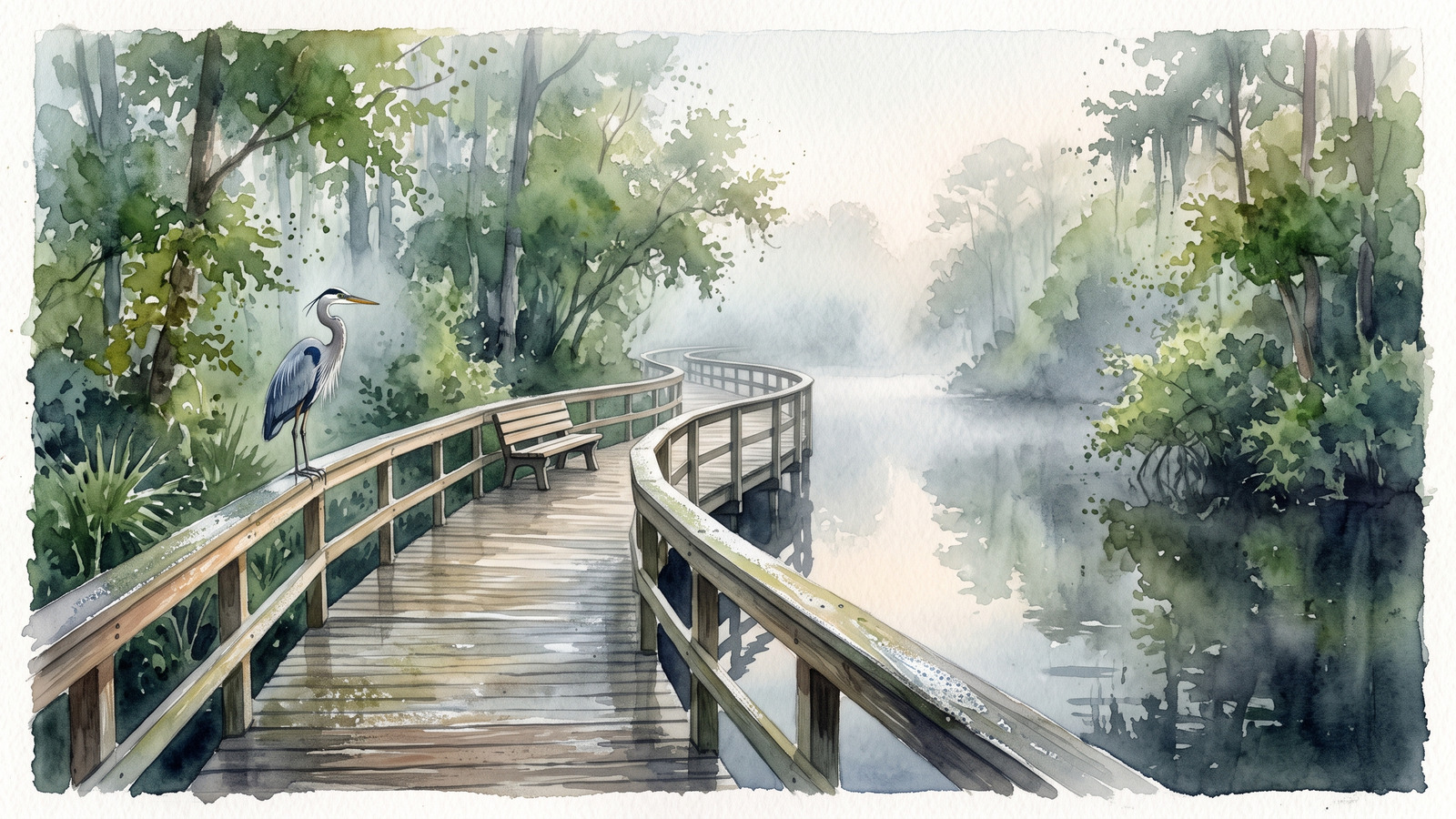
Every region keeps two maps: the one it hands to visitors, all famous piers and boardwalk neon, and the one locals trade in low voices at kid birthday parties: the shaded boardwalk where the owls nest, the mound trail with the breeze, the beach block where nothing has changed since 1962. This article is the second map, shared on purpose and shared kindly: eight quieter places where a family can hear itself think, watch a heron hunt in silence, and remember that the bay's best luxury was never a ticket: it was elbow room. The price of the map is the manners section at the end. Locals will know if you skipped it.
The eight, filed
| The spot | The character | The family move |
|---|---|---|
| Boyd Hill, St. Pete | Trails, boardwalks, resident raptors | The birding starter loop, weekday morning |
| Sawgrass Lake, St. Pete | Maple swamp on raised walkways | Gators and herons from safe altitude |
| Lettuce Lake, Tampa | Hillsborough River boardwalk + tower | The journal bench, tower count |
| Philippe Park, Safety Harbor | Tocobaga mound, grand oaks, seawall shore | History walk + picnic under the giants |
| Emerson Point, Palmetto | Mound, towers, river-meets-bay trails | The two-waters lesson, inland edition |
| Robinson Preserve, Bradenton | Restored coastal wild, towers, paddle trails | The Bishop pairing's outdoor half |
| Pass-a-Grille | Old-Florida beach blocks, the slow pier | Sunset stroll, ice cream, shell walk |
| Anclote Key | Boat-access island, lighthouse, wild beach | The ferry adventure, leave-no-trace full strength |
Why the quiet tier wins with kids
The counterintuitive finding every local family eventually reports: the modest boardwalk morning routinely outperforms the famous attraction, and the mechanics explain it. Boardwalks contain toddlers the way no open beach can (rails, a single path, no horizon to sprint toward), shade converts the summer rhythm's hardest hours into usable ones, and wildlife density runs backwards from fame: the heron at Lettuce Lake hunts thirty feet from the rail, the gopher tortoise crosses Boyd Hill's path on schedule, the ospreys over Robinson's towers perform for whoever climbed. Parking is unhurried, the snack economy is whatever you packed, and the whole outing runs at stroller speed without apology. For the field-trip method, these are the lowest-friction classrooms on the map: one question in, a boardwalk full of answers, and a bench for the journal page. The famous places are for occasions. The quiet tier is for Tuesdays: and childhoods are mostly made of Tuesdays.
The manners that keep the map working
Here is the price of admission, stated as the house rules locals actually live by: pack out everything (these places run lean on bins by design: the leave-no-trace kit rides along), stay on the built path (boardwalks and trails exist because the ground beside them is somebody's nursery: the mangrove and marsh edges especially), porch voices (the quiet is the amenity: guard it like the gallery voice outdoors), distance for the wildlife (the posted-area reflexes generalize: no chasing, no feeding, zoom instead of approach), and share with judgment: bring friends, teach cousins, post the joy: but consider skipping the pin-drop geotag on the most fragile corners, and never publicize a nest, a den, or a burrow. The quiet tier is a commons, exactly like the library: it stays rich because its users behave like co-owners. That's not gatekeeping: it's the maintenance schedule.
The Little Naturalist activity
Commission the family's own second map: a hand-drawn regional map (butcher paper, the fridge's new tenant) where the kids add each quiet spot as the family verifies it: symbol of their choosing, one-line field note ("towers, ospreys, dad saw the gator first"), and a family rating in shells out of five. Rule: a spot may only be added after a real visit, and the map never leaves the kitchen (first lesson in the sharing ethic). Over a year the map becomes the family's private atlas of the region's calm: and the child who drew it can navigate to silence, which is a life skill disguised as crayon.
Questions families ask
Are these spots safe and stroller-friendly?
The boardwalk sections run smooth and contained (several are genuinely access-friendly: check surface notes per park), staffed parks like Boyd Hill add facilities and rangers, and ordinary daylight-hours sense applies everywhere. The wilder trail extensions (Emerson's far loops, Robinson's long paddle edges) are big-kid tier: the maps at each trailhead sort it honestly.
Which one first, for a family new to all eight?
Lettuce Lake for Tampa-side families, Boyd Hill for the peninsula: both deliver the full formula (boardwalk, tower or raptors, shade, bathrooms) in a two-hour visit. If the first visit lands on a cool weekday morning, the family will finish the list by spring without prompting.
What about the boat-access one: is Anclote worth the logistics?
As the graduation trip, yes: ferry or private hull from the Tarpon Springs area, a lighthouse island with wild beach and real shelling, and the same expedition rules as Egmont and Shell Key: everything in, everything out, shade brought not found. Do the mainland seven first: Anclote is the quiet tier's final exam.
Aren't you making these places less quiet by publishing them?
The honest answer: these are public parks that deserve visitors who love them, and the manners section is the actual article. Quiet isn't a secret location: it's a behavior. Eight parks shared with the rules attached beats one overrun beach shared with none: and the families this site trains are the ones every preserve hopes for.
Questions families ask
Where do locals go to escape the crowds in Tampa Bay?
The preserve-and-boardwalk tier: places like Boyd Hill in St. Pete, Lettuce Lake and its river boardwalk in Tampa, Sawgrass Lake's canopy walkways, Emerson Point and Robinson Preserve near the Manatee River, Philippe Park's mound shore, Pass-a-Grille's slow blocks, and Anclote Key by boat. Quiet is a category, and the region stocks it deep.
Are these quiet spots good for young kids?
They're the easiest venue in the region for littles: boardwalks contain wanderers, shade beats the beach's exposure, wildlife appears at stroller speed, and parking is rarely a fight. The trade is amenities: pack the snacks and check bathroom locations before promising anything.
What's the etiquette for sharing quieter local spots?
Share the place, model the manners: pack out everything, keep voices at porch level, stay on boardwalks and paths, give wildlife its distance, and skip the geotag-everything reflex for the most fragile corners. Quiet places stay quiet because the people who love them behave like guests.
Do these places cost anything?
Nearly all run free or parking-cheap: they're county and city parks and preserves. The exceptions are boat-access spots like Anclote Key, where the ferry or your own hull is the ticket.
Sources
More from the Bae
 Learn
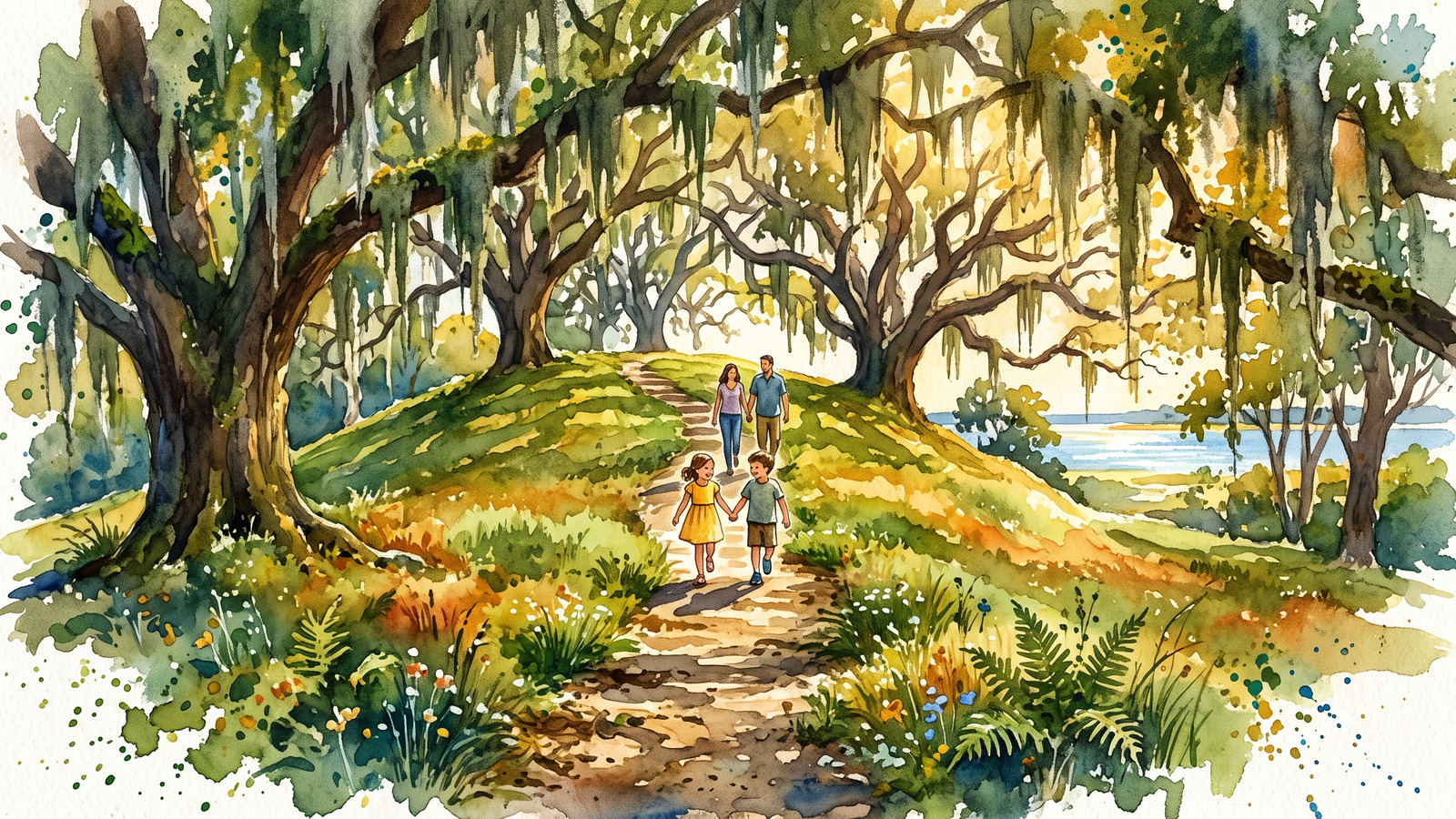
LearnThe Mounds at Philippe Park: A Walk Through 1,000 Years in One Afternoon
Philippe Park in Safety Harbor holds the Tampa Bay region's largest temple mound, Florida's first grapefruit grove, and a free afternoon of real history.
 Learn
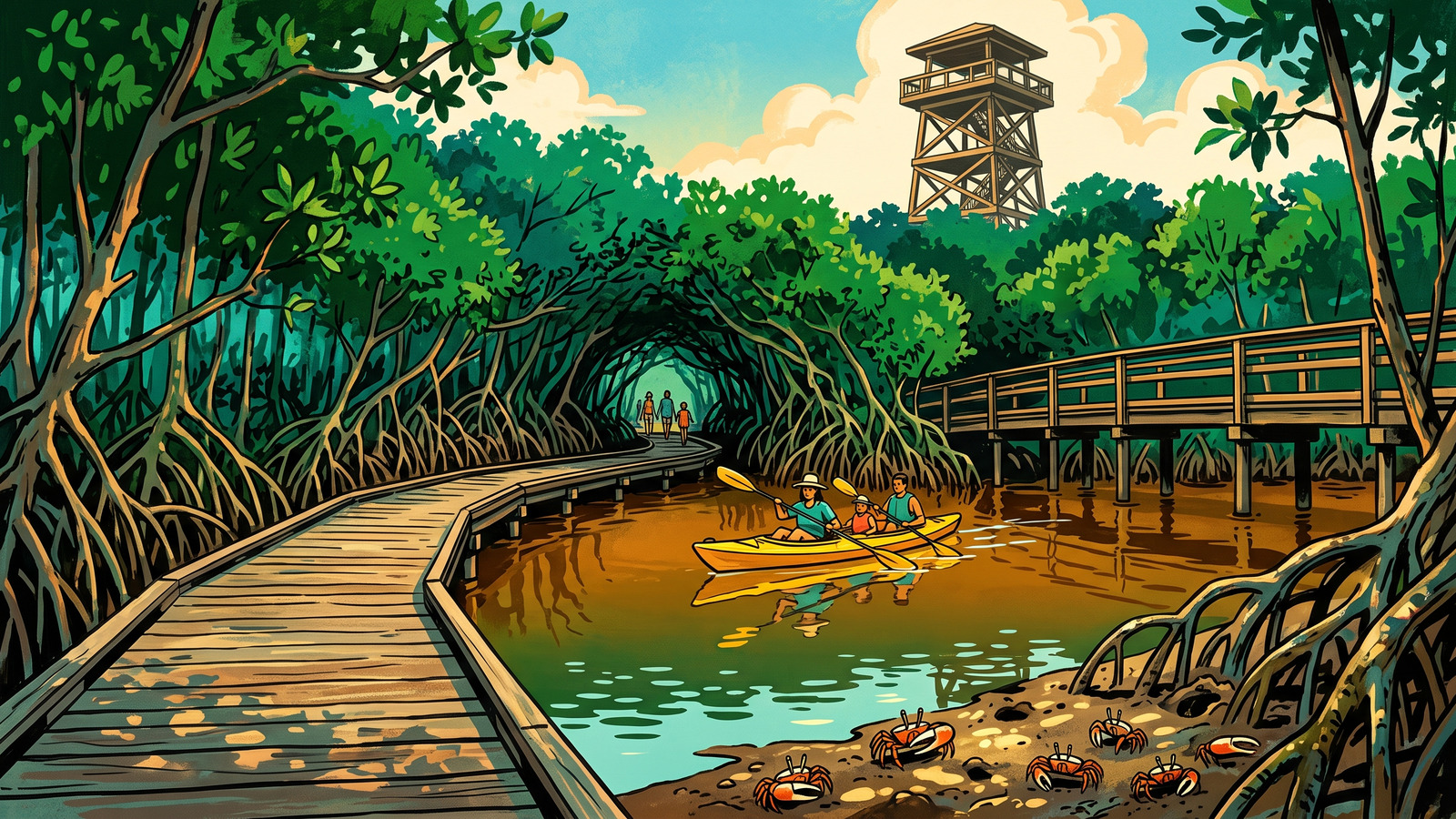
LearnA Family Guide to Weedon Island: Boardwalks, Herons, and a Thousand Years of History
Weedon Island Preserve packs boardwalks, an observation tower, mangrove paddling, and a thousand years of Tocobaga history into one free St. Pete morning.
 LearnCornerstone
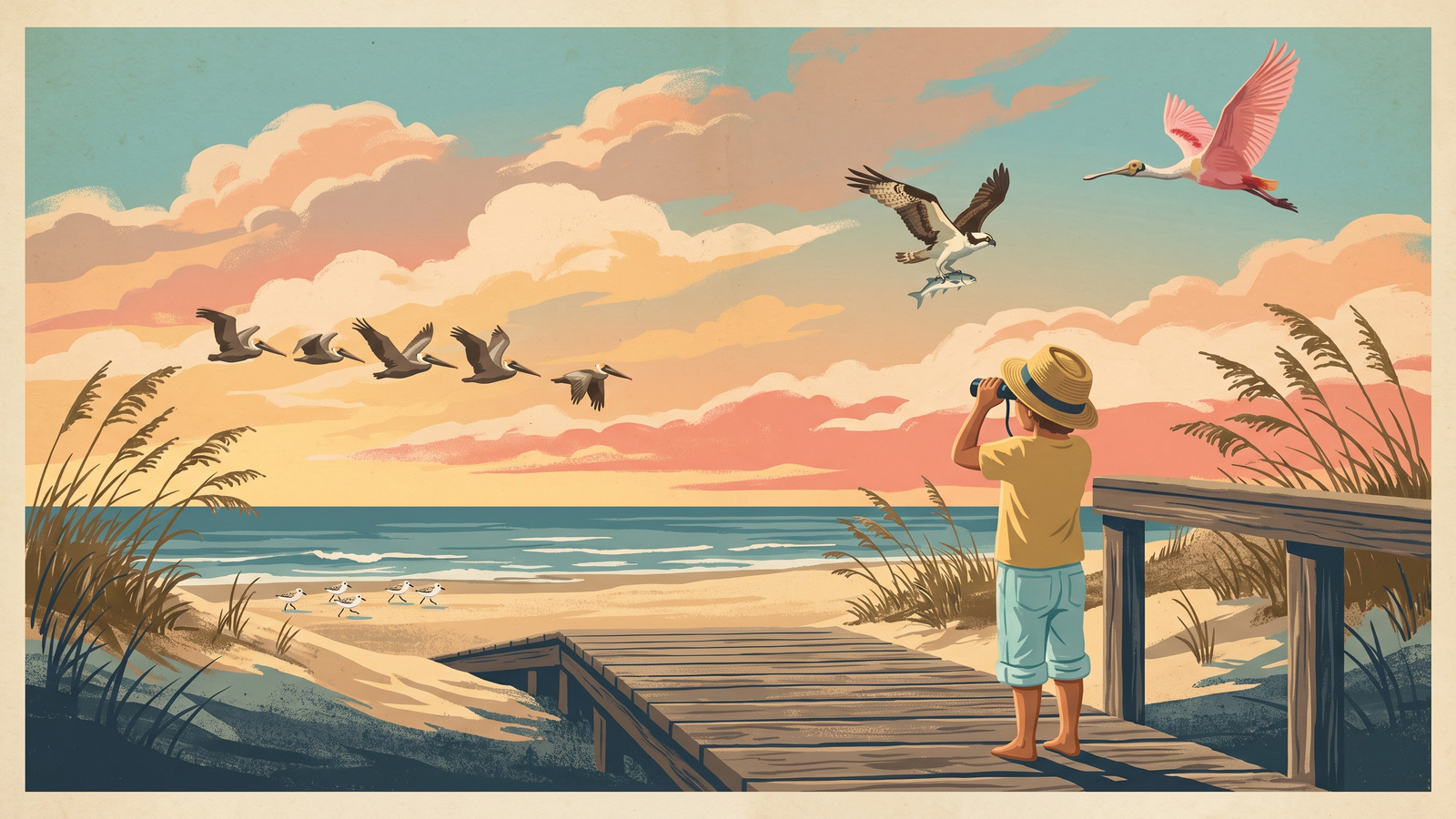
Birding with Kids Around Tampa Bay: The Starter Guide (Binoculars Optional)
How to start birding with kids around Tampa Bay: the big easy birds, the free Merlin app, five starter spots, and habits that make it stick.