
Summer Survival: Splash Pads, Shaded Parks, and the 9 a.m. Rule

Every Tampa Bay parent eventually has the humbling July conversation with a relative up north: yes, it's hot; no, we don't stay inside all summer; no, we don't go to the beach at noon either. What locals have that the relatives don't is an operating system: a daily rhythm tuned to a climate that publishes its schedule in advance. Summer here isn't a wall of heat, it's a wave pattern: cool gold mornings, brutal middles, theatrical afternoon storms, and evenings washed clean and lit like a postcard. Families who surf the pattern have the best summer in America. Families who fight it have the sweaty one. This is the survival manual, which is really a timing manual.
The daily rhythm, hour by hour
| The block | The move | The why |
|---|---|---|
| 6:30-9:00 | The sunrise lane: beach, pier, flats walk | The day's gift hours: cool, calm, empty |
| 9:00-12:00 | The anchor: splash pad, lagoon swim, shaded park | The 9 a.m. rule's window |
| 12:00-2:00 | Retreat: lunch, AC, the library hour | Heat index peak: nobody's hero hours |
| 2:00-5:00 | The storm block: pool-until-thunder, then indoor lane | The sea breeze delivers on schedule |
| 5:00-8:00 | The reopening: cooled evening, gold light | The region's daily reward |
The rhythm's genius is that it matches children's factory settings anyway (early risers, midday crashers, evening zoomers), and its one hard law is the lightning law: when thunder roars, go indoors, thirty minutes past the last rumble, no exceptions, pools included: the region leads the nation in lightning and the rule is the whole reason that fact stays a statistic.
The splash pad circuit and the shade audit
The splash pad is summer's civic genius: water play without surf supervision, at zero dollars, engineered for the exact hours the beach turns hostile. The regional anchors: Water Works Park on Tampa's Riverwalk (splash zone plus playground plus the river breeze, with the Glazer-library stack a stroll away: the full downtown summer morning) and the Curtis Hixon fountains (the museum lawn's play fountains, same stack, opposite end), joined by both counties' community-park spraygrounds: the inventory is deep, and the picking formula is pure logistics: shade adjacency, real bathrooms, parking that won't boil the walk. Run the same audit on parks: a summer park is only as good as its canopy, which promotes the oak-heavy inland parks and the boardwalk preserves (shade plus breeze plus wildlife: the naturalist's splash-pad alternative) to the top of the July rotation. The accessible-beach roster notes transfer too: shade, mats, and bathrooms are everyone's summer infrastructure.
Water discipline in the hot months
Summer's water joys carry summer's water rules, and the survival manual states them plainly: the flag system governs every gulf swim (summer's surprise surf days are real), the rip lesson rides along to any new beach, the stingray shuffle is the warm-month walk (feet sliding, not stepping, through the shallows), and pool season is supervision season: arm's reach for littles, eyes-on always, the water-watcher lanyard trick for gatherings (one named adult on duty, rotating: drowning is silent and the designated watcher is the system that beats silence). Hydration runs on the schedule-not-thirst doctrine: water before, during, after, with the beach-kit protocols upgraded to summer strength. None of this is fear: it's the same competence-first posture this site teaches for everything, applied to the season that tests it most.
The Little Naturalist activity
Chart the storm clock: for two summer weeks, kids log the daily storm's actual arrival time, direction, and drama rating in the journal (first thunder heard, first drops, the clearing time), then graph the fortnight and answer the family research question: what IS our neighborhood's storm o'clock? The data comes out startlingly consistent (the sea-breeze collision runs near-daily schedules), the kids discover they can forecast better than the app's generic 40 percent, and the storm-watching porch ritual gains a house meteorologist. Science requirement one: you may only log from safe cover. The chart is the summer's proof that the climate has a rhythm: and that your family learned to dance to it.
Questions families ask
How hot is too hot for the playground?
Do the equipment touch-test (slides and buckles burn: the forearm check before any child sits) and read the heat index, not the temperature: past the danger thresholds, even shaded exertion moves indoors. The honest summer answer is that playgrounds are sunrise-and-evening venues from June through September: the 9 a.m. rule already knew.
What about kids' sports and camps in the heat?
Good programs run the same manual (morning sessions, water schedules, shade rotations, lightning protocols): ask any camp for theirs before enrolling, and treat a shrug as an answer. The hydration article covers the physiology; the parental job is picking institutions that respect it.
Does the 9 a.m. rule apply to visitors on vacation?
More than anyone: visitor schedules fight the climate hardest (sleeping in, midday ambitions, evening restaurant plans) and lose. Hand guests the daily-rhythm table, promise them the sunrise beach and the golden evening, and watch the vacation reviews improve: the region is spectacular at the hours it invites you, and merciless at the hours it doesn't.
Is summer worth it here, honestly?
It's the season locals earn: the crowds thin, the resort rates drop, the storms perform nightly, the gulf runs bathtub-warm at sunrise, and the rhythm: once a family owns it: feels less like survival than like being in on something. Every place has a hard season. Ours comes with dolphins at dawn.
Questions families ask
What is the 9 a.m. rule for Tampa Bay summers?
Outdoor anchors start by 9 and end by noon: the region's summer heat index climbs into the danger zone by midday and the sea-breeze storms build most afternoons, so the day inverts: outside early, inside or in water through the middle, and back out for the post-storm evening golden hour.
Where are the best splash pads around Tampa Bay?
The riverfront anchors lead: Tampa's Water Works Park and the Curtis Hixon fountains pair splash time with the Riverwalk and Glazer, and both counties run sprayground inventories at community parks. The formula is shade adjacency plus real bathrooms: the pad matters less than its logistics.
How do Florida families handle the daily summer storms?
By clock and by plan: the sea-breeze storm builds most afternoons in a predictable window, so families schedule around it rather than against it: morning anchor done by noon, indoor or porch hours through the storm, and the region's reward: the cleared, cooled, gold-lit evening.
Is the beach still doable in July?
At the edges of the day, yes: sunrise beach mornings are summer's secret (cool sand, calm gulf, empty parking), and evening swims ride the post-storm clearing. The midday beach in July is where visitor vacations go to struggle: locals simply time-shift.
Sources
More from the Bae
 Explore
Rainy Beach Day? The Backup Plan That's Better Than the Original
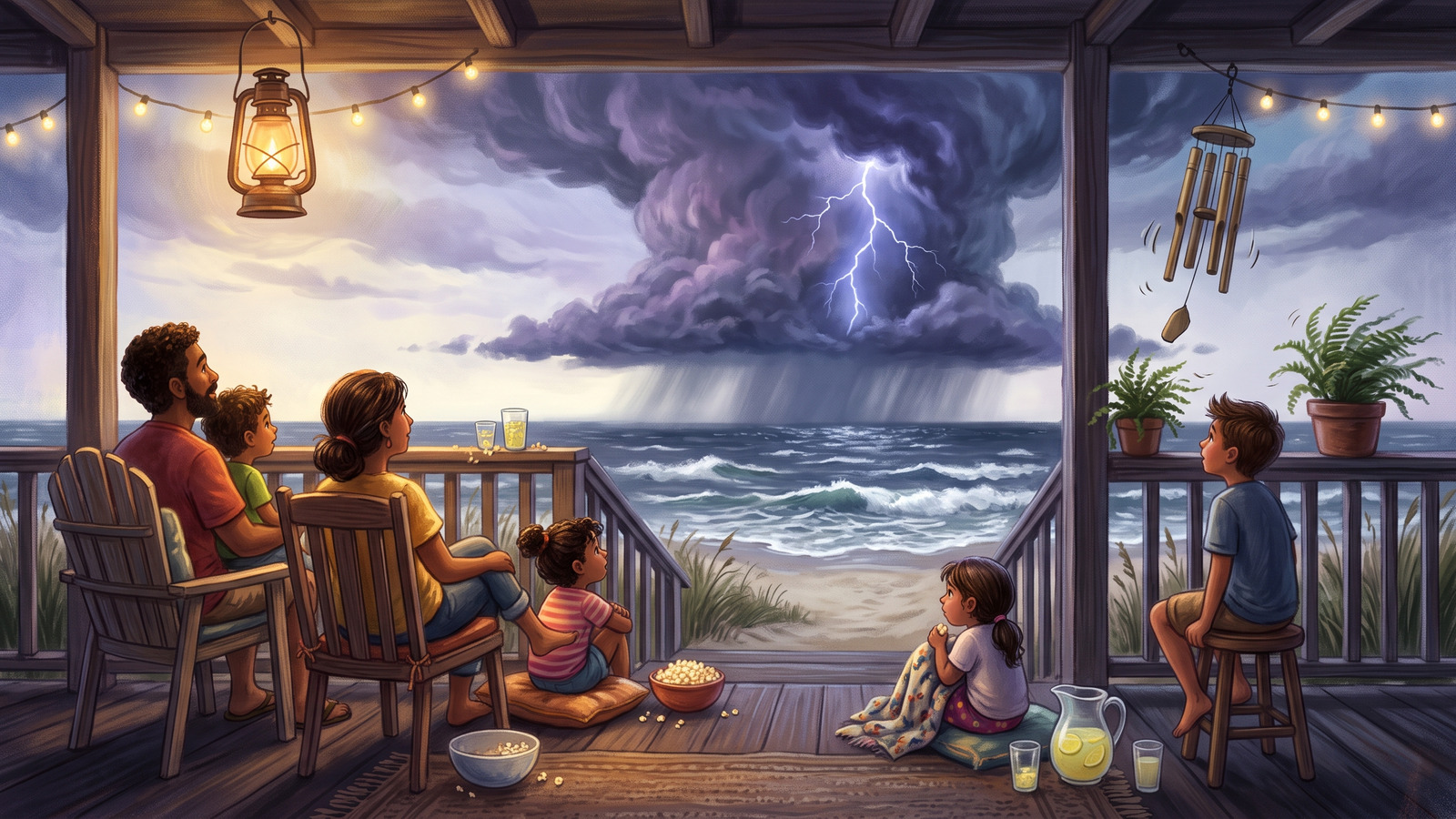
When Tampa Bay's 4 p.m. storms cancel the beach: the lightning rules, the wait-it-out math, and the indoor backup plans that outperform the original.
 Explore
Calm Water Beaches for Little Ones: Where the Gulf Behaves
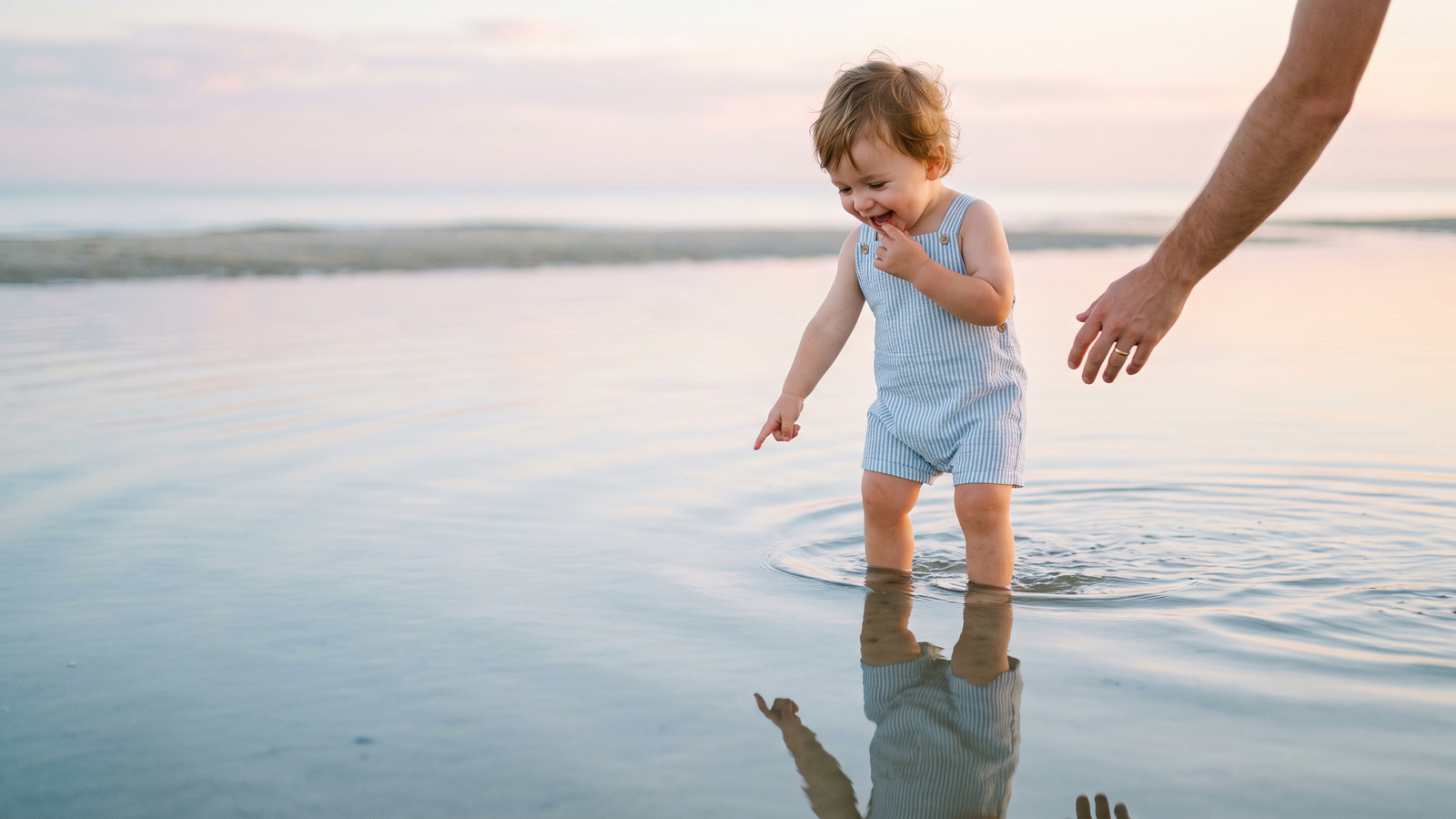
Tampa Bay's calm water beaches for toddlers and new swimmers: the North Beach lagoon, bay-side sands, and causeway shallows where the gulf behaves.
 Explore
Accessible Beach Days: Mobility Mats, Beach Wheelchairs, and Where to Find Them
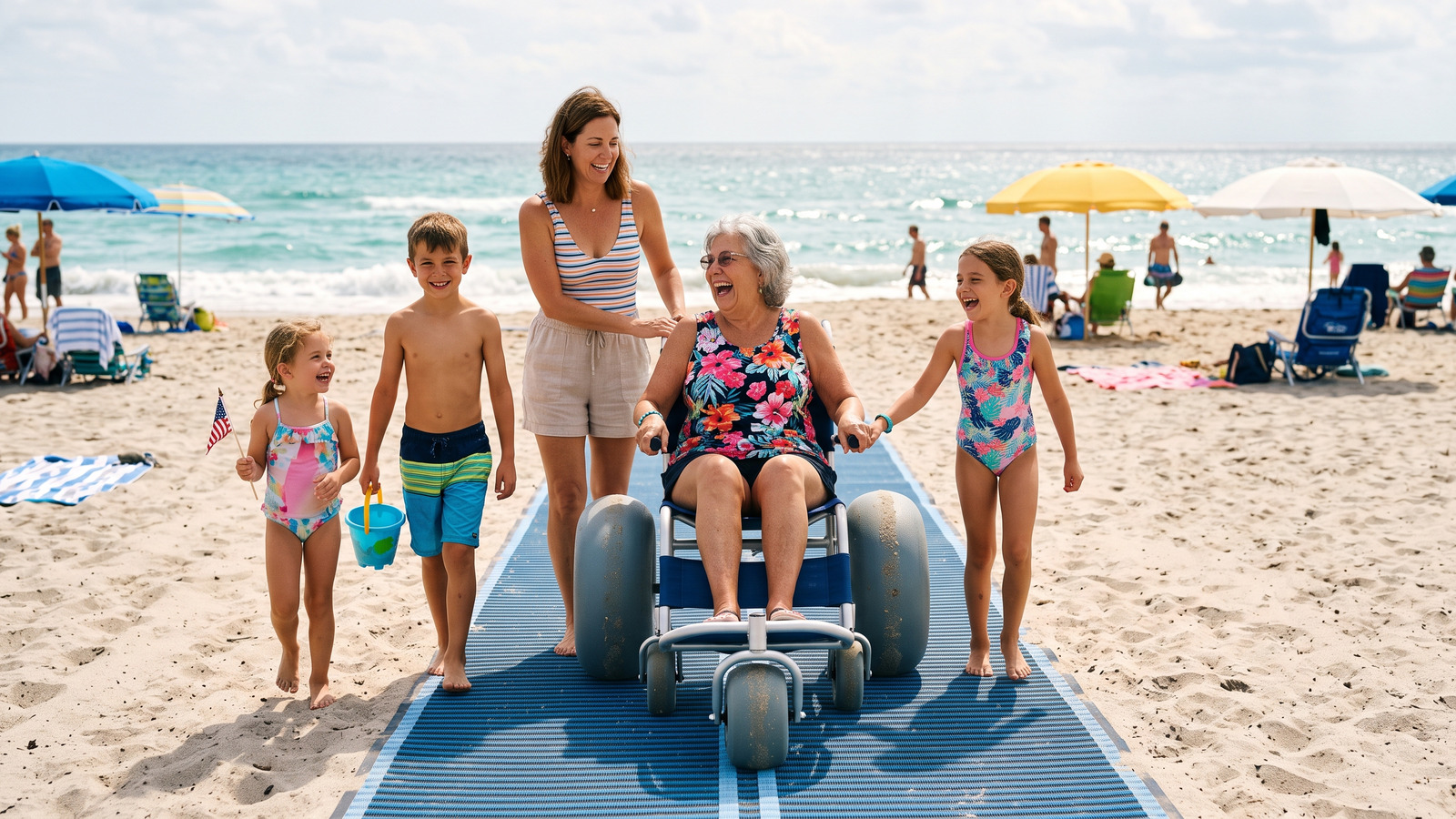
Accessible beach days around Tampa Bay: free beach wheelchair loans, Mobi-Mat locations from Clearwater to Pass-a-Grille, and the planning that works.