
Baby Shorebirds on Our Beaches: What the Roped-Off Areas Protect, and How to Teach the Why
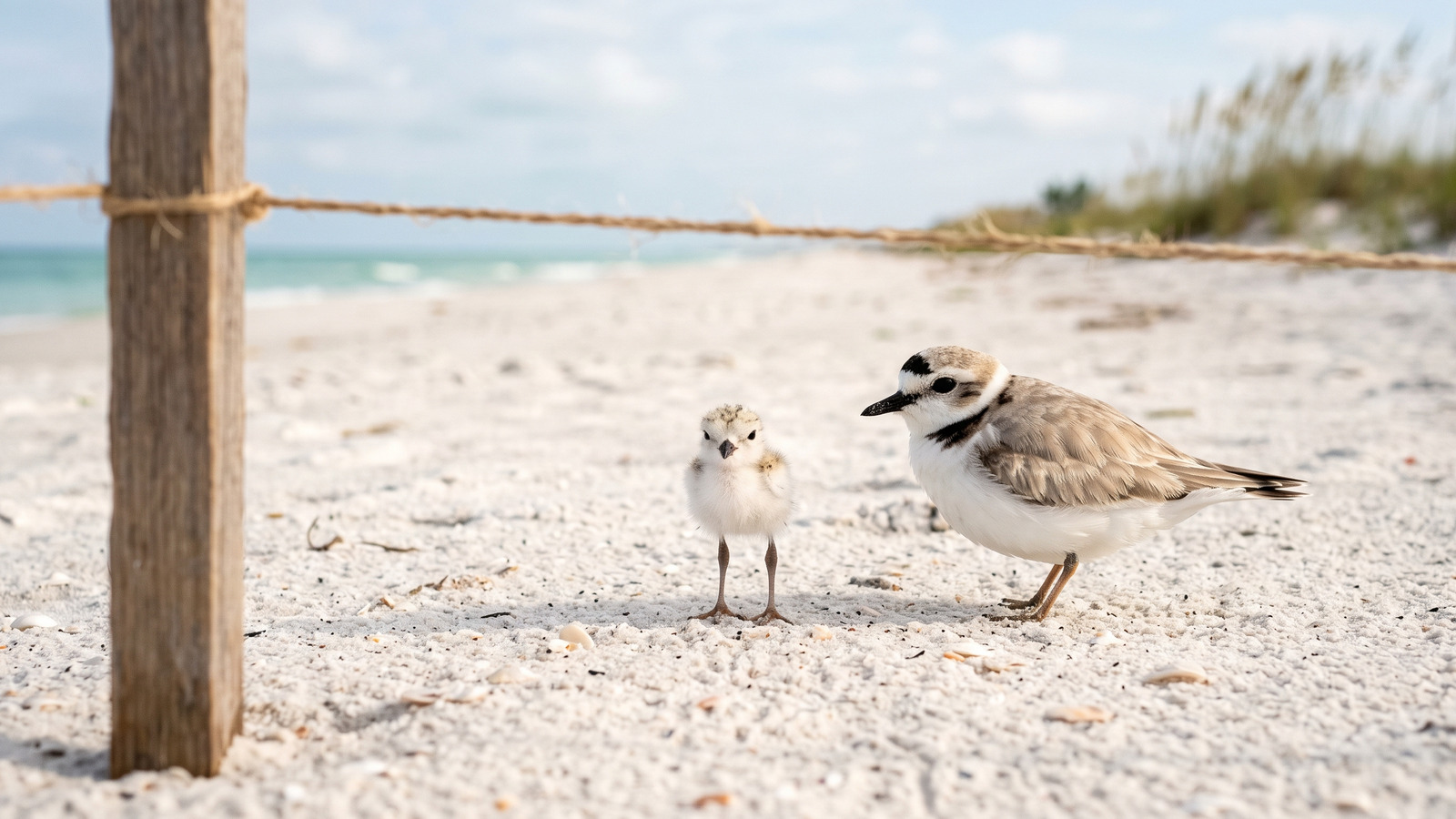
The most dangerous thing on a Tampa Bay beach in June is not in the water. It's a sneaker, and the reason is a bird's egg the size of a ping-pong ball, speckled exactly like sand, sitting in a bare scrape in the open, thirty feet from the towels. There's no nest to see. There's no warning except a length of string on wooden posts and a sign most people read at a jog. Behind that string, an entire generation of Florida's beach birds is betting everything on our manners.
Why on the bare sand, of all places
It seems like terrible planning until you see it through the birds' eyes. Open sand gives a sitting parent a full view of approaching predators, and the eggs' speckled camouflage works best where there's nothing else to look at. For thousands of years the system was sound: the birds nested on quiet barrier island sand, invisibility did the work, and the colonies raised their chicks by the tens of thousands. Then the quiet sand became the most popular real estate in Florida. The birds' camouflage now works against them: what a raccoon can barely find, a beach cart can't see at all. Which is why several of these species are listed as threatened in Florida, and why volunteers spend every spring stringing posts.
The chicks compound the wonder. Shorebird babies leave the scrape within hours of hatching: sand-colored cotton balls on legs, running and freezing on parental command, fed at the tideline weeks before they can fly. That's what's under the "do not enter" string: not a nest in a tree somewhere, but toddlers, at ground level, in the open.
The theater of the desperate parent
Get too close to eggs or chicks, even accidentally, and the adults deploy tactics your kids will never forget. Least terns go air force: shrieking dives at your head, occasionally with payload. Plovers go drama department: the broken-wing act, in which a parent flutters pitifully along the sand, apparently easy prey, luring you step by step away from the babies before lifting off, entirely healed, the moment you've been walked far enough. Teach kids to read both performances correctly: this is a parent spending its last argument, and the respectful response is an immediate, calm exit the way you came. The show ends when you're far enough; the show ending is the bird telling you that you got it right.
The family rules, and the reasons that make them stick
| The rule | The why a kid remembers |
|---|---|
| Wide margin past posted areas | The wall is string; the real wall is us |
| Never run birds into flight | Every panicked launch burns fuel chicks and migrants need |
| No dogs on nesting beaches | To a plover, every dog is a fox, even the sweet ones |
| Every crumb packed out | Food scraps hire the gulls and crows that raid nests |
| Fill holes, flatten castles | A sand-colored chick can't climb out of one; same as the turtles |
| Report trouble | FWC Wildlife Alert: 888-404-3922 |
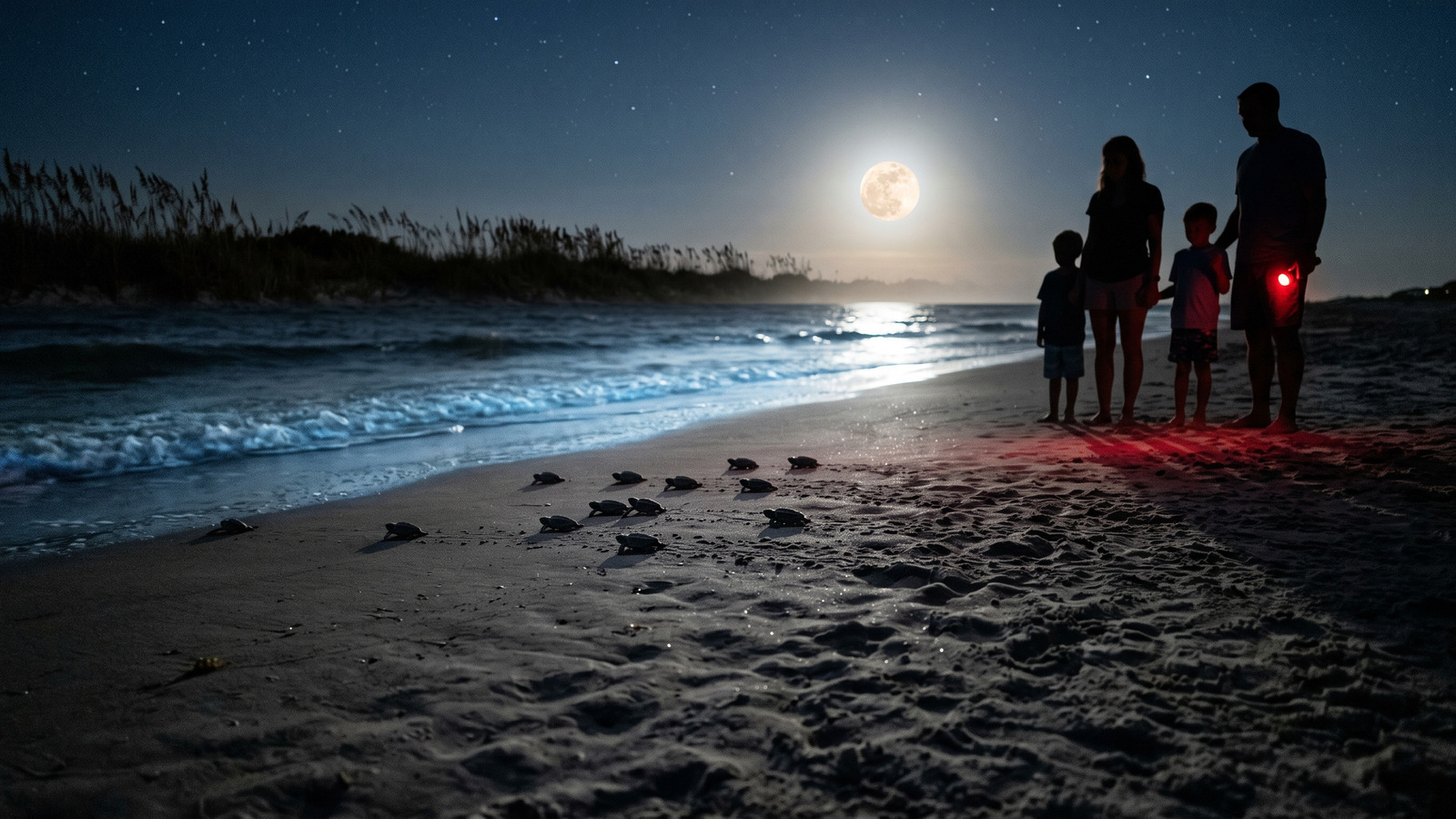
Notice the overlap with sea turtle season: the same beach, the same months, the same habits protecting two nurseries at once. A family that runs the leave-it-flat, keep-it-dark, pack-it-out beach ritual is guarding species from both above and below the sand without any extra effort.
Where to see the colonies respectfully
The joy here isn't behind glass: from outside the ropes, with the naked eye or the starter binoculars, families can watch skimmer colonies run their whole society: incoming parents skimming the shallows with that impossible lower bill, chick creches huddled like kindergarten classes, changing-of-the-guard at the scrapes. Around Tampa Bay, posted colonies come and go by season on the gulf beaches, with Fort De Soto's protected areas among the most dependable, plus island sanctuaries like Three Rooker and Egmont Key that boaters must admire from offshore. Audubon Florida fields volunteer bird stewards at busy colonies on summer weekends: kind people with scopes whose entire job is showing your kids a skimmer chick, and children who ask questions make their day.
The Little Naturalist activity
Practice the freeze game at home before the beach: one kid is the plover chick (freeze on command, flat and still), one is the parent (gives the signal), one is the "predator" trying to spot the frozen chick against the carpet. Then, at the beach, watch a real colony run the same drill. The game turns the rules from restrictions into insider knowledge: they're not being kept out, they're in on the plan.
Questions families ask
When exactly is nesting season here?
Pinellas County posts it as February 15 through August 31, with eggs and small chicks most abundant April through July, right when beach crowds peak. That collision of calendars is the entire reason the ropes exist.
What's a black skimmer, and why does everyone photograph them?
A crow-sized bird whose lower bill is longer than its upper, flown an inch off the water so the bill slices the surface for fish: the only birds on Earth that feed this way. A skimmer colony at golden hour, adults barking like small dogs, is one of the great free spectacles in Florida, which is why the photographers kneel at the rope line all summer.
Are the rooftop nests I've heard about real?
Yes: least terns, squeezed off busy beaches, colonized flat gravel rooftops around Tampa Bay, and biologists monitor those colonies too. It's an ingenious workaround with its own hazards (chicks fall), and it's the clearest possible evidence that beach space is the bottleneck.
How is the recovery actually going?
Mixed and fought-for, colony by colony: some species and sites post record years while others slip, and Audubon Florida's season summaries read like sports coverage of a very close game. The stable variable across every success story is the same one: beaches where people kept their distance and their crumbs. That variable is us.
Questions families ask
What are the roped-off areas on Tampa Bay beaches for?
They're nurseries. Black skimmers, least terns, snowy plovers, Wilson's plovers, and American oystercatchers lay their eggs directly on open sand, camouflaged so well they're nearly invisible. The posts and string are the only wall between a nest and a footstep, from February 15 through August 31.
Why can't we walk close if we're careful?
Because the danger isn't only crushing. When adults flush off their nests, eggs and chicks are left exposed to the summer sun and to gulls and crows, and a few minutes of that can be fatal. Distance keeps the parents on duty, which is the whole protection system.
What should we do if a bird dive-bombs or fakes an injury near us?
Back away the way you came. A tern diving at your head or a plover dragging a 'broken' wing is a parent telling you there are eggs or chicks nearby, sometimes outside the ropes. The performance ends the moment you're far enough, which is the bird grading your exit.
Can kids help protect beach-nesting birds?
Yes, and meaningfully: give posted areas wide margins, never chase birds into flight, keep dogs off nesting beaches, take all trash and food scraps home (scraps feed the gulls and crows that eat eggs), and fill castles and holes, which trap chicks as surely as turtle hatchlings.
Sources
More from the Bae
 Learn
LearnSea Turtle Season: The Family Beach Rules That Save Nests from May to October
Sea turtle nesting season runs May through October on Tampa Bay beaches. The family rules: fill holes, flatten castles, lights out, and let nests be.
 LearnCornerstone
Birding with Kids Around Tampa Bay: The Starter Guide (Binoculars Optional)
How to start birding with kids around Tampa Bay: the big easy birds, the free Merlin app, five starter spots, and habits that make it stick.
 Learn
LearnFort De Soto in Migration Season: Why Birders Fly In from Everywhere Each Spring
Every spring, songbirds crossing the Gulf land first at Fort De Soto, and birders fly in from everywhere to greet them. A family migration guide.