
Leave It Better: Teaching Kids the Leave No Trace Rules, Beach Edition
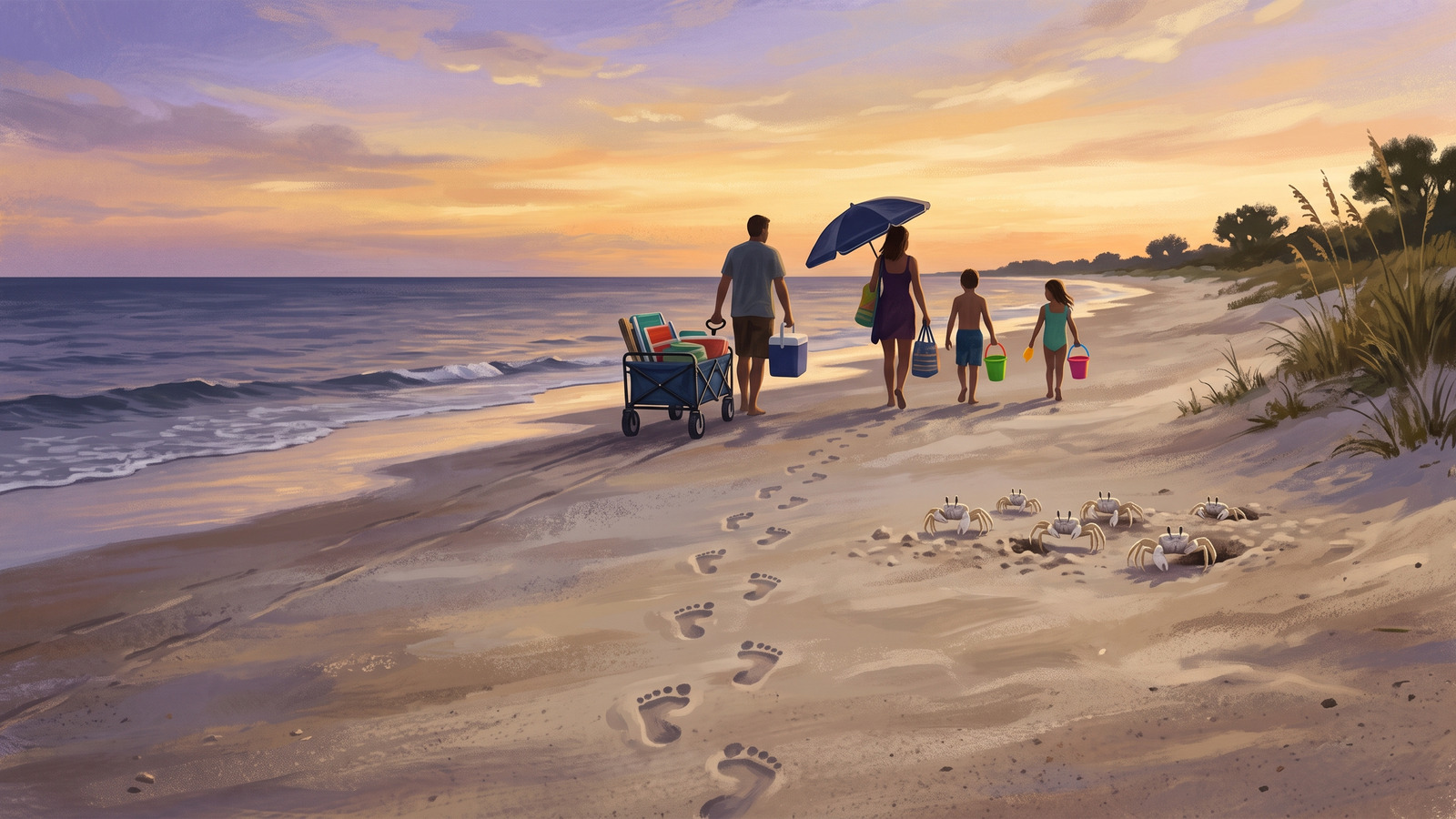
Every principle this cluster has taught (the filled hole, the dark night beach, the ten-minute sweep, the space given to ropes and burrows and gentle giants) turns out to be one principle wearing different hats: use the coast fully, and leave it ready for whoever, and whatever, comes next. The outdoor world has a name and a framework for that idea, tested for decades from mountain trails to riverbanks: Leave No Trace. This is the beach translation, written for the family that wants the whole code in one place, and for the kid ready to carry it.
The seven, translated to sand
1. Plan ahead. The Florida version is a three-tab habit your family may already run: tide chart, weather, and beach status, plus the kit that prevents problems instead of managing them: water, shade, reef-safe mineral sunscreen (the chemical-free kind, kind to the creatures your kids are about to meet), and the fill-in shovel. Planned families make no emergencies and leave no wreckage.
2. Durable surfaces. On a beach that means: hard wet sand for the games and the hauling, boardwalk crossovers (never the dune face) for getting there, and grass flats floated over rather than trampled per the meadow manners. The dune rule gets its own section below, because it's the one with a law attached.
3. Pack it all out. Covered gloriously by the cleanup article: everything in, everything out, plus ten minutes of somebody else's. The additions worth naming: cigarette butts (the global top-ten champion), micro-trash (bottle caps, toy shards: hatchling-sized hazards all), and food scraps, which are not "biodegradable kindness" but gull-recruitment, and gulls raid nests.
4. Leave what you find, if it's alive or working. The heart of beach LNT, big enough for its own section below: shells, sand dollars, and the living beach.
5. Fires: only where posted, only in rings. Most Pinellas beaches say no; some regional beaches host permitted fire areas. The family rule is the sign's rule, and marshmallows travel fine to the backyard.
6. Wildlife gets working room. The whole Wild Neighbors curriculum in one line: no chasing, no feeding, distance from anything nesting, resting, or roped, and the dog only on beaches that welcome dogs, leashed where posted.
7. Be considerate. Music at towel volume, games downwind of strangers, holes filled even mid-day if you're leaving them, and the recognition, taught early, that everyone on the sand came for the same peace.
The collector's code: is anybody home?
Beachcombing is childhood's oldest treasure hunt, and this site defends it: collecting done right builds naturalists. The code has one question at its center: is anybody home? A clean, empty shell (no snail, no hermit crab tenant, no flesh, no smell of recent occupancy) is honest treasure, taken in reasonable numbers. An occupied shell goes back where it stood, gently, every time: Florida regulates live shell collecting (with outright local bans in famous shelling places, and statewide protection for species like the Bahama starfish and certain conchs), and the family standard is stricter and simpler than the law: we don't collect anyone's house while they're in it.
| The find | Home check | The call |
|---|---|---|
| Spiral shell | Look and sniff at the opening; hermit crabs hide deep | Occupied stays, empty is treasure |
| Sand dollar | Velvet brown and fuzzy = alive; white and smooth = long gone | Velvet returns to the water flat-side down |
| Starfish and urchins | Moving feet or spines = alive | Living ones stay wet and stay put |
| Horseshoe crab shell | Split at the front and hollow = a molt | Molts collect; live ones flip and go free |
| Egg cases (whelk spirals, skate purses) | Rattling and dry in the wrack = spent | Wrack finds collect; wet fresh ones return |
| Anything nesting-related | Staked, roped, or buried | Not treasure; report if disturbed |
The dunes: fenced by law, held by grass
Behind every good gulf beach stands its savings account: dunes, built grain by grain by wind and held by sea oats, the tall golden grass whose roots run deeper than a kid is tall. Dunes are the shoreline's storm shield (the mangrove lesson, in grass form), and Florida protects them accordingly: sea oats and dune vegetation are protected by state law (picking is illegal, full stop), and the crossover boardwalks exist because every foot-path through a dune becomes a storm's invitation. The kid translation that lands: the dune is the beach's piggy bank and the sea oats are the lock; we admire, photograph, and walk around. Bonus dignity: dune restoration plantings are volunteer events your family can join with trowels, which converts the fence line from restriction into territory they've personally defended.
The Little Naturalist activity
Commission the family field guide: over several beach days, kids photograph and log ten finds (shells, casings, blades, molts) with the home-check verdict and the keep-or-return call for each, then bind the pages (stapler counts) into the household's official Beach Collector's Code, authored by its enforcers. Writing the rules is the deepest way to own them, and the guide doubles as the visiting-cousin orientation when guests hit the sand unbriefed.
Questions families ask
Is taking a bucket of shells wrong?
Volume matters less than the home-check and the habitat: reasonable collecting of empty shells is legal and, for kids, formative. The mindful middle ground: keep the museum-grade finds, return the bulk, and let the collection jar curate itself toward quality. Whole-bucket hauls of anything are a flag to rethink.
What about driftwood and beach wrack?
Small wrack treasures (a seabean, a whelk case) collect fine; wholesale wrack-line clearing doesn't, because that brown tangle is the beach's pantry: shorebirds feed in it, dune plants sprout from it, and its seeds and blades are tomorrow's shoreline. Towns that rake it bare for tidiness pay in erosion; families that read it like a bookshelf get the whole ID game free.
Are beach bonfires ever okay here?
Only where explicitly permitted and posted (rules vary by city and county, and most local gulf beaches prohibit open fires). Where legal, the LNT fire principles apply whole: established rings, complete extinguishment, zero buried coals, which bare feet find otherwise. When in doubt, the backyard fire pit hosts the marshmallows.
Our kids are little. What's the one-line version of all seven principles?
The title works at every age: leave it better. A three-year-old can hold it, a thirteen-year-old can defend it, and a family that says it at the car for a decade will raise the adults this coast is counting on: which was, quietly, this entire cluster's assignment.
Questions families ask
What is Leave No Trace, and does it apply to beaches?
Seven principles for enjoying wild places without wearing them out, born in backcountry camping and perfectly translatable to Florida sand: plan ahead, stick to durable surfaces, pack out waste, leave what you find, mind fires, give wildlife space, and be considerate of others. The beach edition is this article.
Which shells are okay for kids to collect?
Empty ones, in reasonable numbers. The one-question test: is anybody home? A shell with a snail, a hermit crab, or any flesh inside stays; a clean empty shell is fair treasure. Live shelling is restricted or banned in various Florida places, and a live lightning whelk returned to the water is the better story anyway.
How can you tell a live sand dollar from a dead one?
Color and fuzz: live sand dollars wear brown-to-purple velvet (tiny moving spines, and they leave a harmless yellowish tint on your hand); dead ones are smooth, white or gray, and bald. Velvet goes back in the water gently; white ones are collectible.
Why can't we pick sea oats or play on the dunes?
Because dunes are the beach's savings account (storm protection built grain by grain) and sea oats are the roots holding it. Florida law protects sea oats and dune vegetation, and beach towns route everyone over crossovers for the same reason. Feet and pickers undo years of growth in minutes.
Sources
More from the Bae
 Protect
Beach Cleanups with Kids: Where to Join One and How to Start Your Own
Beach cleanups with kids around Tampa Bay: Keep Pinellas Beautiful events, September's International Coastal Cleanup, and the DIY family kit.
 Protect
Why We Fill In Our Sandcastle Holes: Small Beach Habits That Save Turtles (and Rescuers)
Beach holes trap sea turtles, block rescuers, and collapse on diggers: why filling in holes is the beach's most important habit, and how to dig safely.
 Learn
LearnBaby Shorebirds on Our Beaches: What the Roped-Off Areas Protect, and How to Teach the Why
Those roped-off beach areas protect eggs and chicks you can't see: skimmers, terns, and plovers nesting February 15 to August 31 on Tampa Bay sand.