
The Library Card Curriculum: Free Classes, Passes, and Programs Across Tampa Bay
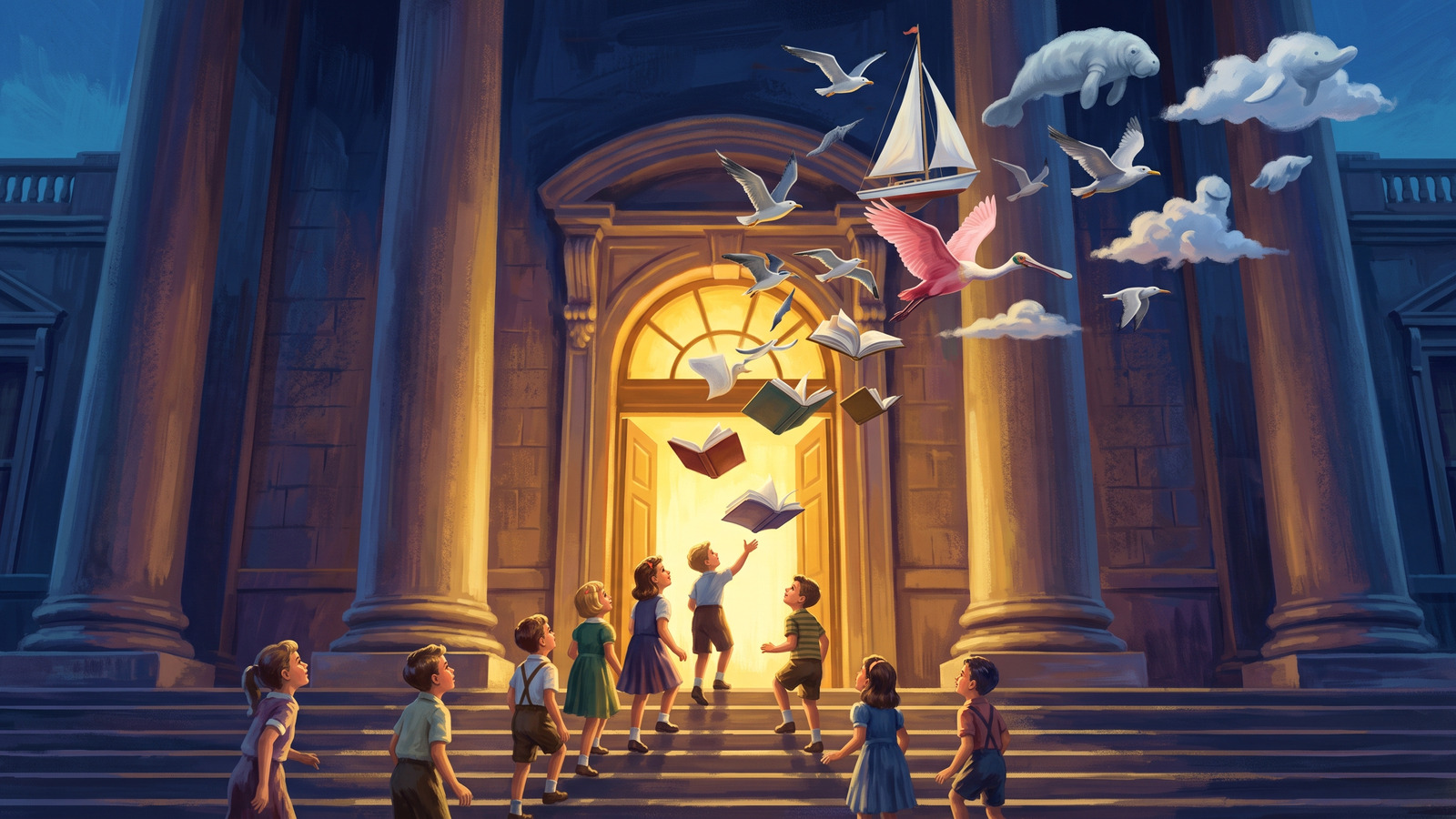
Somewhere in your wallet, behind the loyalty cards, sits the most undervalued piece of educational infrastructure in Tampa Bay: a rectangle that borrows books, yes, but also reserves museum admissions, seats your toddler in a professionally run early-literacy program, hands your ten-year-old a 3D printer, pays your reader in summer prizes, and streams documentaries to the living room: all for the price of nothing. The pass article covered one wing of this building. This article walks the whole thing: the library card treated as what it actually is, a curriculum with a barcode.
The program layer: the free class schedule
Walk any branch's calendar and count the instruction on offer: baby, toddler, and preschool storytimes (early-literacy technique delivered as songs and rhythm: the research behind those hand motions is real, and the librarians running them are trained in it), maker and STEM programs (3D printing, robotics kits, sewing machines, coding clubs: real tools, standing invitation), school-age clubs (chess, LEGO engineering, writing groups, homework help), and teen rooms with their own programming and, crucially, their own social gravity. For homeschool families, this is the elective wheel solved: for everyone, it's the after-school layer that costs what the parking does. The only skill required is calendar literacy: programs are announced monthly, popular ones take registration, and the August newsletter ritual applies to branches exactly as it does to museums.
The catalog layer: every subject's spine
The books were never just books: the children's collection is a complete curriculum shelved by Dewey (ask the children's librarian to teach your kid the number neighborhoods: 597.3 is where the sharks live, and that fact alone has launched a hundred readers), interlibrary loan summons anything the branch lacks, and librarians remain the last professionals on earth who will research your child's obsession free of charge and call when the goods arrive. The digital shelf multiplies it: ebook and audiobook apps for the car curriculum, streaming film and course platforms, language programs, and homework databases: all riding the card number. The audiobook move deserves its own sentence: a family that runs audiobooks on beach drives converts every causeway crossing into a chapter, and the year's mileage into a bookshelf.
| The layer | What it replaces | The cost |
|---|---|---|
| Storytimes and maker labs | Paid enrichment classes | Free |
| Museum pass programs | Admission budgets | Free with card |
| Catalog plus digital shelf | Curriculum, subscriptions, tutoring apps | Free |
| Summer reading | The motivation engine | Free, prizes included |
| Study and teen rooms | Tutoring-center real estate | Free |
The seasonal layer: summer reading and the breaks
Twice a year the library changes gear: summer reading turns the catalog into a game (logged minutes, milestone prizes, grand drawings: a motivation engine tuned by professionals, and the antidote to the summer slide the screen-free article circles), and school-break weeks fill branch calendars with the performers, animal programs, and build days that cost money everywhere else in town. Families who plan breaks around the branch calendar first and the museum calendar second run the cheapest, calmest vacation weeks in the region: and the kids, who measure weeks in events rather than dollars, never detect the economy. The quiet fourth season is hurricane-adjacent: on the storm-watch days when everything else closes early, the downloaded audiobook stack and the maxed-out checkout limit are the household's deepest entertainment reserve: card families ride out power flickers on a full shelf.
The Little Naturalist activity
Run the Dewey expedition: hand each child a quest card of call numbers (597.3 sharks, 523 the sky, 972 the conquistadors, 598 the birds), and set them loose to retrieve one book from each neighborhood: then have them shelve-read their favorite aisle (what lives to the left and right of the number they came for). The exercise teaches the deepest library lesson: knowledge has an address, browsing its street finds neighbors search engines never introduce, and a kid who can navigate by call number owns every library on the continent. Librarian consultation encouraged: they've been waiting all week for someone to ask, and a child who returns monthly with a new quest card becomes, by spring, the branch's known regular: greeted by name, tipped off early, a citizen of the building.
Questions families ask
We're rarely on the library's side of the bridge. Worth it anyway?
The digital shelf alone justifies the card (ebooks, audiobooks, streaming: no bridge required), and the both-counties strategy means your pass inventory doubles even if your visits don't. Then one rainy-day branch-plus-museum stack usually converts the skeptics.
How do storytimes fit a napper's schedule?
Branches stagger them (mornings for babies and toddlers, varied days across a system), and the cooperative structure means a different branch's Tuesday may fit where yours doesn't. Storytime nomads are a recognized species; librarians wave them in.
Is summer reading worth it for a kid who already reads constantly?
Yes, differently: the voracious reader farms the prizes (fine), but the program's real gift to that child is the librarian's recommendation engine: a professional who, told "she's finished everything with dragons," produces the next shelf. Readers plateau on repetition; librarians break plateaus for a living.
What about the kid who owes fines from 2019?
Go anyway: most regional systems have softened or scrapped youth fines, amnesty events recur, and no librarian on this coast wants a child's card dead over a lost paperback. The desk conversation takes two minutes and ends in a working barcode: the best return on embarrassment in town.
Questions families ask
What can a Tampa Bay library card do besides borrow books?
Reserve free museum passes (Hillsborough's Discovery Pass, the Pinellas cooperative's Museum Pass Program), attend storytimes and maker programs, join summer reading with real prize economies, use teen rooms and study spaces, and unlock the digital shelf: ebooks, audiobooks, streaming, and learning apps, all free.
Can a family really build a curriculum from the library?
A substantial one: weekly programs supply the class schedule, the museum passes supply field trips, the catalog supplies every subject's spine, and summer reading supplies the motivation engine. Homeschool families use it as the free tier under everything else; school families use it as the enrichment layer.
Which library systems serve Tampa Bay families?
Hillsborough County's public library cooperative on the Tampa side and the Pinellas Public Library Cooperative's member libraries on the peninsula, with Pasco and Manatee running their own systems. Eligibility spans residence, work, school, and property, so many families legitimately hold cards in two systems.
What are library storytimes and maker programs like?
Free, weekly, staffed by professionals, and better than their billing: baby and toddler storytimes run early-literacy technique dressed as songs, and maker programs put real tools (3D printers, sewing machines, robotics kits) in kid hands with librarians who teach them.
Sources
More from the Bae
 Learn
LearnFree Museum Days and Library Passes Around Tampa Bay: The Family Calendar
Free museum access around Tampa Bay: Hillsborough's Discovery Pass, the Pinellas library museum pass program, community free days, and the family system.
 Learn
LearnNature Journaling for Kids: The One-Notebook Habit That Changes Every Walk
Nature journaling for kids: the one-notebook habit, prompts by age, and why writing down three observations changes every Tampa Bay walk.
 Learn
LearnHomeschool Days at Museums and Parks: The Discount Calendar Nobody Compiles (Until Now)
Homeschool days around Tampa Bay: MOSI SEED, Florida Aquarium classes, museum discount days, and the calendar system that catches them all.