
Calm Water Beaches for Little Ones: Where the Gulf Behaves
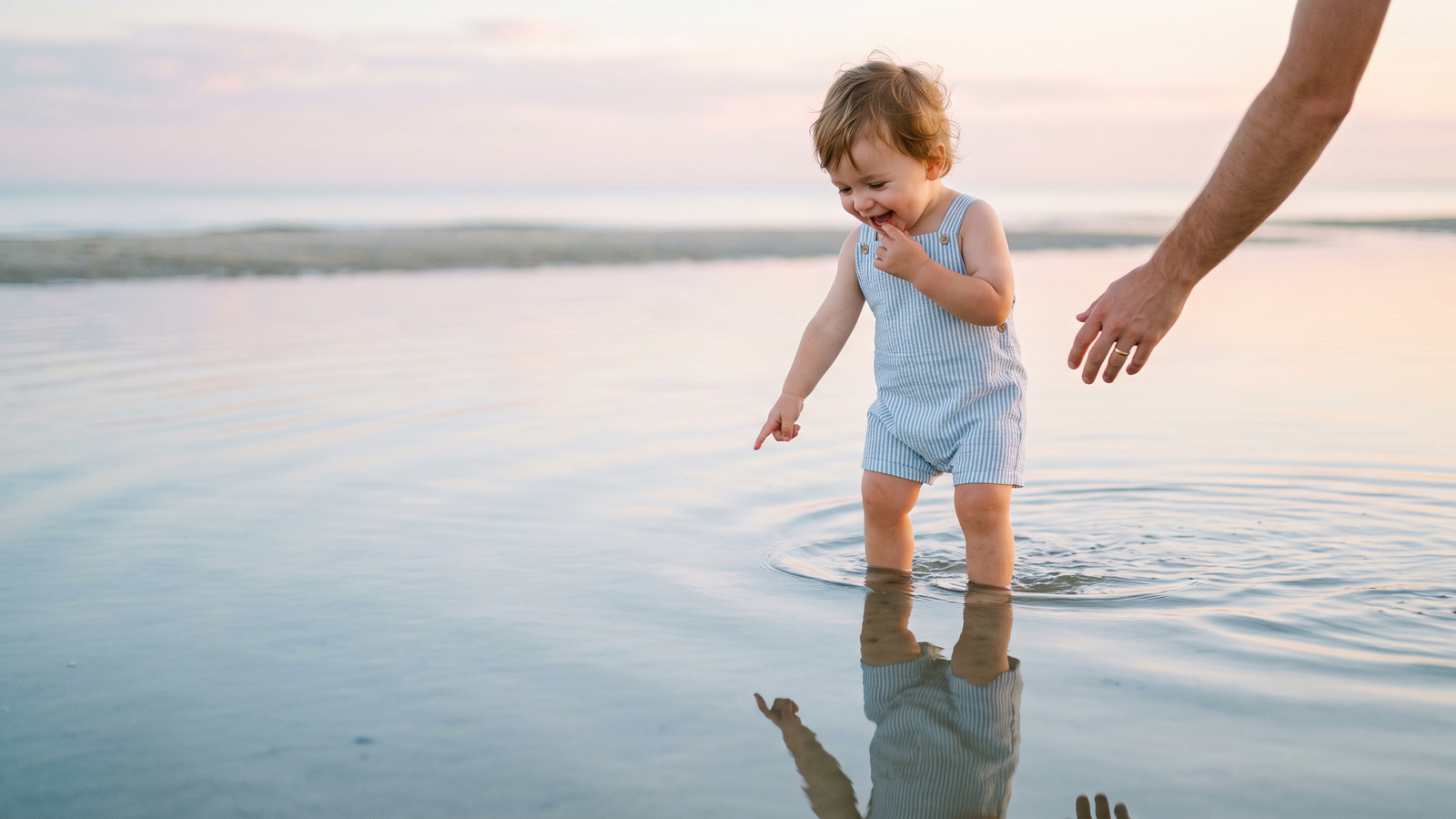
There's a specific parental posture that exists only at big-surf beaches: the crouched hover, arms half-extended, tracking a nineteen-month-old who has declared war on the Gulf of Mexico. It's a workout, not a beach day. Now picture the alternative, twenty minutes away: water so shallow and settled that the same toddler wades forty feet out and it's still mid-shin, herons fishing beside them like colleagues, and the parents (this is the wild part) sitting down. Both scenes are Tampa Bay, same afternoon. The difference is a geography lesson your family can cash every weekend, and this article is the map.
The physics your kids can see
Waves are wind's work: the longer the open-water runway (sailors call it fetch), the bigger the build, which is why the open gulf beaches catch real surf on breezy days. The barrier islands are the region's wave-breaking wall, and everything behind them (lagoons, bay sides, causeway flats) gets only the short protected fetch: ripples where the gulf front gets rollers. Stand your crew at Fort De Soto where they can see both in one turn of the head (surf on the gulf face, glass in the lagoon behind it) and the whole coast decodes at once: it's not luck, it's shelter, and now they can read any shoreline on the map for calmness before the car leaves the driveway.
The all-stars, honestly reviewed
| The water | Why it wins | The honest note |
|---|---|---|
| North Beach lagoon, Fort De Soto | The natural kiddie pool: enclosed, shallow, tide-refreshed, sugar-bottomed | Worth the park's daily parking fee alone; tide sets its depth |
| East Beach, Fort De Soto | Bay-side calm, picnic shade, Skyway views | Grass and shell bottom: water shoes on |
| Gulfport Beach | Boca Ciega calm plus a walkable old-Florida main street | Small, beloved, arrive early on event weekends |
| Dunedin Causeway | Drive-up sandy shallows, kiteboarder scenery, launch-ramp energy | Roadside beach vibes; watch the bike path crossings |
| Ben T. Davis (Tampa) | The city's causeway calm, wide and convenient | Urban backdrop; sunset-famous, midday hot |
The pattern to notice: none of these are secrets, all of them are underloved by visitors chasing the postcard, and every one of them hands small-kid families the two currencies that matter: standing-depth water and parents at ease.
Calm water, full attention
Now the honest chapter, delivered in this site's steady voice: calm is a surf rating, not a supervision waiver. Drownings in gentle water happen precisely because gentle water relaxes the watch, so the calm-beach protocol holds firm: a designated watcher whose only job is eyes-on (rotate the shift; the phone stays in the bag on duty), jackets on non-swimmers even in the shallows, respect for the drop-offs where lagoons meet channels, and distance from any pass or inlet, where tide changes run rivers through otherwise sleepy water. The blessing of these beaches is that the protocol is easy to keep: watching a toddler in four inches of glass is pleasure, not vigilance athletics. That's the point of matching the water to the crew.
The under-surface show
Here's what the surf beaches can't offer: visibility into a working nursery. Calm shallows over sand and seagrass edge are the region's aquarium floor: hermit crabs hauling their real estate, fighting conchs plowing, needlefish hovering like compass needles, juvenile mullet in silver clouds, and the rays that invented the shuffle rule. Equip the crew with a bucket viewer (or a cheap mask laid on the surface), teach the wet-hands, look-mostly, everything-goes-back manners, and a calm-water afternoon becomes a tide pool session that happens to include swimming. Parents of the hover-posture era, take note: at these beaches, the kids are the ones crouched and pointing.
The Little Naturalist activity
Run the depth survey: arm kids with a yardstick (or a marked broom handle) and have them map the lagoon's floor: wade a straight line seaward, measuring and logging depth every ten paces, then chart the profile in the sand or the ship's log. They'll discover the calm beach's secret architecture (the long flat shelf, the sudden channel edge) and in doing so learn exactly where the family's swim boundary lives and why. Cartography, safety briefing, and an hour of purposeful wading in one: the calm-water trifecta.
Questions families ask
Are these beaches good for actually teaching swimming?
The best in the region: warm, standing-depth, wave-free water is the textbook classroom, and the water-confidence ladder climbs fastest where kids can always touch bottom. Many local swim instructors run summer sessions at exactly these spots for exactly this reason.
Do the calm beaches have jellyfish and rays too?
Same gulf, same cast: warm-month rays argue for the shuffle everywhere, and drifting jellies visit bay water on the right winds (purple flag logic applies where flags fly, eyes-first wading where they don't). The difference is visibility: in calm clear shallows, kids usually see the neighbors long before meeting them.
What about sandbars off these beaches?
The causeway and bay sides grow walkable low-tide bars that are toddler heaven, with the standing walk-back rule as the tide turns. The lagoon's version is gentler still: its whole floor is effectively one bar. Check the chart, claim the flat, bring the watermelon.
Is there anywhere calm with full amenities for a mixed-age group?
Fort De Soto is the answer to most versions of this question: North Beach pairs the lagoon with restrooms, showers, snack bar, and shade shelters, so the toddler contingent, the wave-seeking cousins (gulf face, two minutes away), and the picnic elders all win at one address: the full park plan makes the case.
Questions families ask
Which Tampa Bay beaches have the calmest water for toddlers?
The sheltered ones: Fort De Soto's North Beach lagoon (a natural wading pool refreshed by the tide), East Beach on the bay side, Gulfport Beach on Boca Ciega Bay, and the Dunedin Causeway's sandy shallows. They trade surf for knee-deep calm, which is exactly the trade toddler families want.
Why are bay-side beaches calmer than gulf beaches?
Fetch: waves are built by wind blowing across open water, and the barrier islands block the gulf's long reach. Water on the landward side has only a few protected miles to gather energy, so it arrives as ripples. Same region, same day, entirely different sea.
Is the calm water safe from currents?
Calmer, not current-free: passes and channels near any inlet still move serious water on tide changes, so the family rules travel along: swim away from passes and structures, watch little ones at the drop-offs, and keep the walk-back rule when sandbars are in play.
What should we bring to a calm-water beach that's different?
Water shoes (bay bottoms mix sand with shell and seagrass), the shade you'd bring anywhere (these beaches run short on rentals), and the bucket-viewer kit, because calm shallows are creature country: the entertainment is under the surface, not in the surf.
Sources
More from the Bae
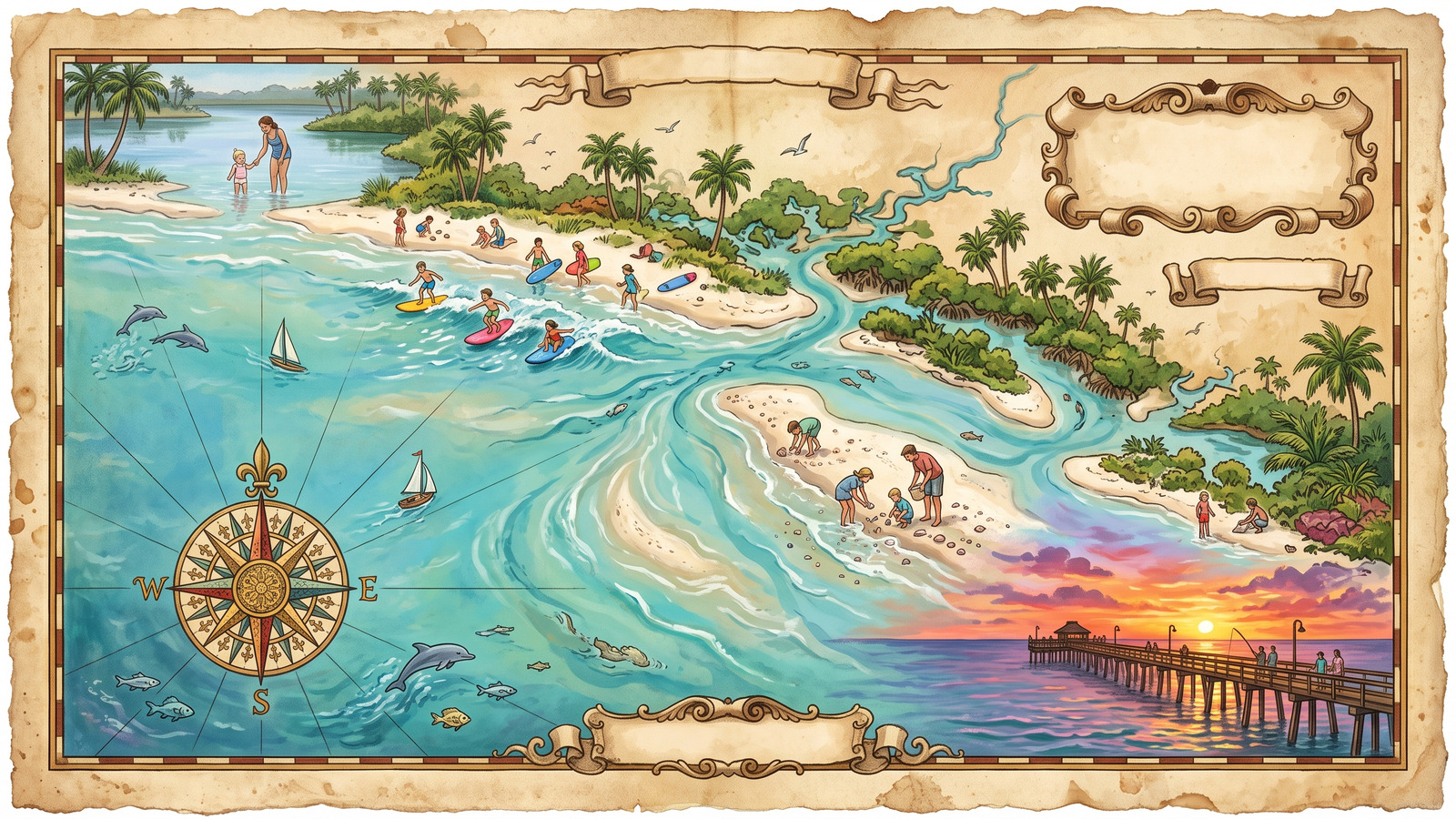 ExploreCornerstone
The Family Beach Matchmaker: The Right Tampa Bay Beach for Toddlers, Shellers, and Wave Chasers
The right Tampa Bay beach for your family: calm water for toddlers, shelling sands, tide pools, waves, dogs, and sunsets, matched honestly.
 Explore
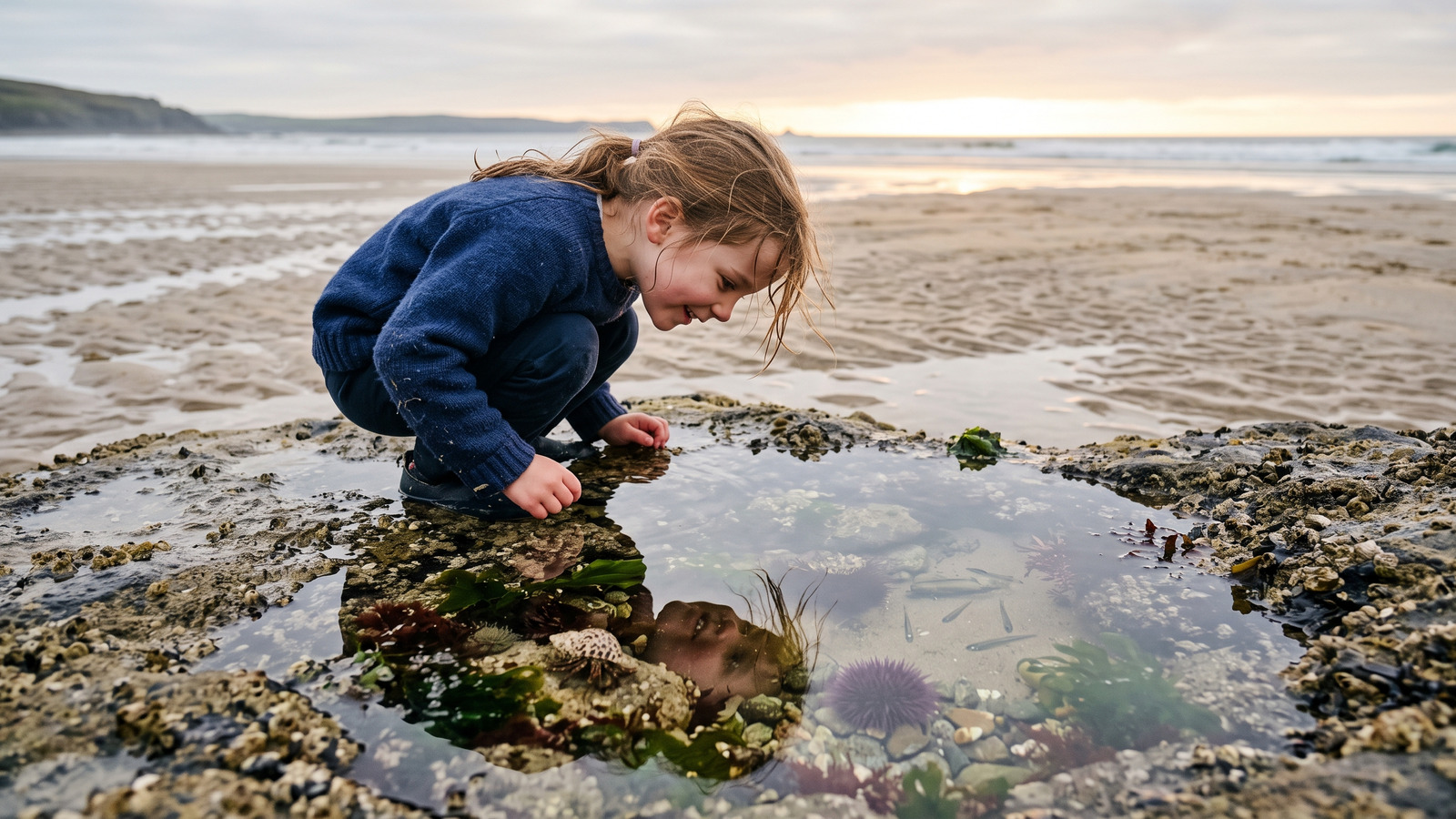
Tide Pooling Around Tampa Bay: Where Kids Can Meet Sea Stars and Hermit Crabs
Tide pooling around Tampa Bay: winter's negative low tides, the best flats at Fort De Soto and Honeymoon, and the wet-hands manners that protect the pools.
 Explore
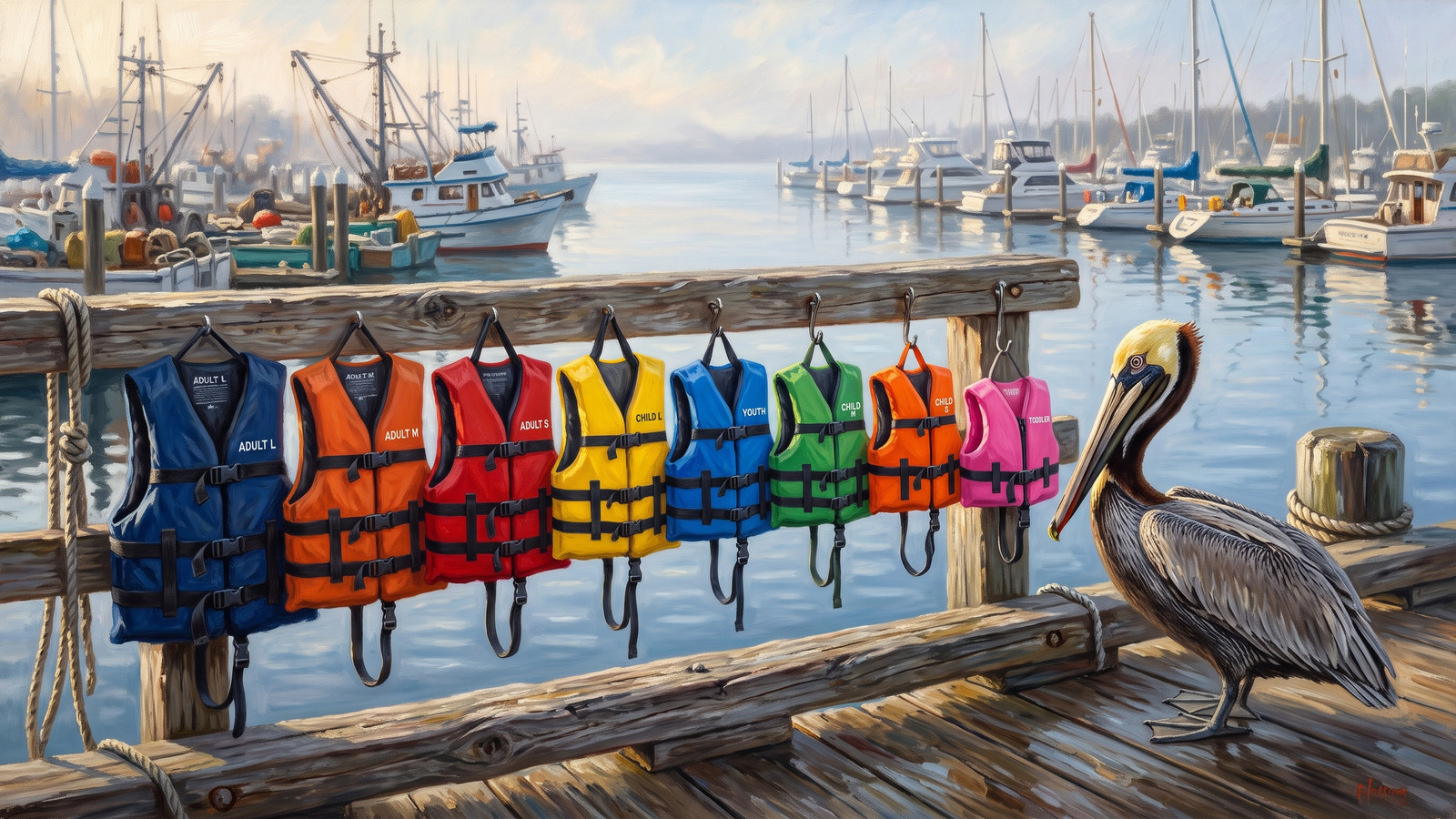
Florida Life Jacket Laws for Kids, in Plain English (and the Fit Test That Actually Matters)
Florida's life jacket laws in plain English: the under-6 wear rule, one per person, throwables on 16-foot boats, and the two-second fit test.