
The Gopher Tortoise: Florida's Little Landlord and the 350 Neighbors in Its Burrow
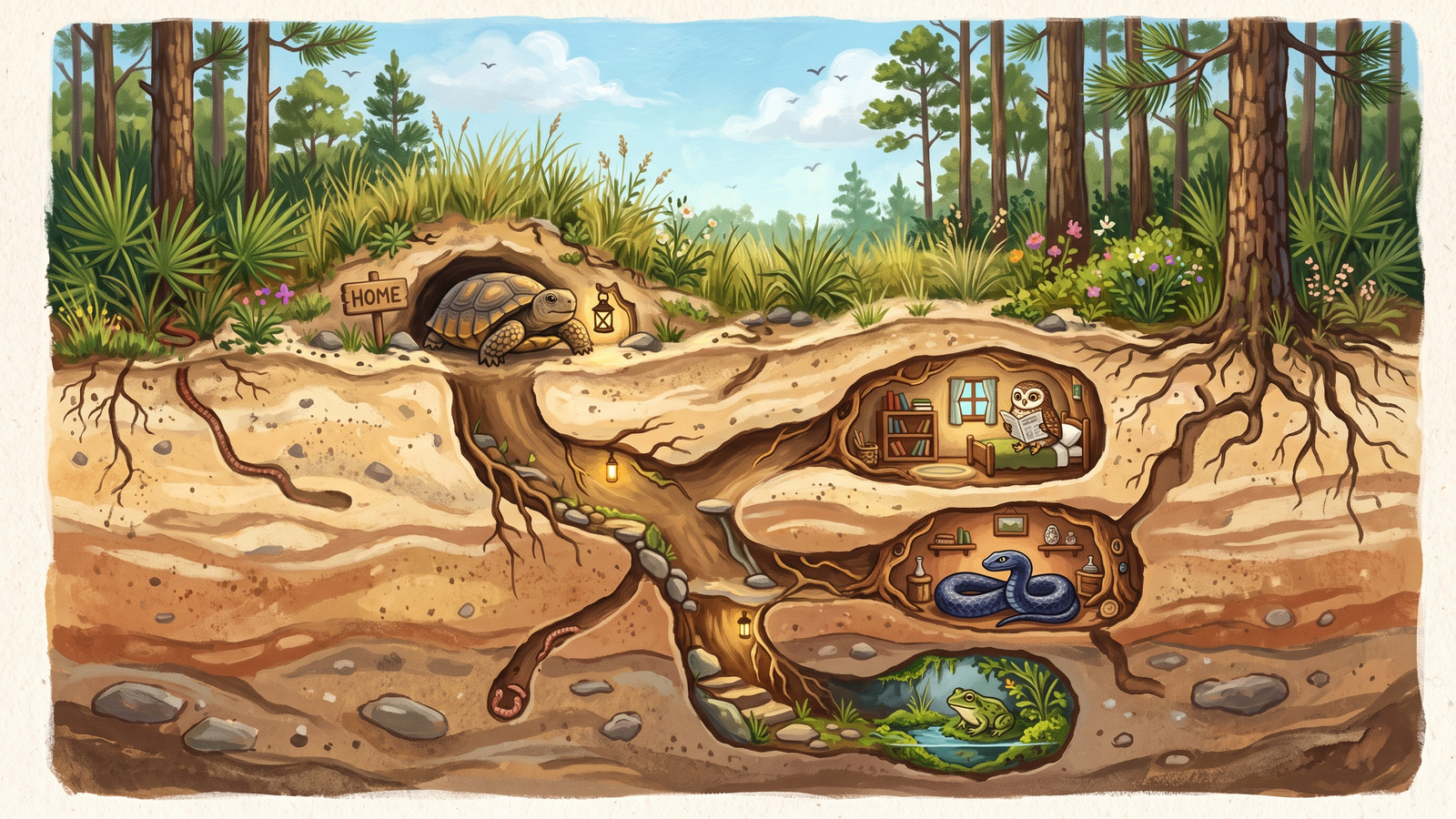
The most important digger in Florida is the size of a dinner plate, moves like a browsing lawnmower, and has been perfecting one home design for a few million years. Meet the gopher tortoise: a dry-land tortoise with shovel feet, an ancient face, and a burrow that functions as the neighborhood's storm shelter, nursery, and spare bedroom. Kids who learn what's down that hole never look at a sandy Florida trail the same way again.
The landlord and the lease
A gopher tortoise spends most of its life within a few hundred feet of a burrow it dug itself: a half-moon shaped tunnel angling down through the sand, commonly 15 feet long and 6 feet deep, holding a steady temperature through heat, cold snaps, wildfires, and hurricanes. That stability is the whole real estate pitch, and the tenant list is astonishing: burrowing owls, gopher frogs, eastern indigo snakes, rabbits, opossums, armadillos, mice, and an entire invertebrate city, more than 350 documented species in all. Some, like the gopher frog and certain beetles, barely exist anywhere else.
Tell it to kids straight: the tortoise is a landlord who never collects rent, and half the sandhill owes it their lives. During a fire or a freeze, the burrow is the ark.
A dinosaur-adjacent neighbor
Gopher tortoises belong to a family of land tortoises that has been digging in the Southeast for millions of years. An individual can live 40 to 60 years or more in the wild, grazing on grasses, wildflowers, and prickly pear (they eat the fruit, spines and all, a fact that buys you the whole car ride home). They also spread seeds as they go, quietly gardening the same landscape they excavate. Slow is their whole strategy: slow metabolism, slow walk, long life, deep home.
Florida named it the official state tortoise in 2008, which means your family's symbols checklist has a very findable entry here.
The two rules, and the sad reason for the second one
Rule one: the burrow is off-limits. Gopher tortoises are listed as threatened in Florida, and the law protects the burrow as strictly as the animal, occupied or not. Watching from ten feet is a front-row seat; poking, flooding, blocking, or letting the dog investigate is a crime scene.
Rule two: never put a tortoise in water. Every year, well-meaning people find a gopher tortoise near a beach or a pond, assume it's a sea turtle in trouble, and "rescue" it into the water, where it can drown. The gopher tortoise is a land animal, full stop. Domed shell and elephant-ish stumpy legs mean land; flippers mean sea. A family that can make that call on sight is qualified beach patrol, and during sea turtle season the distinction genuinely saves lives in both directions.
| Land tortoise or sea turtle? | Gopher tortoise | Sea turtle |
|---|---|---|
| Shell | High and domed | Flat and streamlined |
| Feet | Stumpy, clawed, shovel-like | Flippers |
| Where it belongs | Sandy uplands, never water | The gulf, only ashore to nest |
| If found crossing a road | Help it across, same direction | Shouldn't happen; call FWC |
| If found "stranded" on land | It's fine; leave it | Call FWC: 888-404-3922 |
Where to meet one around Tampa Bay
Boyd Hill Nature Preserve in St. Petersburg is the region's tortoise capital: on warm mornings they graze the trail edges like tiny municipal groundskeepers, utterly unbothered by strollers. Fort De Soto's inland paths, Honeymoon Island's Osprey Trail, and the uplands at Weedon Island all host active burrows; look for the tell-tale half-moon doorway with a fan of fresh sand out front, called the apron. Morning and late afternoon are grazing hours; midday tortoises are usually home with the air conditioning.
The Little Naturalist activity
Burrow census. On your next preserve walk, have kids tally burrow mouths (from a respectful distance): active ones show smooth sand and tracks on the apron; abandoned ones grow weeds and debris. Sketch the half-moon shape, guess the tunnel's path underground, and list five tenants who might be down there right now. It's the exact survey method wildlife biologists use, at a kid's scale.
Questions families ask
What happens to the 350 tenants when land gets developed?
That's the heart of the conservation story. Florida requires developers to obtain permits and relocate tortoises rather than bury burrows, and preserved corridors of sandhill, the same lands that panthers need, keep whole communities intact. The panther's corridor story and the tortoise's are one story at two sizes.
Do gopher tortoises bite or carry disease?
They're grazers with no interest in fingers, and the reason not to handle them is legal and biological rather than fear: handling stresses them, and an upper respiratory disease spreads between tortoises partly through human contact. Watch, sketch, and let the landlord work.
How can kids help beyond watching?
Plant native: a yard corner of native grasses and wildflowers feeds the whole food web tortoises anchor. Drive alert on sandy back roads. And report sightings of sick or injured tortoises to FWC rather than intervening. Stewardship at this scale is mostly restraint plus attention, which happens to be the whole curriculum of this site.
Why do they matter if they're so slow and small?
Flip it: a species doesn't need to be big to hold up an ecosystem, it needs to be generous. The tortoise's one talent, digging, shelters hundreds. It's the best small-hands lesson wild Florida offers, and kids get it faster than adults do.
Questions families ask
Why is the gopher tortoise called a keystone species?
Because its burrows, up to 15 feet long and 6 feet deep, provide shelter for more than 350 other species: owls, frogs, snakes, rabbits, mice, and hundreds of insects. Pull the tortoise out of the ecosystem and the whole apartment building goes with it.
Where can families see gopher tortoises near Tampa Bay?
Boyd Hill Nature Preserve in St. Petersburg is the local classic, with tortoises grazing beside the trails most warm mornings. Fort De Soto, Honeymoon Island, and Weedon Island all host them too. Look for half-moon burrow mouths in sandy ground.
What should we do if a tortoise is crossing the road?
If it's safe, move it across in the direction it was already heading, keeping it low to the ground. Never relocate it somewhere 'better' and never put it in water. It's a land tortoise, it knows exactly where it's going, and its burrow is its whole life.
Is it illegal to bother a gopher tortoise or its burrow?
Yes. Gopher tortoises are a threatened species in Florida, and state law protects both the animal and the burrow itself. Watching is welcome; touching, feeding, blocking, or digging is not. Give the burrow mouth about ten feet of respect.
Sources
More from the Bae
 LearnCornerstone
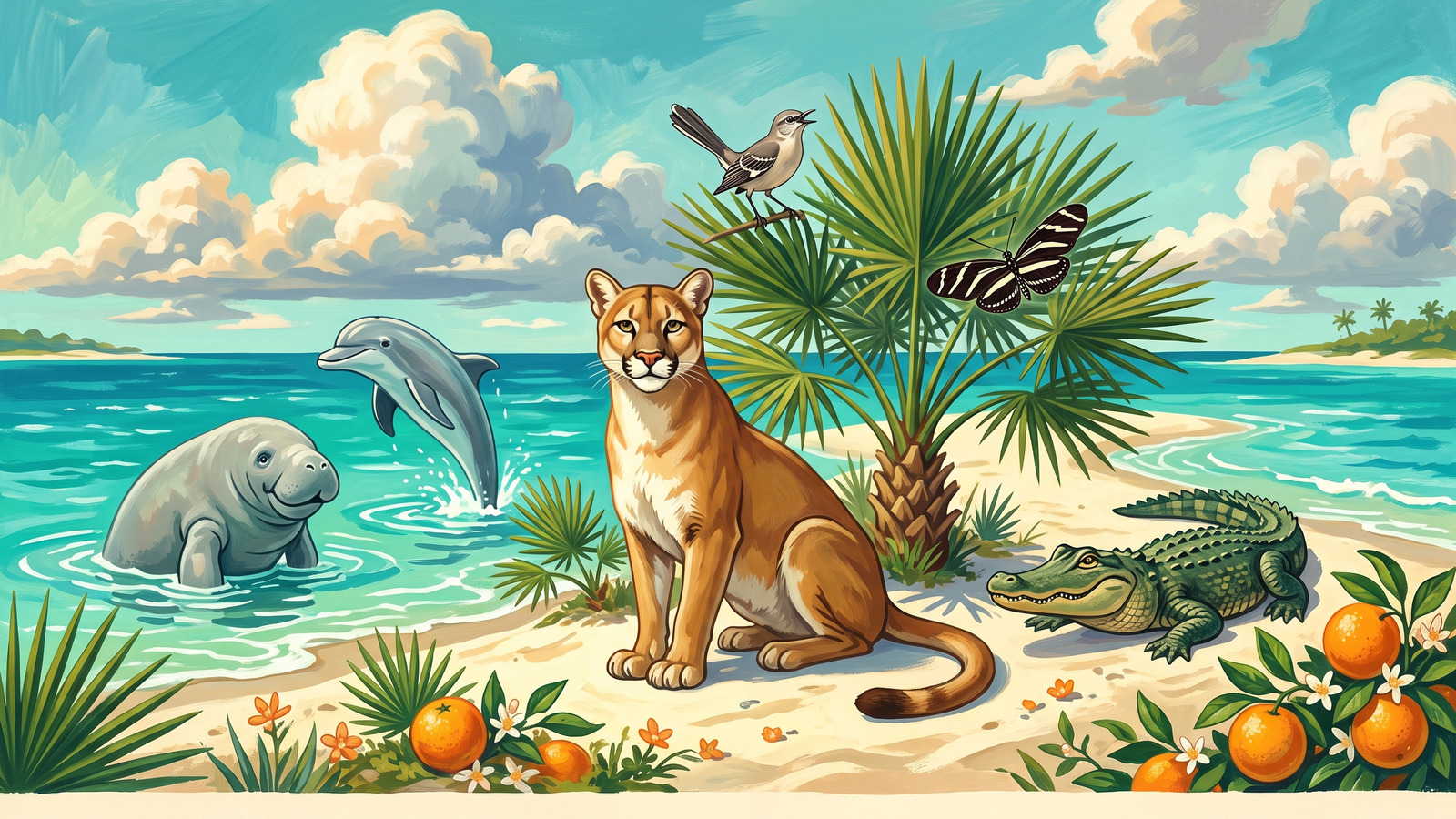
Florida's State Symbols, Explained for Kids: Every Animal, Flower, and Song, and the Stories Behind Them
Every Florida state symbol explained for kids: the panther, manatee, mockingbird, zebra longwing, and more, with the stories and the flamingo debate.
 Learn
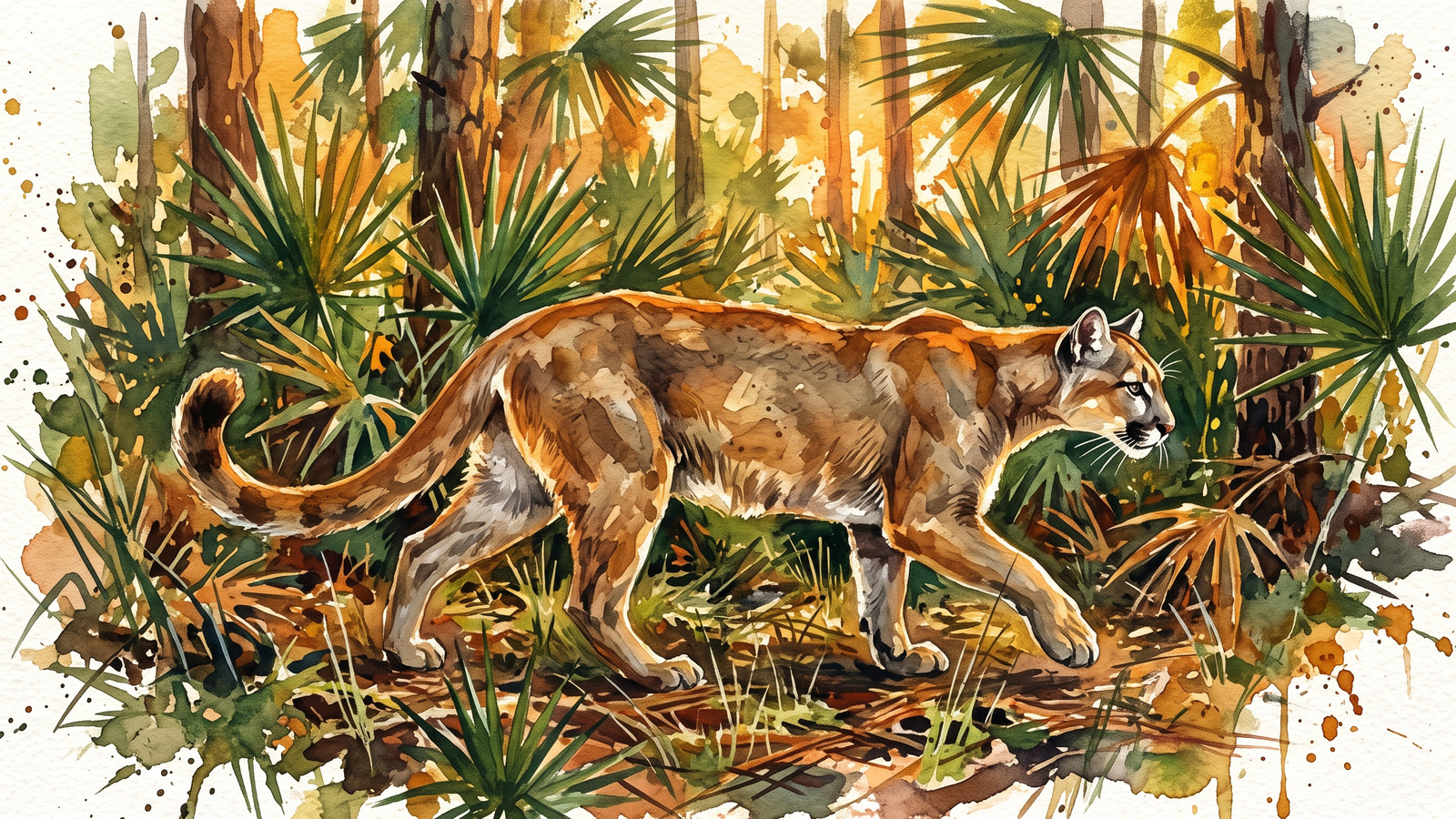
LearnThe Florida Panther: How Many Are Left, Where They Live, and How Kids Can Help
How many Florida panthers are left? Between 120 and 230. Where the state animal lives, why cars are its biggest danger, and how kids can help.
 Learn
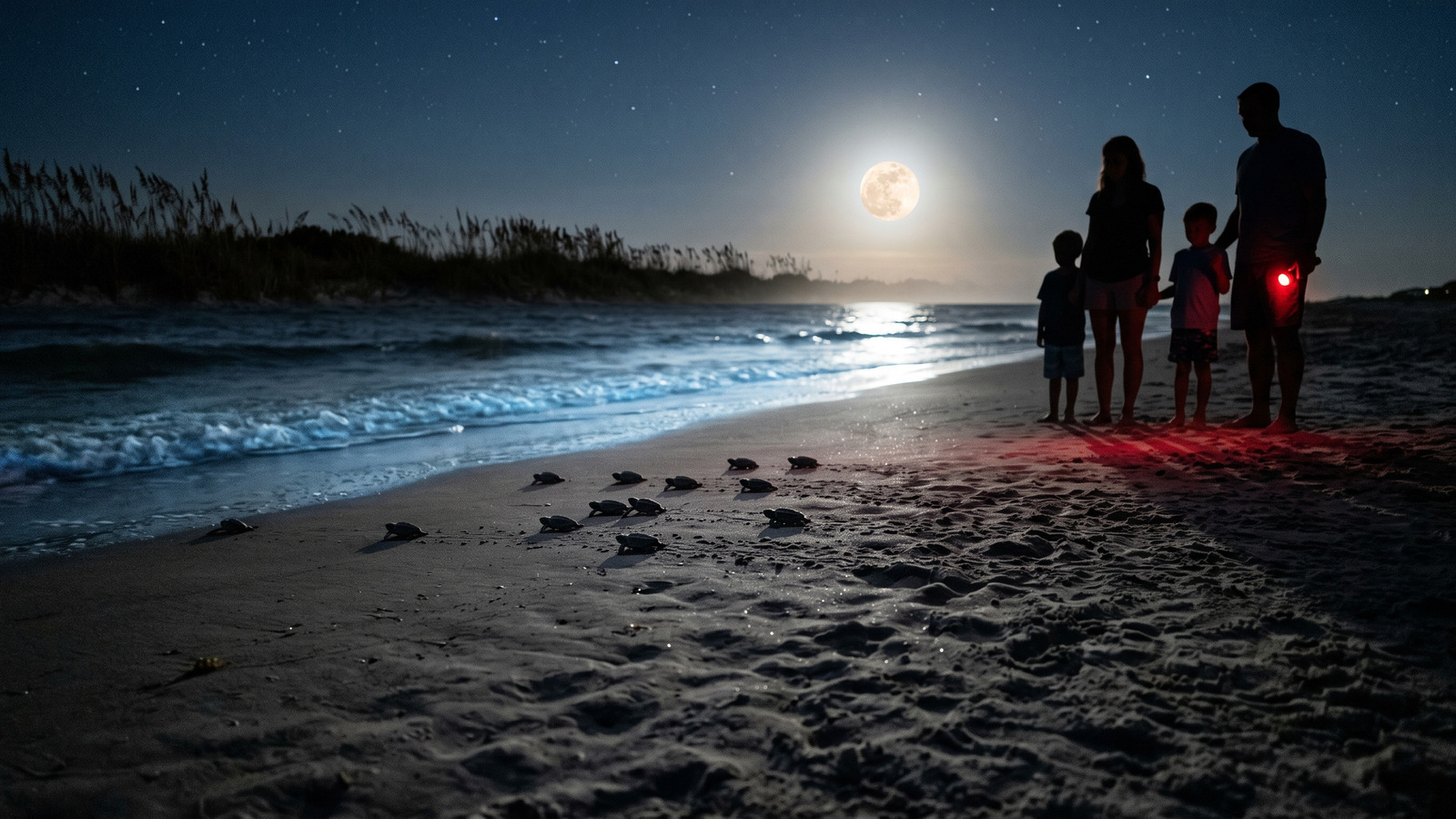
LearnSea Turtle Season: The Family Beach Rules That Save Nests from May to October
Sea turtle nesting season runs May through October on Tampa Bay beaches. The family rules: fill holes, flatten castles, lights out, and let nests be.