
The Mounds at Philippe Park: A Walk Through 1,000 Years in One Afternoon
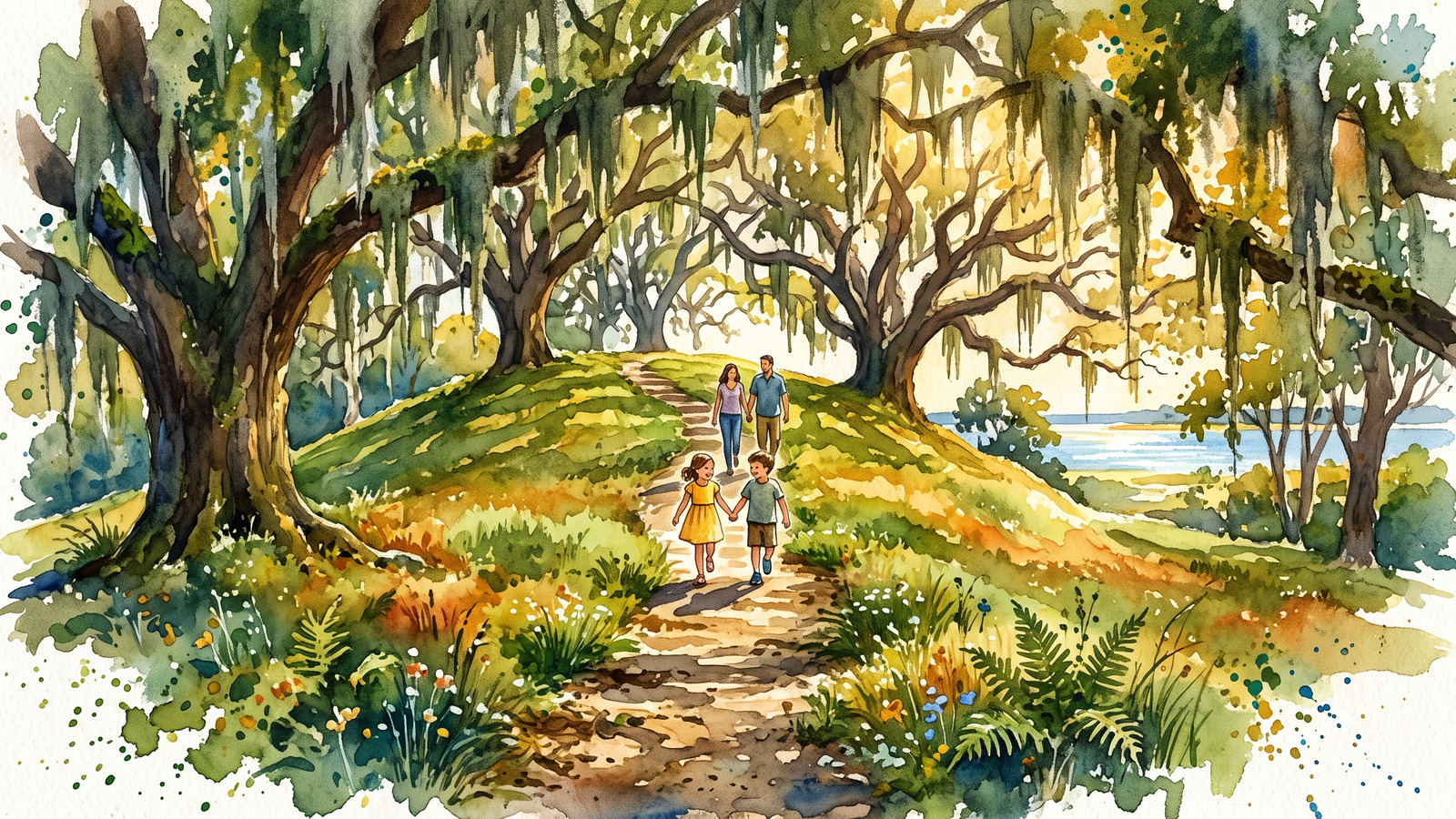
There's a county park in Safety Harbor where you can push a stroller past a thousand years in about four hundred yards. Start at a playground built this decade. Pass picnic tables under live oaks that were saplings when Florida joined the Union. Walk the shoreline where a French-descended pioneer planted grapefruit before Tampa had a name worth printing. And finish at the top of a shell-and-sand pyramid raised by the Tocobaga, basket by basket, when Europe hadn't imagined this coast existed. Admission: free. Parking: ample. Homework value: immense.
Stop one: the mound, and how to see it properly
The temple mound anchors the park's northern end, and the first thing to tell kids is what not to expect: no stone ruins, no gates. Florida's ancient architecture was earth and shell, so what survives reads at first like a steep, tree-crowned hill with a path up it. Then you deliver the numbers from the Tocobaga story: largest surviving mound in the Tampa Bay region, layered shell and sand engineered for drainage, a chief's house or temple once standing on the summit, a ramp descending to a town plaza where hundreds lived. From the top, the view solves the real estate question instantly: sightlines up and down the bay, breeze in every season, seafood at the doorstep. Chiefs chose well.
One respectful note for the family, handled matter-of-factly: sites like this one, as reporting on the park has detailed, include burial areas somewhere in the vicinity, which is one more reason the rules are paths-only, dig-never, take-nothing. Kids rise to being trusted with that.
Stop two: the grapefruit that started an industry
The park's name honors Odet Philippe, the settler who established his St. Helena plantation on this shore in the 1830s, becoming, by most accounts, the first permanent non-native settler of the Pinellas peninsula, and the planter of Florida's first grapefruit grove. Stand the kids at the shoreline and connect the dots forward: from this point, citrus spread until orange blossoms became the state flower and the state's fortune, and the fruit your family squeezes at breakfast traces a line back through this exact soil. History rarely offers so tastable a thread.
Philippe's own story has range worth an older kid's attention: a colorful past (accounts vary between legend and record, a good lesson in itself), survival of the great 1848 hurricane that reshaped this coast, and a homestead that grew into the county's oldest landmark park.
Stop three: the park your family actually uses
What elevates Philippe Park over a museum is that the history sits inside a genuinely great ordinary park: playgrounds, shaded picnic shelters you can reserve, seawall fishing where sheepshead loiter, and calm water views up Old Tampa Bay. The live oaks alone are worth the drive, vast horizontal limbs that have starred in a century of family photos. The rhythm that works: history loop first while legs are fresh, then playground, then picnic, then the museum in downtown Safety Harbor if attention allows, then ice cream on Main Street, because Safety Harbor's little downtown is two minutes away and made for exactly that.
| The afternoon, planned | Time |
|---|---|
| Mound walk and summit view | 30 minutes |
| Shoreline and grapefruit story | 15 minutes |
| Playground and picnic | As long as it takes |
| Safety Harbor Museum (optional) | 45 minutes |
| Main Street ice cream | Non-optional |
The Little Naturalist activity
Bring a measuring tape and do mound math: pace the mound's footprint, estimate its height against a parent's stature, and have kids calculate roughly how many five-gallon-bucket loads of shell and sand it took (spoiler: the answer lands in the hundreds of thousands, minimum). Then time one kid carrying one bucket-weight across the plaza distance. The resulting awe is mathematical, physical, and permanent: monuments stop being scenery once you've computed the labor.
Questions families ask
How does this compare to Weedon Island for a family visit?
They're the two halves of one story: Weedon gives boardwalk wilderness and the earlier Weeden Island culture era; Philippe gives the later Tocobaga capital plus playground-and-picnic ease. Do Weedon for the nature morning, Philippe for the history afternoon, and the kids have the whole arc.
Can we fish at Philippe Park?
Yes, from the seawall, under standard Florida license rules for shore fishing. Sheepshead around the rocks are the local specialty and a kid-patience-appropriate target.
Is the mound climb hard with little ones or grandparents?
It's a short, steady path, manageable for most, with the summit bench as the payoff. Strollers can make it with a determined pusher; the rest of the park is entirely flat and easy.
What's the story with the name Safety Harbor?
The protected upper bay sheltered sailors from gulf storms, hence "safe harbor," and its mineral springs later made the town a spa destination, a thread that continues at the historic spa downtown. Names around here mostly tell the truth, as our place-names story shows.
Questions families ask
What is special about Philippe Park in Safety Harbor?
It layers a thousand years of history in one waterfront county park: the Tocobaga capital's temple mound (the region's largest surviving mound), the homestead of Odet Philippe, the pioneer credited with planting Florida's first grapefruit grove, and the shoreline where a 1567 Spanish mission briefly stood.
Is Philippe Park good for kids beyond the history?
Very: playgrounds, picnic shelters under giant live oaks, seawall fishing, and calm bay views make it a full family afternoon. The history is walkable in twenty minutes; the park absorbs the rest of the day.
Who was Odet Philippe?
An early settler, widely described as the first permanent non-native resident of the Pinellas peninsula, who established his homestead here in the 1830s and planted citrus, including the grapefruit grove credited as Florida's first. The park sits on his old plantation, called St. Helena.
Does it cost anything to visit Philippe Park?
No. It's a free Pinellas County park, open daily, with parking throughout. The Safety Harbor Museum nearby charges a small admission and completes the story with the actual artifacts.
Sources
More from the Bae
 LearnCornerstone
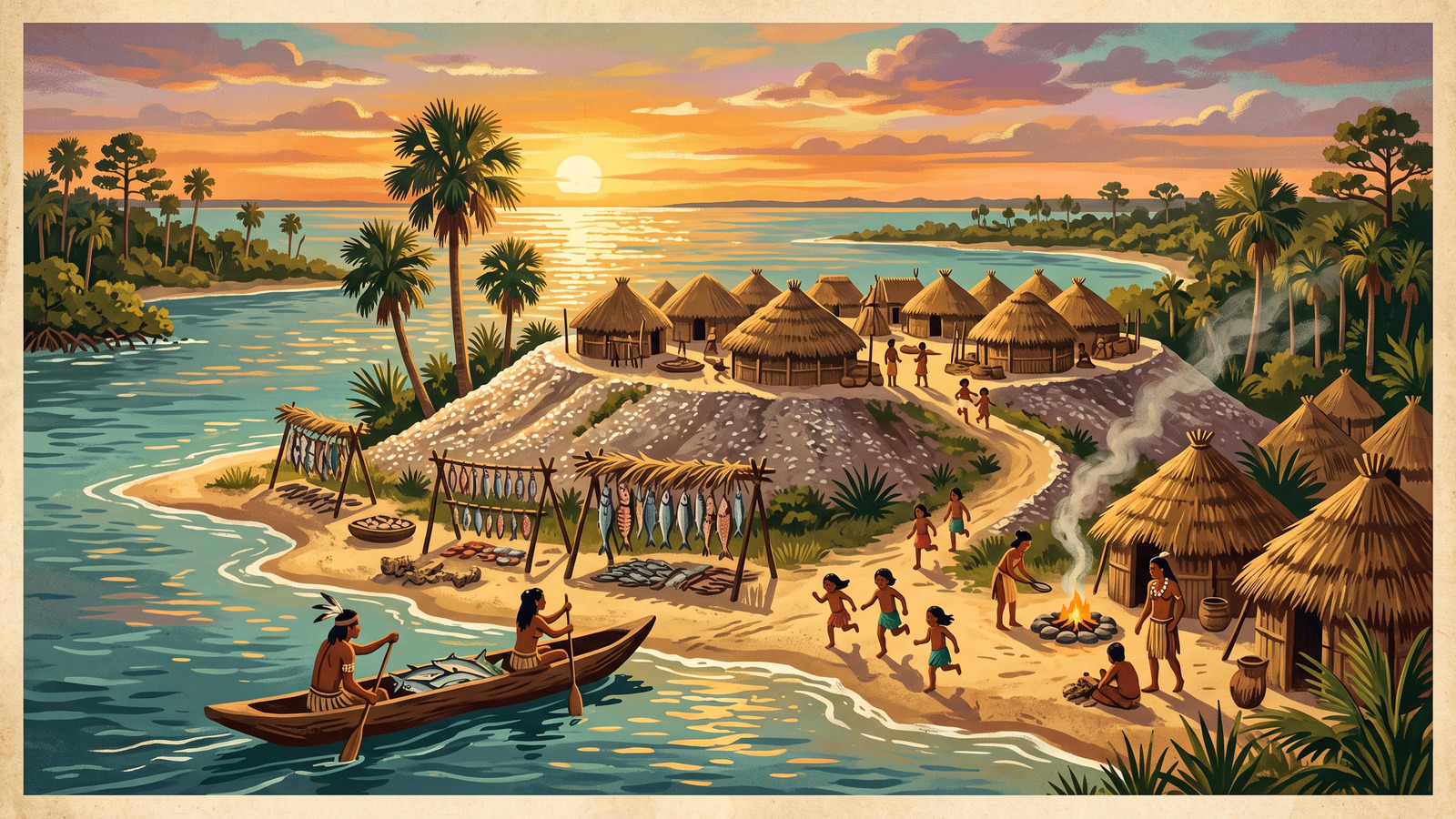
Who Lived Here First? The Tocobaga of Tampa Bay, Told for Kids
The Tocobaga built shell-mound towns around Tampa Bay for centuries before Europe arrived. Their story, told for kids, and where families can stand in it.
 Learn
LearnThe Orange Groves That Built Florida: A Sweet History Kids Can Taste
Oranges built Florida: Spanish seeds, Odet Philippe's grapefruit, the Great Freeze, and a 95 percent decline kids can still taste the last chapters of.
 Learn
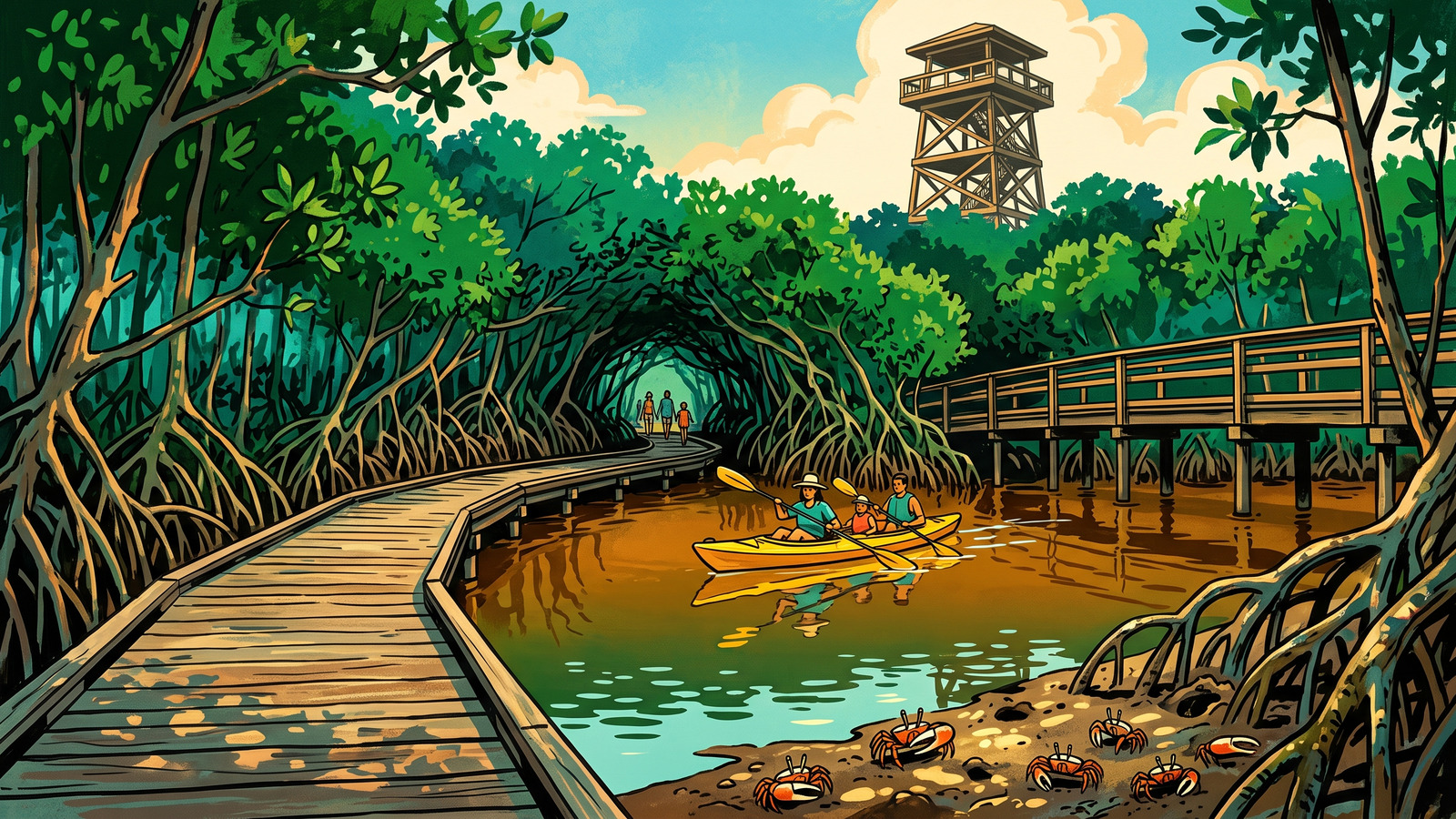
LearnA Family Guide to Weedon Island: Boardwalks, Herons, and a Thousand Years of History
Weedon Island Preserve packs boardwalks, an observation tower, mangrove paddling, and a thousand years of Tocobaga history into one free St. Pete morning.