Shelling with Kids: The Best Sands, the Right Tide, and What to Leave Behind
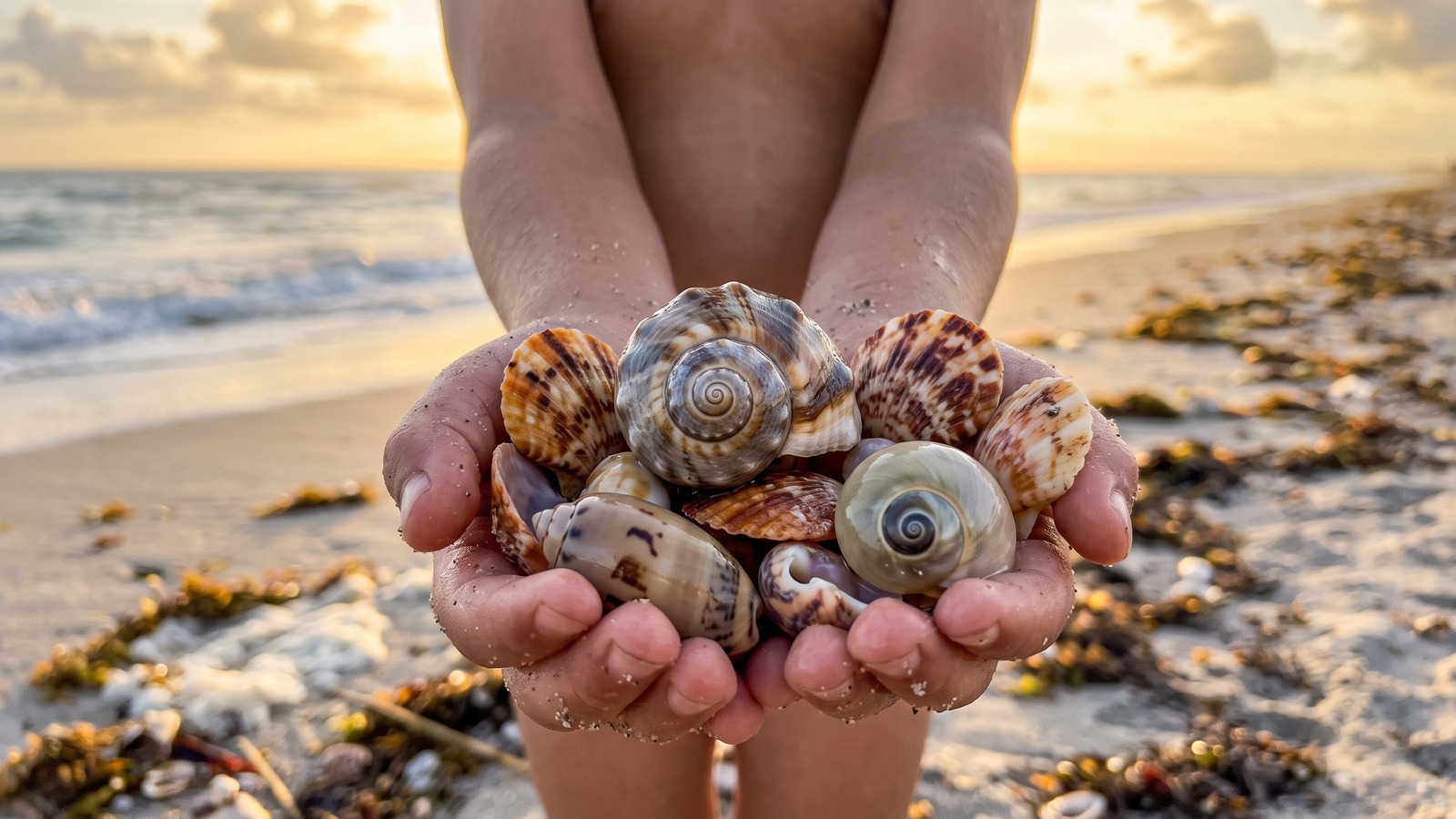
Somewhere in a closet in every Florida family's house is a jar, and inside the jar is a museum: the whelk from the cousin's wedding weekend, the impossible orange scallop, the first olive shell, still glossy, found by someone who is now in college. Shelling looks like a pastime and is actually an archive: every specimen files a day. It's also the rare treasure hunt where the treasure is real, free, and replenished twice daily by the tide: provided you know which sands, which hours, and which finds go home versus back. Here's the family craft, jar to jackpot.
Where the shells actually are
Shells drift ashore everywhere; they accumulate where nobody sweeps. Developed beaches rake their sand nightly for tidiness, which is why the famous tourist stretches produce fragments while the preserves produce specimens. The local hierarchy: Shell Key (the name is a review: unraked, boat-access, drift lines that rebuild with every tide), Caladesi's ferry-kept sands, Honeymoon Island's northern reaches, Fort De Soto's less-trafficked shoulders, and Pass-a-Grille's south end for the car-accessible version. On any of them, hunt the structure: the wrack line (the tide's high-water shelf of weed and wonders), the swash zone where waves sort shells by size like a gravel plant, and the offshore bars at minus tides, where the serious finds wait in ankle water.
Timing: the sheller's almanac
| The window | Why it produces |
|---|---|
| Low tide, any day | More beach, exposed drifts, sorted swash |
| Dawn after a night high | Fresh delivery, zero competition |
| After storms | The seafloor's attic, emptied ashore |
| Winter negative lows | The flats themselves surface: the year's best |
| New and full moon weeks | Bigger swings, deeper reveals |
The pattern your kids will spot: it's the horseshoe crab calendar again: the moon runs the shell economy too, and a family that can read a tide chart shells like insiders while visitors wonder at their luck.
The starter dozen, and the left-handed celebrity
Identification turns picking-things-up into science, and a dozen names cover most finds: cockles (the ribbed hearts), scallops (the fans, in every paint job), olives (glossy torpedoes, often alive: check), augers and ceriths (the little drills), banded tulips, fighting conchs (orange, sturdy, frequently inhabited), pen shells (the big dark fans that host tiny crabs: look inside), moon snails (the polished globes that drill the neat holes your kids will ask about: yes, shells eat shells), sand dollars (velvet test, always), the horse conch (the state shell, a rare, huge, orange-lipped trophy), and the coast's signature: the lightning whelk, whose spiral opens on the left when nearly every other snail on the planet coils right. Hand any kid two spirals and let them discover the difference: it's the fastest hook in shell science, and the left-handed whelk was treasured for exactly that strangeness by the Tocobaga, who traded its shells across a continent.
The code, compressed
The full collector's law travels with every hunt; the shelling-specific compression: empty homes only (the sniff-and-look check defeats hiding hermit crabs), living sand dollars, urchins, and stars back in the water gently, reasonable quantities (curate quality, not volume: one bag per family, best-of only), and nesting-season sand rules intact while you wander: flat is still the exit standard. Where local rules restrict live shelling, the family standard already exceeds them, which is the comfortable place for a code to sit.
The Little Naturalist activity
Build the reference collection properly: an egg carton labeled by species, one best specimen per cell, identified with the starter list and dated: then, the graduate move, a "mystery cell" for unidentifiable finds that the library's field guides or the aquarium's naturalists get consulted on. A curated carton outperforms the bulging jar for teaching (and for marriage-preserving shelf space), and the mystery-cell habit (I don't know, let's find out) is the entire scientific temperament, packaged in cardboard.
Questions families ask
Is it really okay to take shells at all?
Empty shells in reasonable numbers, yes: they're the beach's renewable output, and mindful collecting is childhood's oldest natural history course. The reframe this series teaches: the code (empty, checked, curated) is what makes the taking honorable, and kids who run the code become the adults who defend the beaches that produce.
What about shells with hermit crabs?
Back where found, every time: the sniff test and a moment's watch catch most tenants, and a pocketed hermit is a bad day for everyone including the pocket. Teach kids the double-check on olives, conchs, and whelks especially: the best shells are the most likely to be occupied, which is nature's little integrity exam.
Where do all the famous Sanibel-type shells come from?
Geometry: shallow gulf shelf plus current-catching beach angles funnel shells ashore, and our barrier islands run smaller versions of the same machine. After the right storm, Shell Key plays Sanibel for a weekend, which is why the dawn patrol watches the weather like the migration birders do.
How do we clean and keep shells without the smell?
The classic protocol: soak in half-and-half water and bleach until residue releases, rinse thoroughly, dry in shade, and a touch of mineral oil revives the gloss. Any shell that arrives home with a smell went home with a resident: return-to-beach remains the only real fix, and the story becomes part of the family code's oral tradition.
Questions families ask
What are the best shelling beaches near Tampa Bay?
The wild, unraked sands: Shell Key and Caladesi Island lead, with Honeymoon Island, Fort De Soto's quieter stretches, and Pass-a-Grille's south end close behind. The rule of thumb: the fewer the buildings and beach rakes, the better the drifts.
When is the best time to find shells?
Low tide, first thing in the morning, and especially after storms and winter's negative lows: falling water exposes fresh drift lines before other feet reach them. The calendar's jackpot days combine a night storm with a dawn minus tide.
What shells will kids actually find here?
The starter set: cockles, scallops, olives, augers, lightning whelks (Florida's famous left-handed spiral), fighting conchs, banded tulips, and with luck a horse conch, the state shell. Sand dollars appear on the flats: white ones are collectible, velvet brown ones are alive and go back.
What are the shelling rules for live shells?
The one-question test: is anybody home? Occupied shells, living sand dollars and starfish, and anything with a resident go back gently where found: local rules restrict live collecting, and the family code is stricter: no collecting anyone's house while they're in it.
Sources
More from the Bae
 Explore
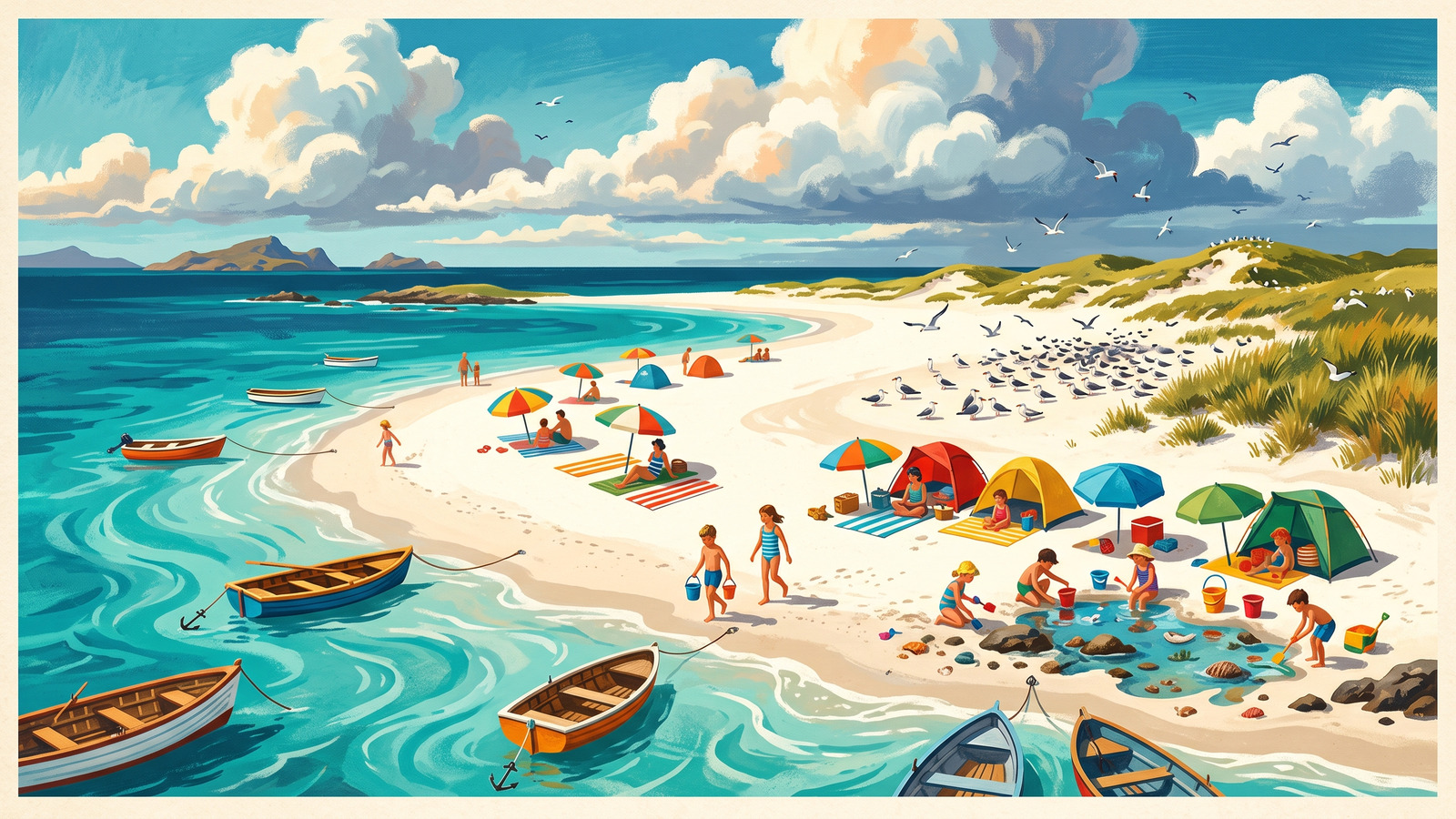
Shell Key by Ferry or Paddle: The Wild Island Afternoon Your Kids Will Remember
Shell Key Preserve: an undeveloped barrier island reached by shuttle from Pass-a-Grille or by paddle, with world-class shelling and zero buildings.
 Explore
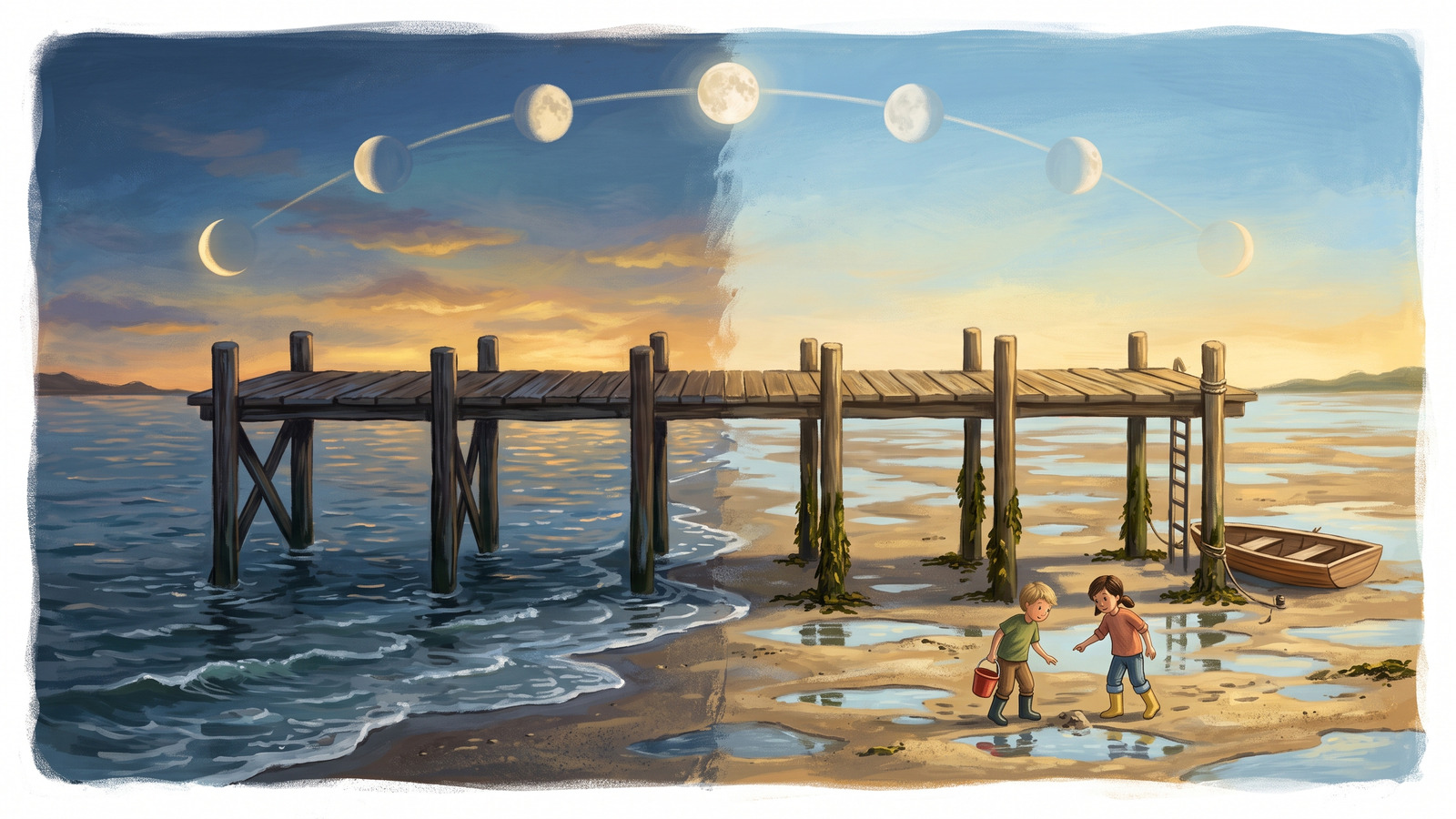
Tides 101 for Families: How to Read a Tide Chart and Plan a Better Beach Day
How to read a tide chart, why Tampa Bay's tides are quirky, and the family cheat sheet matching low tide, high tide, and moon phases to activities.
 Protect
Leave It Better: Teaching Kids the Leave No Trace Rules, Beach Edition
The seven Leave No Trace principles for Florida beach families: shells and sand dollars, dunes and sea oats, wildlife space, leaving it better.