
Community on the Coast: How Newcomer Families Find Their People in Tampa Bay
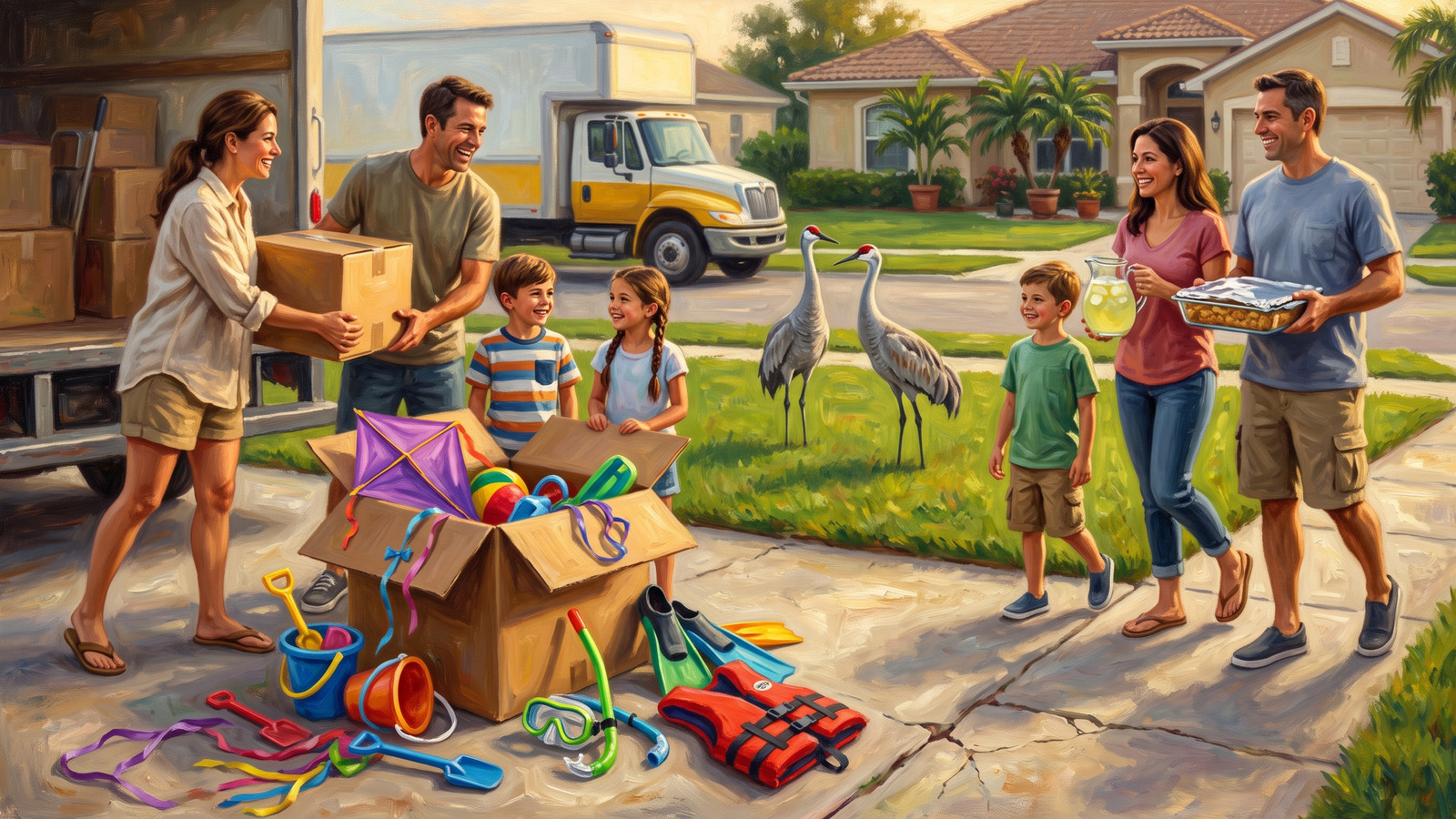
Nobody warns you that the hard part of moving to paradise is the Tuesday afternoon in month two: boxes unpacked, beach visited, kids fed: when it lands that you know the region's attractions better than you know a single phone number in it. Every newcomer family hits that Tuesday. The ones who climb out fastest aren't the luckiest or the most charming: they're the ones who understand what friendship is actually made of (repetition, not chemistry) and feed it deliberately. This region, it turns out, is unusually well-built for exactly that: half its families came from somewhere else too, its institutions run practiced welcome machinery, and its social calendar has more open doors than almost anywhere in America. This is the final practical article of the Educational 100, and it's the one everything else was secretly building: the belonging playbook.
The recurring rooms, ranked by speed
| The room | The speed | The mechanics |
|---|---|---|
| Library storytime week | Fastest for littles | Same session weekly: the stroller parliament forms in month one |
| The club season | Fastest for big kids | Team or troop = instant recurring cast + sideline parents |
| Church community | Fastest whole-family, for those who keep one | Small groups and kids ministries are welcome machines |
| Co-op and park days | The homeschool front door | Two park days before committing: the culture-match rule |
| The volunteer crew | The character filter | Cleanups and conservation programs: meet the people who show up |
| Same beach, same morning | The slow burn | Regulars recognize regulars: the coast's oldest social network |
The ranking's logic: rooms with fixed casts and weekly rhythm bond fastest (storytime, teams, small groups), rooms with rotating casts bond slower but broader (beaches, markets), and every room beats every one-off event ever attended. The discipline that makes any of them work: pick the SAME session: Tuesday 10:15 storytime, not "storytimes": because the science of the pickup line is simply this: familiarity plus repetition plus shared circumstance equals, in roughly eight exposures, the parking-lot conversation that becomes the first playdate.
The moves that accelerate
Beyond attendance, four accelerants with long local track records: host early and imperfectly (the newcomer instinct is to wait until settled: reverse it: the boxes-still-stacked pizza invitation converts acquaintances to friends precisely because it's unpolished: vulnerability is the currency), ask for the local knowledge (people bond by helping: "which beach for littles? which pediatrician? is the ferry worth it?" opens doors flattery can't: and this site's whole catalog makes you the newcomer who arrives already asking GOOD questions), join the season, not the sampler (a full 4-H or team season builds the recurring cast; serial trial classes build nothing), and let the kids lead (children make friends at machine speed and drag their parents along: the park day, the junior ranger swearing-in, and the boogie-board lineup are all staffed by your future friends' children). And one gentle regional note: the snowbird rhythm means some friendships run seasonal: the winter neighbors who leave in April aren't rejecting you: they're a genre, and the good ones return every fall like the manatees.
The six-month arc, honestly
Month one runs on logistics adrenaline; month two hits the Tuesday; months three through five are the faithful-attendance grind where the playbook feels like it isn't working (it is: the exposures are accumulating); and somewhere in month six, the shift: the storytime parliament saves your spot, the sideline conversation resumes mid-sentence from last week, somebody's kid yells your kid's name across the splash pad, and the family calendar develops its first birthday-party traffic jam. The rituals this cluster installed: the walk, the beach Sunday, the market Saturday: quietly double as belonging infrastructure: rhythms make you findable. Hold the arc with self-compassion (lonely months in paradise are still lonely: name it at home, especially for grieving kids: the old home deserves its mourning), and trust the region's actual math: it runs on newcomers, the doors are real, and the family that attends becomes, sometime around the year mark, the one welcoming the next arrivals: which is when you know.
The Little Naturalist activity
Have the kids build the friend map: the hand-drawn neighborhood-and-region map (the quiet-spots atlas's social twin) where every new named friend gets a pin: storytime friends, team friends, the neighbor dog that knows them: with the date met and the room met-in noted. Review it monthly at dinner. The map makes the invisible visible in both directions: slow months show the family where to attend more, and the six-month version: pins crowding the library, the field, the beach: hands homesick kids the evidence their hearts haven't caught up to yet: we know people here now. It's citizen science where the species logged is friendship, and the dataset is the family's new life.
Questions families ask
We're introverts. Is there a lower-key version?
The playbook, at lower volume: the same-beach-same-morning room and the volunteer crew ask the least small talk per friendship formed, the evening walk surfaces neighbors one at a time, and one faithful room beats three abandoned ones. Introvert families report the recurring-room structure is actually a relief: the script is pre-written, you just attend.
What about making adult friends, not just kid-parents?
The kid-parent lane is honestly the freeway (shared circumstance does the heavy lifting), but the region's adult rooms run parallel: the market's vendor conversations, rec leagues, church groups, the cleanup crews, and whatever your version of the 4-H volunteer bench is. Same physics: recurring beats occasional, season beats sampler.
How do we help a heartbroken kid who left best friends behind?
Both-and, patiently: full permission to grieve the old (video calls protected, the memory book's old-home pages honored) while the new rooms accumulate exposures without pressure to replace anyone. The friend map helps because it never asks the new pins to outrank the old ones: hearts expand; they don't swap. And the pediatrician is the right call if the sadness stays heavy past a season: moving is a real loss, and real losses sometimes need real help.
Does this playbook work for grandparents and snowbirds too?
Beautifully: swap the storytime for the morning market, the club season for the volunteer bench and the birding circles, and the physics hold exactly. The region's welcome machinery has been onboarding retirees for a century: it's the best in the world at it: and the grandparent who attends the same Tuesday everything becomes a regular by Thanksgiving, with the trolley-day friend group to prove it.
Questions families ask
How do new families make friends in Tampa Bay?
Through recurring rooms, not one-off events: the weekly library storytime, the school or co-op pickup line, the club season, the church small group, the same beach on the same mornings. Friendship runs on repetition: the playbook is picking three recurring rooms and attending them faithfully for a season.
What should a newcomer family do in their first month?
Get library cards (the region's front door: storytimes, passes, and the family calendar in one card), walk the neighborhood at the same evening hour daily (the neighbors surface), and pick the season's one club or class enrollment. Belonging starts with rhythms, and all three are free or close.
Is Tampa Bay friendly to newcomers?
Structurally, yes: half the region moved here from somewhere too, which keeps the social doors unusually open: the co-op, club, church, and park-day cultures all run practiced welcome machinery. The catch is that Florida friendliness is invitational: it opens to people who show up recurringly, not to people who wait to be discovered.
How long does it take to feel at home?
Families who run the recurring-rooms playbook report the shift between six months and a year: somewhere around the second season, the pickup line knows your name, the beach crew expects you, and the kids stop saying 'back home' about the old place. The calendar can't be rushed, but it can be fed.
Sources
More from the Bae
 Learn
Learn4-H, Scouts, and Coastal Clubs: Finding Your Child's People in Tampa Bay
4-H, Scouts, and Tampa Bay's coastal clubs compared: ages, flavors, costs, and how to find the group where your child's people already meet.
 LearnCornerstone
The Homeschool Family's Guide to Tampa Bay: Co-ops, Field Trips, and Free Curriculum Gold
Homeschooling in Tampa Bay: Florida's three legal lanes explained gently, the co-op landscape, and the free field trip curriculum the bay hands you.
 Learn
LearnThe Library Card Curriculum: Free Classes, Passes, and Programs Across Tampa Bay
The library card as curriculum: free museum passes, storytimes, maker labs, summer reading, and a Tampa Bay semester built for exactly zero dollars.