The Homeschool Family's Guide to Tampa Bay: Co-ops, Field Trips, and Free Curriculum Gold
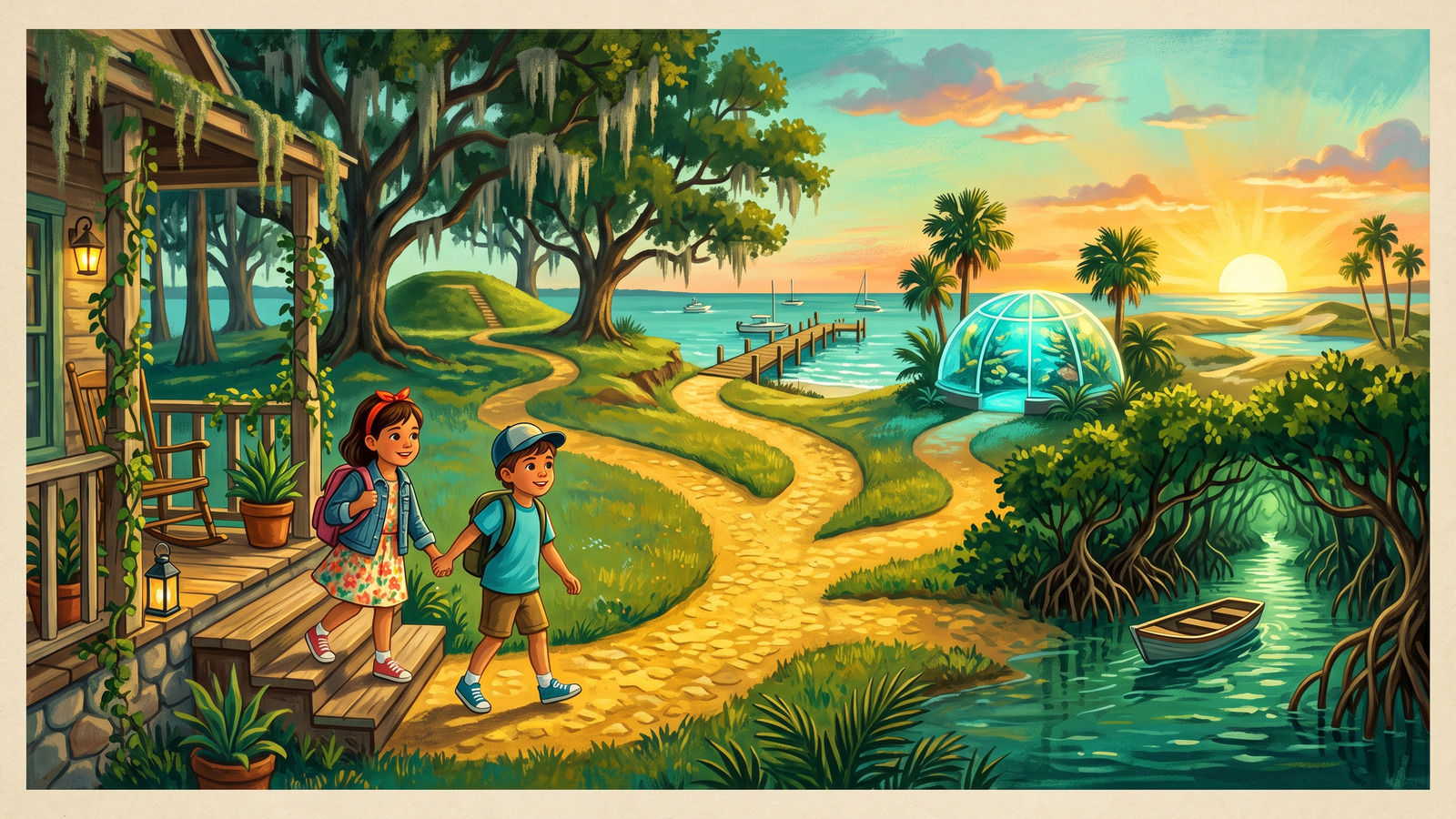
Every August, in kitchens from Wesley Chapel to Gulfport, a parent stares at a stack of curriculum catalogs and asks the question this article exists to answer: we live in a place where the manatees have their own speed limits and the history is walkable, so why does homeschooling here feel like it requires a law degree and a travel agent? It doesn't. Tampa Bay is quietly one of the best homeschool regions in America: the legal requirements are lighter than the rumors, the community is enormous, and the field trip infrastructure would make a private school jealous. This is the cornerstone guide: the law in plain English, the community map, and the free curriculum the bay has been publishing all along.
What does Florida actually require?
Gently, because the paperwork anxiety is the number one reason families stall: the district lane asks for three things. The notice of intent: a short letter or form to your county school district's home education office (Hillsborough, Pinellas, Pasco, and Manatee each have one) within 30 days of beginning, filed once, not annually. The portfolio: a log of educational activities and samples of your child's work, kept for two years: a three-ring binder or a box of nature journals and math pages satisfies it, and it stays home unless the district asks to see it with notice. The annual evaluation: filed each year, with five routes: a portfolio review by any Florida-certified teacher you choose (the most common), a nationally normed test, a state assessment, a psychologist's evaluation, or another method agreed with the district. That's the whole machine. No required curriculum, no minimum hours, no teaching certificate: the state asks that instruction be sequential and appropriate to the child, and trusts you with the rest.
The umbrella school lane trades that machine for private school enrollment: the school reports attendance, you skip the notice, portfolio, and evaluation. The PEP lane adds money: several thousand dollars a year in scholarship funds for curriculum, classes, and tutoring, with its own learning plan and annual testing through the scholarship organization. Families argue the lanes at every park day; the real answer is that all three produce the same Tuesday at Weedon Island.
| The lane | The paperwork | Best for |
|---|---|---|
| District home ed | Notice once, portfolio, annual evaluation | Maximum independence, minimum cost |
| Umbrella school | The school's attendance reporting | Families who'd rather not deal with the district |
| PEP scholarship | Learning plan + testing via the program | Families who want the funding and accept its rules |
Where the community already meets
The co-op landscape here is deep enough that the search is really a matching problem: church-based co-ops (weekly class days, mom-taught, from preschool through high school labs), secular and eclectic co-ops (same structure, different flavor), drop-off academies (one to three days weekly, closer to school-lite), and the informal layer that carries most families: park days, beach days, and field trip groups organized in local Facebook and co-op networks. The Florida Parent Educators Association (FPEA) runs the statewide backbone (conference, legal guidance, support group directory), and both counties' 4-H, scouts, and coastal clubs supply the activity layer no co-op has to. The finding method that works: attend two park days before you commit to any class day. Co-ops are cultures: the park day is where you learn which one is yours.
The free curriculum the bay publishes
Here's the local advantage, stated plainly: Tampa Bay families are surrounded by institutions that teach for free or nearly so, and a homeschool schedule is the only schedule loose enough to use them all. The library card alone carries storytimes, maker labs, summer reading, and the museum pass programs that turn admission fees into reservations. The museum homeschool days run weekday classes at student prices. The state parks hand out junior ranger badges like a parallel diploma. And this site's whole catalog was built to be a field trip curriculum: the wildlife articles are science units, the Old Florida stories are history units, and every Little Naturalist activity was written to go straight into the portfolio binder. The bay is the textbook; you're holding the index.
The Little Naturalist activity
Found your school properly: have the kids name it (real registered homeschools have names, and the naming meeting is a rite), design the crest (one animal from the state symbols roster, one local landmark, one family motto), and write the one-sentence mission on the binder's first page. It sounds like play; it functions like governance. A child who attends The Mangrove Academy of the Palms takes the tide chart lesson more seriously than a child who's vaguely not in school, and the crest on the portfolio cover has charmed more than one evaluating teacher.
Questions families ask
Is the portfolio inspection something to worry about?
Districts may ask to review a portfolio with written notice, and in practice it's rare and procedural. The binder you'd keep anyway (log, work samples, journal pages, photos of projects) is the binder that satisfies it. Keep it as you go rather than reconstructing in May: future you sends thanks.
Can we start mid-year, or switch lanes mid-year?
You can begin home education any day of the year: the 30-day notice clock starts when you start. Lane switches (umbrella to district, district to PEP) happen at natural boundaries with each program's paperwork: do the reading before unenrolling from anything, and keep records across the seam.
What about high school, transcripts, and college?
Florida homeschoolers go to college every year on parent-made transcripts, dual enrollment (free college courses in high school, open to home ed students), and the same tests everyone takes. Bright Futures and university admissions both have established home ed paths. It's a solved problem: the families three years ahead of you at co-op have the templates.
What does homeschooling actually cost here?
The honest range is enormous: a library card, a state parks pass, and used books run one family's whole year; another family's co-op plus classes plus curriculum rivals a car payment. The regional advantage is that the free layer here is thick enough to be the whole diet: which is exactly what the PEP families spend their scholarship dollars supplementing.
Questions families ask
What does Florida legally require to homeschool?
For a district home education program: a one-time notice of intent to your county's home education office within 30 days of starting, a portfolio (a simple log of activities plus samples of work, kept two years), and an annual evaluation filed with the district. Florida offers five evaluation routes, and the most common is a portfolio review by any Florida-certified teacher you choose.
What is an umbrella school and do I need one?
A private school that enrolls home educators: you follow its attendance reporting instead of the district's notice, portfolio, and evaluation rules. Some families prefer the paperwork trade, some prefer the district lane's independence. Neither is better: they're two doors into the same house.
What is Florida's PEP scholarship for homeschoolers?
The Personalized Education Program: an education savings account through the state's scholarship organizations for students not enrolled full time in public or private school, open regardless of income, with amounts set annually by the Legislature. It funds curriculum, classes, tutoring, and more, and it runs on its own learning-plan and testing rules rather than the district home ed lane. One lane per student per year.
Do homeschooled kids in Tampa Bay get enough social time?
The honest local answer: the calendar problem runs the other direction. Between co-ops, park days, museum homeschool classes, 4-H, scouts, library programs, and the beach itself, most Tampa Bay homeschool families end up defending their empty days, not filling them.
Sources
More from the Bae
 Learn
LearnFree Museum Days and Library Passes Around Tampa Bay: The Family Calendar
Free museum access around Tampa Bay: Hillsborough's Discovery Pass, the Pinellas library museum pass program, community free days, and the family system.
 Learn
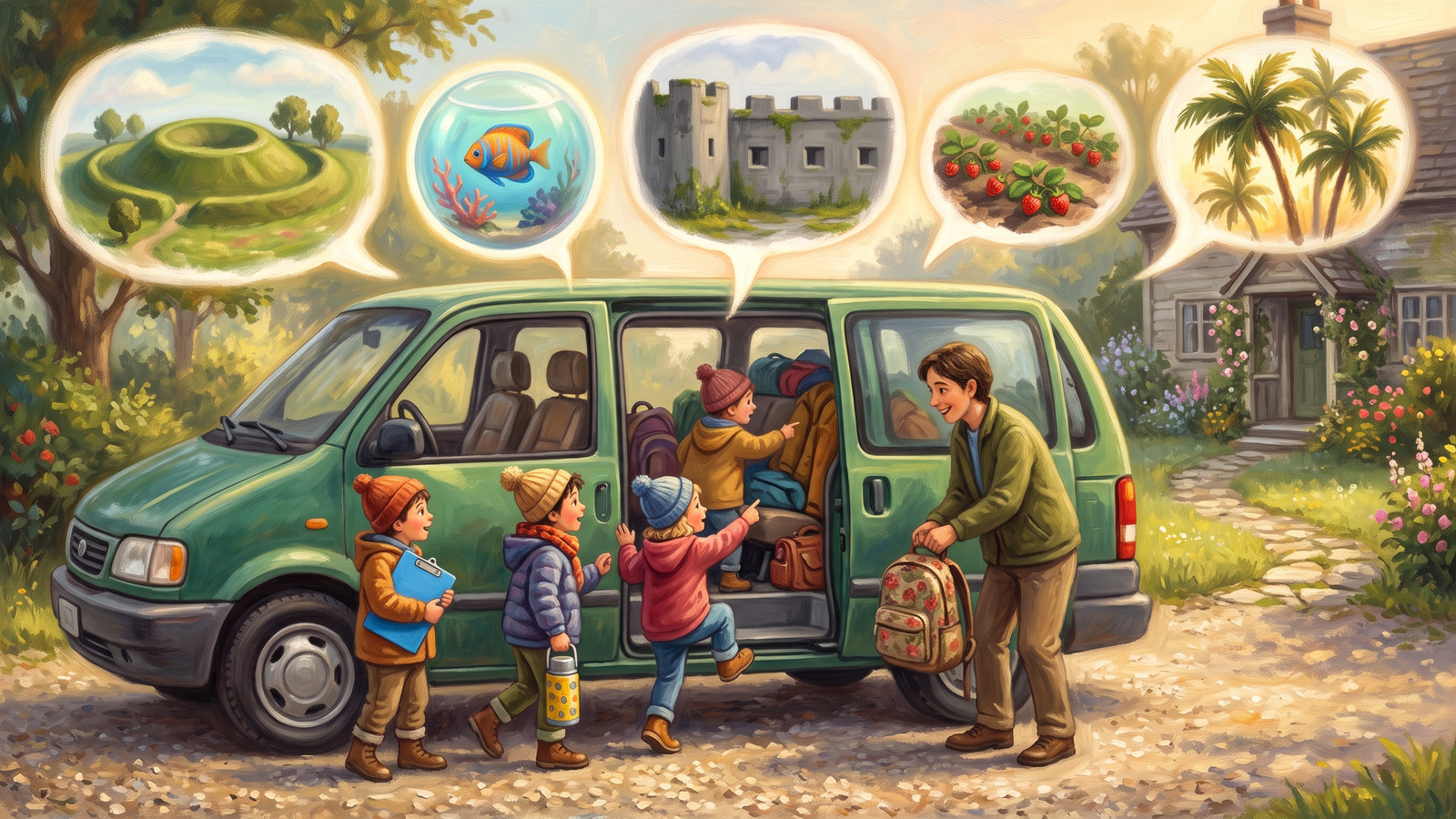
LearnField Trips That Teach Themselves: 15 Tampa Bay Outings Mapped to What Kids Learn
Fifteen Tampa Bay field trips mapped to what kids learn, plus the before-during-after method that turns a fun outing into a lesson that sticks.
 Learn
LearnHomeschool Days at Museums and Parks: The Discount Calendar Nobody Compiles (Until Now)
Homeschool days around Tampa Bay: MOSI SEED, Florida Aquarium classes, museum discount days, and the calendar system that catches them all.