Citizen Science for Families: Five Real Projects Kids Can Join This Month
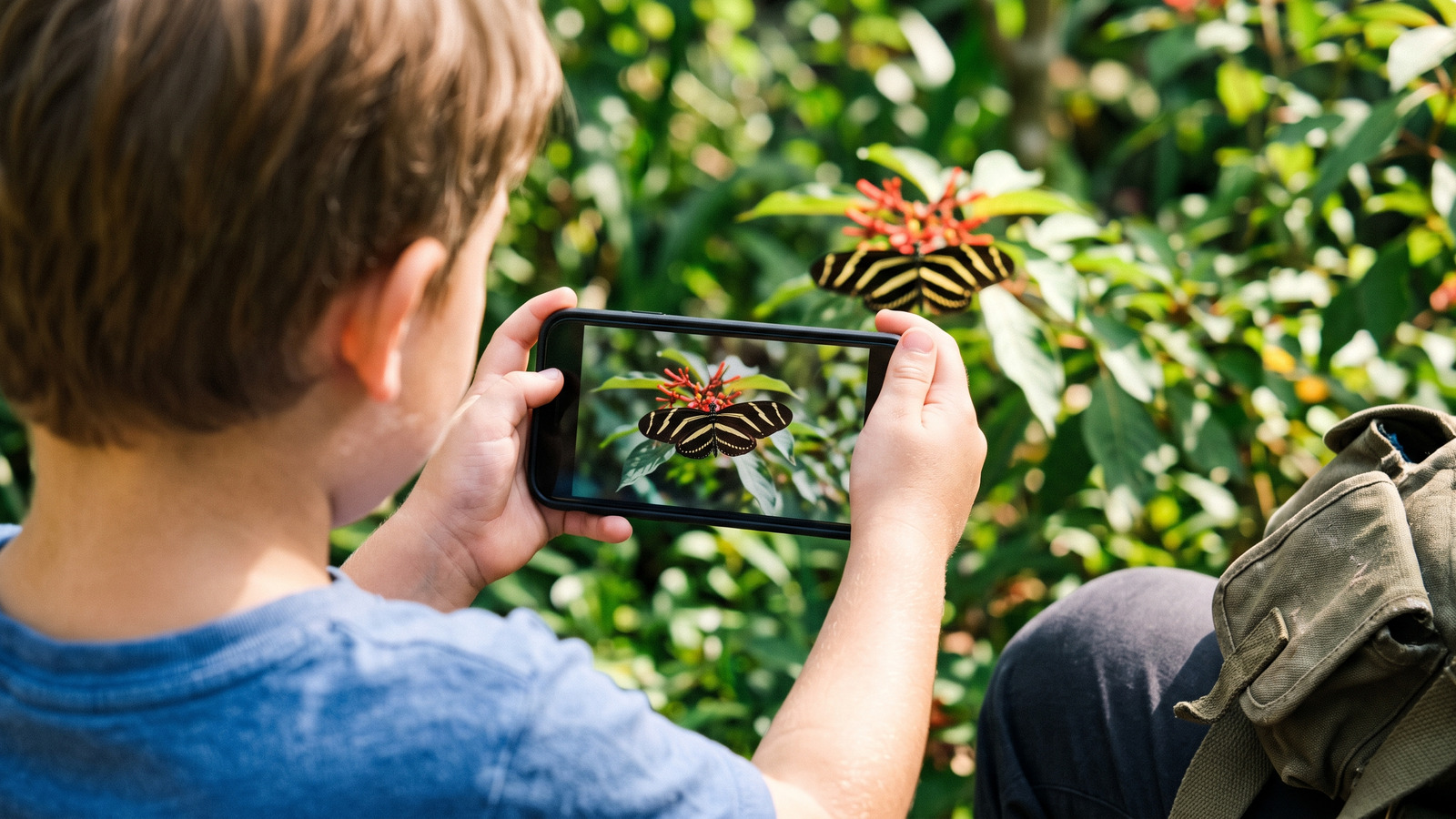
At some point this year, a scientist studying bird populations will run an analysis whose data includes fifteen minutes of counting done by a seven-year-old on a porch in Largo, and neither of them will ever know the other's name. That's citizen science: the quiet arrangement by which real research borrows a million amateur eyes, and the best-kept educational secret in the family calendar. Kids can smell fake work from across a room (the worksheet posing as a mission, the "experiment" with a predetermined ending), and citizen science is the antidote: the count is real, the dataset is real, and the child's tally line rides into the same records as the retired ornithologist's up the street. Here are the five projects this coast runs best, and how a family joins by the weekend.
The five, in calendar order
| The project | The window | The family's job |
|---|---|---|
| Christmas Bird Count | Dec 14 to Jan 5 | Join a local circle's team day: the full guide |
| Great Backyard Bird Count | Four days, mid-February | 15+ minutes of counting anywhere; submit online |
| FeederWatch | November through April | Recurring two-day counts at your own feeder |
| Horseshoe crab survey | Spring and fall, new and full moons | Report beach sightings to FWC's survey |
| City Nature Challenge | Late April | Log every living thing on iNaturalist for the region's tally |
The starter ranking: begin with the Great Backyard Bird Count (fifteen minutes, any porch, mid-February: the lowest bar in all of science), graduate to FeederWatch when the family wants a season-long thread, and treat the Christmas count as the varsity trip: real birders, assigned territory, a child welcomed onto a team that's been running since before the causeways existed. The horseshoe crab survey is the beach family's specialty (your full-moon walk was already the survey; now it files a report), and the City Nature Challenge is pure family sport: a weekend where the region competes on species logged, and the kid who photographs a lizard is scoring for Tampa Bay.
Why real data changes the child
The pedagogy deserves one plain paragraph: a child who counts birds for a worksheet learns counting; a child who counts for Cornell learns that they are the kind of person whose observations matter. That identity shift is the project's real product. The protocols teach honest habits no lecture manages (count only what you're sure of, record effort and conditions, resist the wish for a better number: the journal header discipline, now with stakes), and the feedback loop closes visibly: FeederWatch publishes maps the family's dots live in, iNaturalist observations get confirmed by strangers who know their skinks, and the Christmas count's local circle publishes totals the family can find their species in. Science stops being a subject and becomes a thing the family does on Saturdays: which was this whole site's thesis, formalized with a submit button.
Running it without wrecking the walk
The failure mode is over-instrumenting: a beach morning that becomes data entry teaches resentment, not science. The working shape: one project active per season, the count window ritualized (FeederWatch's two days get the good breakfast; the February count gets the porch blanket ceremony), phones used as instruments, not destinations (photograph, log, pocket: the screen-free doctrine holds even here), and the child's role scaled by age: littles spot, middles tally, teens run the submissions and own the accounts. And keep the amateur's privilege front and center: you are allowed to skip a window, botch a count, and try again next season. The dataset forgives; that's what the thousands of other households are for.
The Little Naturalist activity
Build the family life list: one page (or the journal's back section) where every species the family has ever positively identified gets a line: name, date, place, who spotted it first. Bird count weekends feed it, tide pool censuses feed it, the backyard feeder feeds it daily. Read the total aloud each New Year's. Families who keep the list report the same curve: it crosses one hundred faster than anyone believes, and somewhere past that, the children stop asking what a thing is and start asking whether it's new: the collector's flip that every naturalist remembers as the beginning.
Questions families ask
Do we need to identify species perfectly to participate?
No: count what you're sure of and skip what you're not (the honest zero is data too), and iNaturalist was built for uncertainty: post the photo, the community refines the ID. The counts have absorbed beginner error for decades; the protocols expect you.
Which apps do we actually need?
Merlin for bird ID (its sound ID feature is the birding-with-kids cheat code), iNaturalist for everything living, and the count-specific portals for submissions. All free; all run fine on one parent phone.
Is there citizen science for the water-obsessed kid?
The horseshoe crab survey is the gateway, shorebird stewarding takes older kids and teens, and the conservation programs article maps the volunteer tier: cleanup data, seagrass programs, and the bay's monitoring efforts where families plug in as they grow.
What does it cost?
Nothing but attention: every project here is free, the instruments are a phone and the three-dollar notebook, and the feeder count runs on the feeder you have. Citizen science is the rare family activity whose entire budget is showing up.
Questions families ask
What is citizen science for kids?
Real research projects that accept observations from the public: bird counts, species surveys, photo-logged sightings. The data goes into working datasets scientists actually use, which is the whole difference from a worksheet: the child's count matters to someone beyond the kitchen.
What citizen science can Tampa Bay families do?
Five anchors: the Great Backyard Bird Count each February, Project FeederWatch November through April, Florida's horseshoe crab sighting survey around spring and fall new and full moons, the City Nature Challenge each spring on iNaturalist, and the Christmas Bird Count from December 14 to January 5.
What is iNaturalist and is it kid-friendly?
A free app where photos of any living thing become logged, identifiable observations: the community confirms species, and research projects harvest the data. Run it on a parent's account for young kids: it's the year-round default when no organized count is running.
Do kids' observations really get used by scientists?
Yes: Cornell's bird counts, FWC's horseshoe crab survey, and iNaturalist's research-grade records all feed published science and management decisions. Kids' counts enter the same datasets as everyone's, which children find quietly thrilling.
Sources
More from the Bae
 Learn
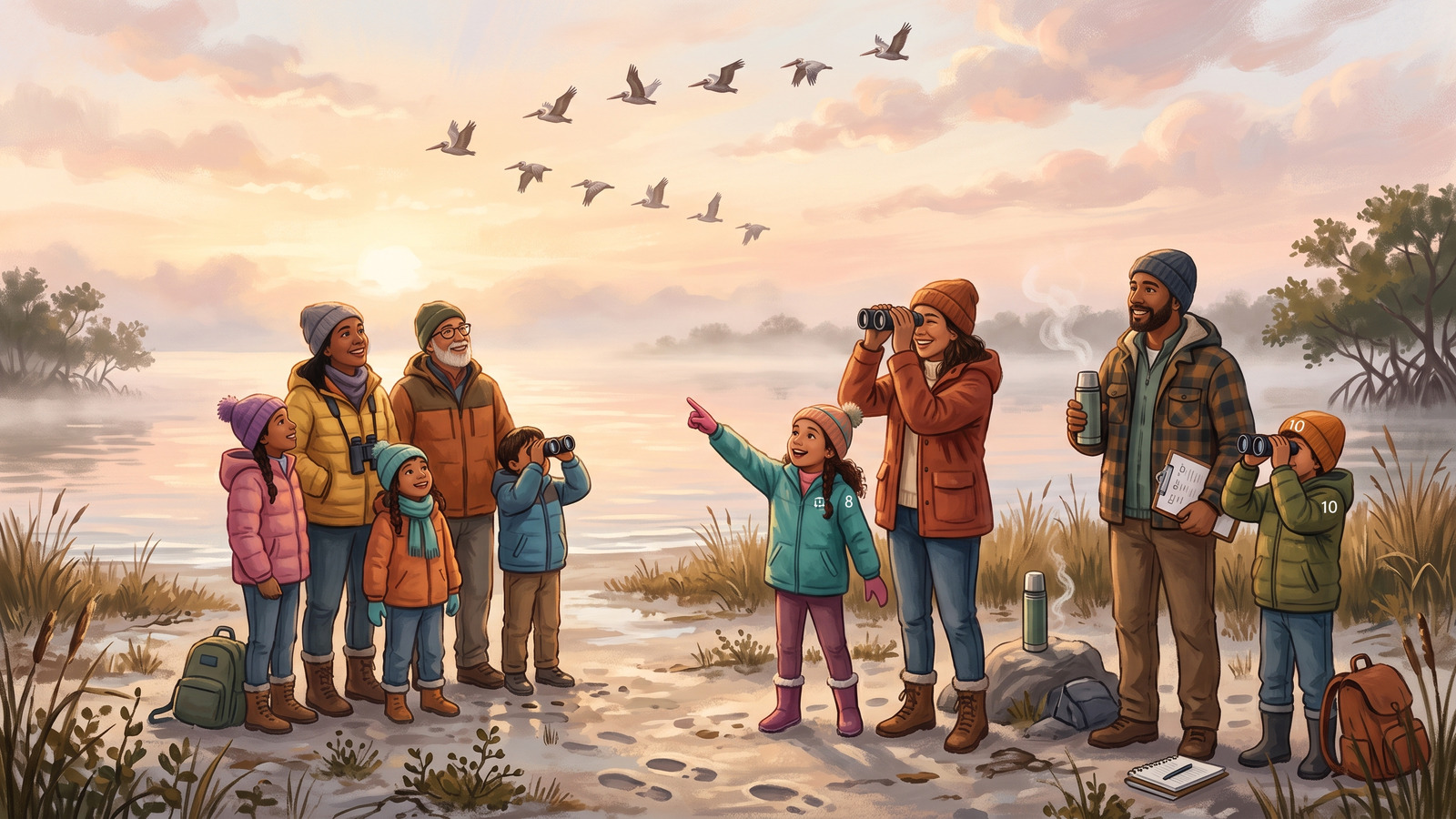
LearnThe Christmas Bird Count: How Your Family Can Join Science's Longest-Running Tradition
The Audubon Christmas Bird Count runs December 14 to January 5. How Tampa Bay families join the 127-year-old tradition, even from the breakfast table.
 Learn
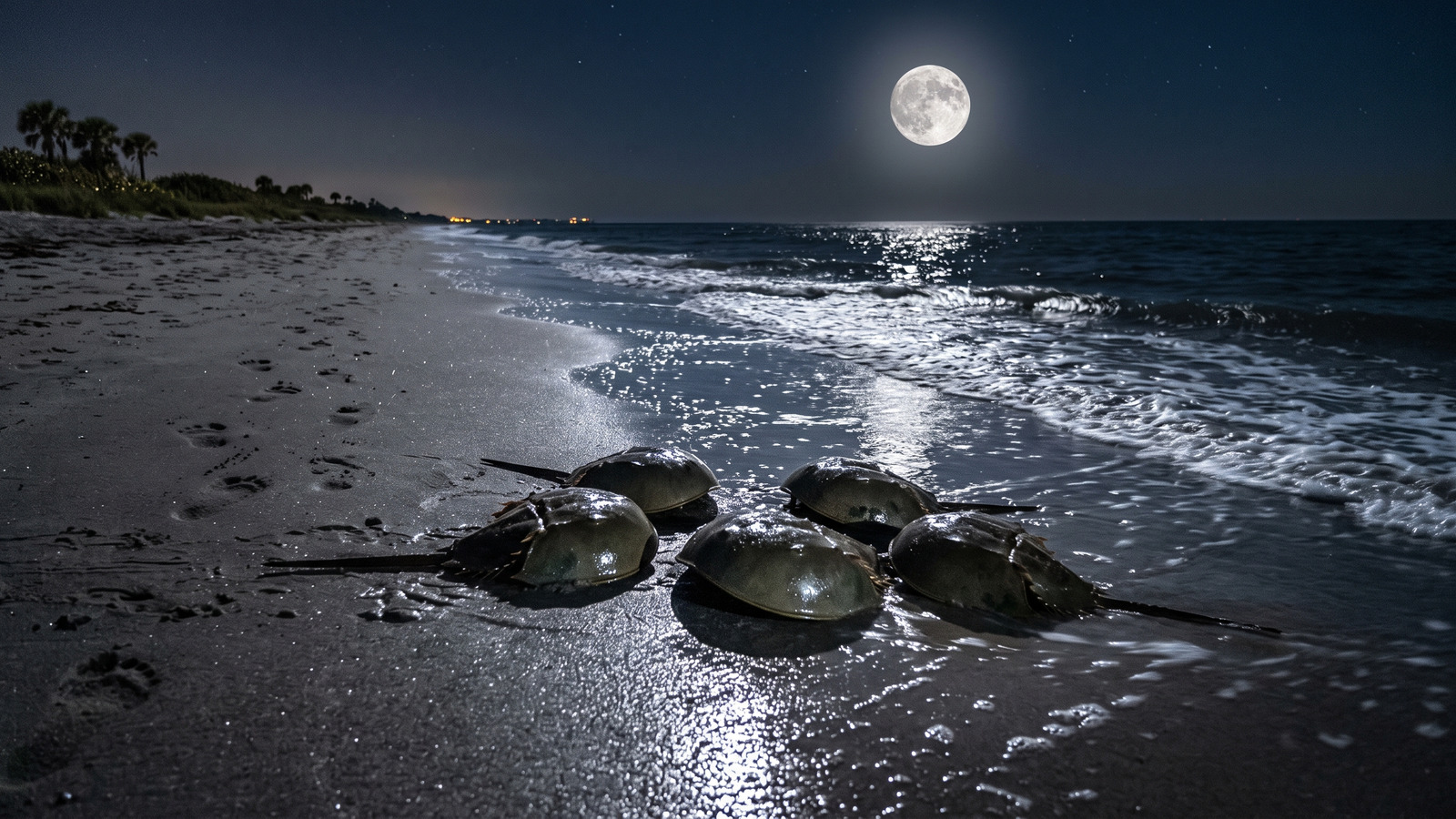
LearnHorseshoe Crabs: Living Fossils on Our Sand, and How Your Family Can Count Them for Science
Horseshoe crabs are 445 million years old, have ten eyes and blue blood, and FWC wants your family's sightings. Where to find them around Tampa Bay.
 Learn
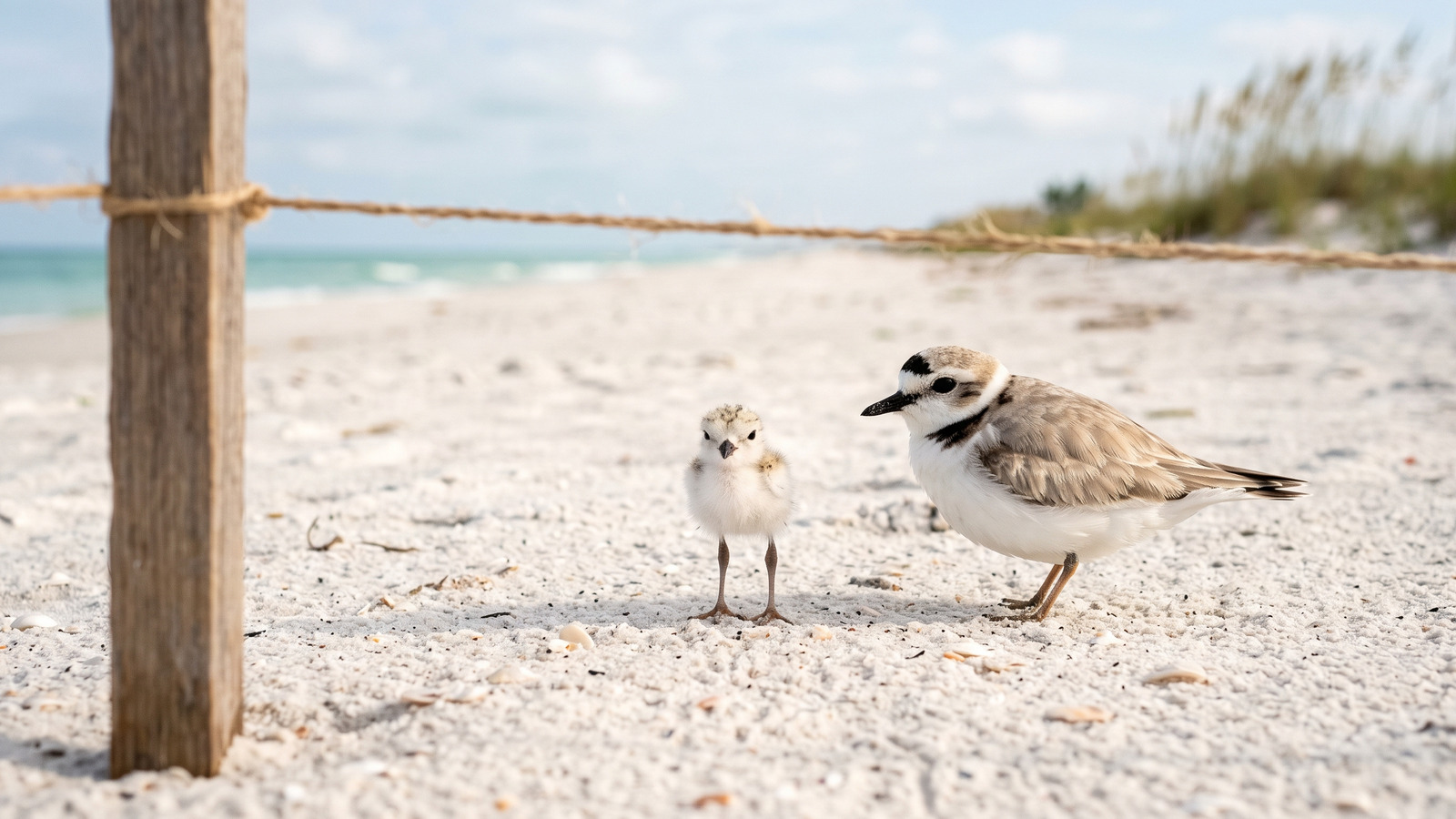
LearnBaby Shorebirds on Our Beaches: What the Roped-Off Areas Protect, and How to Teach the Why
Those roped-off beach areas protect eggs and chicks you can't see: skimmers, terns, and plovers nesting February 15 to August 31 on Tampa Bay sand.