The Manatee Season Weekend: TECO Viewing Center, Springs, and Hot Chocolate
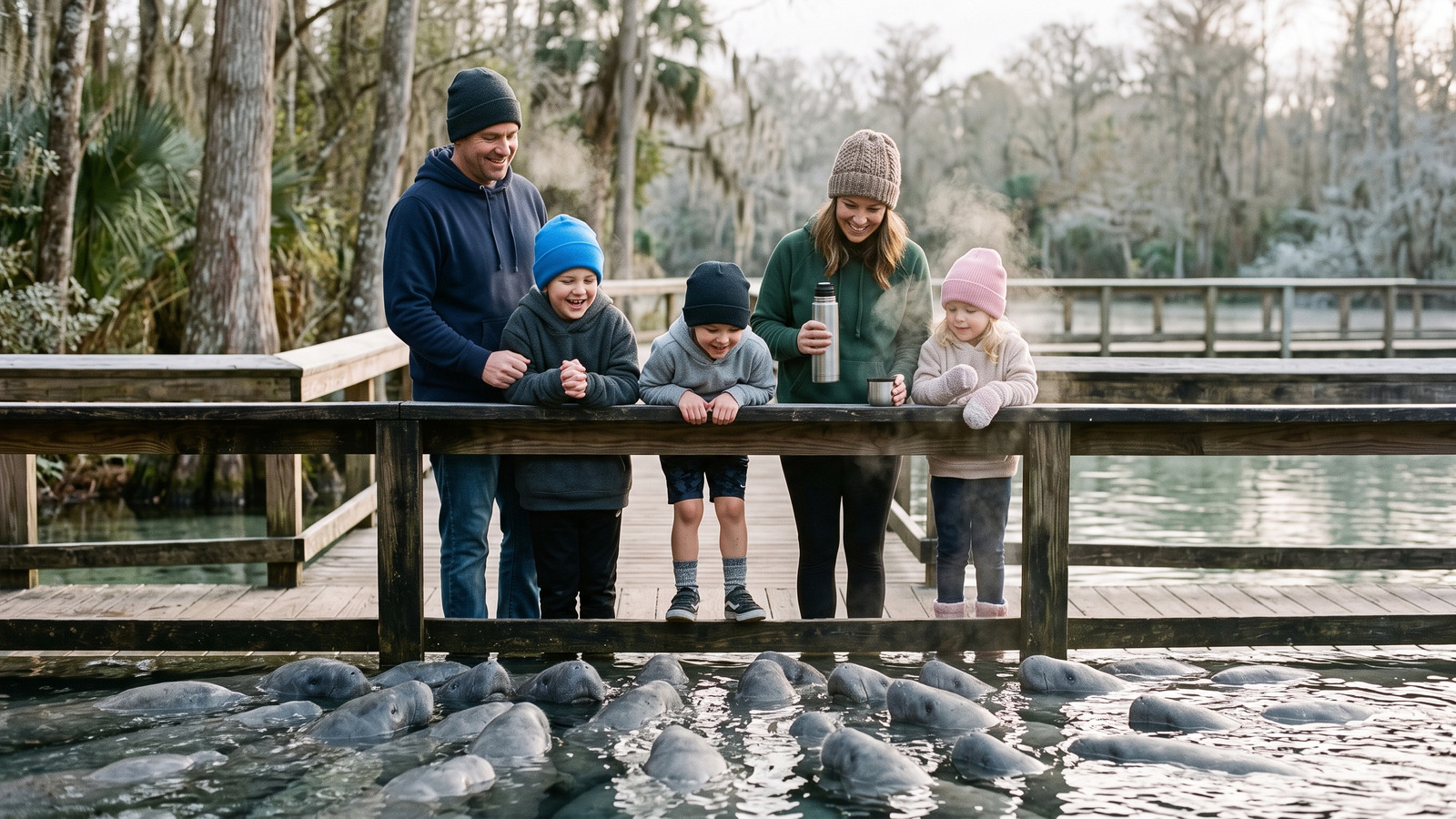
Somewhere around the first week of November, Tampa Bay's most reliable winter forecast comes true: the gulf cools, and several hundred sea cows commute to a power plant. It remains the strangest beautiful thing this region does: an industrial outflow canal in Apollo Beach becomes, every cold snap, one of the largest manatee gatherings on earth, and the electric company built a free boardwalk so families could watch. Manatee season is the coast's winter holiday, it runs November through mid-April, and the well-planned version (cold front tracked, thermos packed, springs weekend booked for the sequel) is the best cheap tradition a Tampa Bay family can own. Here's the whole season, planned.
Reading the cold for maximum manatee
The season's craft is meteorological: manatees can't tolerate sustained cold (below the upper 60s, they physiologically must find warm water: the whole winter story your family knows), so the aggregation tracks the gulf temperature, not the calendar. The pattern to play: a real front passes (the north-wind morning, the region's collective sigh), the gulf drops over a day or two, and the outflow fills: the second and third mornings after a front are the classic peak, and a long warm spell empties the canal as the animals disperse to feed. So the family method is watch-then-go: keep the trip unbooked, watch the ten-day forecast for the front, and strike the cold snap at opening bell. January and February fronts produce the legendary mornings (water crowded with backs, breaths puffing in the cool air, the boardwalk's whole railing lined with delighted kids), and the manatee-zone lessons hit different when the reason is floating right there in visible hundreds.
The visit, run right
| The stop | The move |
|---|---|
| Tidal walk boardwalk | First, at opening: the 900-foot accessible loop over the outflow |
| The counting ritual | Kids tally backs, calves, and propeller-scar IDs: journal page standing |
| Ray touch tank | The cownose rays: two-finger touch, the stingray-shuffle science live |
| Education building | The skeleton, the lessons: warm-up stop, literally |
| Observation tower | 50 feet up: Tampa Bay panorama, the estuary map from above |
| Habitat trails | The 0.8-mile coastal loop if legs remain |
| The thermos | Hot chocolate on the boardwalk: the tradition that makes it winter |
Logistics worth their line: it's free but not empty (cold-snap weekends draw crowds by late morning: opening arrival is the whole trick), the site is stroller and wheelchair friendly on the boardwalk (access notes apply kindly here), and the café plus picnic options mean the morning stretches to lunch without a fight.
The springs sequel and the season's arc
TECO is chapter two of the manatee's winter story; the original chapter runs north: the springs country of Crystal River and Homosassa, where 72-degree spring water has sheltered wintering manatees since before Florida had names, and where the one-tank weekend puts your family underwater-adjacent with the species at Homosassa's observatory or on a guided, manners-first Crystal River tour. The full season arc this cluster recommends: November the TECO opener (the season's ribbon-cutting, item nine on the fall list), deep winter the cold-snap strikes and the springs weekend, March the zone-season awareness as animals begin dispersing, and April 15 the closing day, with the family's tally page totaled. Kids who ride the whole arc own the region's conservation flagship as a lived season, not a mascot: which is exactly the adopt-a-manatee posture this site has been building since article three.
The Little Naturalist activity
Run the scar-book study, gently: manatee researchers identify individuals by propeller-scar patterns, and the boardwalk is close enough that kids can do the same: sketch two or three distinctive backs in the journal (the white arcs, the notched tails), name them (tradition demands), and look for them on the return visit after the next front. The activity teaches real methodology (individual ID by natural marks: the same trick used on dolphin fins), and it carries the season's honest lesson at kid scale: those scars are boat lessons written on animals, which is why the slow zones your family honors exist. Wonder first, then the why: the order this whole site runs on.
Questions families ask
What if we visit and the manatees are elsewhere?
Warm-spell visits happen: the rays, tower, trails, and education building still carry the morning, and the lesson is honest ecology (warm gulf means the animals are out feeding: good news wearing a disappointment costume). Check the forecast next front and return: the free admission makes re-strikes painless, which is the center's quiet genius.
Is TECO worth it for teens who've "seen manatees"?
Reframe it as the count: hand the teen the scar-ID project, the camera, and the question of how many individuals they can distinguish, and the boardwalk becomes fieldwork. The tower and the estuary story hold the older audience; the hot chocolate holds everyone.
How does this connect to the swim-with-manatees tours?
Those run north in Crystal River: the only place in the country with a legal, regulated in-water manatee program, manners-first and passive-observation by rule. TECO is watch-from-above; Crystal River is float-among, guided: the pairing across one winter is the complete manatee education, and this site's tour-choosing standards apply to picking the operator.
What should we teach before the first visit?
The manatee article's short version: why warm water matters, what the scars mean, and the season's one family pledge (slow boats, clean ramps, zone respect). Kids who arrive knowing the why treat the boardwalk like a reunion, not a zoo: which is the difference this whole curriculum exists to make.
Questions families ask
When is manatee season at the TECO viewing center?
November 1 through April 15, daily 10 to 5 (trails close at 4), closed Thanksgiving, Christmas, and Easter. Admission and parking are free, and the colder the snap, the better the viewing: manatees crowd the power plant's warm outflow when the gulf chills.
What's at the TECO Manatee Viewing Center besides manatees?
A real half-day: the 900-foot accessible boardwalk over the outflow, an education building, nearly a mile of habitat trails, a 50-foot observation tower with Tampa Bay views, a cownose ray touch tank, and a café. It's the region's best free family attraction, full stop.
What's the best cold-weather manatee plan?
Watch the forecast, not the calendar: the two or three days after a real cold front are peak aggregation. Arrive at opening, boardwalk first while the crowds are thin, then rays, tower, and trails: and bring the thermos, because the hot chocolate on a chilly boardwalk is the tradition.
TECO versus the springs: which manatee trip is better?
Different chapters of one story: TECO shows the modern truce (manatees wintering at a power plant's warm water), the springs show the ancient original (72-degree spring water that drew them first). The full manatee season does both: TECO on the cold snap, the springs run as the one-tank weekend.
Sources
More from the Bae
 Learn
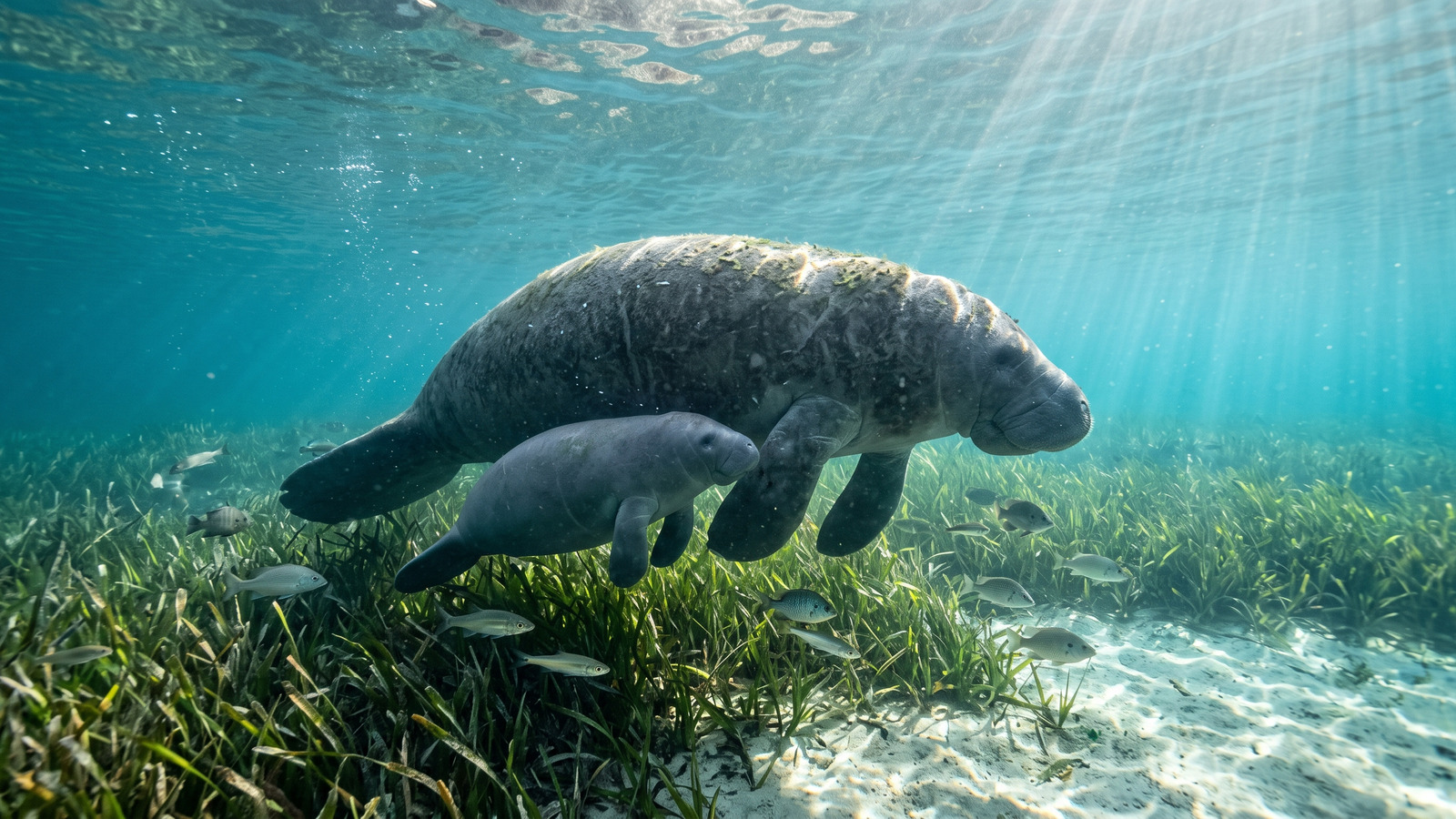
LearnManatees for Families: Where to See Them Near Tampa Bay and the Rules That Keep Them Safe
Where to see manatees near Tampa Bay: the free TECO Manatee Viewing Center opens November 1, plus the look-don't-touch rules families should know.
 Explore
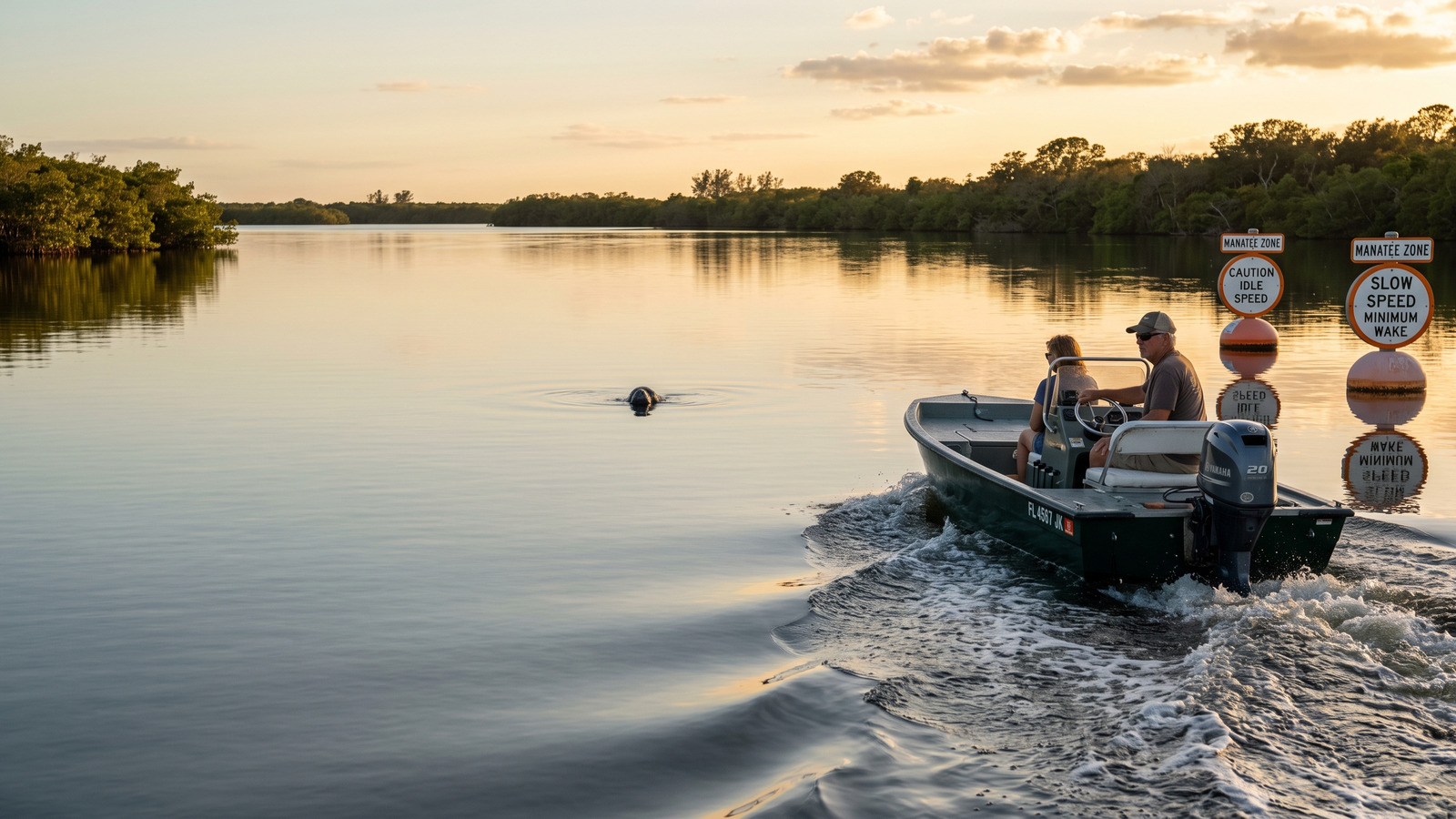
Manatee Zones and Slow Wakes: How Boating Families Protect the Gentle Giants
Manatee zones decoded for boating families: what the signs mean, the seasonal rules, and how to spot a manatee before your prop does.
 Explore
One-Tank Trips: Crystal River, Homosassa, and the Springs Worth the Drive
One-tank trips from Tampa Bay: Crystal River's manatees, Homosassa's wildlife park, Weeki Wachee mermaids, and the springs day worth the drive.