4-H, Scouts, and Coastal Clubs: Finding Your Child's People in Tampa Bay
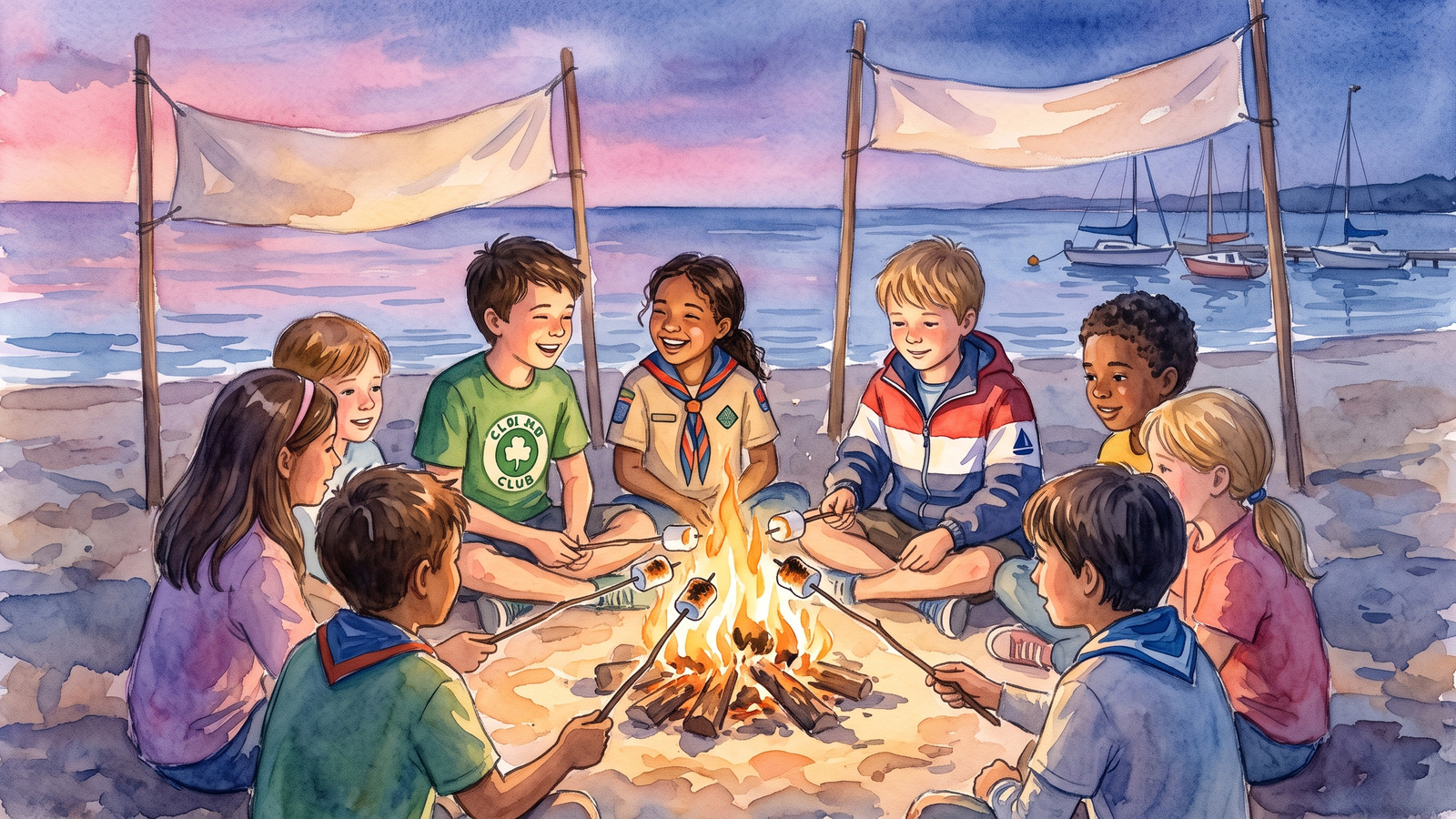
Every child eventually needs a room that isn't home and isn't school: a place with its own handshake, its own patch on the sleeve, and adults who volunteer their Tuesdays because they remember needing such a room themselves. Finding that room is one of parenting's quieter assignments, and Tampa Bay stocks three whole traditions of them: 4-H (older than it looks, less agricultural than you think), the scouting councils (two of them, both regional institutions), and the coastal specialty shelf (sailing, junior lifeguards, fishing clubs: the rooms where this coast teaches its native skills). September is when their doors all open at once. Here's the map, and the method for matching a kid to their people.
4-H: the university's youth program
The structure explains the substance: 4-H is run by the land-grant universities' extension service (UF/IFAS in both Hillsborough and Pinellas), which means its clubs are backed by actual scientists and its famous record-book habit (every member documents their year's project) is a research notebook wearing a green clover. Modern Tampa Bay clubs run marine and environmental science (the natural fit for this site's whole curriculum), robotics and STEM, photography, cooking, archery, and the classic animal projects for the families with the yard for it. The machinery: enroll through the county extension's 4-H office (4-H Online is the statewide portal), dues are minimal, Cloverbuds (5-7) do the sampler version, and the year runs September to summer with fairs and showcases where the record books and projects go public. The sleeper benefit every 4-H parent eventually testifies to: the public-speaking ladder. Demonstrations and presentations are built into the culture, and the twelve-year-old calmly explaining water quality to a judging panel learned it in a room you found through the extension office.
Scouts: two councils, one method
The scouting method (small units, earned ranks, outdoor practice, kid leadership with adult scaffolding) comes in two regional institutions: Scouting America's Greater Tampa Bay Area Council (Cub Scouts for the elementary years, Scouts BSA up through the Eagle trail, girls fully in the program since 2019) and Girl Scouts of West Central Florida (Daisies through Ambassadors, the cookie enterprise as the nation's largest girl-run business lesson). What both share here is a coastal accent the national brochures undersell: local units camp at Fort De Soto, paddle the preserves, earn the water-adjacent badges constantly, and staff the cleanup calendar reliably. Because units are neighborhood-based, the real variable is culture, not brand: visit two troops or packs and they'll feel like two different institutions. That's normal, and it's why the visit rule below is the whole method.
The coastal shelf: where the water skills live
| The club | The ages | The flavor |
|---|---|---|
| Youth sailing programs | ~7+ | Community sailing centers and clubs; the boat-day skills formalized |
| Junior lifeguard summers | ~9-16 | Gulf beach programs: rip literacy, rescue basics, fitness |
| Fishing clubs | All ages | Pier craft with mentors and tournaments |
| Swim teams | 5+ | The non-negotiable base layer, year-round |
| Paddle and surf groups | Varies | Seasonal, informal, skills-forward |
This is the tier that turns a Florida childhood into a Florida competence: sailing programs convert the family boat day into actual seamanship, junior lifeguard programs make the beach-flag lessons professional, and every one of them feeds the water confidence this site keeps calling the region's true diploma. Most run seasonally (summer intensives, school-year weekends), so they layer over a 4-H or scout year rather than replacing it.
The Little Naturalist activity
Before joining anything, run the volunteer interview: have your child ask one club leader three questions (why do you volunteer here, what did this club teach you as a kid or your favorite member ever, what does a great year look like) and journal the answers. The exercise flips the evaluation: instead of the club auditioning the child, the child studies the adults: and the answers are the actual data. A leader who lights up at question two is running a good room. A child who's interviewed three adults has also, incidentally, just done the scariest part of every scholarship and job application, at nine, with a notebook.
Questions families ask
What do these cost, honestly?
4-H runs lightest (minimal enrollment, project costs vary by project: a photography year costs a camera you have; a steer costs a steer). Scouting carries registration, uniform pieces, and camp fees, with councils running assistance programs nobody should hesitate to ask about. Coastal clubs range from modest (fishing clubs) to real line items (sailing seasons): ask about scholarships, which most programs quietly offer.
Can homeschoolers do all of this?
They're often the backbone: daytime 4-H project work, record books as portfolio entries, and scout advancement folding neatly into a homeschool year. Every organization here enrolls by age, not school.
My kid is shy. Which lane is gentlest?
Small-unit cultures with predictable structure: a Cloverbud circle or a small den, where the same six kids appear weekly. Skip the giant open-house nights for a shy starter: email the leader, arrive early to a regular meeting, let the room fill around them. And trust the one-season rule above: belonging is a slow chemistry.
Is there a club for the kid whose whole personality is sharks?
That kid is a 4-H marine science club's founding citizen, a future aquarium teen program member, and the family's designated iNaturalist administrator. Stack all three and stand back: the obsessive years are when the room matters most, because it's where they learn the obsession has colleagues.
Questions families ask
What is 4-H and is it only about farm animals?
4-H is the youth program of the universities' extension service (UF/IFAS locally), and the farm image is a century out of date: Tampa Bay clubs run marine science, robotics, photography, cooking, archery, and yes, some animals. Ages roughly 5 to 18, with 5-7s in Cloverbuds, enrolled through the county extension office at minimal cost.
What scouting options serve Tampa Bay?
Scouting America's Greater Tampa Bay Area Council runs Cub Scouts and Scouts BSA programs for boys and girls across the region, and Girl Scouts of West Central Florida runs the parallel tradition. Both organize by neighborhood units, so the real question is which nearby troop's culture fits your child.
What are coastal clubs for kids?
The specialty tier: youth sailing programs at community sailing centers and yacht clubs, junior lifeguard summer programs on the gulf beaches, fishing clubs, paddle and surf groups, and swim teams. They teach the water skills this coast runs on, usually seasonally.
How do we pick between 4-H, scouts, and clubs?
Visit before you commit: attend one meeting of each candidate (all three worlds welcome trial visits), watch whether the kids run the room or the adults do, and let your child pick the room. September is open-house season across all of them.
Sources
More from the Bae
 Explore
Fishing with Kids 101: Licenses, Piers, and the First-Catch Checklist
Fishing with kids around Tampa Bay: the free shoreline license, the under-16 exemption, licensed piers where nobody needs one, and the first-catch plan.
 Protect
Beach Cleanups with Kids: Where to Join One and How to Start Your Own
Beach cleanups with kids around Tampa Bay: Keep Pinellas Beautiful events, September's International Coastal Cleanup, and the DIY family kit.
 ExploreCornerstone
Your Family's First Boat Day on Tampa Bay: Rentals, Routes, and the Rules That Matter
Your family's first boat day on Tampa Bay: rental options and costs, the license rule, a calm first route, and the safety habits that make it easy.