
Slow Coastal Living with Kids: The Family Rhythm That Beats the Rush
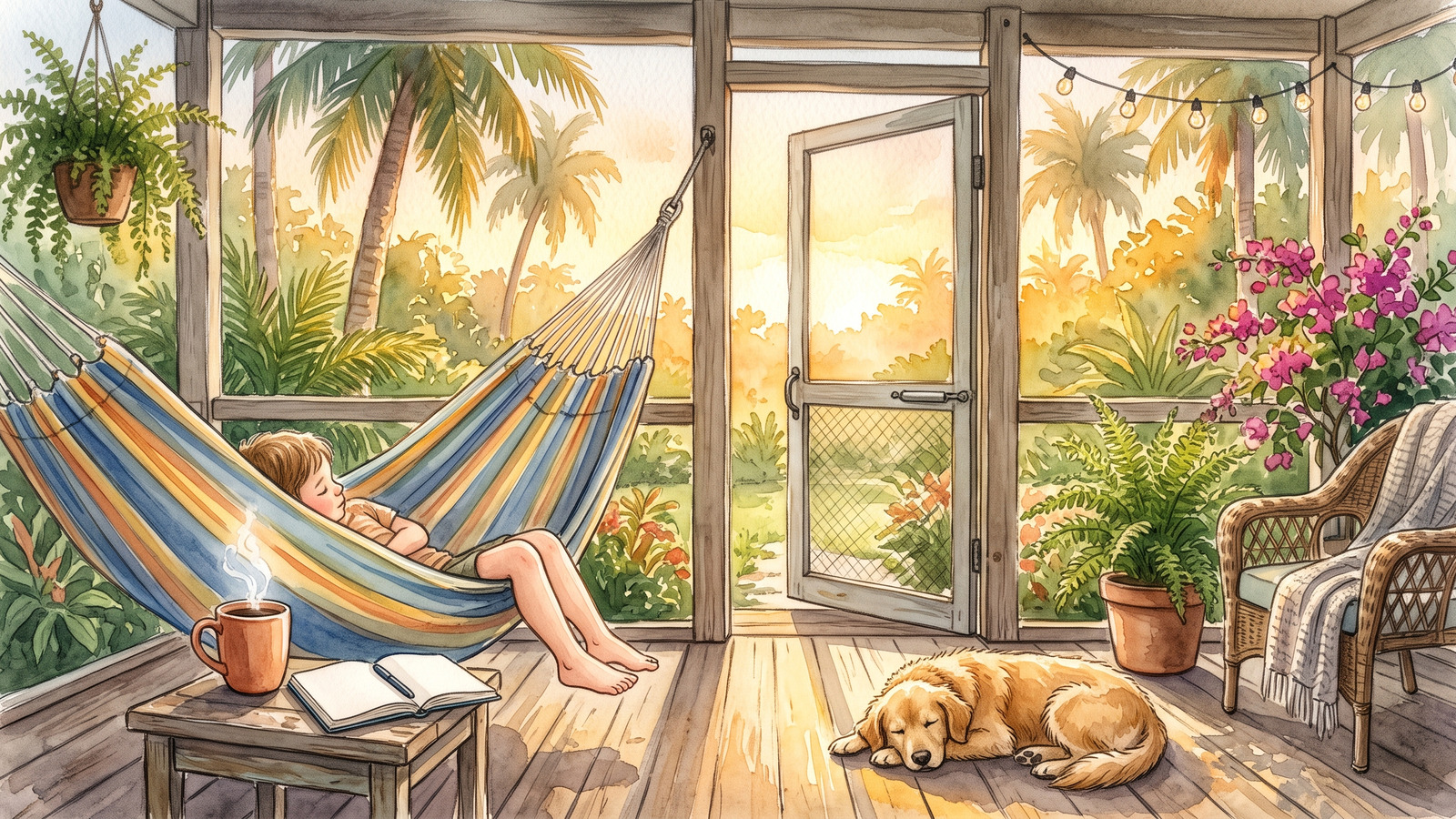
Somewhere between the third weekend activity and the fourth carpool, most modern families arrive at the same quiet suspicion: we are doing everything and experiencing almost none of it. The calendar is full, the photos are plentiful, and the days blur anyway. This article is the site's cornerstone answer, and it starts with a confession of geography: we live in a place that runs on a slower clock than the one in our pockets: the tide takes six hours whether you hurry or not, the sunset performs nightly at exactly its own pace, the manatee has never once checked a watch. Slow coastal living is the decision to let the family's rhythm match the coast's instead of the feed's. Here's the rhythm, and how to install it.
The case against the rush, briefly
The rushed family and the slow family often do the same number of things: the difference is presence per thing, and children are precision instruments for measuring it. Ask any kid their favorite day of a packed vacation and watch the answer skip every ticketed attraction to land on "the morning we stayed at the pool forever" or "when we found the horseshoe crab": children experience time by depth, not coverage, and every parent has felt the sting of engineering an expensive blur. The coast sides with the kids on this: its best offerings are pace-locked (shelling cannot be hurried, the minus tide reveals on its own schedule, the green flash attends only those who sat through the whole sunset), which makes this region a co-conspirator for any family trying to downshift. Slow living here isn't a retreat from the good stuff: it's the only speed at which the good stuff is visible.
The rituals that carry it
| The ritual | The shape | What it quietly does |
|---|---|---|
| The porch morning | Ten unhurried minutes before the day starts | The family meets before the world does |
| The evening walk | Same route, most nights, no phones | The day gets digested together |
| The beach Sunday | Weekly-ish, half-speed, gratitude built in | The week gets an anchor and an altar |
| The analog day | One screen-free day weekly | Attention gets rebuilt |
| The no-plans day | One a month, defended fiercely | The margin gets modeled |
| The tide-chart check | Sunday evening, five minutes | The coast sets the week's tempo |
Rituals beat resolutions because they run on rhythm, not decision: the family that walks every evening isn't choosing nightly (choosing is exhausting): they're just a family that walks. Start with one: the evening walk has the highest install rate: run it thirty days before judging, and let the others accrete seasonally. And note what the table's rituals share: they're all free, all outdoor-leaning, all conversation-shaped: the coast's whole quiet-spots and sunrise-mission inventory exists to host exactly this.
Subtraction: the hard move stated kindly
Every family that pulls this off names the same first step, and it's not additive: something got dropped. The audit is two questions per commitment: does anyone light up on the way there, and would anyone mourn it in a month? Two noes is a resignation letter. This is the tender part of slow living (activities carry guilt, grandparents' expectations, sunk costs), so hold the one-season rule in reverse: finish honorably, then release without speeches. What fills the space matters less than the space existing: boredom, as the analog doctrine taught, is the ignition system, and a Wednesday with nothing scheduled is where the fort economy, the journal habit, and the porch conversation actually live. Families report the same arithmetic every time: two commitments out, one ritual in, net calm enormous.
The Little Naturalist activity
Run the family pace audit, kid-administered: for one ordinary week, the kids log the family's actual tempo in the journal: meals eaten together versus in transit, evenings with margin versus scheduled, the number of times anyone said "hurry up" (tally marks: prepare for humility), and each person's best ten minutes of the week. Then hold the porch meeting: read the data, let everyone nominate one thing to drop and one ritual to try, and vote. The exercise makes children co-authors of the family's pace rather than passengers of it: and the "hurry up" tally, re-run each season, becomes the household's honest speedometer.
Questions families ask
Is this realistic for two-working-parent households?
It was designed by them: the rituals are deliberately short (ten-minute porch, twenty-minute walk) and deliberately daily-ish rather than daily (rhythm survives misses; streaks don't). The honest claim isn't more hours: it's that the same hours, ritualized and unhurried, produce a different family feeling by March.
What about kids who thrive on activity and competition?
Slow living caps the calendar, not the kid: the club-and-team lane stays open at whatever depth serves the child: the audit simply demands each commitment earn its evening. Many driven kids relax visibly when the family's baseline calms: the rituals are the recovery protocol their schedules were missing.
Doesn't this just romanticize being disorganized?
The opposite: margins take more planning than fullness (anyone can fill a Saturday; protecting an empty one against a culture of filling takes actual governance). The weekend planner, the tide check, and the cabinet card are organizational tools: slow is a structure, not a shrug.
Where does faith fit for families who practice one?
Naturally and quietly: the rhythm has a sabbath-shaped hole in it on purpose, and the beach Sunday traditions article next door offers the gentlest version: gratitude spoken at the water, rest taken seriously, wonder treated as worship-adjacent. Families of every stripe report the same finding: the pace itself is the spiritual practice: the rest is denomination.
Questions families ask
What is slow coastal living for families?
A family rhythm built on fewer, deeper things: one anchor a day instead of a packed schedule, standing rituals (the porch morning, the evening walk, the beach Sunday), margins left empty on purpose, and the coast's own clock: tides, sunsets, seasons: as the family's pacing device.
How do busy families actually slow down?
Subtract before you add: pick the two weekly commitments that give the least and let them go, install one unbreakable ritual in the space (most families start with the evening walk), and protect one no-plans weekend day a month. Slow living is a scheduling decision before it's a philosophy.
Why is Tampa Bay good for slow living with kids?
The infrastructure is free and five minutes away: sunset is a nightly event, beaches and boardwalk preserves reward unhurried visits, the tide chart hands you a natural calendar, and the region's best experiences: shelling, manatee watching, porch storms: literally cannot be rushed.
Does slow living mean doing less with the kids?
It means doing fewer things at full presence: one tide-pool morning where everyone touched the water beats three attractions viewed from a stroller at speed. Kids consistently remember the unhurried days: the pace was the gift, not the itinerary.
Sources
More from the Bae
 Learn
LearnScreen-Free Learning Days: A Week of Tampa Bay Plans That Don't Need a Tablet
A week of screen-free learning days around Tampa Bay: tide pools, library hauls, build days, and the boredom-first method that makes them work.
 Live Well
The Evening Walk: Why the Simplest Habit on the Coast Is the Best One
The family evening walk: why the coast's simplest habit beats screens, calms dinner-hour chaos, and quietly becomes everyone's favorite part of the day.
 Live Well
Grateful by the Gulf: Simple Family Traditions for Beach Sundays
Simple gratitude traditions for beach Sundays: the thankful walk, the sunset blessing, and gentle family rituals that fit the coast's rhythm.