Beach Cleanups with Kids: Where to Join One and How to Start Your Own
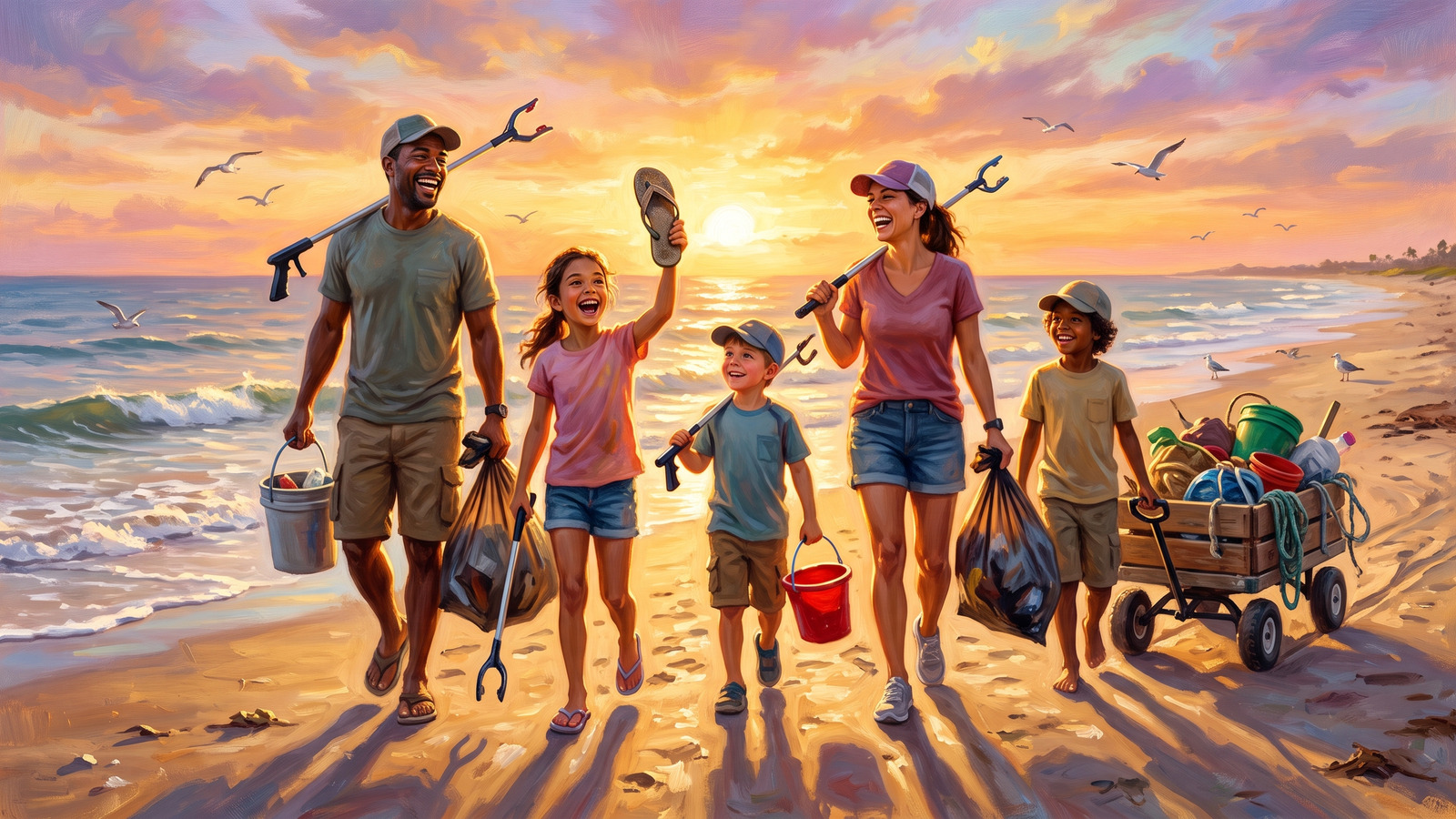
There's a moment at every family's first beach cleanup, usually about twenty minutes in, when a kid holds up something (a bottle cap, a fork, forty feet of tangled line) and says, with real indignation, "who DOES this?" That's the moment the whole thing pays for itself. You came for a tidy beach; you're leaving with a child who has switched teams permanently, from the people who don't notice to the people who do. Everything this site teaches about the coast eventually funnels here, to a bucket and a grabber on a Saturday morning.
The organized route: someone else brings the buckets
Organized events solve every beginner obstacle at once: supplies (bags, grabbers, gloves), a safe assigned zone, disposal handled, and a crowd that makes kids feel like part of a workforce rather than a chore. Keep Pinellas Beautiful maintains the region's steadiest calendar (monthly shoreline events, annual blitzes, and supplies for self-led groups), Tampa Bay Watch folds cleanups into its family volunteer programs, and beach cities post their own, often tied to holidays that generate the mess (the July 5th cleanup is a local institution and a sociology lesson in one).
Sign-up mechanics are kid-simple: register online, arrive sunscreened and closed-shoed, sign the waiver, collect gear, work your zone, weigh in. The weigh-in is secretly the best part for children: pounds collected is a score, and scores get repeated at dinner.
The big one: September's global roll call
The International Coastal Cleanup, run globally by Ocean Conservancy since the 1980s, is the event to build a family tradition on: one September Saturday, hundreds of thousands of volunteers on shorelines worldwide, all collecting and, crucially, counting. Locally it lands at sites across Pinellas, Hillsborough, and the beaches, with this year's date falling September 19 at many locations: close enough to the school year's start to become the family's official fall opener. Kids who participate are part of a dataset decades deep that has documented the rise of plastics, pushed packaging changes, and given cleanup-day tallies a second life as policy evidence.
The DIY version: the ten-minute sweep
No event on the calendar? The family cleanup kit lives in the beach bag: a bucket or reusable bag, two grabbers (the tool that converts reluctance into enthusiasm; children fight over grabbers), gloves, and hand sanitizer. The routine that sticks is the exit sweep: last ten minutes of any beach day, everyone works the towel radius outward, then one adult logs the count in Ocean Conservancy's free Clean Swell app, which feeds the same global database as the September event. Ten minutes, most visits, all season: a family running that routine clears more debris annually than most one-day volunteers, and their home beach starts showing it.
| The kid safety rules | The reason said plainly |
|---|---|
| Gloves or grabbers, always | Hands never touch mystery items |
| Closed shoes on debris duty | Glass hides in wrack lines |
| Sharp, medical, or dead things: adult calls | Kids flag it, grown-ups handle it |
| Heavy or half-buried: leave and report | Some finds are a hotline's job |
| Roped nesting areas: clean outside only | The nursery outranks the tidy-up |
| Wash up after, every time | Non-negotiable, snack-dependent |
Why the tally is the treasure
Here's the reframe that turns a chore into a science project: the most valuable thing your family collects is the count. What washes up, in what amounts, where, and when: multiplied by a million volunteers, that's the evidence behind bottle bills, balloon-release bans, and the slow redesign of packaging. Show older kids the annual "top ten items" lists (cigarette butts and plastic fragments duel for the crown most years) and let them predict your beach's list before the sweep, then check. Prediction, collection, data, comparison: it's the whole scientific method again, wearing gloves this time.
And close the loop the comeback story taught: cleanup is the visible end of a system. The bag your family fills was headed for a turtle's jellyfish-shaped mistake or an oyster's filter. Ten minutes on the sand is habitat defense, executed at the last line.
The Little Naturalist activity
Run the source detective game on one cleanup's haul (gloves on, adult supervising): sort finds into "dropped here," "washed in from the water," and "blew in from somewhere upstream," using clues: barnacles and algae mean sea time, freshness means today's crowd, straws and caps skew local. Then the hard question for the car ride: which pile can our family's habits actually shrink, and how? A kid who traces trash to its sources has completed the course; the grabber was just the enrollment fee.
Questions families ask
Do we need permission to clean a beach ourselves?
Public beaches, no: hauling out litter is welcome everywhere, with two cautions: stay outside posted nesting areas, and leave natural material (wrack, driftwood, shells with residents) in place per leave-it-better rules. For group events with tents and tables, cities appreciate a heads-up.
What do we do with fishing line we find?
It's the most dangerous common find (entanglement kills birds and manatees), so it gets VIP treatment: gather every strand, and deposit it in the tube-shaped monofilament recycling bins at most piers and ramps. Teaching kids to spot those bins converts them into line-hunters for life.
Are cleanups discouraging for kids, seeing so much trash?
Managed right, the opposite: kids alchemize indignation into agency fast, especially with a score (pounds, items, weirdest find) and a visible before-and-after. The framing that works: this beach has a staff now, and it's us.
What's the strangest stuff local cleanups actually find?
Beyond the cigarette-butt and bottle-cap economy: entire coolers, phones, dentures, and one legendary kitchen sink (every veteran coordinator has that story). The weird-find leaderboard is real cleanup culture, and your family's entry awaits.
Questions families ask
Where can families join a beach cleanup near Tampa Bay?
Keep Pinellas Beautiful runs a year-round calendar of cleanups with supplies provided, Tampa Bay Watch hosts family volunteer events, and cities from Treasure Island to Tampa post their own. The big one is September's International Coastal Cleanup, when sites across the region mobilize at once.
What is the International Coastal Cleanup?
The world's largest single-day volunteer effort for the ocean, held each September (the 2026 date falls on Saturday, September 19 for many local sites). Volunteers don't just collect trash; they tally it on data cards or the Clean Swell app, feeding a global database that has shaped real policy.
What age can kids start doing cleanups?
As soon as they can walk and grip: toddlers spot bottle caps at nose-height nobody else sees. The kid rules: gloves or grabbers always, closed shoes, adults handle anything sharp or mysterious, and everyone washes up after. Most organized events welcome all ages with a waiver.
Do beach cleanups actually make a difference?
Twice over. The trash removed stops entangling and starving wildlife immediately, and the data collected (what, how much, where) drives the bigger fixes: bans, bottle deposits, packaging changes. A family that tallies is doing science; the bag is just the visible half.
Sources
More from the Bae
 ProtectCornerstone
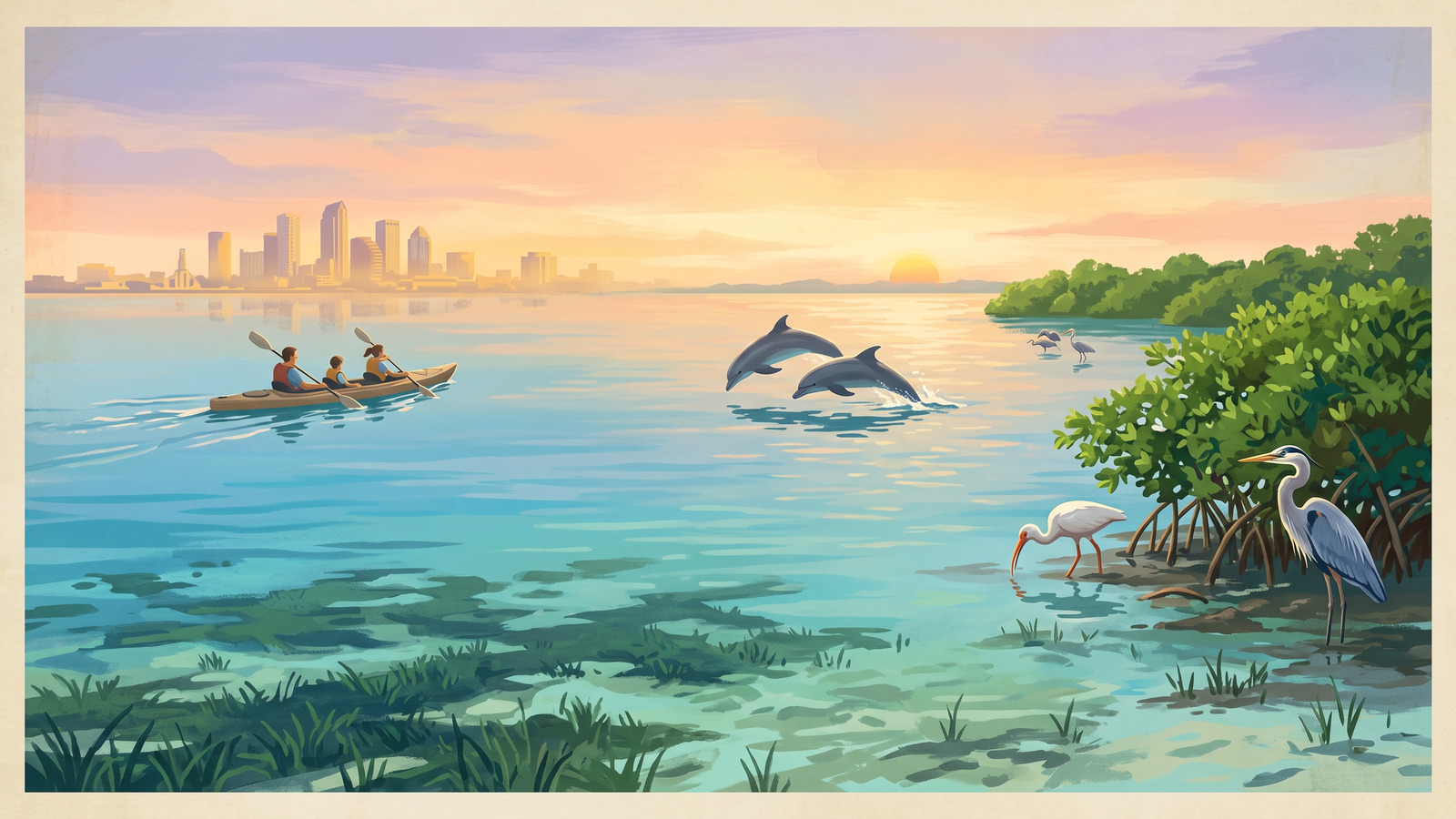
The Tampa Bay Comeback: How Our Bay Nearly Died and Came Back to Life
By the 1970s Tampa Bay was nearly dead: algae mats, empty water, vanished birds. How laws, science, and neighbors brought it back, told for families.
 Learn
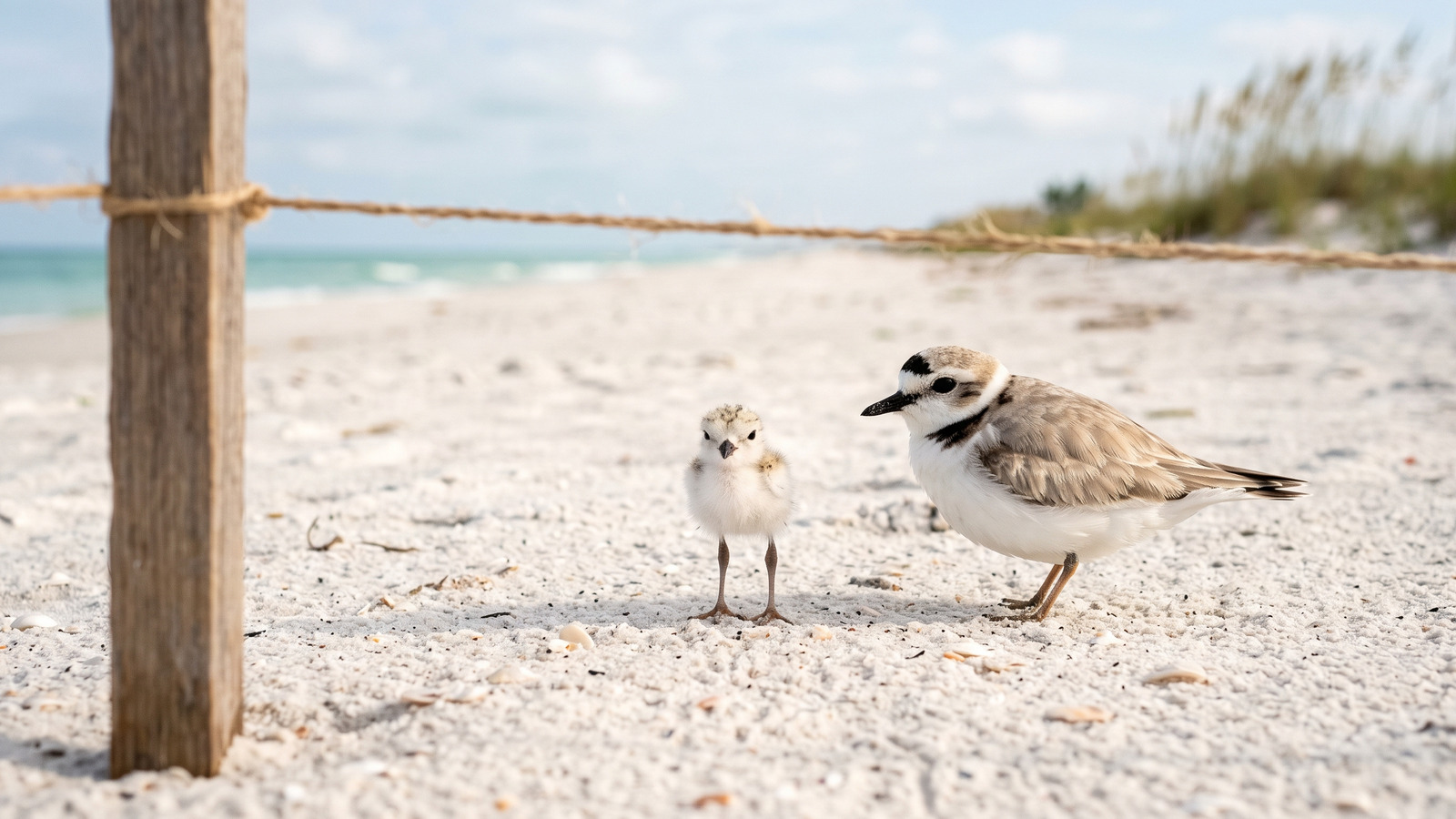
LearnBaby Shorebirds on Our Beaches: What the Roped-Off Areas Protect, and How to Teach the Why
Those roped-off beach areas protect eggs and chicks you can't see: skimmers, terns, and plovers nesting February 15 to August 31 on Tampa Bay sand.
 Protect
Leave It Better: Teaching Kids the Leave No Trace Rules, Beach Edition
The seven Leave No Trace principles for Florida beach families: shells and sand dollars, dunes and sea oats, wildlife space, leaving it better.