
Tide Pooling Around Tampa Bay: Where Kids Can Meet Sea Stars and Hermit Crabs
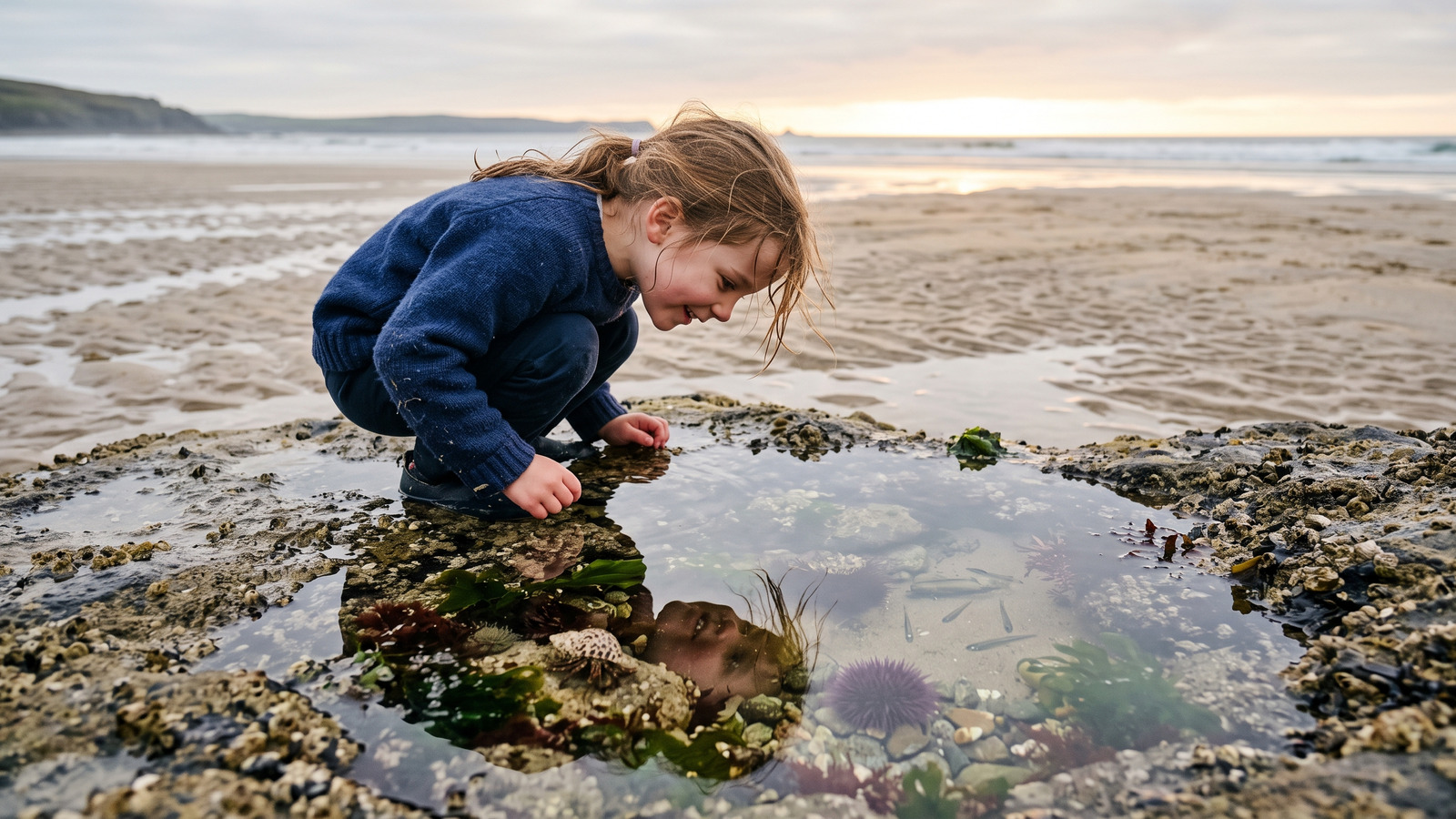
Twice a winter or so, the bay performs its best magic trick: the water simply leaves. A minus tide on a crisp January morning pulls the sea back hundreds of yards, and ground that was seafloor at dinner is a walkable plain by breakfast: rippled, gleaming, and dotted with tide pools like dropped mirrors, each one holding a stranded cast waiting for the water's return. Kids walk into this landscape the way they walk into snow: aware, instantly, that the rules of the world have been suspended in their favor. Locals mark these mornings on the calendar. Here's how your family joins them.
What a minus tide actually is
The tides lesson pays its dividend here: tide heights are measured against an average low, so a "-0.8" on the chart means the water drops nearly a foot below even that: and on our flat-shelved coast, every vertical inch of drop translates to yards of exposed horizontal ground. Winter's alignment of moon and sun serves up the year's deepest minuses, often conveniently mid-morning, and the flats emerge: seagrass edges glistening, sand ripples like a giant's fingerprint, and the pools: every trough and basin now a temporary aquarium. The horseshoe-crab-trained kids in your crew will clock the pattern instantly: the moon is running this show too, and the chart is the ticket printer.
The cast of the pools
| The resident | Where and how | The kid note |
|---|---|---|
| Hermit crabs | Everywhere, hauling borrowed shells | The pool's comedians; watch a house-swap if you're lucky |
| Fighting conchs | Plowing furrows, orange and busy | Watch one right itself with its foot: sea judo |
| Lightning whelks | The left-handed celebrity, often live here | Admire, don't pocket the occupied |
| Brittle stars | Under pool-edge debris, legs like whips | Handle never: they shed arms when stressed |
| Urchins and sand dollars | Half-buried at the pool floors | Velvet equals alive; return flat-side down |
| Stranded small fish | Gobies, blennies, juvenile mullet | The rescue question: leave them; the tide is coming |
| Crown conchs, tulips, moon snails | The predator patrol | The drilled holes in shells? Their work |
| Herons and ibis | Working the same pools as you | The professionals; give them their space |
The honest note for expectation-setting: true sea stars visit our flats modestly compared to postcard coasts, and their appearance is an event, not a guarantee: which, properly framed, makes the finding better. The everyday cast above never disappoints, and the flats' real headliner is abundance: a good minus-tide pool holds more visible, touchable, watchable life per square yard than any exhibit in the region.
The manners that keep the magic
A tide pool is a neighborhood in suspended animation: everything in it is mid-crisis, holding out for the water's return, and the family code honors that. Wet hands before any touch (dry skin harms soft residents). Brief and gentle: a hermit crab visits a palm for a moment and goes home; nothing rides in buckets to the towel. Exactly where it was: position matters in a drying pool: shade, depth, and burial are survival choices the residents already made. Bare-sand stepping: the flats look empty and are paved with the buried: drags and stomps do real harm. Nothing pried, nothing "rescued": the stranded fish and beached-looking snails are running an ancient play; the tide is their ride, not your bucket. Kids absorb this code fastest through the framing this series always uses: you're not restricted, you're trusted: junior naturalists with waiting-room privileges.
The expedition, planned
The kit is short: water shoes non-negotiable (winter flats are shell-studded and chilly), the bucket viewer or cheap mask for pool-peering, a thermos (the manatee-morning trick applies: cold-snap mornings are the best mornings), and the camera-over-collection doctrine. Timing: arrive an hour before the printed low and work seaward behind the retreating water, then turn with the tide and let it walk you home: the flats refill from the outside in, and the walk-back rule is family law here. Pair the morning with Fort De Soto's warm-up amenities or a Dunedin hot chocolate and the minus-tide expedition becomes the winter tradition it deserves to be.
The Little Naturalist activity
Adopt one pool: instead of roaming the whole flat, have each kid claim a single pool for a full thirty minutes: map it (shape, depth, temperature by finger), census it (every resident counted and identified), and journal its drama (the hermit dispute, the conch's crossing, the heron's visit). Thirty minutes in one pool teaches what thirty pools in passing never do: that a habitat is a plot, not a picture. Return visits to "their" pool across the winter turn the exercise longitudinal, and somewhere in that journal, a future marine biologist is filing her first field season.
Questions families ask
Is winter water too cold for kids out there?
You're walking, not swimming: ankle-deep at most, and water shoes plus a fleece handle January beautifully: the gulf-in-the-60s rule keeps swimmers out, not waders. The cold snap that empties the beach is exactly what fills the flats with birds and stillness: dress for it and own the morning.
What about stingrays in the pools?
Winter pooling season is the rays' quiet season, and pool-depth water plus the standing shuffle habit retires the worry: shuffle between pools, look before hands go in, and the flat's excellent visibility does the rest.
Can we bring the dog to the flats?
Where dogs are legal (the two official beaches), leashed and away from the pools and feeding birds: honestly, the flats are the outing to leave the dog home for: the residents are stressed enough, and the herons vote no.
How is this different from the touch tank at the aquarium?
Same cast, no glass, and nobody arranged it: which is the whole difference. The aquarium teaches names and lets kids touch a urchin with a docent watching; the flats hand them the wild version, manners required, tide enforcing the closing time. Do both in one winter and the kids will tell you which one they dream about.
Questions families ask
Does Tampa Bay have tide pools?
Not the rocky Pacific kind: ours are sandflat pools, shallow basins and troughs left behind when big low tides drain the flats, holding whatever couldn't leave with the water: hermit crabs, fighting conchs, whelks, urchins, brittle stars, small fish. Different architecture, same magic.
When is tide pooling best around Tampa Bay?
Winter's negative low tides, roughly November through March, when the chart shows minus numbers and the flats drain hundreds of yards out. Check the tide table for a morning minus low, add sun and a light jacket, and you've booked the season's best show.
Where are the best tide pooling spots locally?
Fort De Soto's north flats are the classic (lagoon and gulf-side pools both), with Honeymoon Island's ends, Caladesi's flats, Shell Key's lagoon side, and the causeway shallows strong seconds. Any wide, gently sloped sand exposed by a minus tide runs the show.
What are the tide pooling rules for kids?
Wet hands before touching, look mostly and handle briefly, everything back exactly where it was, no prying anything off, and step on bare sand rather than the residents. A pool is a stranded neighborhood holding its breath until the tide returns: kids are visitors in the waiting room.
Sources
More from the Bae
 Explore
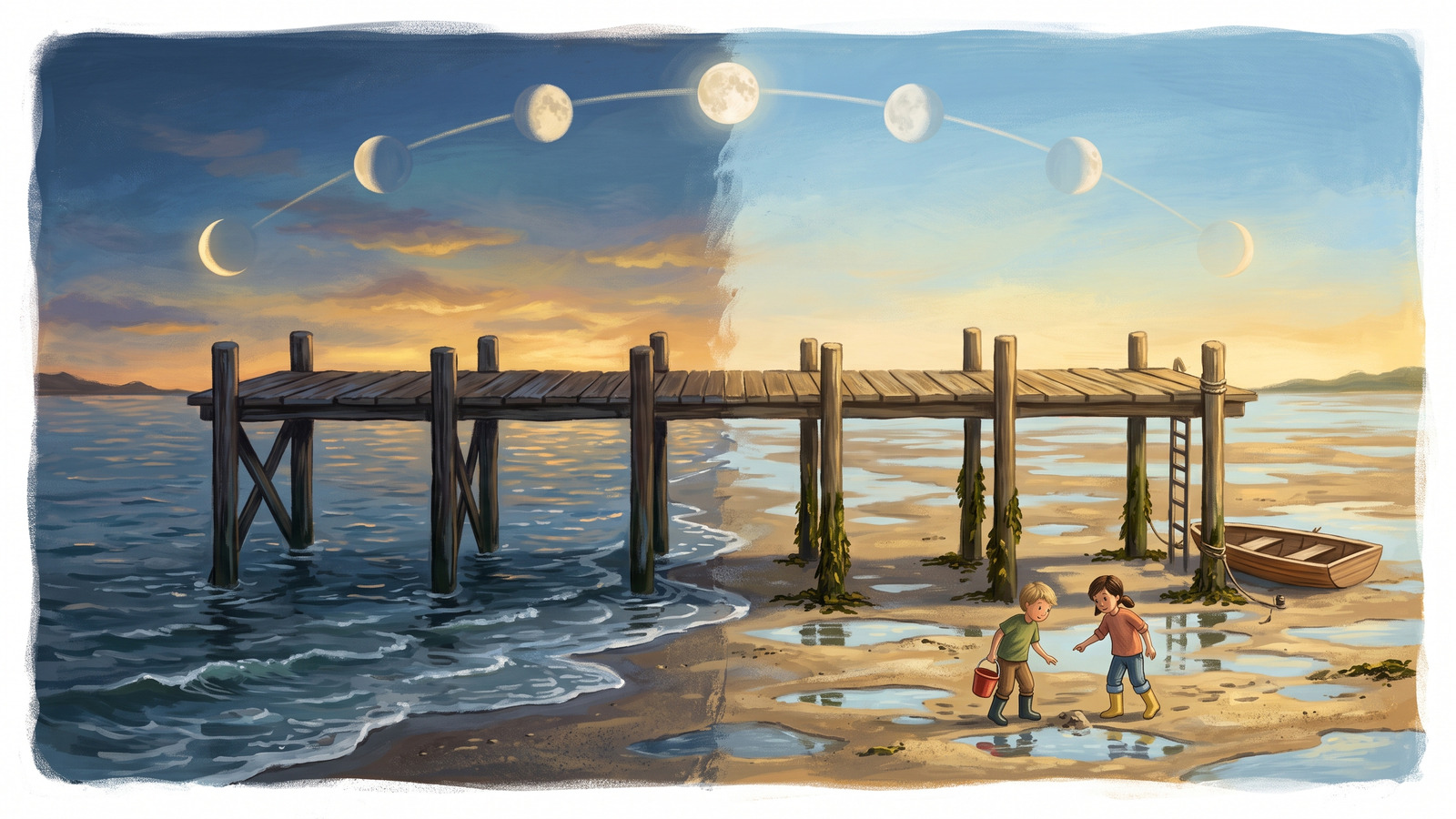
Tides 101 for Families: How to Read a Tide Chart and Plan a Better Beach Day
How to read a tide chart, why Tampa Bay's tides are quirky, and the family cheat sheet matching low tide, high tide, and moon phases to activities.
 Explore
Calm Water Beaches for Little Ones: Where the Gulf Behaves
Tampa Bay's calm water beaches for toddlers and new swimmers: the North Beach lagoon, bay-side sands, and causeway shallows where the gulf behaves.
 Protect
Leave It Better: Teaching Kids the Leave No Trace Rules, Beach Edition
The seven Leave No Trace principles for Florida beach families: shells and sand dollars, dunes and sea oats, wildlife space, leaving it better.