
Why We Fill In Our Sandcastle Holes: Small Beach Habits That Save Turtles (and Rescuers)

The best engineering project on any Florida beach is being run by someone under four feet tall with a plastic shovel and a vision. Moats, tunnels, a hole to China with committed staff. This site is officially, enthusiastically pro-digging. And then, at day's end, we're the family that erases all of it: castles flattened, holes filled, sand left the way the tide expects to find it. This is the article that explains the second half to the crew doing the first half, because "why we fill in our holes" has three answers, and one of them is about the diggers themselves.
Reason one: the night shift can't climb
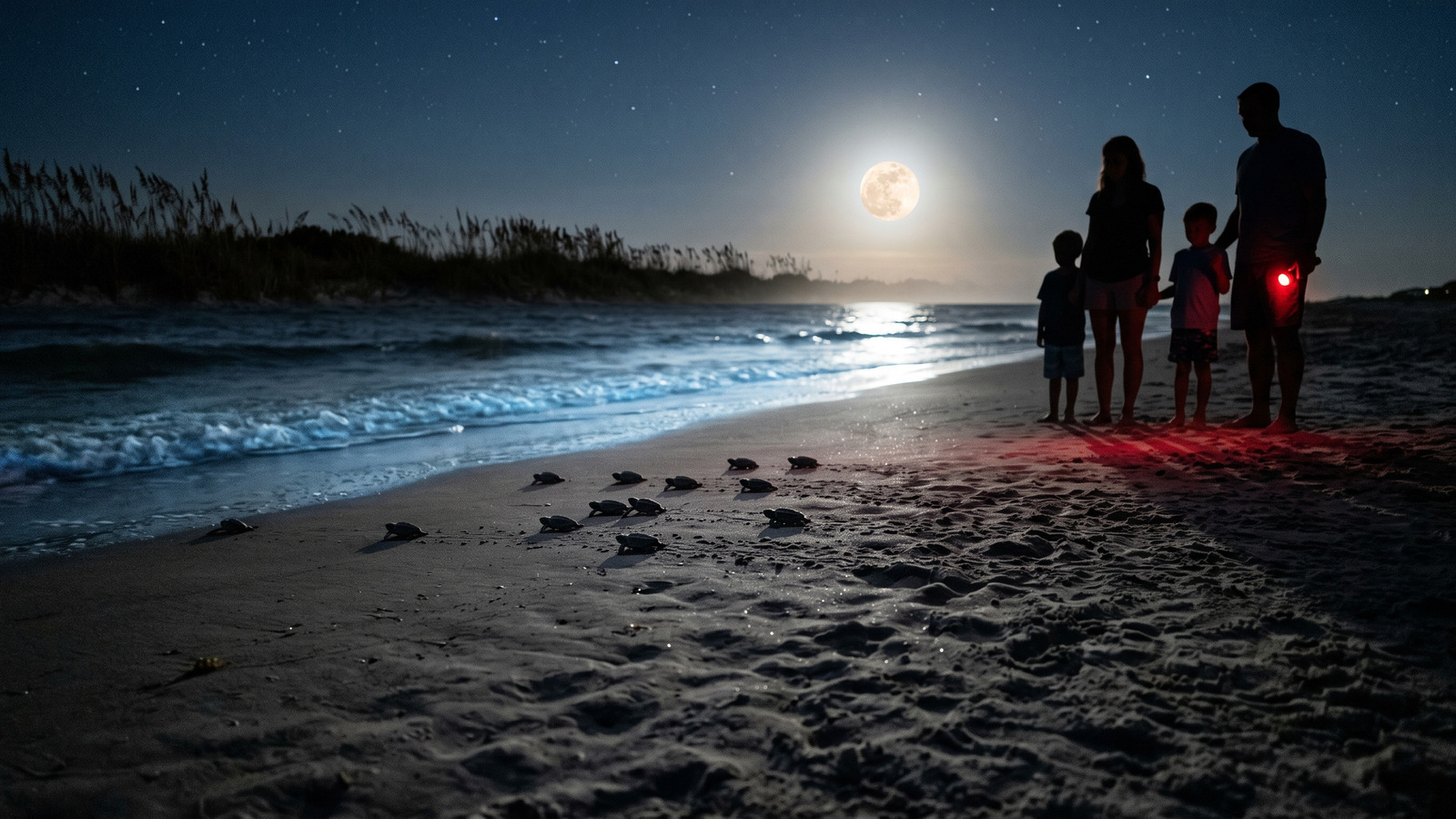
Your beach clocks out at sunset; the nursery shift clocks in. From May through October, loggerhead mothers weighing as much as a refrigerator haul themselves up the same sand your kids sculpted, moving like determined luggage, unable to reverse or climb. A hole that a seven-year-old hops out of becomes, for her, a trap: patrols find mothers exhausted at the bottom of yesterday's excavation, precious nesting energy spent on escape attempts. Two months later the hazard inverts and shrinks: hatchlings, bottle-cap-sized and racing their own energy reserves to the surf, rain into even shallow craters and cannot get out. A moat your family forgot becomes, at hatchling scale, a canyon system.
The fix costs nothing but the last five minutes: flat sand reads as runway again. Kids who've seen one photo of a hatchling in a footprint (even a footprint can hold one) never need the lecture twice.
Reason two: the beach is a road at dawn
Before your family arrives, the beach has already had traffic: turtle patrol surveyors marking new nests at first light, lifeguards positioning, and, when it matters most, ambulances and rescue trucks that treat the sand as a road. Holes and deep moats are axle-breakers and, at speed in low light, genuinely dangerous to responders. Beach towns publish the plea every summer: a crater field between a rescue vehicle and a drowning swimmer is a delay nobody can afford. Flat isn't fussy; flat is infrastructure.
Reason three: the sand itself, and the rule that saves diggers
Now the sober one, delivered calmly, because informed kids dig safer and scared kids just dig elsewhere: dry sand doesn't hold walls. A hole deep enough to sit in can collapse inward without warning, and collapsed sand is astonishingly heavy and airless: researchers and physicians have documented deaths nearly every year, most victims children and teens digging on family beach days, a toll that in some years exceeds shark fatalities. The physics is unforgiving and the prevention is almost embarrassingly simple.
| The family digging code | Why |
|---|---|
| No deeper than the smallest digger's knees | Collapse becomes a non-event |
| Wide beats deep; never tunnel, never sit in a hole | Tunnels and pits are the killers |
| Dig in damp sand zones, away from dune base | Wet sand holds; dunes stay untouched |
| Adults present for any group excavation | The rule enforces itself |
| Fill it flat before you leave, every time | Turtles, trucks, and tomorrow's toddlers |
Deliver it with the same tone as rip current rules: not fear, competence. Your kids can move as much sand as their ambitions demand: sideways.
The ritual that makes it stick
Rules fade; rituals hold. The version that works, tested across this series: the last kid off the towel is the day's Beach Marshal (rotating title, badge shell optional), with authority to order the flattening, direct the fill crew, and declare the site "turtle-ready." Attach the walk-the-site game: crouch to hatchling height (ankle level) and survey the flattened zone for remaining canyons. Five minutes, some ceremony, zero argument, and the habit installs so deep that your kids will someday flatten strangers' castles with the quiet confidence of public servants.
The Little Naturalist activity
The collapse demo, run safely at dinner-prep scale: fill a clear container with dry sand, tunnel a finger hole in the side, and watch the ceiling let go; repeat with damp sand and note the difference; then load a toy figure's "pit" and measure how much sand weight sits on it (a measuring cup of sand on a kitchen scale is the gasp moment: sand is heavy). Ten minutes converts the digging code from parental decree into physics the kids demonstrated themselves, which is the only authority children fully accept.
Questions families ask
Are sandcastles themselves a problem, or just holes?
Both count at turtle scale: a castle is a wall on the runway, a hole is a pit in it, and patrols ask for both to go flat at day's end during season. Build the kingdom by day; return the coastline by dusk. The tide was going to file the same request overnight anyway.
What about the huge holes we sometimes find already abandoned?
Fill what your crew safely can (it's the beach's favorite good deed), and report truly hazardous excavations to lifeguards or beach patrol, who deal with them daily. Never let kids explore an abandoned deep hole: unstable walls don't advertise.
Is this really a big enough deal to drill into kids?
The turtle math alone says yes (patrols log hole strandings every season on our coast), and the safety literature is unambiguous about collapses. But notice what the habit actually installs: the reflex of leaving a wild place ready for its next user, which is the entire Protect curriculum in one gesture. The hole is the lesson; the flat sand is the diploma.
Do umbrellas and canopies matter the same way?
Overnight, yes: anything left staked becomes a nesting obstacle, which is why beach towns require nightly removal in season. The rule of dusk is total: what your family brought vertical goes home or goes flat, and the beach resets to wild, as advertised.
Questions families ask
Why are we supposed to fill in holes at the beach?
Three reasons stacked: holes trap wildlife (nesting sea turtles and hatchlings can't climb out), they block the patrol and rescue vehicles that drive the beach at dawn, and deep holes can collapse on the kids digging them, which causes deaths most summers somewhere in America. Flat sand at day's end fixes all three.
How deep is too deep for a beach hole?
The lifeguard standard: no deeper than the knees of the smallest person in the group, and never deep enough to sit or stand in. Dry sand holds no shape; walls collapse inward in a second and pin a digger under crushing weight. Wide and shallow builds every fort a kid needs.
Do holes really trap sea turtles?
Every season. A 300-pound nesting loggerhead that blunders into a hole at night may be unable to climb out, exhausting herself until dawn patrol finds her, and hatchlings the size of a bottle cap drop into even modest holes on their dash to the water. Turtle patrols spend real hours on hole rescues.
When does this matter most?
Sea turtle season, May 1 through October 31 on our coast, is the high-stakes window, and it happens to be exactly when beach digging peaks. But rescue vehicles run year-round and kids dig year-round, so the fill-it-flat habit has no off season.
Sources
More from the Bae
 Learn
LearnSea Turtle Season: The Family Beach Rules That Save Nests from May to October
Sea turtle nesting season runs May through October on Tampa Bay beaches. The family rules: fill holes, flatten castles, lights out, and let nests be.
 Learn
LearnBaby Shorebirds on Our Beaches: What the Roped-Off Areas Protect, and How to Teach the Why
Those roped-off beach areas protect eggs and chicks you can't see: skimmers, terns, and plovers nesting February 15 to August 31 on Tampa Bay sand.
 Protect
Leave It Better: Teaching Kids the Leave No Trace Rules, Beach Edition
The seven Leave No Trace principles for Florida beach families: shells and sand dollars, dunes and sea oats, wildlife space, leaving it better.