Horseshoe Crabs: Living Fossils on Our Sand, and How Your Family Can Count Them for Science
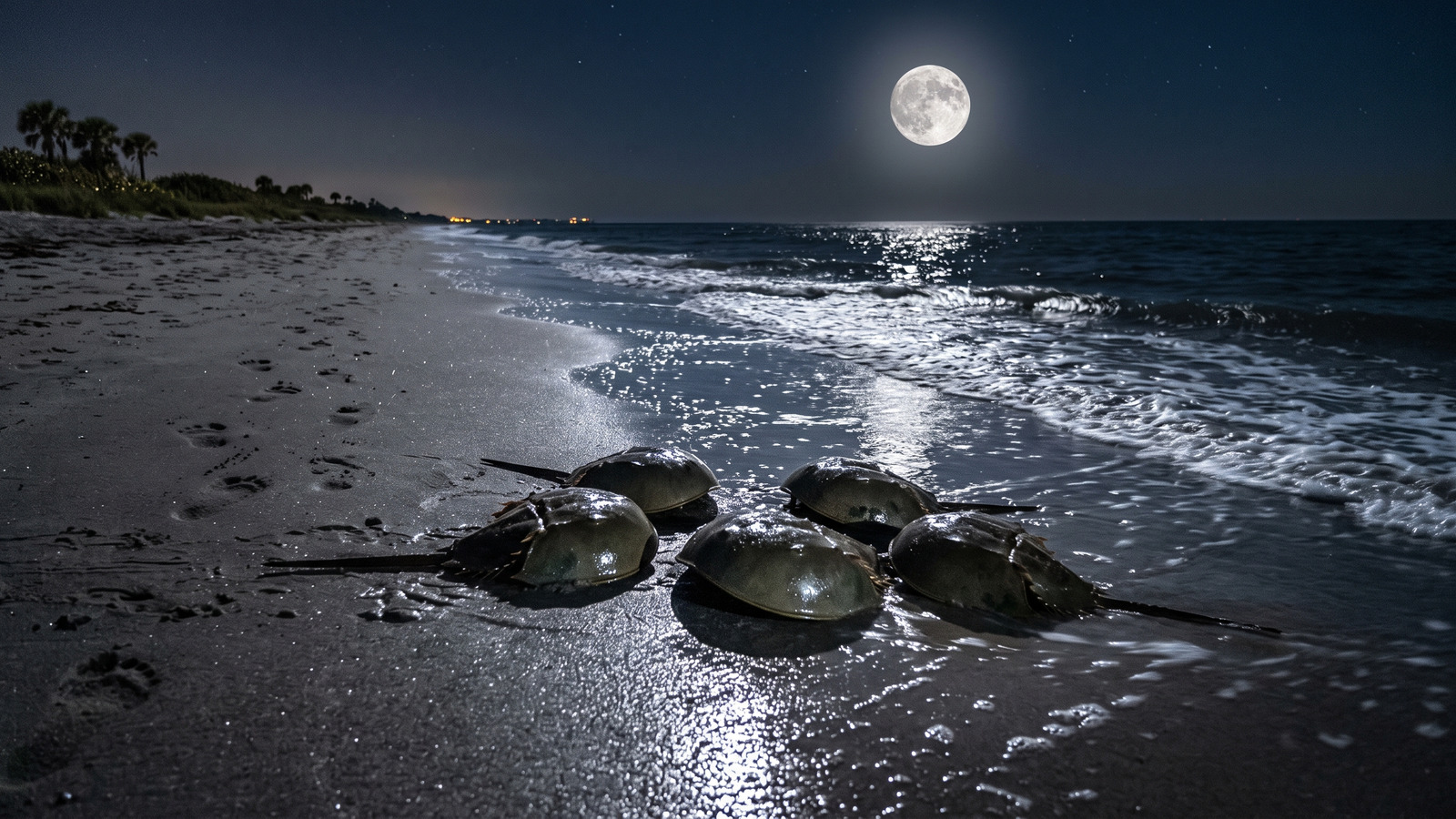
Parked at your feet on the bay shallows is an animal older than dinosaurs, older than sharks, older than trees. It has ten eyes, blood the color of blueberry jam, and a body plan so successful it hasn't bothered with a redesign in roughly 445 million years. Your kids can meet one this spring at high tide, twenty minutes from home, and if they write down where and when, actual state scientists will use their homework.
Older than practically everything
The numbers deserve to be said slowly. Horseshoe crabs have been crawling ashore to spawn for something like 445 million years. Dinosaurs arrived, ruled, and vanished during their tenure. They watched the first trees show up. Four species remain worldwide, and ours, the Atlantic horseshoe crab, patrols the gulf's edges looking exactly like its fossils.
And despite the name, it isn't a crab at all: it's closer kin to spiders and scorpions, a fact that either delights or unsettles children depending on the child. Under the helmet-shaped shell (which kids may recognize as the inspiration for a certain video game mushroom), it runs on ten legs and sees with up to ten eyes, including light sensors on its tail that help it track moonlight, which is how an animal with no calendar keeps lunar appointments.
The blue blood your family has already used
Here's the fact that turns a beach walk into a science unit: horseshoe crab blood is blue (copper does the work iron does in ours) and contains a compound called LAL that clots instantly around bacterial contamination. For half a century, medicine has used it to safety-test vaccines, IV medications, surgical implants, practically anything that enters a human body. Every childhood immunization card in your house has a horseshoe crab's signature on it somewhere. Synthetic alternatives are finally arriving, easing pressure on the animals, and that handoff (from harvesting a wild creature to replacing what it taught us) is one of the better how-science-works stories a parent ever gets handed for free.
Spawning nights: the appointment
Spawning peaks in spring and fall, keyed to the highest tides around new and full moons. Pairs and small crowds come ashore right at the waterline, the larger female towing a male (sometimes several hopefuls trailing), to bury thousands of tiny green eggs in the wet sand, which then feed half the shorebirds on the coast. Look for them on calm, protected sand rather than crashing surf: around Tampa Bay, that means the bay sides of Fort De Soto, the Weedon Island shorelines, Picnic Island, and similar quiet flats, at high tide, give or take a few days of a moon phase in March, April, September, or October.
What you'll also find, any month, are their molted shells: perfect hollow armor abandoned on the wrack line. They're not dead crabs, they're outgrown jackets (a horseshoe crab molts more than a dozen times growing up), and they're the best free souvenir in Florida.
| Kid question | Fast answer |
|---|---|
| Is it dead? | Probably a molt: pick it up; a molt is light and split at the front |
| Can it sting me? | No venom, no sting, no real pinch; the tail is a rudder |
| It's upside down and wiggling | Flip it gently by the shell sides, never the tail |
| Why ten eyes? | Moonlight tracking, mate finding, and watching for you |
| Boy or girl? | Big one doing the towing is the female |
How your family joins the science
FWC runs the Florida Horseshoe Crab Watch because nobody can be everywhere at spawning tide, and reports from beachgoers map the populations. See horseshoe crabs (one, a pair, or a beach full)? Note the date, time, location, and roughly how many, and send it in through the FWC Reporter app or the survey link on FWC's horseshoe crab page. Kids can own this entirely: they spot, they count, they file. It's the same civic muscle as filling holes for sea turtles, except this one comes with a data submission and, for the right kind of kid, that's the whole prize.
The Little Naturalist activity
Build the moon-tide forecast. Have kids find the next new and full moons on a calendar, look up that week's highest tides for your nearest bay beach, and mark the two best "crab appointment" windows this season. Then keep the appointment and log what shows up. Hit or miss, they've just run a real field study: hypothesis, schedule, observation, data. Miss twice and find a molt anyway, and the beach still paid out.
Questions families ask
Can we take a live horseshoe crab home, or keep a molt?
Molts and empty shells, yes, and they make superb nature-shelf specimens. Live animals stay, full stop; they're wildlife, and Florida manages their harvest tightly. The line for kids: the jacket is a souvenir, the animal is a neighbor.
Do horseshoe crabs bite or eat fish?
They're gentle bottom-feeders, munching worms, small clams, and algae, chewing (this is true) with the bases of their legs, since they have no jaws. An animal that eats with its knees will hold a seven-year-old's attention longer than any lecture on marine invertebrates.
Why do shorebirds care about their eggs?
Horseshoe crab eggs are premium fuel for migrating shorebirds, famously so on the Atlantic coast, and our spring spawn feeds local birds the same way. It's a tidy lesson in how one ancient animal quietly holds up a food web, the gopher tortoise's trick, performed underwater.
Are horseshoe crabs endangered?
Globally they face pressure from harvest and habitat loss; Florida's populations are monitored, which is exactly why the citizen counts matter. The honest kid-sized answer: they've survived 445 million years, and whether they clear the next hundred is partly a family-by-family decision, starting with the flip count.
Questions families ask
When can families see horseshoe crabs in Florida?
Spawning peaks in spring and again in fall, especially around the high tides that come with new and full moons. Around Tampa Bay, check quiet, protected sandy shorelines at high tide in March, April, September, and October, ideally within a few days of a moon phase.
Is a horseshoe crab dangerous? What about the tail?
Completely harmless. No venom, no sting, no pinch worth mentioning. The tail, called a telson, is a lever the animal uses to steer and flip itself upright, never a weapon. The one rule: never pick one up by that tail, which can injure it.
What should we do if we find a horseshoe crab flipped on its back?
Gently flip it upright by the sides of its shell, like turning a dinner plate, and let it continue. Stranded, overturned crabs bake in the sun, and a two-second assist from a kid genuinely saves lives. Then report the sighting to FWC's Horseshoe Crab Watch.
Why is horseshoe crab blood so important to people?
Their blue, copper-based blood contains a compound (LAL) so sensitive to bacterial contamination that medicine has used it for decades to safety-test vaccines, IV drugs, and implants. If anyone in your family has had a shot, a horseshoe crab helped make it safe.
Sources
More from the Bae
 LearnCornerstone
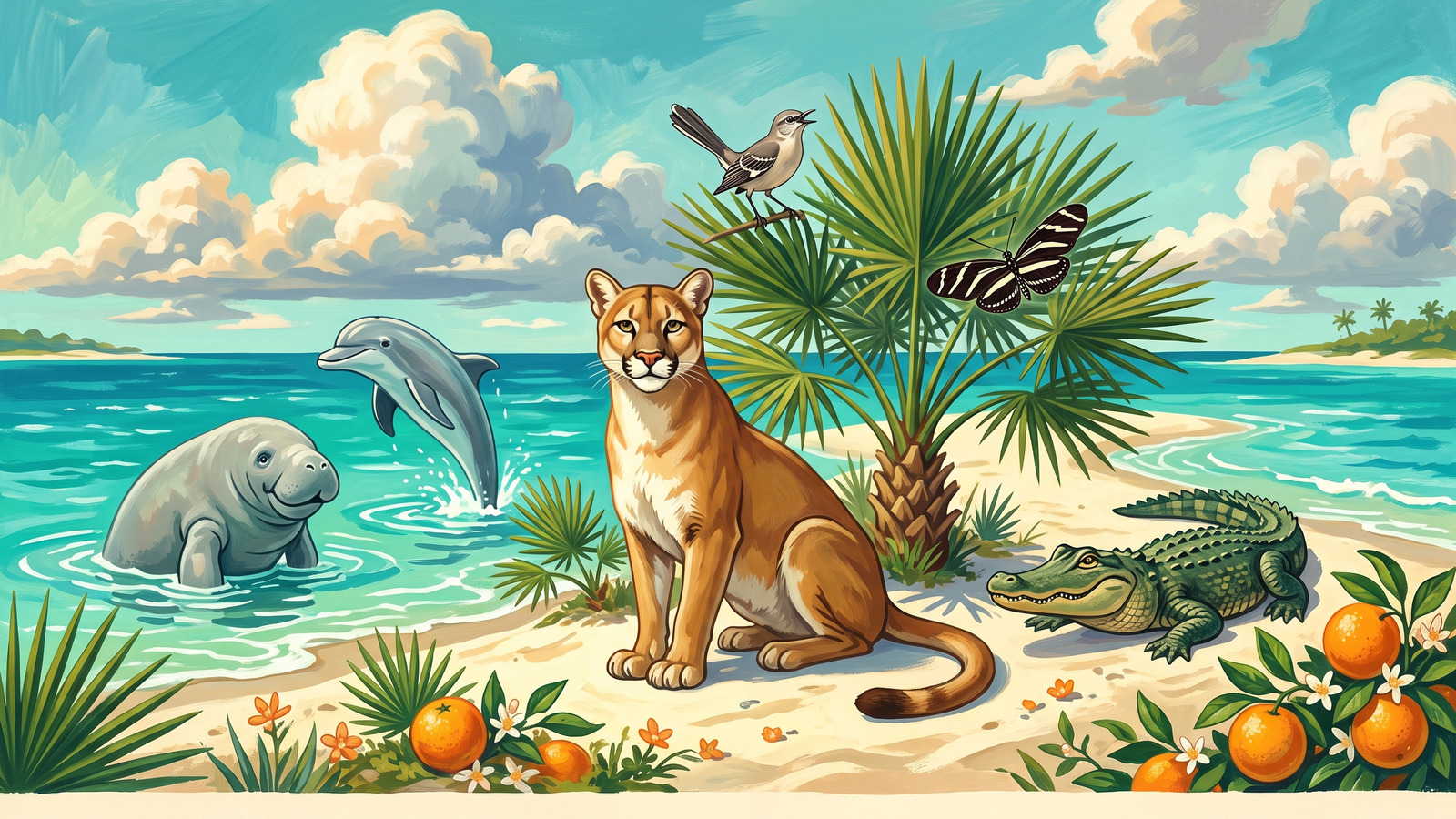
Florida's State Symbols, Explained for Kids: Every Animal, Flower, and Song, and the Stories Behind Them
Every Florida state symbol explained for kids: the panther, manatee, mockingbird, zebra longwing, and more, with the stories and the flamingo debate.
 Learn
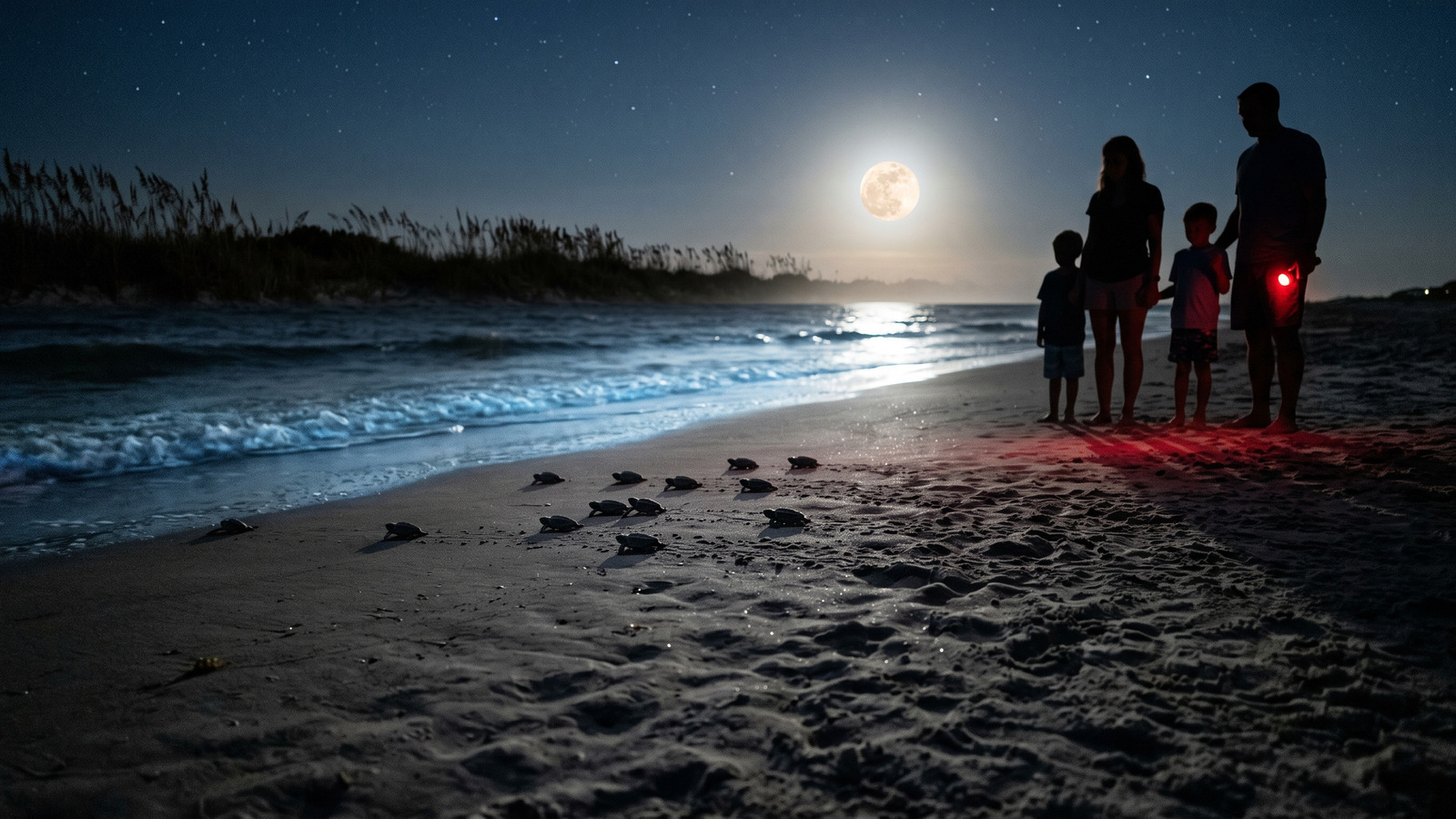
LearnSea Turtle Season: The Family Beach Rules That Save Nests from May to October
Sea turtle nesting season runs May through October on Tampa Bay beaches. The family rules: fill holes, flatten castles, lights out, and let nests be.
 Learn
LearnThe Gopher Tortoise: Florida's Little Landlord and the 350 Neighbors in Its Burrow
The gopher tortoise digs burrows that shelter 350 other species. Where families can see Florida's little landlord, and the never-put-it-in-water rule.