Manatees for Families: Where to See Them Near Tampa Bay and the Rules That Keep Them Safe
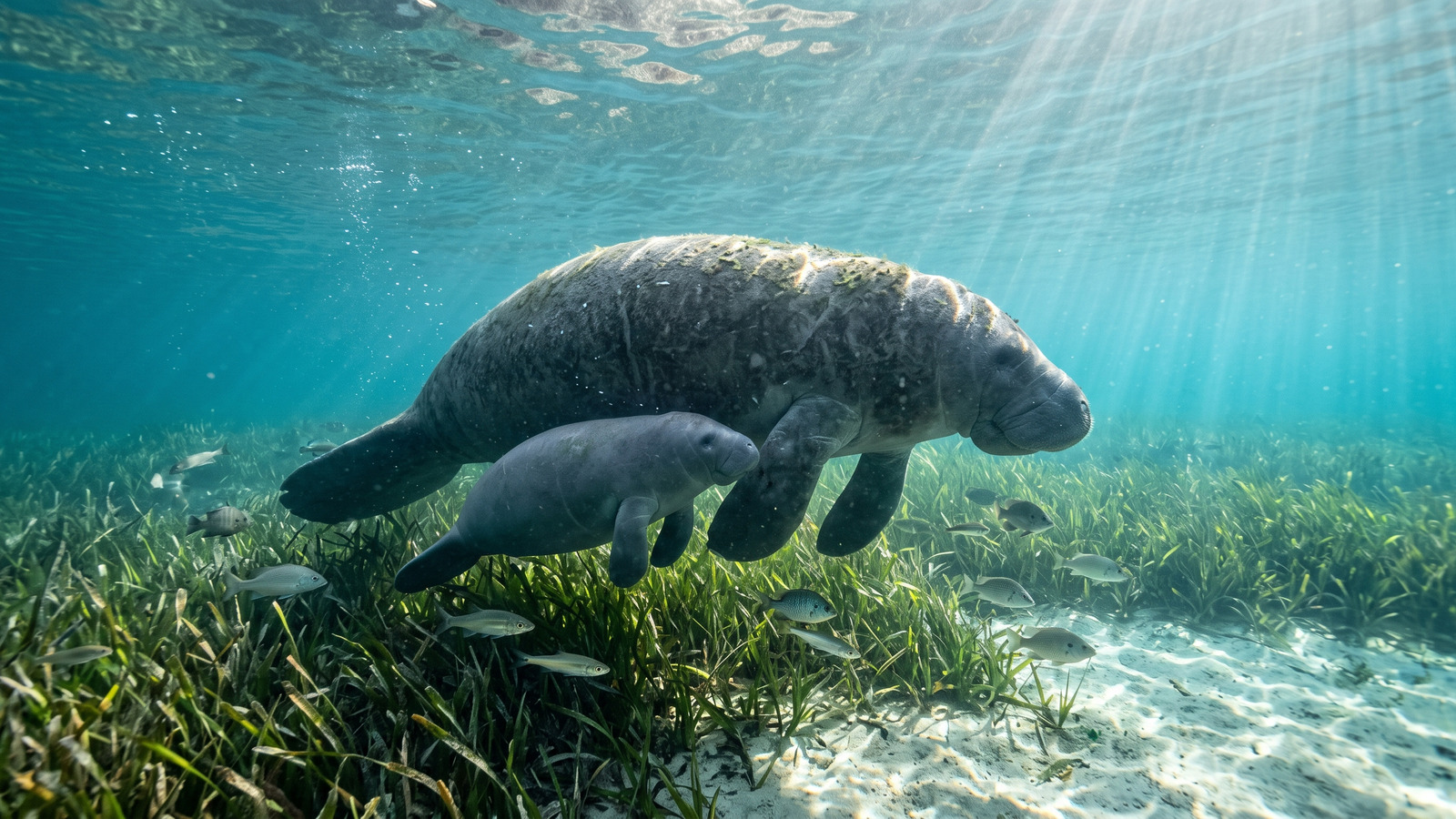
The first manatee of the season announces itself with a sound like a whale politely clearing its throat: a round gray nose breaks the surface, takes one unhurried breath, and sinks. On the boardwalk, forty kids go silent at once, which their parents will tell you is the real miracle. It happens every winter, twenty minutes from Tampa, and it costs nothing.
Why manatees spend winter with us
A manatee looks built for cold with all that roundness, but the blubber is mostly myth: manatees carry surprisingly little fat and lose heat quickly. When the gulf drops below about 68 degrees, they must find warm water or sicken. Springs do the job elsewhere in Florida. In Tampa Bay, the warm, clean water flowing from Tampa Electric's Big Bend power station has served as a refuge for decades, formally designated a manatee sanctuary, and on the coldest mornings hundreds may drift in the canal like unhurried gray clouds.
That's the story worth telling on the drive over: the animals aren't performing, they're surviving winter, and we've agreed to watch quietly while they do.
Planning the TECO trip
The center opens November 1 each year and runs to mid-April. Admission is free, and the site has grown into a full morning: boardwalks over the sanctuary, an education center, a stingray touch tank, a butterfly garden, and a tall observation platform for spotting rays and the occasional shark in the shallows.
| Plan around | The honest advice |
|---|---|
| Best conditions | The cold morning after a front; the colder, the more manatees |
| Worst conditions | Warm sunny spells in February; the manatees leave to graze |
| Crowds | Weekends after cold snaps get busy; weekday mornings are calm |
| Time needed | Two to three hours with kids |
| Cost | Free, including parking |
| Stroller reality | Boardwalks are stroller-friendly; bring sun hats anyway |
One expectation to set with kids: manatee counts swing wildly with temperature. A warm January afternoon might show you five distant noses; a 40 degree morning might show you a hundred animals. Teaching the why (warmth, not schedules, moves wildlife) turns even a quiet day into the lesson.
The rules, and the reasons kids remember
Manatees are protected by federal law and Florida's own sanctuary act, and the offenses are the friendly-seeming things: touching, feeding, offering hose water, blocking a manatee's path. Every one teaches manatees to approach docks and boats, and boats are the great manatee wound; most adults carry propeller scars, which is how researchers tell them apart.
So the family code is passive observation, and it converts beautifully to kid logic: you're a guest in their living room; guests don't grab. If your crew boats or paddles, that's a whole second lesson in slow-wake zones, and our first boat day guide walks through it.
Where else to see them nearby
Cold snaps pull manatees into canals and springs all over the region: the Weedon Island shallows, warm basins around Bradenton, and, for the famous swim-with experience, Crystal River's springs a scenic 90 minutes north, the only place in the U.S. where in-water manatee encounters are legally managed. For most Tampa Bay families, TECO first: it's free, close, and the manatees outnumber the people.
The Little Naturalist activity
Manatee researchers identify individuals by scar patterns, so play scientist: have kids sketch two or three manatees from the boardwalk, marking any scars or notches they can see, then name their individuals and look for them again on the next visit. It's real methodology, it occupies the wait between surfacings, and it plants the boats-and-manatees conversation without a lecture.
Questions families ask
Are manatees endangered?
They're currently classified as threatened, with roughly 8,000 to 12,000 in Florida. The species survived near-extinction from hunting, then faced boat strikes and, recently, seagrass famine on the Atlantic coast. Protection works when it's kept up, which is exactly why the rules feel strict.
What do manatees eat?
Seagrass, sixty to a hundred pounds a day of it, which links the manatee's future directly to the health of our bay's underwater meadows. Kids who love manatees are one short step from caring about seagrass, and we take that step in our Tampa Bay comeback story.
Can we kayak with manatees at TECO?
Not at the viewing center itself; the sanctuary is for manatees only, which is the point. Nearby launches offer winter paddles where respectful distance applies. In Crystal River, licensed operators run the regulated in-water tours.
How do I explain the propeller scars to my kids?
Honestly and calmly: boats and manatees use the same water, boats used to win every time, and slow-speed zones exist so they don't anymore. Then let them watch a manatee glide under the boardwalk, entirely unbothered. Hope lands better than guilt, at every age.
Questions families ask
Where can my family see manatees near Tampa Bay?
The TECO Manatee Viewing Center in Apollo Beach is the reliable one: free admission, boardwalks over a warm-water refuge, open every year from November 1 through mid-April. On cold mornings after a front, the water below the boardwalk can hold manatees by the dozen.
Why do manatees gather at a power plant?
Manatees can't handle cold. When gulf temperatures drop below about 68 degrees, they seek warm water, and the clean, warm discharge canal at Tampa Electric's Big Bend station has become a state and federally designated sanctuary. The colder the snap, the bigger the gathering.
Can you touch or feed a manatee?
No, and it's the law. Manatees are protected by state and federal law, and touching, feeding, chasing, or giving them water counts as harassment. The rule to teach kids is passive observation: watch quietly, let the manatee decide everything.
When is manatee season in Florida?
Roughly November through March or April, tied to water temperature rather than a calendar. The TECO center's season runs November 1 to mid-April, and the best viewing follows cold fronts, so check the forecast and go the chilly morning after.
Sources
More from the Bae
 LearnCornerstone
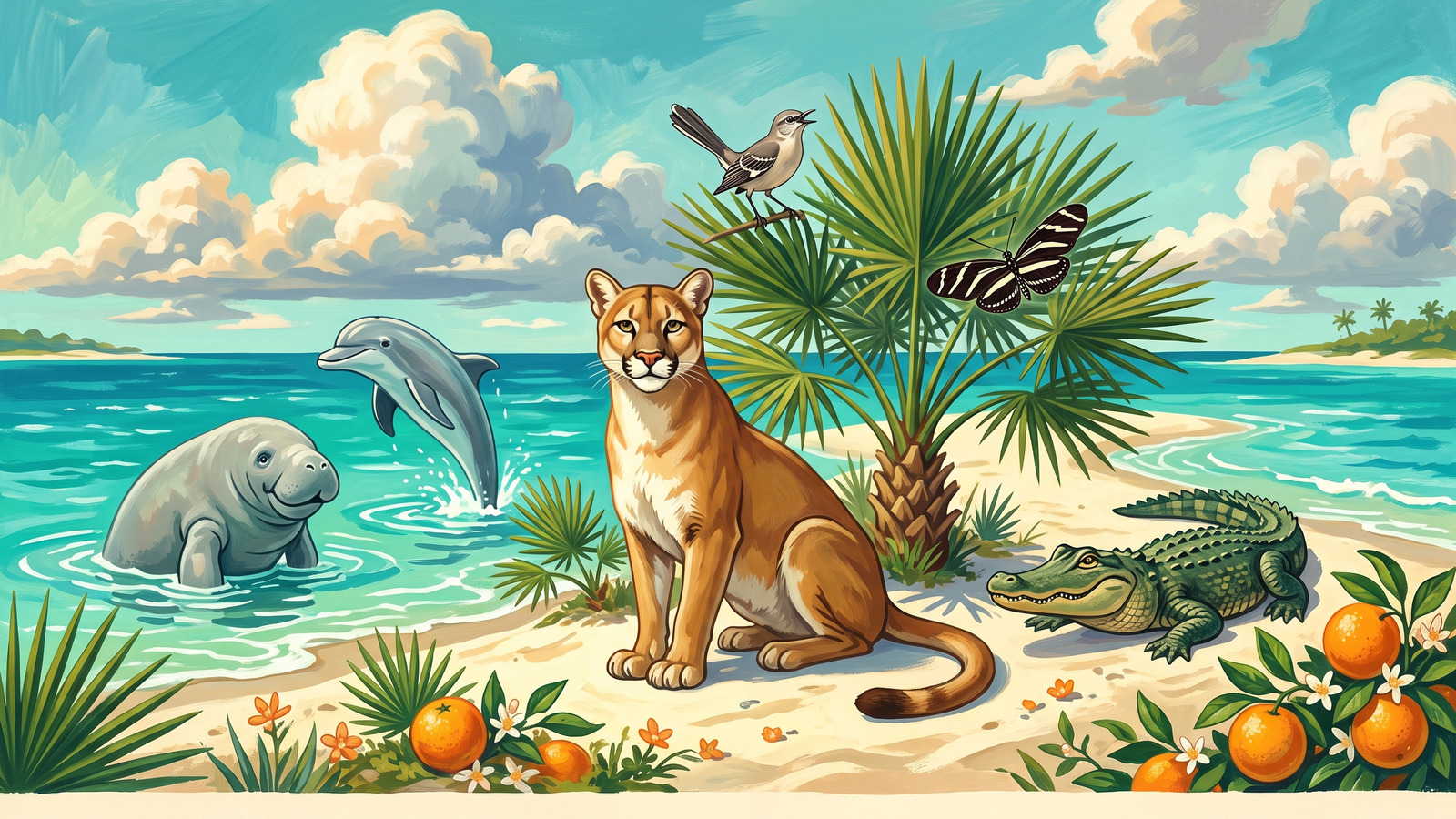
Florida's State Symbols, Explained for Kids: Every Animal, Flower, and Song, and the Stories Behind Them
Every Florida state symbol explained for kids: the panther, manatee, mockingbird, zebra longwing, and more, with the stories and the flamingo debate.
 Learn
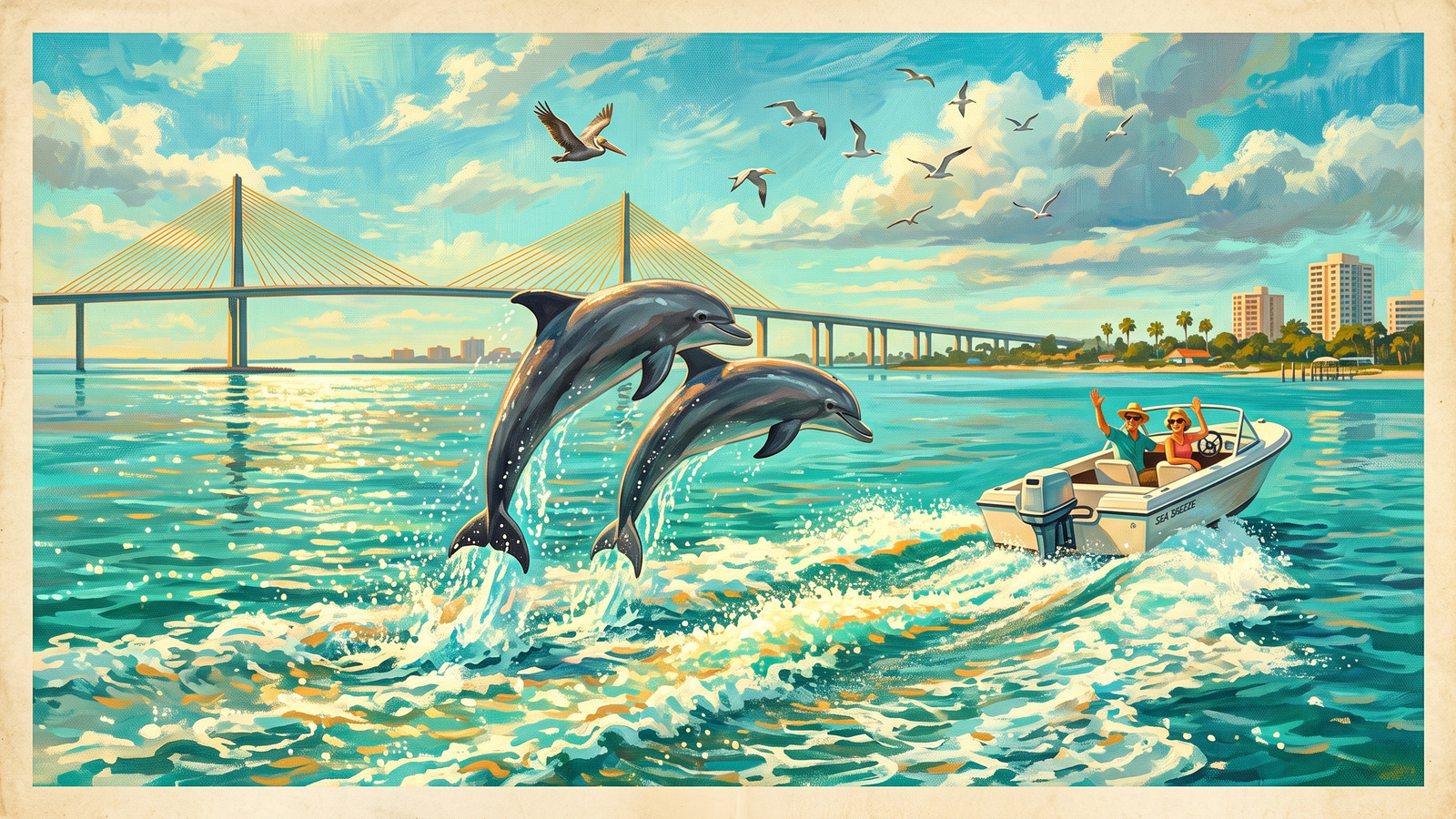
LearnThe Dolphins of Tampa Bay: What Your Kids Are Seeing Out There, and the One Rule That Protects Them
Tampa Bay's bottlenose dolphins live here year-round, have names for each other, and are protected by one big rule: never feed a wild dolphin.
 Learn
LearnSea Turtle Season: The Family Beach Rules That Save Nests from May to October
Sea turtle nesting season runs May through October on Tampa Bay beaches. The family rules: fill holes, flatten castles, lights out, and let nests be.