
The Family Beach Matchmaker: The Right Tampa Bay Beach for Toddlers, Shellers, and Wave Chasers
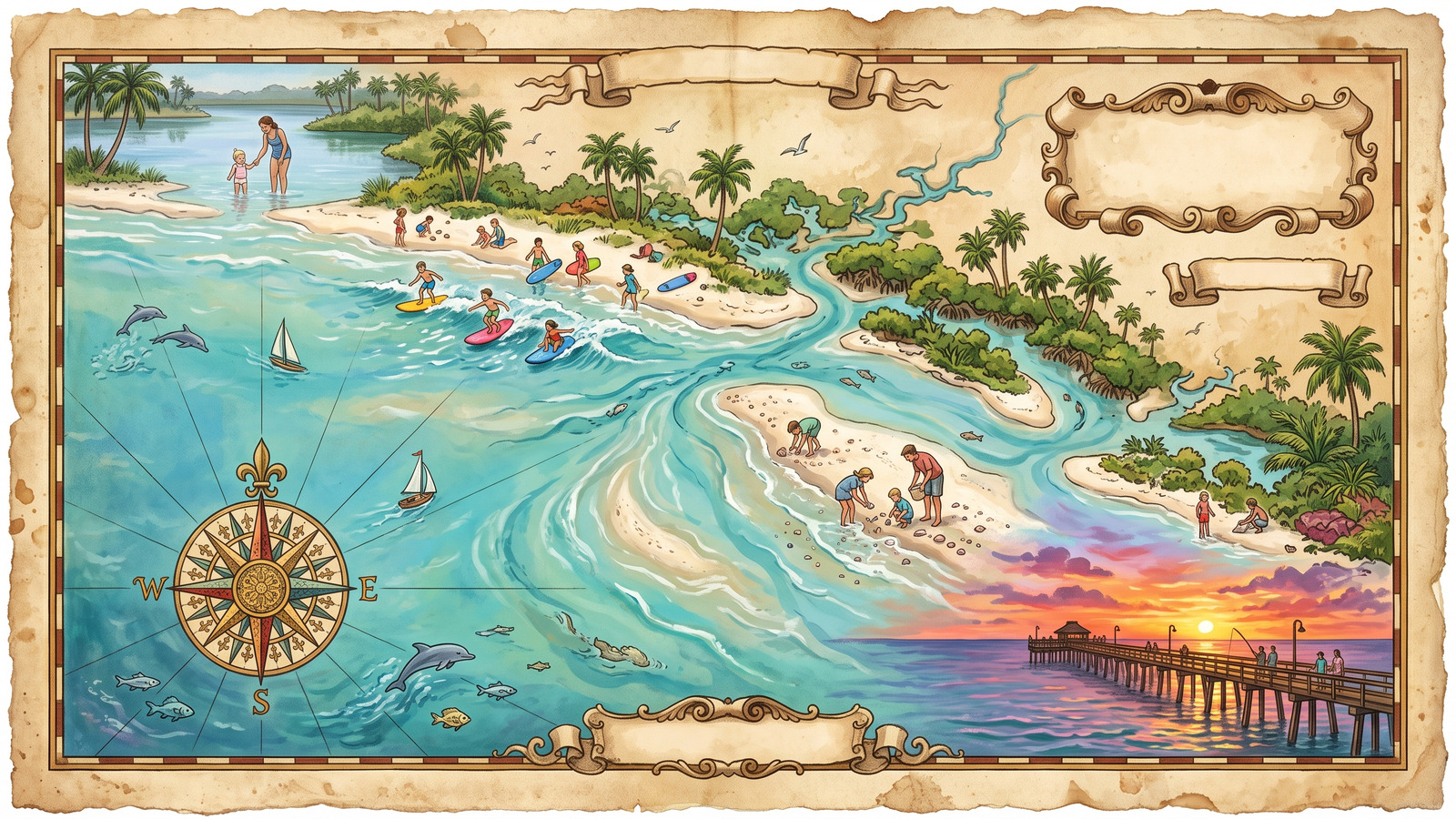
"Which beach should we go to?" is the most-asked question on this coast and the worst-answered, because the honest reply is another question: which family are you today? The crew with a wobbling toddler needs different water than the crew with a nine-year-old wave hound; the shell hunters want the opposite tide from the sandcastle engineers; and the friends visiting with a doodle need exactly two beaches out of forty. So here is the matchmaker: the region's sand sorted by what your family actually needs today, with the honest catches included, because every great beach has one.
The matchmaker table
| Today's family | The match | The honest catch |
|---|---|---|
| Toddlers and waders | Fort De Soto North Beach lagoon; East Beach; Gulfport; Dunedin Causeway | Calm-water list has the full tour |
| Shell hunters | Shell Key, Caladesi, Honeymoon, quiet De Soto stretches | Low tide is the appointment; the code rides along |
| Wave and boogie kids | Open gulf beaches on breezy days: Clearwater, St. Pete Beach, Upham | Flag first; waves here are wind-made |
| Tide pool scientists | De Soto's north flats, Honeymoon's ends, at negative lows | Winter mornings; bring the thermos |
| The dog | Paw Playground (De Soto), Honeymoon pet beach | Nearly everywhere else says no; don't chance it |
| Amenity lovers (food, rentals, restrooms every 100 yards) | Clearwater Beach, St. Pete Beach core | Crowds and parking are the tax |
| Peace seekers | Pass-a-Grille, Sunset Beach, north Caladesi | Fewer facilities is the price and the point |
| Sunset ritualists | Pier 60's nightly festival; Pass-a-Grille seawall | Sunrise vs sunset math here |
| Full-day base camp | Fort De Soto, the everything park | One park, five beaches; pay the parking, win the day |
The two-coast secret
The matchmaking works because this region is secretly two coasts wearing one name. The open gulf front (Clearwater down through Pass-a-Grille) faces the sea's full fetch: that's where wind builds real waves, where flags earn their pole, where sunsets play to a standing crowd, and where the sand is that famous sugar. The inside waters (bay sides, lagoons, causeways) sit sheltered behind the islands: knee-deep for a hundred yards, wave-free on all but the wildest days, warm as bathwater by May: nature's toddler pools, with seagrass meadows and their residents as the entertainment. Families who learn to choose their coast by crew and wind stop having mediocre beach days entirely: the gulf on a still morning is glass; the lagoon on a blowy afternoon is still glass. Somewhere within twenty minutes, the water is always right.
The all-season habits
Three one-liners cover the coast's honest hazards, all taught before, assembled here. The shuffle (warm months): slide, don't step, when wading sandy shallows: stingrays settle there, the vibration sends them off, and the shuffle is why locals almost never meet one the hard way. The flag (the traffic light): read aloud on arrival, obeyed all day. The exit sweep (holes flat, trash out, treasures checked, nothing living): ten minutes that keeps every beach on this list worth matching. Add sun discipline (shade, hats, the water math) and the matchmaker's guarantees hold.
Parking, the unglamorous truth
Every local beach guide that skips parking is lying by omission, so: the famous gulf beaches meter nearly everything and fill by late morning on season weekends (arrive by 9:30 or embrace the walk); Fort De Soto charges a daily fee and rewards it with acres of spaces; the causeway and bay beaches are the parking-easy sleepers; and the state parks run per-vehicle entry that makes carpooling arithmetic. The family rule that beats all of it: the earlier coast is the cheaper coast, in dollars, degrees, and disposition.
The Little Naturalist activity
Commission the family beach atlas: one page per beach visited, rated by the crew across five axes (water calm, shells, snacks proximity, crowd, wow factor), with a sketch and a "best find" line. After ten beaches, the atlas becomes the household's own matchmaker, argued over and amended like all good atlases, and the kids who built it can brief any visiting cousin with professional authority: which, at this site, is the whole graduation ceremony.
Questions families ask
What about Anna Maria and the Bradenton beaches?
Gorgeous, family-beloved, and a genuine day trip from most of Pinellas: Coquina's shaded picnic pines and Anna Maria's old-Florida calm earn their own itinerary. This matchmaker keeps to the twenty-minute radius; the atlas can annex southward as your family does.
Are there lifeguards at these beaches?
The busy gulf cores staff towers seasonally (Clearwater, St. Pete Beach, Fort De Soto's guarded zones); the wilder matches (Shell Key, Caladesi's far ends, causeways) mostly don't: which moves the flag-and-rip protocols from helpful to essential. Rough-day rule: guard-adjacent sand only.
Which beach for a kid's birthday party?
Fort De Soto's shelters (reservable, shaded, beach-adjacent) are the institution: the full park guide has the plan. The gulf beaches host smaller towel-cluster parties fine, minus the shade and plus the parking scramble: shelters win for anything over six kids.
Honestly: is there a best beach?
There's a best-fit beach, daily, which is this article; and there's the one every local family ends up defending at dinner parties, which around here is usually whichever sand hosted their kids' firsts: first shell, first fish, first unassisted float. The atlas will tell you yours within a season. That's the one.
Questions families ask
What's the best Tampa Bay beach for toddlers?
Calm, shallow, gradual water beats famous every time: Fort De Soto's North Beach lagoon is the local legend (a natural wading pool), with the bay-side and causeway beaches (East Beach, Gulfport, Dunedin Causeway) close behind. Save the big-surf postcard beaches for the swimming years.
Which local beach has the best shelling?
The less developed, the better the drifts: Shell Key and Caladesi lead, with Honeymoon Island and Fort De Soto's quieter stretches next. Go at low tide, best after storms and winter negative lows, and run the is-anybody-home check before anything comes home.
Where can we take the dog to the beach around Tampa Bay?
Fort De Soto's Paw Playground (a fenced dog park with its own beach) is the flagship, and Honeymoon Island's pet beach handles the leashed set. Most other public gulf beaches prohibit dogs, so check before you drive: the two official spots are worth the trip.
What is the stingray shuffle, and when does it matter?
Slide your feet along the bottom instead of stepping when wading, especially in warm months when rays settle in the sandy shallows. The vibration announces you, rays leave, everyone's happy: it's the one-line habit that prevents the region's most common beach injury.
Sources
More from the Bae
 Explore
Calm Water Beaches for Little Ones: Where the Gulf Behaves
Tampa Bay's calm water beaches for toddlers and new swimmers: the North Beach lagoon, bay-side sands, and causeway shallows where the gulf behaves.
 Explore
Shelling with Kids: The Best Sands, the Right Tide, and What to Leave Behind
Shelling with kids around Tampa Bay: the best beaches, the low-tide and after-storm timing, a starter ID list, and the is-anybody-home rule.
 Explore
Tide Pooling Around Tampa Bay: Where Kids Can Meet Sea Stars and Hermit Crabs
Tide pooling around Tampa Bay: winter's negative low tides, the best flats at Fort De Soto and Honeymoon, and the wet-hands manners that protect the pools.