
The Florida Aquarium with Kids: A Local's Room-by-Room Game Plan

Every exhibit your family has met in the wild this year lives at one address in downtown Tampa. The seagrass meadows you floated, the sea turtles whose nests you stepped around, the rays that taught the shuffle, the mangrove roots from the kayak tunnels: all of it, behind glass, at toddler eye level, with the air conditioning running. The Florida Aquarium is not a break from this site's curriculum; it's the review session, and locals who learn its room-by-room rhythm (and its splash pad endgame) hold the region's most reliable four-hour family card. Here's the game plan.
Room by room, in the order that works
The wetlands dome opens the visit for a reason: it's the aquarium's signature and the state's ecosystem in a greenhouse: a humid, glass-crowned Florida swamp where ibis and spoonbills fly free overhead, young alligators drift below the boardwalk at gator-sense viewing distance, and the river otters run their permanent comedy hour. Kids who've walked Weedon's boardwalks will narrate it unprompted: that's the point, and the dome's free-flying birds landing an arm's length away deliver the closest looks most children will ever get at the big five.
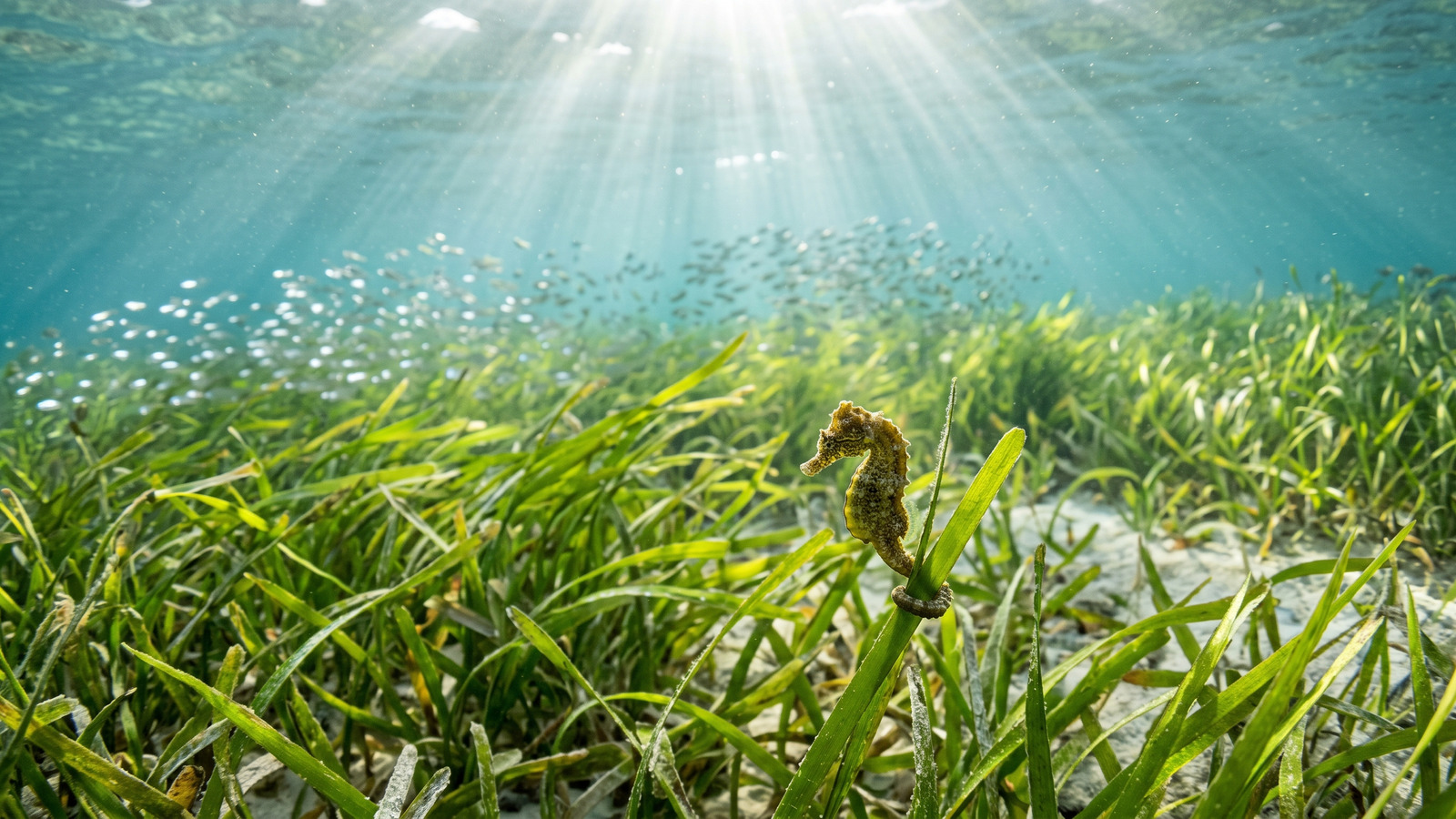
Bays and beaches is your family's own coastline, annotated: the seagrass tanks with their seahorses and pipefish (the meadow's hidden cast, finally visible), the shoreline habitats, and the local species your pier passport has been collecting: snook, sheepshead, and redfish at portrait range.
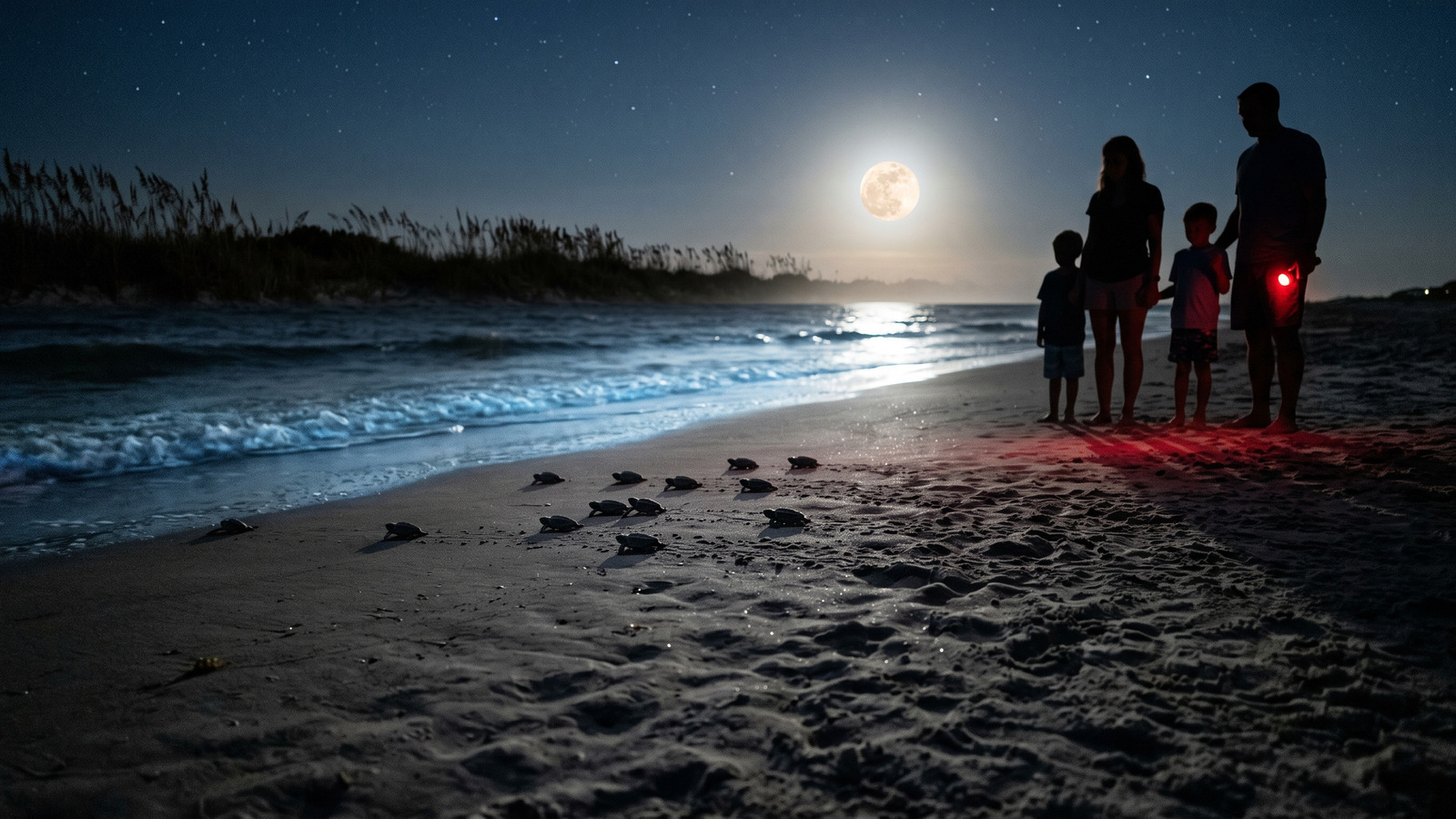
The coral reef gallery is the cathedral: the floor-to-ceiling window onto a half-million-gallon reef, sharks and grouper processing past, and the scheduled dive shows where a wetsuited educator answers kid questions from inside the tank (check times at entry and build the loop around one: it's the day's anchor event). The stingray touch experience teaches the two-finger contact code (flat hand, gentle, let them glide under), which is the tide-pool manners lesson administered by professionals. And sea turtle rehabilitation viewing shows the hotline's other end: real patients, real release stories, and the cleanest possible answer to "what happens when we call the number?"
The splash pad, outdoors, is the negotiated settlement that ends every local visit: schedule it last, bring the towel, and the museum day closes as a water day: which around here is constitutionally required.
| The plan | The move |
|---|---|
| Arrive | At opening; the dome before school groups |
| The anchor | Note dive-show times at entry, loop around one |
| Lunch | The café mid-loop, or stamp out to Sparkman Wharf next door |
| The finale | Splash pad, swimsuits pre-installed |
| Duration | 3-4 hours full; 2 hours highlights |
| The budget move | Library Discovery Pass or membership math |
The ticket strategy, honestly
The gate price is real (Florida's big aquariums run theme-park-adjacent pricing), and three levers move it: the library pass programs (Hillsborough's Discovery Pass has carried free aquarium admissions in its rotation: check current inventory, book fast), the membership math (two family visits typically cross the break-even, and locals treat the aquarium as a 90-minute errand precisely because the pass makes frequency free), and the resident and off-peak specials the aquarium runs seasonally. The parking is garage-adjacent with a covered approach: part of why this is the rainy-day system's reflex pick, with the streetcar-and-Sparkman Wharf pairing turning it into a full downtown day.
What the aquarium is actually for
Here's the framing that separates this site's aquarium visit from the default one: the tanks are the review, the coast is the course. The child who meets a seahorse behind glass and then finds the seagrass meadow it came from; who touches a ray on Tuesday and shuffles correctly on Saturday; who watches turtle rehab and then patrols their own nesting beach: that loop, run both directions, is the whole educational engine this coast offers families. The aquarium's conservation work (turtle rescue, coral restoration science) makes it a working institution, not a display case: tell the kids that plainly, because kids who know they're visiting a hospital-and-lab behave like colleagues, not customers.
The Little Naturalist activity
Run the wild-match game: before the visit, have kids list ten species they've personally met in the wild through this series (ray, heron, gator, snook, hermit crab, seahorse aspirationally); at the aquarium, find and photograph each one's captive cousin; afterward, the debrief: which looked different up close, and what could you see through glass that the wild never showed? The list makes the visit a treasure hunt, the debrief makes it science, and the photo set becomes the family field guide's illustrated edition.
Questions families ask
Stroller and toddler logistics?
Fully stroller-friendly with elevators throughout, nursing space, and the dome's boardwalk wide enough for the double-wide. Toddler pacing: dome, touch pool, splash pad, nap: skip the galleries' middle depth without guilt; the membership makes completionism unnecessary.
Is there a shark experience for the brave kid?
The aquarium has run in-water and behind-the-scenes programs (shark swims, penguin encounters, and similar premium add-ons rotate seasonally): check current offerings for ages and booking. The reef window's free shark procession satisfies most brave kids until the birthday-gift tier.
How does it compare to Clearwater Marine Aquarium?
Different institutions on purpose: this is the big collection and habitat spectacle; CMA is a working rescue hospital with a story-driven visit. Locals do both in a year and kids articulate the difference fast: one shows you the ocean, the other shows you the ambulance. This series endorses the pair.
What about the aquarium's boat tour?
The bay cruise from the aquarium's dock (seasonal offerings vary) pairs the tanks with the real estuary in one ticket: dolphins usually oblige. Check schedules; morning museum plus afternoon bay is the full-circle version of this whole article.
Questions families ask
What are the must-see exhibits at the Florida Aquarium?
The wetlands dome (a glass-roofed Florida swamp with free-flying birds and young alligators), the coral reef gallery with its floor-to-ceiling window and dive shows, the stingray touch experience, the sea turtle rehabilitation viewing, and the outdoor splash pad that closes every local family's visit.
How long does the Florida Aquarium take with kids?
Three to four hours covers the full loop with a snack break and splash pad time; two hours does the highlights for short attention spans. Locals with memberships treat it as a 90-minute regular stop, which is the membership's whole argument.
What age is the Florida Aquarium best for?
Genuinely all of them, with different centers of gravity: toddlers live at the touch pools and splash pad, grade schoolers work the dive shows and wetlands, and older kids connect the galleries to the real bay this site keeps taking them into. It's the region's most age-proof indoor ticket.
Is the aquarium a good rainy or hot day plan?
The best one: fully indoor galleries, a covered path from parking, and the splash pad for when the sun returns. It's the reflex pick in the rainy-day backup system, and summer locals go at opening to beat both heat and crowds.
Sources
More from the Bae
 Protect
Seagrass, Explained for Kids: The Underwater Meadows Everything Depends On
Seagrass is the underwater meadow feeding Tampa Bay: nursery for most of our fish, manatee salad, and oxygen factory. The kid-level tour.
 Learn
LearnSea Turtle Season: The Family Beach Rules That Save Nests from May to October
Sea turtle nesting season runs May through October on Tampa Bay beaches. The family rules: fill holes, flatten castles, lights out, and let nests be.
 Explore
Rainy Beach Day? The Backup Plan That's Better Than the Original
When Tampa Bay's 4 p.m. storms cancel the beach: the lightning rules, the wait-it-out math, and the indoor backup plans that outperform the original.