
Tides 101 for Families: How to Read a Tide Chart and Plan a Better Beach Day
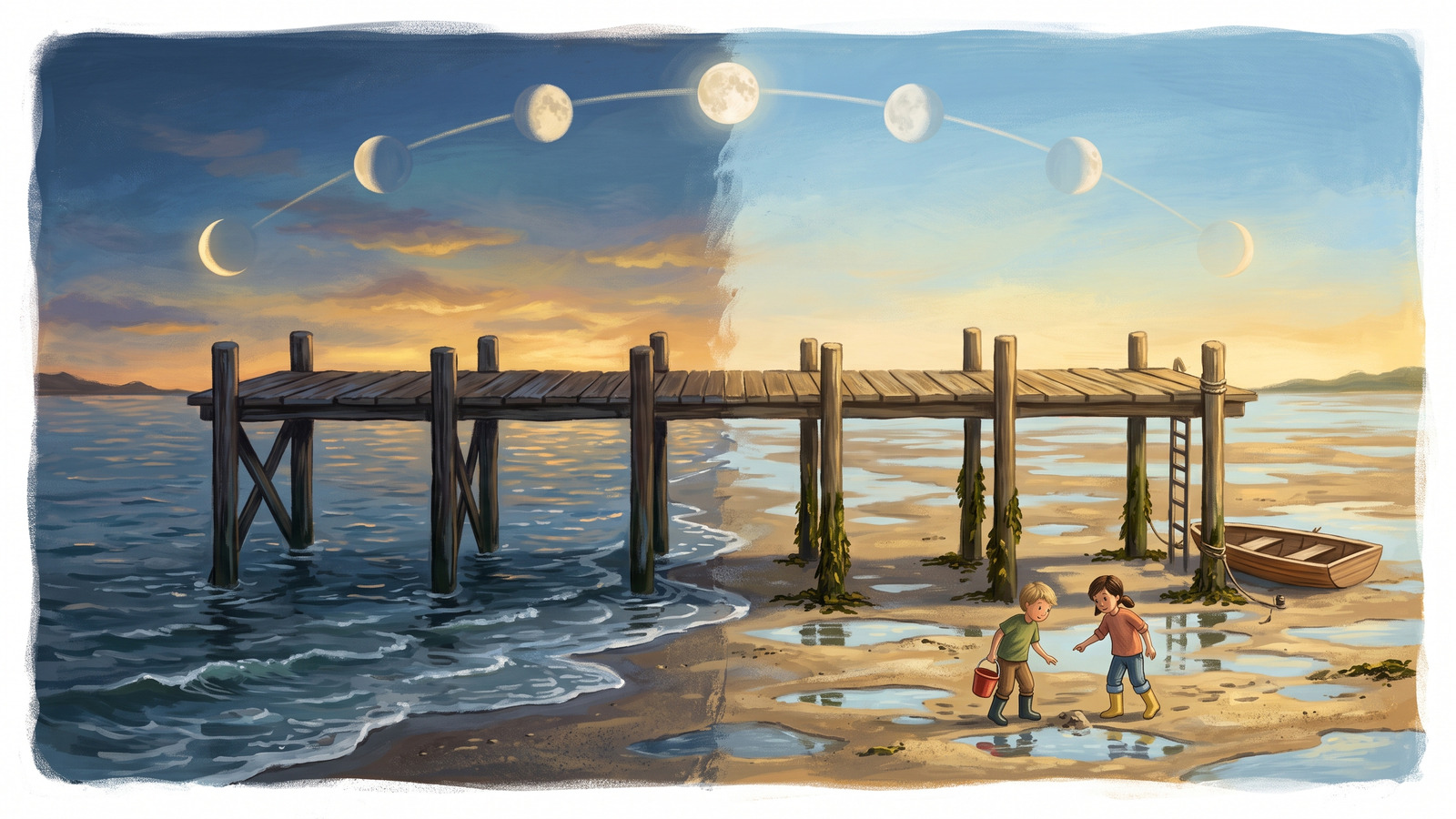
Two families arrive at the same beach an hour apart. The first finds a skinny strip of soft sand, waves at the towel line, nowhere to wade a toddler. The second finds a hundred yards of rippled flats, warm tide pools stocked with hermit crabs, and a sandbar begging for a kingdom. Same beach, same day: the difference was one number the second family checked at breakfast. The tide chart is the coast's daily schedule, it's free, it's accurate years in advance, and reading it is the single most local-making skill this site can teach your crew.
The moon runs the beach: the kid-sized physics
Deliver the mechanism once, simply, and it holds for life: the moon's gravity gathers the ocean into a bulge (with a twin bulge on Earth's far side, the seesaw's other end), and as Earth rotates, your beach sweeps through bulge, gap, bulge, gap: high, low, high, low. The sun plays second violin: when it lines up with the moon (new moon, full moon) the bulges stack and tides swing big: spring tides, nothing to do with the season; when sun and moon pull at right angles (quarter moons), they partly cancel: gentle neap tides. Your kids already own half this lesson: the horseshoe crabs keeping moon appointments and the sandbar days that only exist at low water are the same clockwork, seen from the sand.
The local plot twist worth naming: the Gulf coast's tides are "mixed": two highs and two lows most days, conspicuously unequal, and occasionally merging toward one grand high and one grand low. It's why here, more than most coasts, locals check rather than guess.
Reading the chart in thirty seconds
A tide table is four numbers and two skills. The numbers: times of the day's highs and lows, and their heights (in feet above or below the average low mark). The skills: direction (is the water coming or going right now? between a low and the next high, it's rising) and range (a 2.5-foot swing moves serious real estate; a 0.8-foot day barely breathes). Add the winter bonus every local family should know: our cold-season negative lows (heights below zero) drain the flats spectacularly, exposing sandbars and tide pool country that summer never shows: the best beachcombing of the year happens in January at ankle-biting water temperatures, which is what thermoses were invented for.
| The mission | The tide to book | Why |
|---|---|---|
| Shelling and wrack-line museum | Low, especially after storms or spring lows | The drifts and flats lie exposed |
| Tide pooling with little kids | Falling to low | Pools isolate, warm, and stock themselves |
| Sandbar anchoring | Low through early rise | The bar exists; depth under the hull returns for the ride home |
| Mangrove tunnel paddling | Mid or higher, ideally rising | Water in the tunnels, forgiveness under the hull |
| Swimming small kids | Mid, rising, calm wind | Gradual entry, gentler shore break |
| Pier and shore fishing | The hour around any change | Moving water moves bait; slack tide naps |
| Boat launching | Avoid extreme lows at shallow ramps | Trailers and grass flats agree on this |
The planning ritual
Fold it into the family's existing night-before check (the three tabs: weather, beach status, and now tide): pull tomorrow's local station predictions (NOAA's St. Petersburg or Clearwater Beach stations bracket most family water), read out the lows and highs at breakfast like a forecast, and let the numbers pick the mission rather than vice versa. A minus-low at 10 a.m.? Shelling expedition. High water at noon? Tunnel paddle or swim day. Fat 2.3-foot range with a mid-morning turn? Fishing's moving-water window. Families who plan tide-first stop having generic beach days entirely: every outing arrives pre-matched to what the coast is actually offering that day, which is the entire local advantage in one habit.
The Little Naturalist activity
Build the stick gauge: at a calm shore, plant a marked stick (tape bands every inch) at the waterline on arrival, note the time, and have kids log the water's position against it every twenty minutes alongside the chart's prediction. Watching the printed forecast come true against their own instrument (usually within minutes and a hand's breadth) lands the deepest science lesson this site owns: the natural world runs on knowable schedules, and a child with the schedule is never merely lucky at the beach again. Graduate the gauge keeper to moon-phase forecasting and the loop closes.
Questions families ask
Why was the tide chart wrong today?
It almost never is: wind is the usual editor. A stiff onshore blow stacks extra water over the prediction; a hard offshore wind drains below it: locals call it wind tide, and learning to add that mental correction (chart plus weather) is the graduate course, taught free by any breezy day at the stick gauge.
Do tides matter for safety, not just fun?
Directly: rising tides refill sandbars and cut off wanderers (teach kids the walk-back-early rule), outgoing water through passes runs strong (the structure-current lesson), and paddlers time routes so the tide carries them home rather than fighting them. The chart is the safety briefing wearing a fun hat.
What's a king tide?
The year's most extreme spring tides, when moon distance and alignment stack: notably high highs (and low lows), often flooding low streets on calm sunny days. They're a preview-of-the-future teaching moment for older kids, and, at the low end, the beachcomber's national holiday.
One station's predictions for the whole bay?
Close counts for family purposes, with lag: the tide wave arrives at Egmont's mouth before it reaches upper Old Tampa Bay by a meaningful margin, so use the station nearest your actual beach and note your home spot's offset once. Precision beyond that is for captains, who will find the harbor tables happily.
Questions families ask
How do tides work, in one paragraph for kids?
The moon's gravity pulls a bulge of ocean toward it, the spinning Earth carries your beach into and out of that bulge, and the water rises and falls on schedule: that's the tide. The sun helps or hinders: moon and sun aligned (new and full moons) make bigger 'spring' tides; at quarter moons they cancel somewhat into milder 'neap' tides.
Why are Tampa Bay's tides so irregular?
Our coast runs mixed tides: usually two highs and two lows a day, but unequal in size, and on some days the pattern collapses to nearly one of each. That quirk is why locals check the chart instead of assuming, and why the chart-checking habit pays off more here than almost anywhere.
What's the best tide for a beach day with kids?
Depends on the mission: low and falling tide for shelling, tide pooling, and sandbars; mid and rising for kayak tunnels and swimming comfort; moving water (either direction) for fishing. The family cheat sheet in this article matches each activity to its tide.
Where do we check tide predictions?
NOAA publishes free predictions for local stations (St. Petersburg, Clearwater Beach, and more), and every weather app carries a tide module. Check the night before, note the low and high times and heights, and plan the day's mission around them: it's a thirty-second habit.
Sources
More from the Bae
 Explore
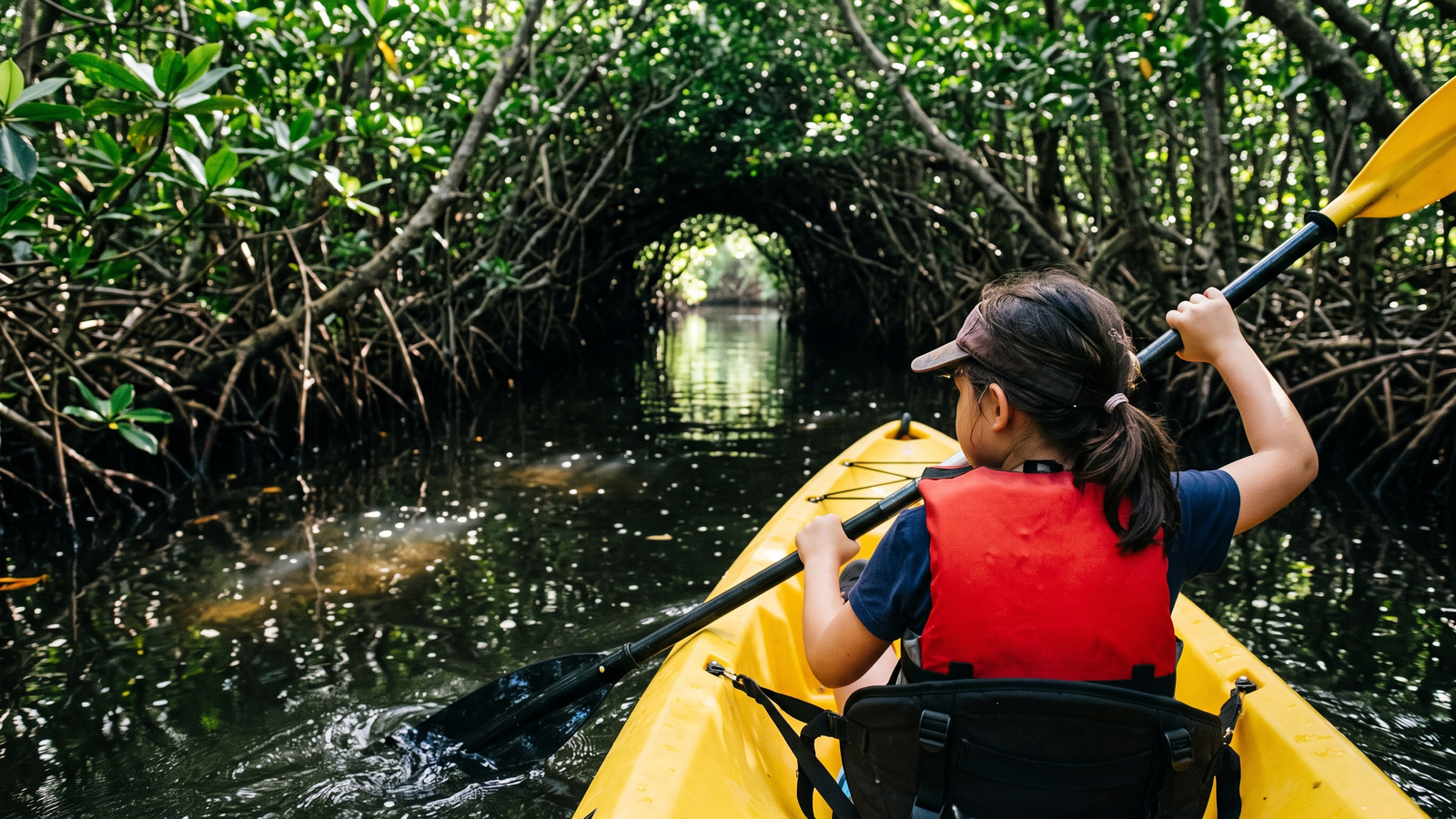
Kayaking Weedon Island with Kids: The Mangrove Tunnel Trail, Step by Step
Kayaking Weedon Island's South Paddling Trail with kids: the marked 4-mile mangrove tunnel loop, rentals, tide timing, and the step-by-step family plan.
 Explore
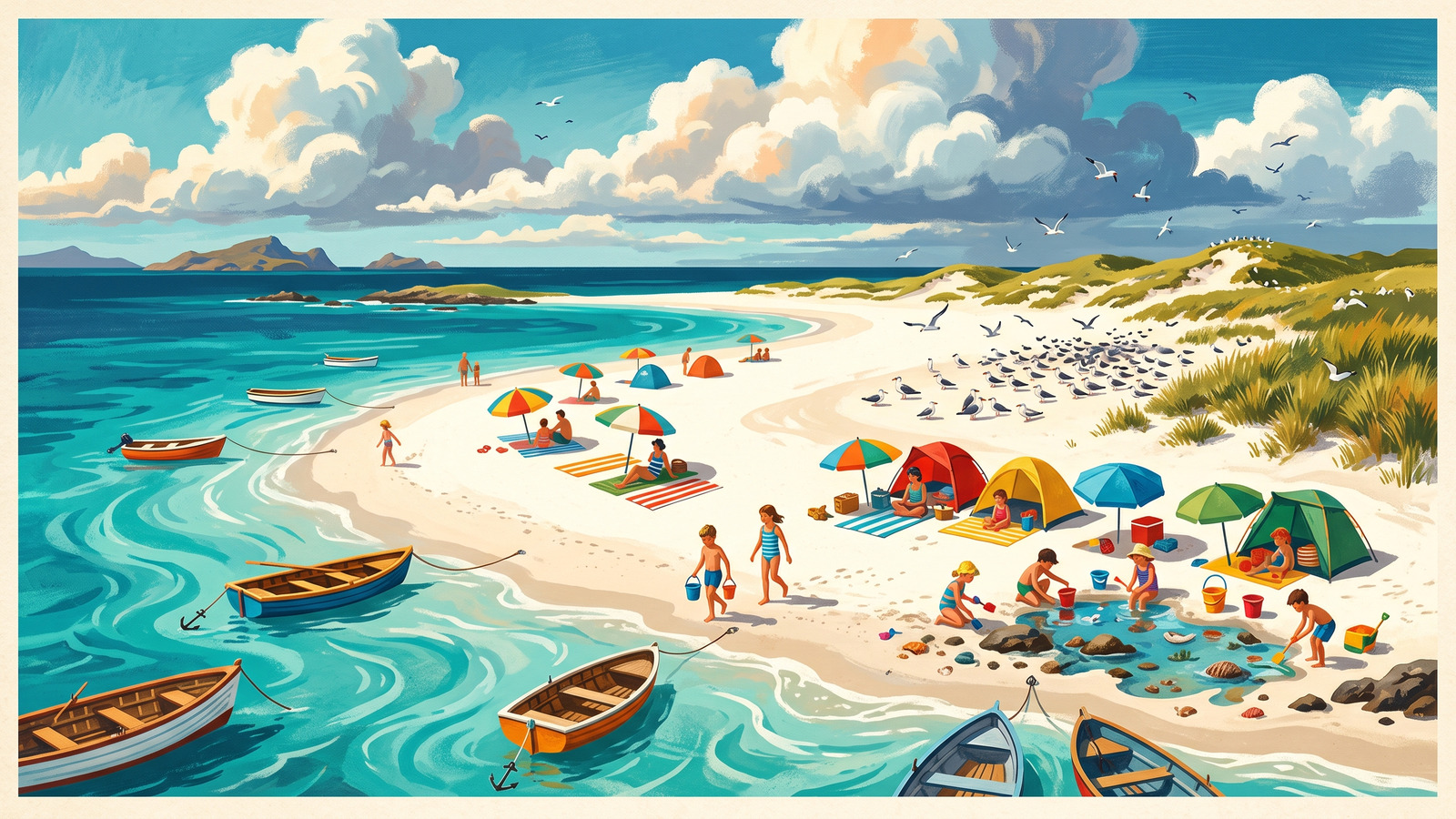
Shell Key by Ferry or Paddle: The Wild Island Afternoon Your Kids Will Remember
Shell Key Preserve: an undeveloped barrier island reached by shuttle from Pass-a-Grille or by paddle, with world-class shelling and zero buildings.
 Explore
Shelling with Kids: The Best Sands, the Right Tide, and What to Leave Behind
Shelling with kids around Tampa Bay: the best beaches, the low-tide and after-storm timing, a starter ID list, and the is-anybody-home rule.