
Rainy Beach Day? The Backup Plan That's Better Than the Original
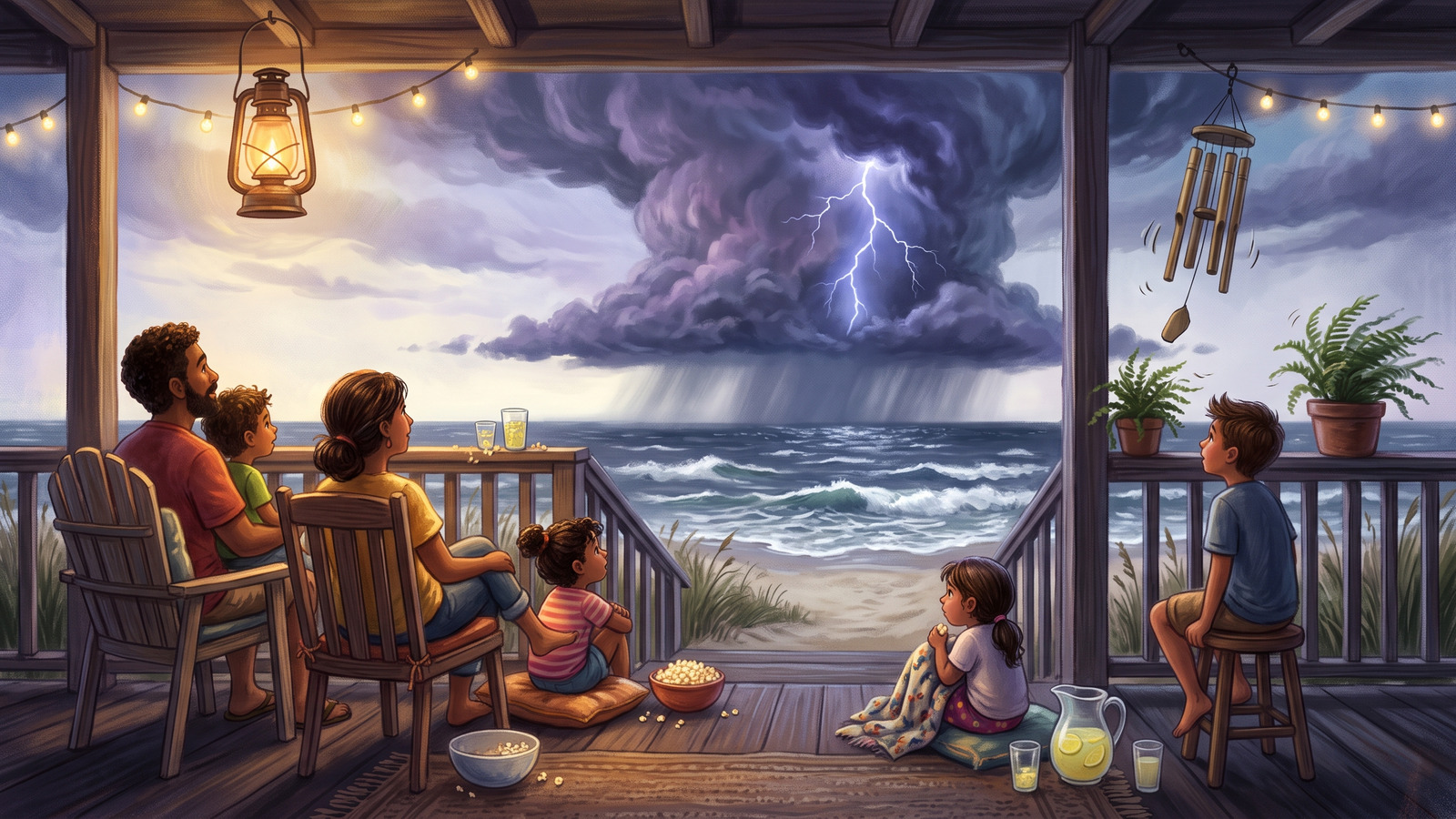
Every Tampa Bay summer family owns the same photograph, whether or not anyone took it: the 3:40 p.m. sky going the color of a bruise behind a beach full of scattering umbrellas, one parent doing the towel-scoop sprint, and a horizon already strobing. The afternoon storm is not weather here; it's a civic institution, punctual as a school bell, and the families who thrive in summer are not the ones who out-guess it (nobody does) but the ones who built their day around it: morning at the water, exit before the bruise, and a backup plan so good the kids occasionally root for rain. This is that system.
The machine behind the 4 o'clock storm
Give the kids the mechanism once and the daily forecast becomes legible forever: Florida is a warm peninsula between two seas, morning sun heats the land, and the heated air rising inland pulls breezes in from both coasts: the gulf's from our side, the Atlantic's from theirs. By mid-afternoon the two sea breezes collide over the interior, shoving warm wet air upward into the towering clouds your crew can watch build from the towel: cumulus at lunch, anvil by three, and the collision's daily lightning made this state the country's undisputed lightning capital, with the I-4 corridor as its main stage. The schedule drifts with the day's winds (some days the collision happens east and the coast stays golden; some days it marches west and arrives early), which is why locals read the radar like a tide chart: not to cancel, to time.
The lightning law, non-negotiable
This series does calm safety, and lightning gets the calmest, firmest paragraph in it. The rule: when thunder roars, go indoors: audible thunder means strike range, no exceptions for sunshine overhead or "one more swim." Indoors means a real building or a hard-topped car: pavilions, tents, and umbrella clusters are not shelter, and open sand, water, and piers are exactly where not to be. The clock: 30 minutes after the last thunder restarts the day, timed honestly (kids make excellent, merciless timekeepers). Lifeguarded beaches will clear the water for you; unguarded sand makes your family the lifeguard, and the drill run matter-of-factly (pack calmly, car picnic, radar check) teaches the deepest weather lesson this coast offers: respect without fear, the alligator-sense voice pointed at the sky.
The wait-it-out math
Not every rumble ends the day: the classic cell blows through in 30 to 60 minutes, trailing cooled air and emptied beaches, and families who waited (car snack, library book chapter, radar refresh) inherit a rinsed, half-private coast for the golden evening hours. The decision tree veteran crews run at the first thunder: check radar motion (one cell passing, or a training line?), check the clock (is there re-beach time before dinner?), check the crew (nappers and the sunburned vote for the pivot). One cell plus early hour equals wait; anything else triggers the backup, cheerfully, because the backup was chosen last night.
The backup lanes, pre-decided
| The lane | The picks | Best for |
|---|---|---|
| Aquarium lane | The Florida Aquarium, Clearwater Marine Aquarium | Everyone; the reflex pick |
| Museum lane | History Center, the Dalí, Bishop's manatees | Grade school up |
| Little-kid lane | Glazer, Great Explorations | The under-8 crew |
| Free lane | Library programs and museum passes | Every Tuesday, every budget |
| Home lane | Boater course, shell-collection curating, the fort-blanket classic | The stay-in day |
The one rule that makes the system work: name the backup before the beach day starts ("if it storms, we're doing the aquarium"), because a plan chosen in sunshine executes in rain, while a debate held in a wet parking lot executes in tears. The two-beach habit taught the pivot; this is its indoor wing.
The Little Naturalist activity
Make the crew storm forecasters: each summer morning, have kids call the day's storm arrival time from the evidence (humidity feel, morning cloud build, the app's radar loop), log predictions against reality for two weeks, and crown the house meteorologist. They'll discover the pattern's rhythm and its exceptions personally, start narrating cumulus stages from the back seat, and: the real product: internalize that this coast's weather is knowable, schedulable, and no reason to fear a forecast icon. The sunset log crew already has the notebook out.
Questions families ask
Is morning really that much safer for lightning?
Dramatically: the sea-breeze machine needs hours of heating to arm itself, so the 8-to-1 window carries a small fraction of the day's strike risk, which is exactly why this series schedules everything from sandbars to tide pools before lunch in summer. The pattern relaxes October through May, when fronts, not sea breezes, run the weather.
What about rain without thunder: can we stay on the beach?
A warm, thunder-free shower on a summer beach is honestly delightful (ask any kid), and nothing in the law forbids it: the trigger is thunder, not water. Watch the radar for what follows the shower, keep the flag rules in force, and enjoy the county's least-crowded swimming.
Do the storms affect the bay and boating differently?
More, not less: open water is the worst lightning real estate there is, and squall winds arrive ahead of the rain: which is why boat-day doctrine docks crews by early afternoon all summer, no debate. The bruise-colored sky negotiates with no hull.
Our vacation week looks all storm icons. Are we doomed?
You're fine: the icons encode the afternoon pattern, not all-day washouts, and visiting families who adopt the local schedule (early beach, backup lane, evening return) routinely log full beach vacations under a forecast that looked apocalyptic from Ohio. Welcome to summer's actual rhythm: the locals built a whole way of life inside it.
Questions families ask
Why does it storm every summer afternoon in Tampa Bay?
The sea breeze machine: mornings heat the peninsula, drawing gulf and Atlantic breezes inland until they collide over the middle by mid-afternoon, igniting the daily thunderstorms that made Florida the lightning capital of the country. It's a schedule, not bad luck: mornings are the beach's safe half.
What's the lightning rule for beaches and pools?
When thunder roars, go indoors: if you can hear thunder, lightning is in range, and the beach, pool, and piers clear immediately. The all-clear comes 30 minutes after the last thunder heard. Pavilions and canopies don't count as indoors; cars and real buildings do.
Should we cancel a beach day if rain is forecast?
Almost never for the classic summer pattern: the storm icon usually means the 3-to-6 p.m. window, not the whole day. Go early, plan the exit before mid-afternoon, and keep a named indoor backup. Cancel-and-mope loses to shift-and-conquer every time.
What are the best rainy-day backups near the beaches?
The region is stacked: the Florida Aquarium and Glazer in Tampa, Clearwater Marine Aquarium a bridge from the sand, Great Explorations and the Dalí in St. Pete, the History Center downtown, and the library systems' free everything. Pick your lane by age and county, and keep two pre-decided.
Sources
More from the Bae
 LearnCornerstone
The Florida Aquarium with Kids: A Local's Room-by-Room Game Plan
The Florida Aquarium with kids: the room-by-room game plan, from the wetlands dome to the stingray touch pool, plus timing and ticket strategy.
 Learn
LearnClearwater Marine Aquarium: The Rescue Story Behind Every Tank
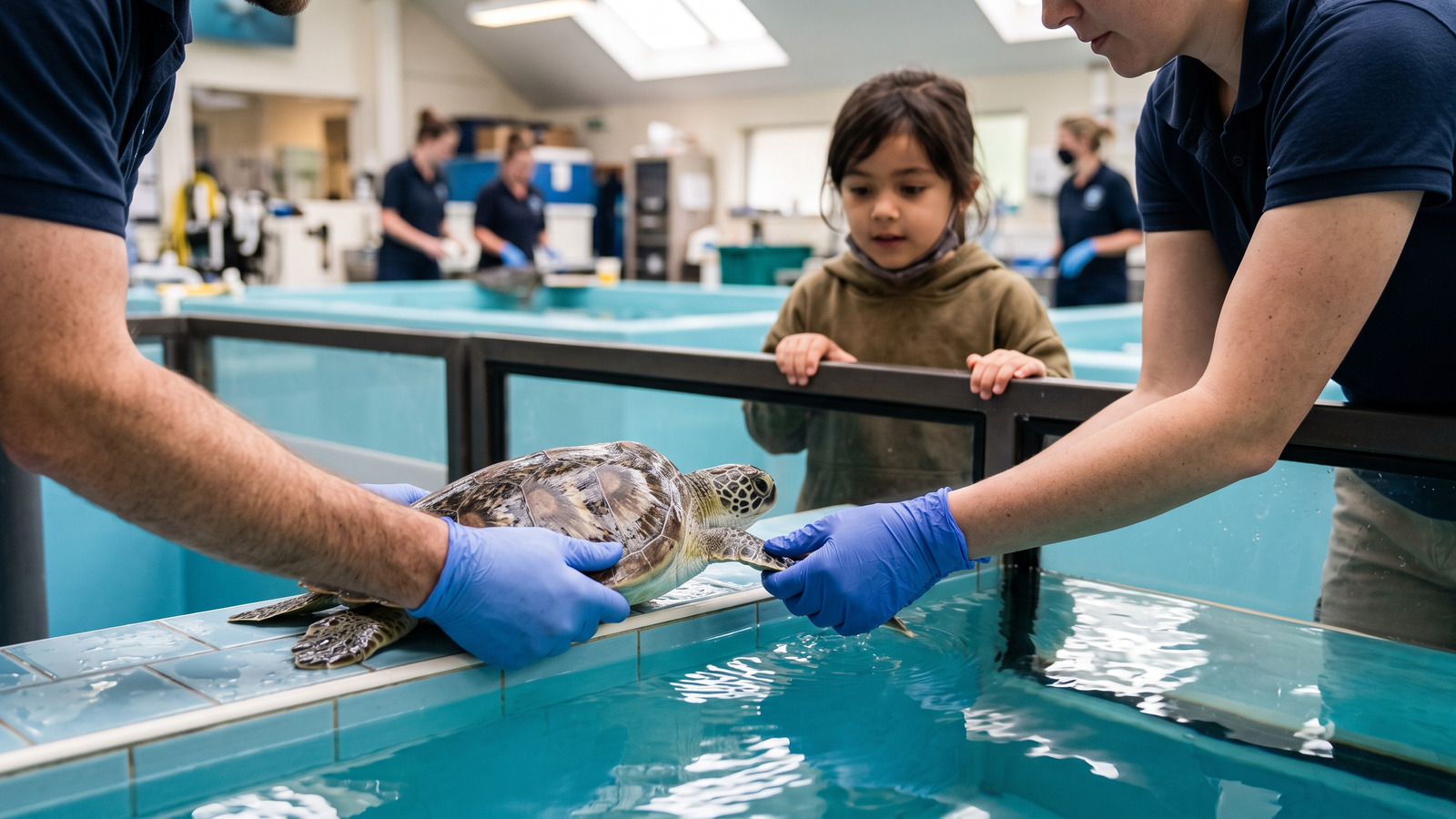
Clearwater Marine Aquarium is a working rescue hospital: every resident has a rescue story, Winter's legacy lives on, and kids leave wanting to help.
 Learn
LearnTampa Bay History Center: Making 12,000 Years Interesting to a Nine-Year-Old
The Tampa Bay History Center with kids: a boardable pirate ship, the Tocobaga galleries, cigar city, and 12,000 years made genuinely interesting.