
Alligator Sense for Families: The Calm Facts Every Florida Kid Should Know
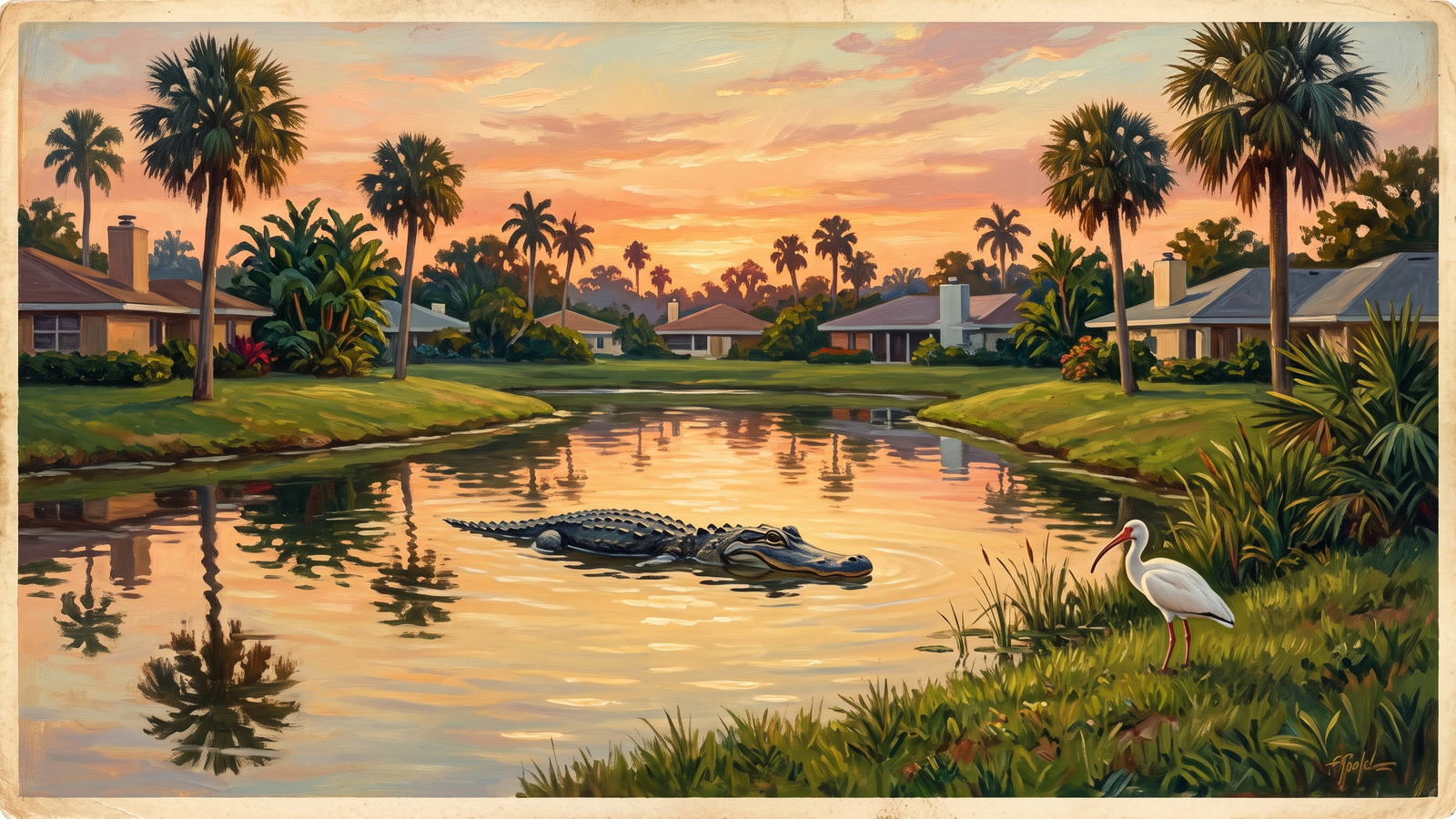
At some point this year, a relative from up north will look at your neighborhood retention pond and ask, in a lowered voice, whether there's something in there. The honest Florida answer is: quite possibly, and everyone's fine. Raising kids here means raising kids who are neither casual about alligators nor afraid of their own state, and that middle ground has a name. Locals call it gator sense, and it can be taught in an afternoon.
The honest numbers first
Fear shrinks when you weigh it. Since 1948, FWC has documented roughly 500 unprovoked alligator bites in Florida, which averages out to six or seven a year, and 32 deaths across nearly eighty years. Set that against a state with 1.3 million alligators, 23 million residents, and tens of millions of visitors wading, paddling, and golfing beside fresh water every single day, and the picture resolves: the alligator is not hunting your family. Recent years have run above the long average, and this summer's tragedy in Seminole County is a sober reminder the number is never zero. Which is precisely why the habits below are worth teaching rather than skipping: they're how a rare risk stays rare at your house.
The species itself is one of conservation's loudest success stories, hunted to the brink by the 1960s, protected, and recovered so thoroughly it became the state reptile. Kids should hold both facts at once: comeback and caution.
The three habits of gator sense
Habit one: designated swim areas, daylight only. Alligators live in lakes, rivers, canals, retention ponds, and ditches. Marked swimming areas exist because they're maintained and watched, and daylight matters because gators feed most actively at dusk, night, and dawn. One sentence covers it: in Florida, fresh water is gator water, and we swim where the sign says.
Habit two: pets on leashes, back from the edge. A small dog at the waterline reads as prey in a way a person never does, and most neighborhood close calls involve dogs. Walk the pond path happily; just own the ten feet nearest the water.
Habit three: never feed, never approach, never harass. Feeding is illegal because it rewires the animal: a gator that connects people with food loses its wariness and, once it starts approaching docks and yards, generally must be destroyed. The kids' version lands hard and true: feeding a gator is how you get a gator in trouble. Thirty feet of distance is a good family standard for any gator on land, and a sunning gator with its mouth open is air conditioning, not aggression.
What about the one in our pond?
A gator under four feet is generally considered no threat to people and part of the scenery. One that's large, has lost its fear, or is somewhere it can't stay (a pool, a garage, a playground fence line) is a job for the state's Nuisance Alligator Program: 866-FWC-GATOR (866-392-4286). Teach older kids that number exists; it converts "scary" into "handled."
| Situation | The gator-sense response |
|---|---|
| Gator sunning across the pond | Enjoy it; that's Florida working |
| Gator on the path or lawn | Give it 30 feet and go around; it's commuting |
| Gator approaches people or begs | Someone fed it; leave and call FWC |
| Gator over 4 feet where kids or pets play | Call the nuisance line: 866-392-4286 |
| Any gator, any size, being fed by anyone | That's the actual emergency; say something |
Where families can learn gators safely
Boardwalks are the classroom: Lettuce Lake Park in Tampa and Circle B Bar Reserve near Lakeland offer close, elevated, completely safe viewing of wild alligators being magnificently boring. Watching a big one drift like a log for twenty minutes recalibrates kids better than any lecture: awe in, panic out. Zoos and wildlife parks fill in the biology, including the one fact that never misses: a mother gator carries her hatchlings in her jaws as gently as you'd carry eggs.
The Little Naturalist activity
Play "spot the periscope" from any safe boardwalk: only eyes and nostrils show on a swimming gator, and kids who learn that silhouette will read every pond, lake, and canal in Florida correctly for life. Follow with the temperature question: gators are cold-blooded, so ask kids to predict where one will be on a chilly morning (sunning) versus an August noon (submerged), then check their forecast against the water.
Questions families ask
Are alligators in salt water at the beach?
Rarely and briefly; gators lack salt glands, so the gulf beaches are effectively gator-free. Brackish spots where rivers meet the bay can host a traveler, which is why the freshwater rule is worded "assume any fresh or brackish water."
What months are gators most active?
Warm ones. Activity rises April through October, with courtship in spring making big males more mobile. Winter gators mostly nap, which is why January boardwalk counts feel low.
Should we avoid kayaking because of alligators?
No; paddlers share Florida's rivers with gators every day without trouble. Stay in the boat in fresh water, keep hands and snacks inboard, give sunning gators a wide line, and skip swimming at the sandbar unless it's a designated area.
How do I answer "could a gator eat me?" at bedtime?
With the math and the plan: "It's happened fewer times in Grandma's whole lifetime than lightning strikes happen in a single year here, and our family follows the three habits, so we're the boring kind of people gators ignore." Respect plus a plan is what safety feels like from the inside, at any age.
Questions families ask
How common are alligator attacks in Florida?
Rare, and the numbers say so: FWC has recorded about 500 unprovoked bites since 1948, roughly six or seven a year on average, with 32 deaths in nearly eight decades. Florida holds 1.3 million alligators and 23 million people, and almost all of both mind their own business.
What is the number one alligator safety rule?
Assume any fresh water in Florida can hold an alligator, and swim only in designated swimming areas during daylight. That one habit, taught once, does more than every other rule combined.
Why is feeding an alligator such a big deal?
Because a fed gator learns that people mean food, loses its natural wariness, and usually has to be removed and killed once it starts approaching people. Feeding is illegal in Florida for exactly that reason. The kindest thing your family can do for a gator is be uninteresting.
What should we do about small dogs near water?
Keep them leashed and well back from the edges of ponds, canals, and lake shores, especially at dusk, dawn, and night. Pets at the waterline look like natural prey, and most close calls in neighborhoods involve dogs, not people.
Sources
More from the Bae
 LearnCornerstone
Florida's State Symbols, Explained for Kids: Every Animal, Flower, and Song, and the Stories Behind Them
Every Florida state symbol explained for kids: the panther, manatee, mockingbird, zebra longwing, and more, with the stories and the flamingo debate.
 Learn
LearnSea Turtle Season: The Family Beach Rules That Save Nests from May to October
Sea turtle nesting season runs May through October on Tampa Bay beaches. The family rules: fill holes, flatten castles, lights out, and let nests be.
 Learn
LearnThe Gopher Tortoise: Florida's Little Landlord and the 350 Neighbors in Its Burrow
The gopher tortoise digs burrows that shelter 350 other species. Where families can see Florida's little landlord, and the never-put-it-in-water rule.