
Fishing with Kids 101: Licenses, Piers, and the First-Catch Checklist
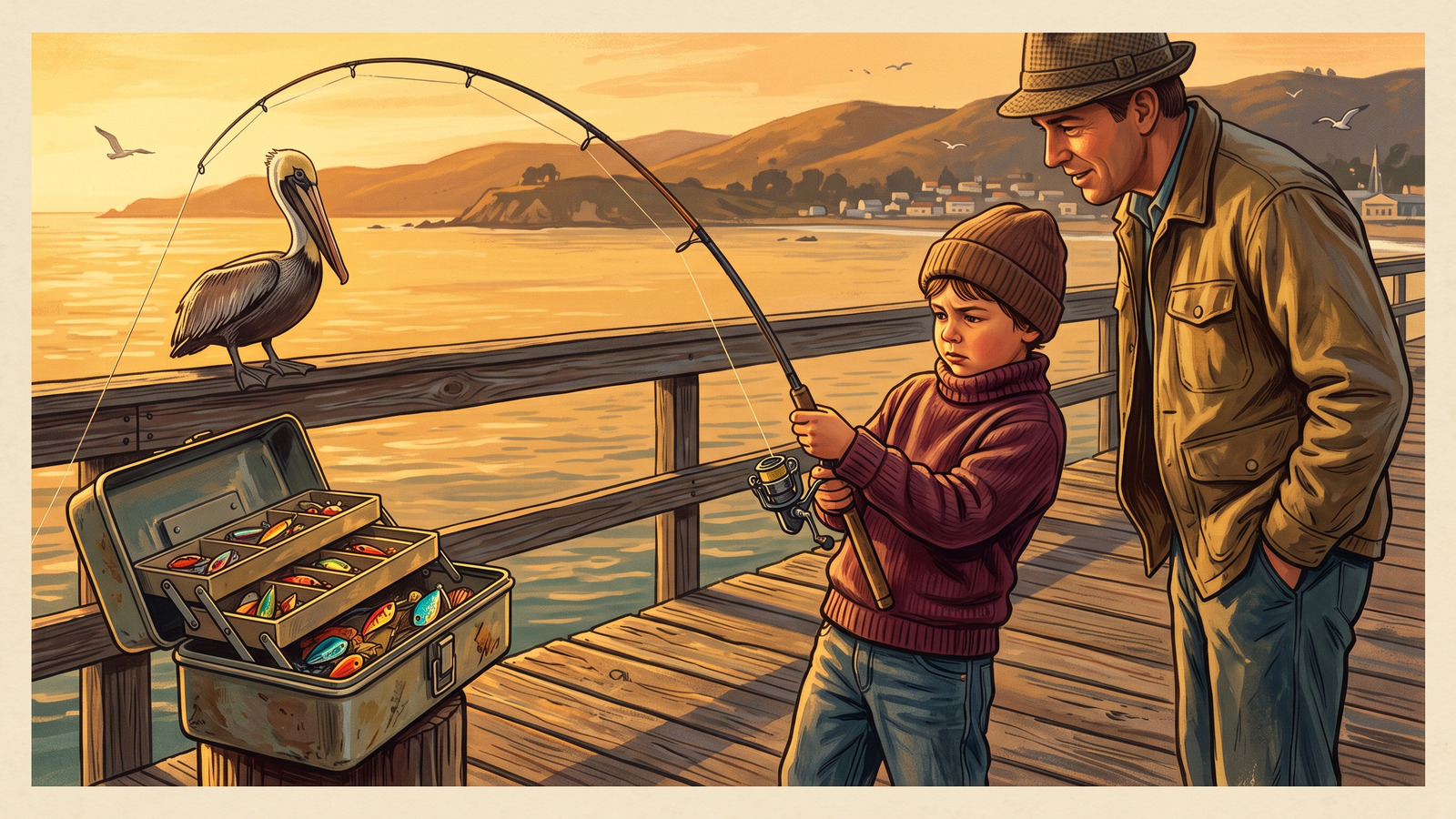
Nobody remembers their hundredth fish. The first one, though (the rod tip bouncing, the shriek, the flapping silver fact of it swinging over a railing) installs permanently, which is why grandparents who can't recall last Tuesday can describe their first pinfish in courtroom detail. Tampa Bay may be the easiest place in America to give a child that memory: piers everywhere, fish that bite year-round, bait shops that hand out advice free, and a license system that, once decoded, costs a resident family exactly nothing. Here's the decode, plus the checklist that makes the first catch nearly inevitable.
The license question, settled in one table
| Who | What they need from shore | Cost |
|---|---|---|
| Kids under 16 | Nothing, anywhere | Free |
| FL resident adults, shore or wading | Resident shoreline saltwater license | Free, but register it |
| FL residents 65 and older | Nothing (exempt) | Free |
| Anyone on a licensed pier | Nothing: the pier's license covers all anglers | Pier admission only |
| Non-resident adults | Regular saltwater license | $17 (3-day), $30 (7-day), $47 (annual) |
| Anyone fishing from a boat | Regular license rules (boat-day chapter) | Varies |
Two footnotes worth saying aloud: the free shoreline license exists so the state can count its anglers, and registering it (online in five minutes) is the grown-up homework; and "licensed pier" is the family cheat code: the pier bought a blanket license, so visiting grandparents, non-resident cousins, and undocumented-by-paperwork parents all fish legal the moment they pay admission.
Pick your pier
The starter criteria: railings, benches, a bait shop with rod rentals, and restrooms within a kid's sprint. Around the bay that means the Fort De Soto Gulf and Bay piers (free fishing, bait shop, pelican theater), the big beach piers with their built-in sunset festivals, and the region's crown oddity: the Skyway Fishing Pier State Park, the old bridge spans reborn as (by local boast) the world's longest fishing pier, lit at night and famous for serious fish. The Skyway runs serious rules to match: every angler, of every age and exemption, completes a short online seabird-safety course annually, gear is capped at two rods per person, and from November 15 to March 15 multi-hook rigs, trebles, and jigs are banned outright: all of it because diving pelicans and wintering seabirds share the rail, and entanglement is the pier's real enemy. A family that does the ten-minute course together has had the wildlife-ethics lesson before the first cast, which is this site's kind of paperwork.
The first-catch checklist
Kid fishing is engineering for frequency, and the rig is deliberately humble: a light rod (rentals are fine), a small hook (size 6 or so: small hooks catch everything, big hooks catch nothing), a piece of fresh-cut shrimp from the bait shop, and a float set two or three feet up so the strike is visible: the bobber dip is half the theater. Drop it beside pilings where the structure current stirs the buffet, and let the pier's population do the rest: pinfish, grunts, and juvenile snapper compete to be first. Set expectations honestly (we're catching small and often, and everything swims home today) and bring the two tools that separate prepared families: a damp rag for handling and pliers for hook removal.
The handling ritual is the conservation lesson wearing gloves: wet hands before touching (dry hands strip a fish's protective slime), support the belly, watch for dorsal spines (pinfish are named honestly), one quick photo, and back over the rail gently: kids who master release fishing have learned that the game is the visit, not the keeping. Circle hooks, which catch the lip and spare the gut, are the upgrade purchase when your crew graduates from rentals.
The Little Naturalist activity
Start the species passport: a notebook page per species caught, with date, pier, bait, and a kid-drawn portrait: pinfish first, then the collection grows (grunt, snapper, ladyfish, the inevitable catfish with its own handling lecture). Tampa Bay pier regulars can carry a family past twenty species without leaving a railing, each one findable afterward in the aquarium's tanks for the full-circle moment. A passport with fifteen stamped species is a marine biology course that thought it was a hobby.
Questions families ask
What about the pelican standing next to us like a coworker?
The pier pelican is a professional freeloader, and the rules are firm kindness: never feed it (fed pelicans mob anglers and swallow hooks), reel fast when it eyes your bait, and if a bird is ever hooked, don't cut the line: reel it in calmly, cover its eyes with the rag, and the bait shop will help unhook or call rescue. The Skyway's whole seabird course exists for exactly this moment.
Can we keep and eat what we catch?
Once the crew outgrows catch-and-release, absolutely, inside the rules: FWC's regulations app lists seasons and sizes per species, the bait shop translates fluently, and sheepshead and mackerel are the classic first keepers. The family standard stays: know the rule before the cooler opens, and when in doubt, it swims.
Rods for little kids: what's worth buying?
After the rental test-drive proves interest: a short spinning combo sized to the child, spooled light, under thirty dollars, and expect it to be beloved and abused equally. Skip the cartoon push-button rods that break by August; a real small reel teaches real skills.
Is fishing compatible with everything else this site teaches?
It's the same curriculum with a rod: tide reading, wildlife ethics, patience, species ID, and pack-out habits (fishing line is the cleanup's most dangerous find, so your family's scraps go in the pier's line-recycling tubes, every inch). An angler kid raised this way is a naturalist with better wrist action.
Questions families ask
Do kids need a fishing license in Florida?
No: children under 16 fish license-free statewide. Florida resident adults fishing from shore need the resident shoreline saltwater license, which costs nothing but must be registered, and residents 65 and older are exempt. Everyone fishing from a licensed pier is covered by the pier's license.
Where's the easiest place to take kids fishing for the first time?
A licensed pier: the license question vanishes, bait and rod rentals live at the shop, fish gather around pilings, and railings plus benches keep the outing contained. Around Tampa Bay, the Fort De Soto piers, the big beach piers, and the Skyway rest piers are the classic starters.
What will my kids actually catch?
Pinfish, grunts, small snapper, and the occasional ladyfish or mackerel: fast-biting pier regulars perfectly sized for small hands. The honest secret of kid fishing is that bite frequency beats fish size every time, and Tampa Bay's piers run high-frequency all year.
What's special about fishing the Skyway piers?
The old Skyway bridge spans are now a state park pier famous for big fish and night lighting, and it runs its own rules: every angler completes a short annual online seabird-safety course, gear is limited to two rods, and winter months ban multi-hook rigs and treble hooks to protect diving birds.
Sources
More from the Bae
 Explore
Tides 101 for Families: How to Read a Tide Chart and Plan a Better Beach Day
How to read a tide chart, why Tampa Bay's tides are quirky, and the family cheat sheet matching low tide, high tide, and moon phases to activities.
 Explore
Fort De Soto with Kids: Beach, Fort, Ferry, and the Best Picnic Tables in Florida
Fort De Soto with kids: the North Beach lagoon, the 1898 fort, the Egmont ferry, the Paw Playground, camping, and the full family day.
 Learn
LearnBaby Shorebirds on Our Beaches: What the Roped-Off Areas Protect, and How to Teach the Why
Those roped-off beach areas protect eggs and chicks you can't see: skimmers, terns, and plovers nesting February 15 to August 31 on Tampa Bay sand.