
Clearwater Marine Aquarium: The Rescue Story Behind Every Tank
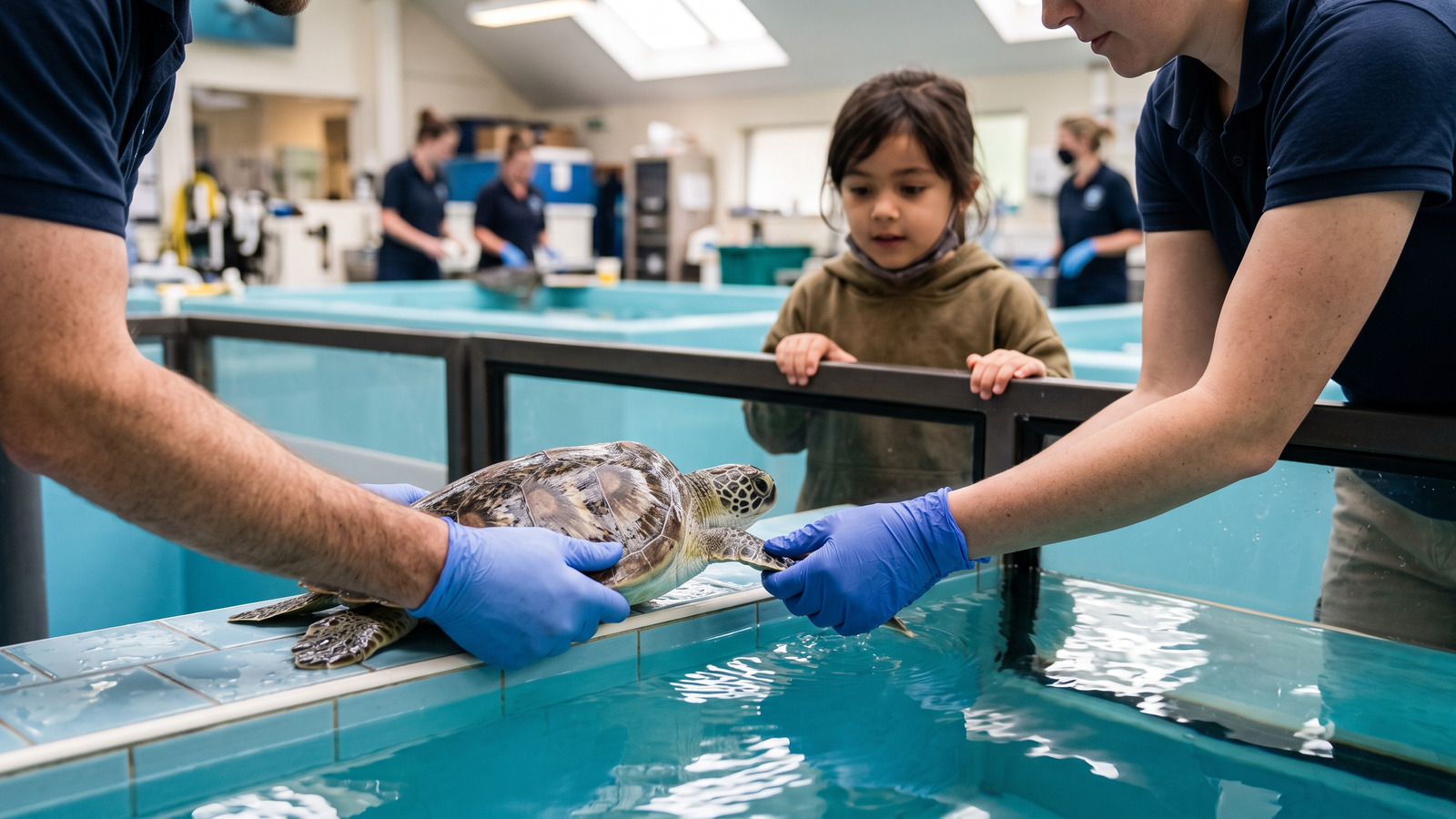
There's a moment at Clearwater Marine Aquarium that reorganizes children, and it usually happens at a tank card. A kid reads the resident's story (found entangled in fishing line; struck by a boat; stranded, cold-stunned, flown in) and looks up at the animal swimming anyway, and you can watch the recalibration happen: this isn't a collection, it's a ward. CMA is the region's working marine hospital with a public gallery attached, every resident is a patient or a survivor, and the visit teaches something no exhibit hall can: rescue is a real job, done by real people, funded partly by the ticket in your hand.
A hospital you can visit
Frame the visit before the doors: this is triage-and-care you're walking through. The sea turtle hospital runs a live patient board (names, conditions, progress: kids track individuals like fans), the resident dolphins are animals whose strandings or injuries made release impossible, and the seabird aviary is effectively a veterans' home for pelicans who met fishing line the hard way: the very entanglement your family's line-recycling habit prevents. That loop closes hard here: the hotline number your kids memorized, the dark-beach rules, the packed-out line: CMA is where the saved ones go, and children who realize they're already on the rescue team walk the halls differently.
The release part matters most, and CMA tells it well: the majority of patients (turtles especially) heal and go home to the gulf, and release days (announced publicly, sometimes on the beaches your family uses) are the institution's graduations. Ask at the desk which patients are close: following one from tank card to release-day beach is the single best conservation arc a local childhood can collect.
Winter's legacy, told honestly
For a generation of kids, this aquarium was Winter's house: the young dolphin who lost her tail to a crab-trap line, swam wrong, and was fitted with a prosthetic tail whose engineering (and the gel sleeve invented for it) went on to help human amputees, all of it made famous by the Dolphin Tale films shot here. Winter died in late 2021, and the aquarium grieved publicly and well; today the Tales of Winter exhibit keeps the story: film props and costumes, her actual prosthetics, and the science honestly told. For visiting families the guidance is simple: kids who know the movies should hear before arrival that Winter herself has passed, and that the exhibit is a celebration: handled that way, it lands as legacy, not loss. Hope and the other resident dolphins carry the ambassador work forward, and the rescue mission Winter funded is the living memorial.
| The visit, planned | |
|---|---|
| Duration | 2 to 3 hours: sized for real attention spans |
| The anchor | Check the day's presentation and feeding schedule at entry |
| The order | Dolphin terraces first (mornings are active), turtle hospital, aviary, Tales of Winter |
| The pairing | Beach morning + CMA afternoon, or the reverse on storm days |
| The extras | Boat tours from the dock; behind-the-scenes programs by booking |
| The budget | Membership math for locals; ticket funds the actual rescues |
What kids do here (versus watch)
CMA's format is participatory by design: presentation decks where trainers narrate care sessions (medical behaviors, not tricks: kids see a dolphin voluntarily present a fluke for blood draw, which prompts excellent questions), touch tanks with two-finger manners, the working-hospital windows where actual procedures happen on view, and the boat tour option that runs the real bay from the aquarium's own dock. The gift-shop conversation resolves itself unusually well here too: animal sponsorships sit beside the plush versions, and a kid choosing the sponsorship certificate over the toy is a graduation this series has been quietly arranging for sixty articles.
The Little Naturalist activity
Adopt a patient: pick one current sea turtle patient from the hospital board on arrival, record their story (name, condition, rescue location), and follow them after the visit through CMA's public updates until release day: then, if the release is local and public, attend it. The full arc (injured, treated, followed, released, cheered from the sand) is conservation education in its complete form, and the kid who watched their patient swim into the gulf owns a memory that outperforms every souvenir in the state.
Questions families ask
Is CMA too sad for sensitive kids?
It's honest, not sad: the framing is competence (look what fixing looks like) rather than tragedy, and the hospital's energy is briskly hopeful: most patients leave. Sensitive kids often do best here of anywhere, because the story has helpers in it: name that pattern for them and the visit becomes reassuring.
How does the boat tour compare to the commercial dolphin cruises?
It's the responsible-operator test passed by definition (the rescue institution runs it), with naturalist narration and the same wild-bay cast. Shorter and homier than the big catamarans: right-sized for the CMA day.
What happened to the original aquarium building?
CMA's campus has grown and renovated substantially through the movie-era years: today's dolphin complex and hospital facilities are the expanded version, and long-gap returning visitors should expect a bigger institution than they remember: the mission unchanged, the ward much larger.
Can kids volunteer or intern here someday?
Yes: CMA runs youth programs, camps, and a volunteer pipeline that local marine-biology-dreaming teens have ridden for decades: the conservation-programs article maps the on-ramp ages. Plant the flag early; this is one of the region's genuine dream-job factories.
Questions families ask
What makes Clearwater Marine Aquarium different from a regular aquarium?
It's a working marine rescue hospital first: rescue, rehabilitation, and release is the mission, and the animals on view are patients or permanent residents whose injuries rule out the wild. Every tank card tells a rescue story, which changes how kids see the whole visit.
Is Winter the dolphin still at Clearwater Marine Aquarium?
Winter, the prosthetic-tailed dolphin of the Dolphin Tale films, passed away in 2021, and the aquarium honors her with the Tales of Winter exhibit: movie props, her story, and the prosthetic-tail science that helped human amputees too. Her legacy funds and frames the rescue work kids see today.
What animals will kids see at CMA?
Rescued dolphins and sea turtles headline, with river otters, pelicans and other seabirds, rays, and rotating patients in the turtle hospital. The population literally changes with the rescue season, which is why locals return: the residents have news.
Is CMA worth it for a short visit?
Yes: it's a two-to-three-hour visit rather than a full-day park, sized for young attention spans, minutes from Clearwater Beach, and the story-first format lands hard even on a quick loop. Pair it with a beach morning or the marina boardwalk for the full day.
Sources
More from the Bae
 LearnCornerstone
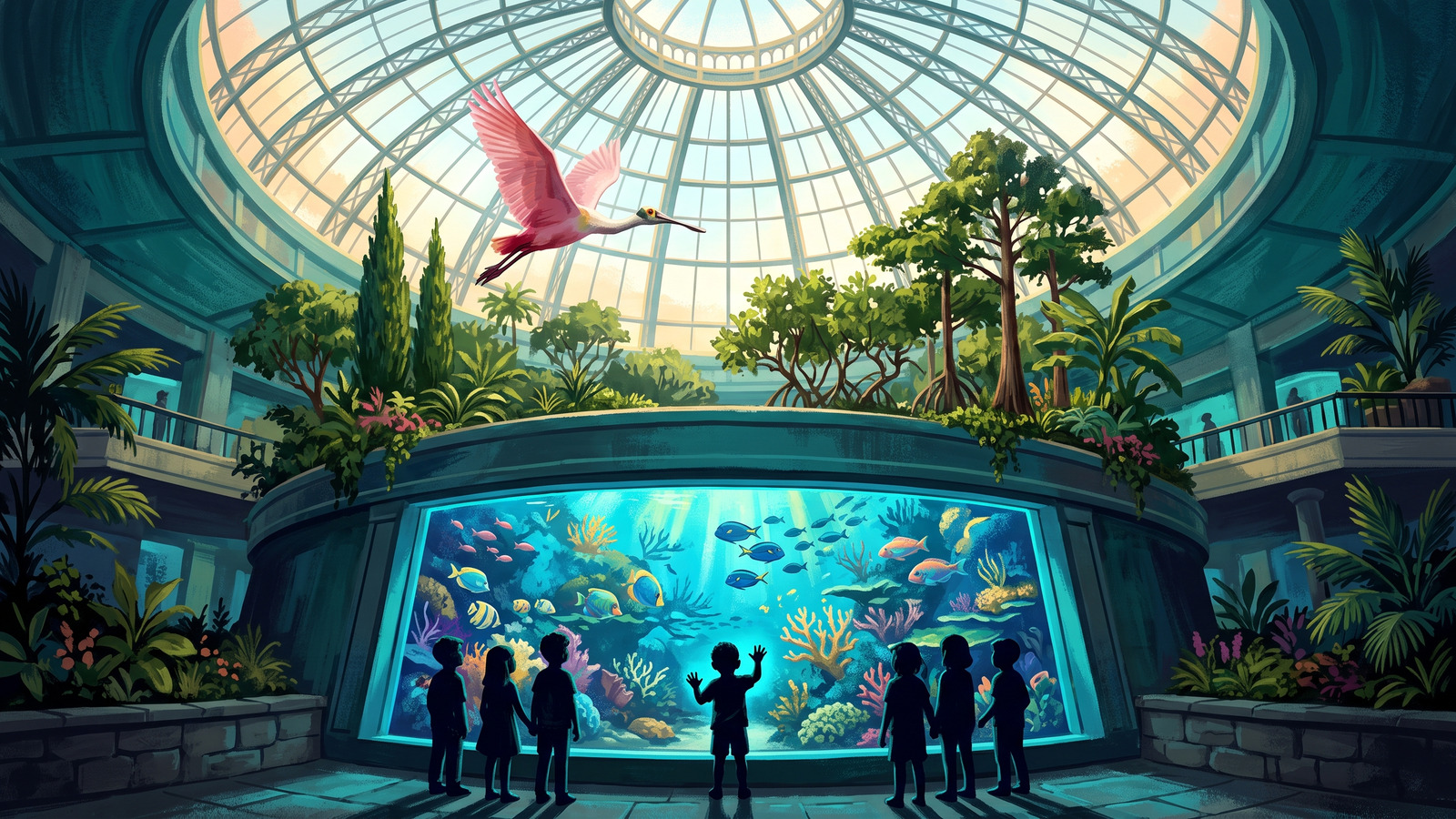
The Florida Aquarium with Kids: A Local's Room-by-Room Game Plan
The Florida Aquarium with kids: the room-by-room game plan, from the wetlands dome to the stingray touch pool, plus timing and ticket strategy.
 Learn
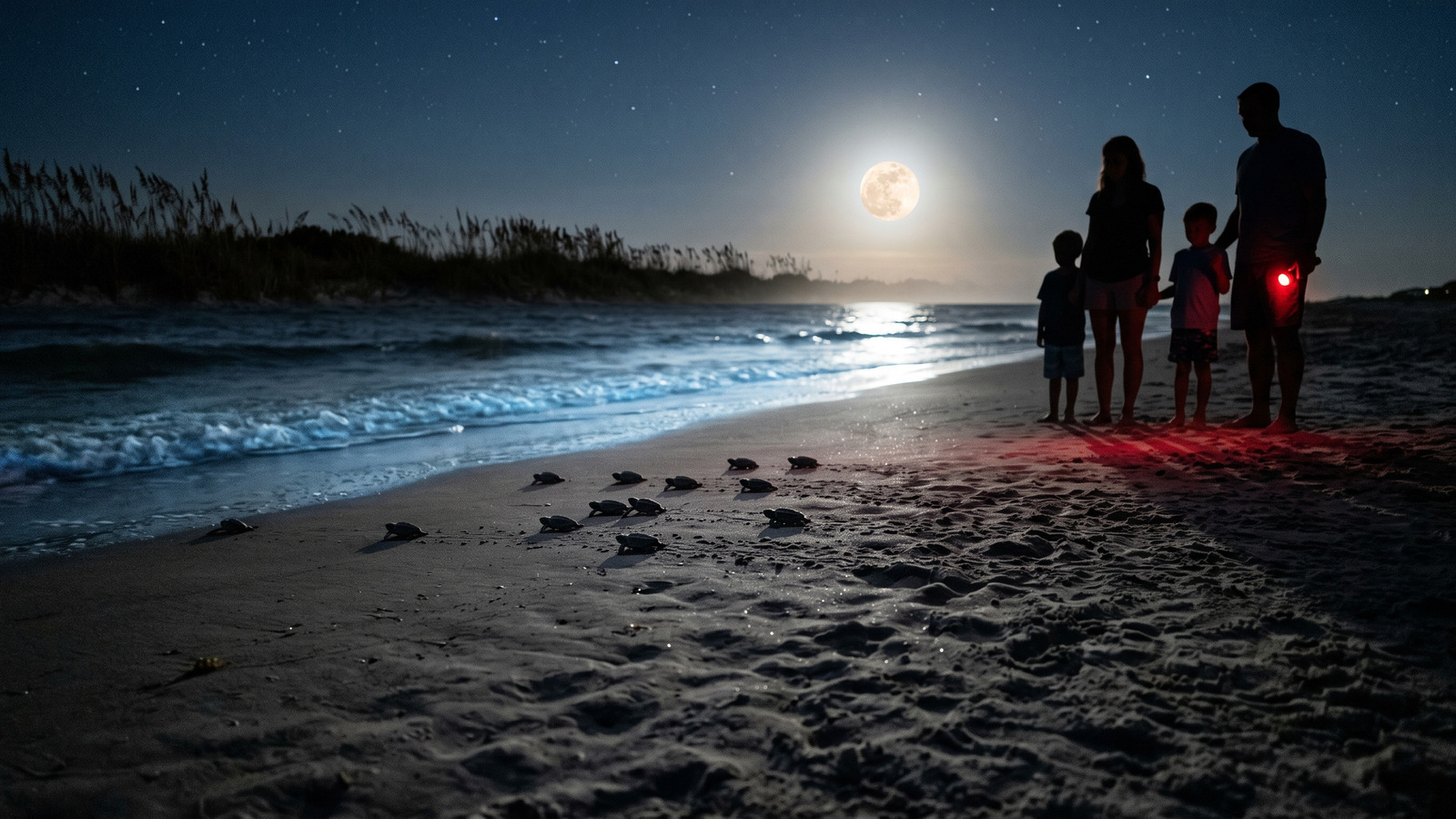
LearnSea Turtle Season: The Family Beach Rules That Save Nests from May to October
Sea turtle nesting season runs May through October on Tampa Bay beaches. The family rules: fill holes, flatten castles, lights out, and let nests be.
 Protect
Adopt, Sponsor, Volunteer: Family Conservation Programs Around Tampa Bay Worth Joining
The Tampa Bay family conservation menu: adopt a real named manatee, steward shorebirds, build oyster reefs, and pick programs that do real work.