
Sunrise or Sunset? The Best Beach Hours for Families, and the Photos to Prove It
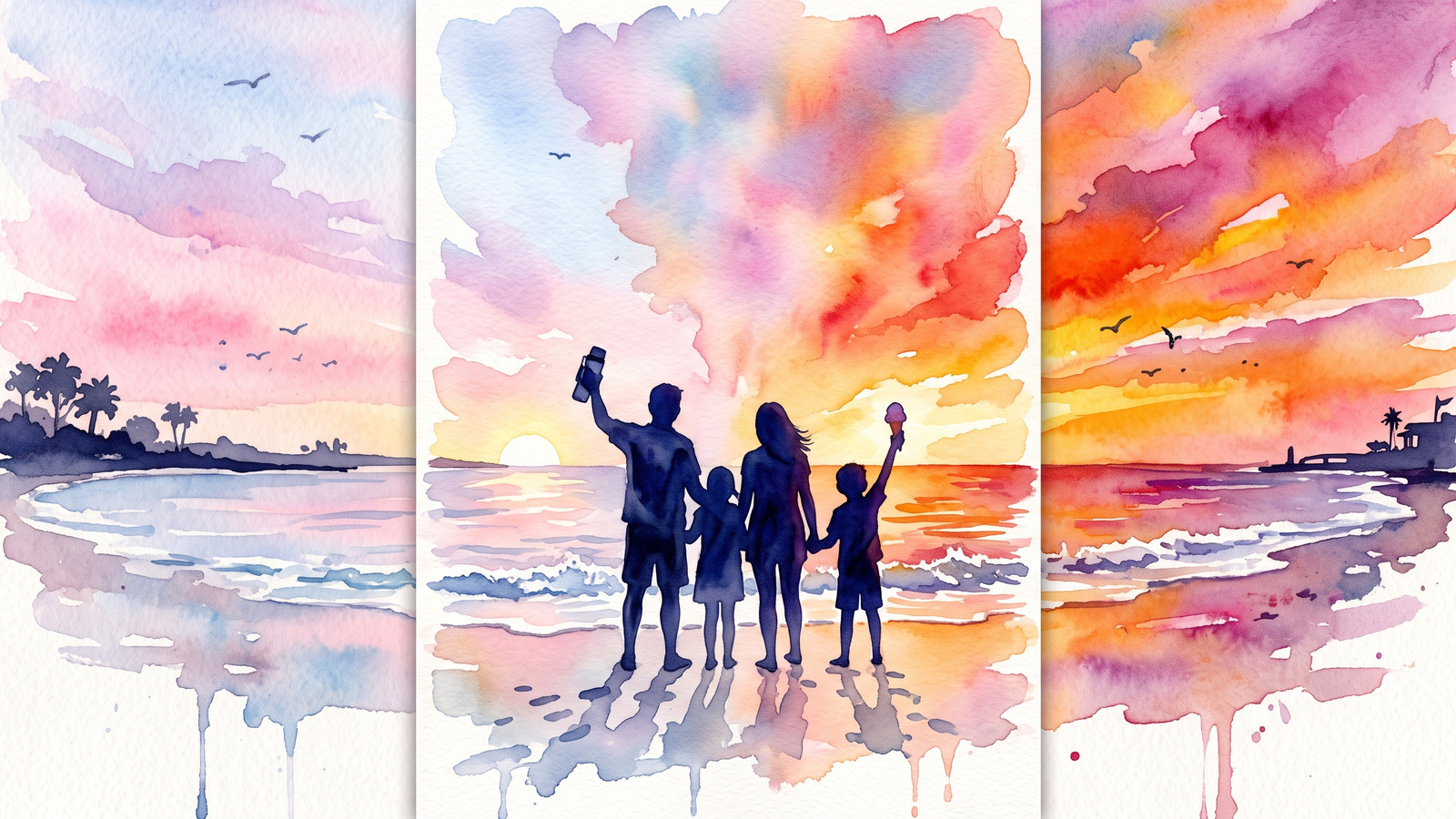
Every gulf beach town keeps the same daily appointment: twenty minutes before sundown, the sand fills, conversations angle west, and a coast full of strangers goes quiet together for the two-minute main event, then (this is the part that gets visitors) applauds. The sun sets into the water here, nightly, free, and the region has organized itself around the fact: a pier throws a festival for it, towns built seawalls that function as pews. And yet the family-hours insider knowledge runs the other direction too: the same beaches at sunrise are empty, cool, print-free, and paved with the night's unclaimed shells. This is the guide to both ends of the day: the show everyone attends, and the one your family can own.
The sunset, done properly
The mechanics of a great family sunset are mostly arrival math: the show starts well before the sun touches water (the forty-minute warm-up paints the sky's best colors on the high clouds), so the crew that lands at listed-sunset-time missed half the movie. The venue menu: Pier 60 for the festival version: Clearwater's nightly gathering, running roughly two hours around sundown with street performers, craft stalls, and enough carnival energy to carry kids who find horizons slow; Pass-a-Grille for the ritual version: the seawall, the church bell that sometimes rings the sun down, ice cream within walking distance, and a crowd that's been doing this for generations; Fort De Soto's gulf pier for the wildlife version, where the pelican commute crosses the sunset flight path; and any towel on forty miles of west-facing sand for the general-admission miracle, nightly, no ticket.
Two family upgrades: bring the red headlamps in season (the walk back goes dark fast, and turtle-season beaches want dark), and teach the afterglow rule: the sky's second act (fifteen minutes post-sundown, when the high clouds ignite) plays to a beach that mostly left early. The families still on the towels get the best photos of the night and the parking lot's patience.
The green flash vigil
Give your crew the honest science and the sporting odds: in the last second before the sun's upper edge vanishes into a clean sea horizon, atmospheric refraction can separate the light enough to flare it green: a real phenomenon, not folklore, requiring a haze-free horizon, an unobstructed sea drop, and eyes that don't blink at the wrong moment. Most nights fail the horizon test; most watchers blink. Which is precisely the appeal: the green flash is the beach's rarest collectible, the family that hunts it has a standing quest costing nothing, and the night somebody finally sees it enters the ship's log in capital letters. (House rule for integrity: claimed flashes require a second witness or eternal gentle doubt.)
The sunrise heist
Now the counter-program, pitched honestly: nobody's coming, and that's the product. The same sand that hosts thousands at sunset holds your family alone at 7 a.m., with the gulf glassy before the sea breeze wakes, the temperature ten degrees kinder, the night's wrack line unpicked, and the light (this is the photographic fact) every bit as golden as evening's, minus the crowd in every background. The gulf beaches don't face the sunrise, but they don't need to: dawn's show here is the pastel version (pinks over a silver gulf, the east glowing behind the dunes), and the true east-facing spectacle belongs to the bay sides: East Beach's Skyway silhouette, the causeways, the minus-tide flats steaming in first light. One sunrise a month, doughnuts deployed, converts even teen skeptics: it's the dawn patrol with better light and warmer pastries.
The family photo craft, minimally
| The shot | The trick |
|---|---|
| Kids at golden hour | Sun behind them, expose for faces: haloed hair, no squints |
| The sunset silhouette | Crew between camera and sun, poses big and simple: jumps read best |
| The sunrise portrait | Soft front light, empty beach: the school-photo replacement |
| The afterglow family shot | Fifteen minutes post-sunset, pastel sky, phone flash off |
| The green flash attempt | Video, not photo: start it early, review the last seconds |
| The monthly same-spot shot | One fixed location, repeated: the growth chart with a horizon |
The only rule that matters with kids: shoot first, direct never, and accept that the best frame of the year will be the accidental one: this coast produces them on schedule.
The Little Naturalist activity
Run the sunset science log: over a month of attended sunsets, have kids record sundown time (drifting nightly: the calendar made visible), cloud conditions, color quality on a one-to-ten family scale, and green-flash horizon eligibility (clean or hazy). Patterns emerge fast: the cloud-color relationship (some clouds are the show's fuel, overcast is its cancellation), the time drift, the seasonal angle change along the horizon: and the crew graduates from watching sunsets to forecasting them, which around here is a legitimate social skill.
Questions families ask
Does the Pier 60 festival run every single night?
That's the premise: nightly, free, weather permitting, roughly two hours bracketing sundown: check their calendar for special-event nights. It's the rare tourist institution locals actually use, precisely because the sun keeps showing up for its half.
What about sunset cruises with kids?
A fine boat-day dessert: the water-side view adds dolphins and skyline, trades towel freedom for rails, and suits the older-kid crew. The towel version wins for toddlers, who treat boats at dusk as bedtime's enemy.
Is sunrise worth it with genuinely small children?
The small ones are the argument: they're up anyway, dawn is their peak hour, and the empty beach absorbs their volume beautifully. Sunrise beaching with toddlers is the rare outing where the family schedule and the optimal schedule agree: exploit it before adolescence repeals it.
Phone or real camera for the sunset?
The phone in your pocket beats the camera at home, and modern phones handle the golden hour honorably: the craft is in the arriving early and the afterglow patience, not the gear. The one upgrade that matters: wipe the lens: half of this coast's blurry sunsets are sunscreen thumbprints.
Questions families ask
Is Tampa Bay a sunrise coast or a sunset coast?
The gulf beaches face west, so sunset is the headline show: the sun drops into open water nightly, and the whole region attends. Sunrise belongs to the bay sides and east-facing spots, and it comes with empty sand, cool air, and the day's freshest shelling: the family-hours secret.
Where is the best family sunset around Tampa Bay?
Pier 60 on Clearwater Beach runs a free nightly festival (performers and artisans, roughly two hours around sundown), Pass-a-Grille's seawall hosts the local ritual version, and any gulf-facing towel works. For the show plus logistics, Pier 60; for the quiet version, Pass-a-Grille.
What is the green flash, and is it real?
Real, rare, and worth the family vigil: in the final second of a clean-horizon sunset, refraction can flare the sun's last sliver green for an instant. Requirements: a haze-free horizon over open water and unblinking eyes. Most attempts fail, which is exactly why the wins are legendary.
When should families take beach photos?
The hour after sunrise and the hour before sunset (the golden hours): low warm light, long shadows, no squinting. For kid photos specifically, morning wins: fresh moods, empty backgrounds, and nobody's schedule melting down at the exact photogenic moment.
Sources
More from the Bae
 ExploreCornerstone
The Family Beach Matchmaker: The Right Tampa Bay Beach for Toddlers, Shellers, and Wave Chasers
The right Tampa Bay beach for your family: calm water for toddlers, shelling sands, tide pools, waves, dogs, and sunsets, matched honestly.
 Explore
Shelling with Kids: The Best Sands, the Right Tide, and What to Leave Behind
Shelling with kids around Tampa Bay: the best beaches, the low-tide and after-storm timing, a starter ID list, and the is-anybody-home rule.
 Protect
Lights Out for Turtles: How Beach Towns Go Dark for Nesting Season, and Families Can Too
Why gulf beach towns dim their lights May through October: hatchlings steer by moonlight. The FWC rules (low, shielded, long) and what renters can do.