
Your Family's First Boat Day on Tampa Bay: Rentals, Routes, and the Rules That Matter
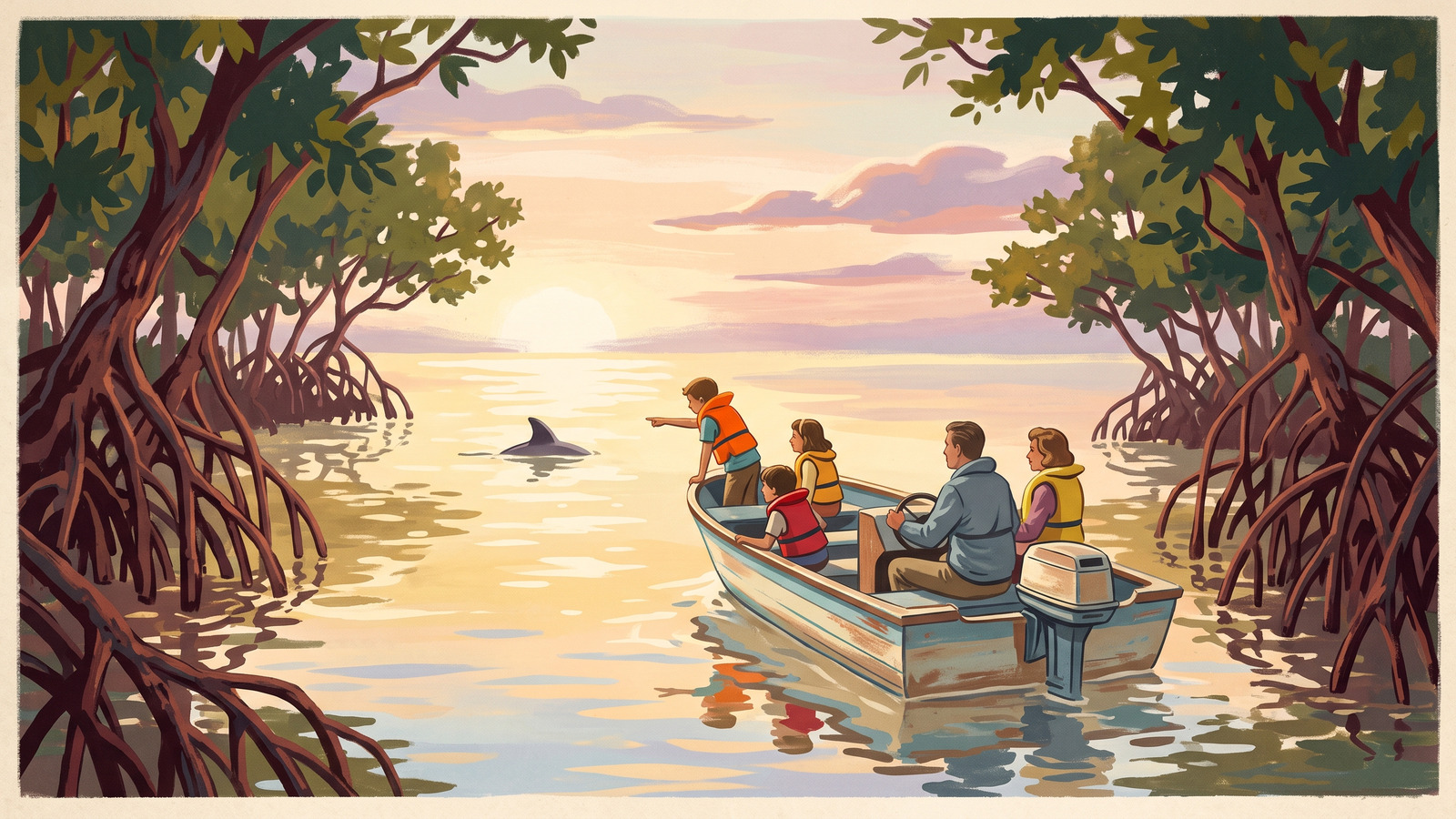
There is a moment on every family's first boat day, usually about eleven minutes in, when the dock disappears behind you, the bay opens up like a second sky, and somebody's kid goes quiet mid-sentence: the specific silence of a child recalculating the size of the world. Tampa Bay families live beside one of the great protected boating playgrounds in America, and the difference between having that moment this month versus someday is mostly paperwork, a reservation, and knowing which water to point at first. Consider this the briefing that turns someday into Saturday.
Choosing your boat, honestly
| The option | The reality | Best for |
|---|---|---|
| Pontoon rental | Stable, shaded, room for the cooler; the family standard | First-timers with kids of any age |
| Peer-to-peer (Boatsetter, GetMyBoat) | Wide choice from ~$35-65/hr; many owners offer captains | Comparison shoppers, captained deals |
| Livery half-day | Walk-up simplicity, orientation included | The classic first rental |
| Boat club membership | Monthly fee, fleet access, training included | Families who'll go twice a month or more |
| Captained charter | You bring snacks, they bring competence | The stress-free first day, grandparents aboard |
The honest counsel for a true first day: a pontoon or a captain. Pontoons forgive everything (slow, stable, hard to mishandle), and a captained morning converts the entire mental load (navigation, docking, weather) into someone else's profession while your family learns the water. Renting a fast center-console for your maiden voyage is how the bay collects its comedy footage.
The paperwork paragraph, painless
Florida issues no boating license; it requires education. Born on or after January 1, 1988 and driving 10 horsepower or more? You need the FWC Boating Safety Education ID card, earned through an approved course (online, a few hours, never expires). Booking next weekend without one? Rental operations can administer a temporary certificate on the spot, and captained trips make the whole question moot. Do the real course anyway before season two: it's cheap, the teen version is a legitimate homeschool credit, and the bay rewards operators who know a day marker from a channel marker.
The first route: the inside circuit
Point the bow at the classic: launch from the St. Pete or Tierra Verde side, idle out through the manatee zones (signage will teach you the rhythm immediately), run the protected Intracoastal south, and spend the day in the Shell Key and sandbar archipelago: anchor in sand, swim in waist-deep clear water, watch dolphins commute past, ferry the crew ashore for shelling on Shell Key's open sections. It's ambitious enough to feel like a voyage and protected enough that wind and swell stay manageable, with the run home under thirty minutes from anywhere in it. What the first day skips: the open gulf, the big ship channel, and any plan requiring precise timing. The bay will still be there when your logbook is thicker.
Two habits complete the route. Check the tide before choosing your sandbar hours (low tide makes the bars, rising tide shrinks them), and file the two-minute float plan: text a friend where you're going and when you'll be back. Boring, professional, and free.
Weather: the afternoon rule
Summer boating here runs on one pattern your family can set a watch by: calm bright mornings, cumulus building by noon, and the 4 o'clock storm arriving with lightning that clears every sandbar in minutes. The move is structural, not reactive: book morning slots, plan to be docked by early afternoon in storm season, and treat any blackening sky over the mainland as last call rather than a negotiation. Fall through spring loosens the schedule wonderfully, with winter's crisp light making some of the year's best boat days for the families who know it.
The kid-crew system
Boats run best with assigned jobs, and children take marine employment seriously: a bow watch (spots crab trap buoys, manatee swirls, and dolphins, reports loudly), a flag officer (manages the dive flag when swimmers are in), and a quartermaster (snack logistics, the most contested portfolio). Jackets on kids under six the whole time underway per the law (and this site's standard: young non-swimmers wear them dockside too), everyone seated when the engine's in gear, hands inside at the dock, and the ladder rule: engine off before anyone swims, always. Assign the roles at the dock and the safety briefing disguises itself as a commissioning ceremony.
The Little Naturalist activity
Keep the first ship's log: a small notebook where the crew records departure time, weather, route sketched on a hand-drawn chart, wildlife sighted (species and count), and one line each: best moment of the day. Nautical logs are the oldest continuous scientific documents on Earth, your family's now joins the tradition, and the entry from the first boat day (misspellings, dolphin tallies, and all) will be read aloud at gatherings for the next thirty years. Start it on day one; you only get one first page.
Questions families ask
Is Tampa Bay safe for beginner boaters?
Among the friendliest big-water classrooms anywhere: protected routes, sandy bottoms, short distances, and rescue never far. The genuine beginner hazards are sun, running aground on grass flats (read your water color), and the summer afternoon sky: all managed by the habits above.
What about seasickness with kids?
The inside circuit barely rocks (pontoons on protected water move less than a porch swing), which is exactly why it's the first route. Save judgment about your crew's sea stomachs for calm days, feed people before and during, and keep ginger candy in the quartermaster's stores.
Renting versus a boat club versus buying?
Rent until the family asks to go more than once a month; club when the asking becomes standing; and buy only when you catch yourself at boat ramps on non-boating days, wistful. The old line holds: the two happiest days involve buying and selling, and the rental counter lets you skip both.
Can grandparents with mobility limits do a boat day?
Beautifully, with the right platform: pontoons board by wide gate at floating docks, captained trips remove every task, and calm-morning water keeps footing predictable. Call ahead about dock setup, bring the shade and hydration discipline, and the three-generation boat photo takes itself.
Questions families ask
How much does it cost to rent a boat for a family day on Tampa Bay?
Peer-to-peer platforms list pontoons from roughly $35 to $65 an hour, traditional liveries run a few hundred dollars for a half day, boat clubs sell monthly memberships for regular boaters, and a captained charter (someone else drives) typically starts a few hundred for a private trip. First-timers get the most value from a pontoon or a captained morning.
Do I need a license to rent a boat in Florida?
Florida has no boating license, but anyone born on or after January 1, 1988 must carry a Boating Safety Education ID card to operate a vessel of 10 horsepower or more. Rental operations can issue a temporary certificate after a short test, and captained trips skip the question entirely.
Where should a first-time family boat day go?
Stay inside: the protected Intracoastal and lower bay routes to Shell Key, the sandbars, and back. Calm water, short distances, places to stop and swim, and no gulf swell. Save open water for the season you no longer need this article.
What time of day is best for boating with kids in Florida?
Morning, almost always: lightest wind, flattest water, coolest sun, and in summer you'll be back at the dock before the afternoon storm pattern builds. The classic family window is 9 a.m. to 1 p.m.
Sources
More from the Bae
 Explore
Florida Life Jacket Laws for Kids, in Plain English (and the Fit Test That Actually Matters)
Florida's life jacket laws in plain English: the under-6 wear rule, one per person, throwables on 16-foot boats, and the two-second fit test.
 Explore
Shell Key by Ferry or Paddle: The Wild Island Afternoon Your Kids Will Remember
Shell Key Preserve: an undeveloped barrier island reached by shuttle from Pass-a-Grille or by paddle, with world-class shelling and zero buildings.
 Explore
Tides 101 for Families: How to Read a Tide Chart and Plan a Better Beach Day
How to read a tide chart, why Tampa Bay's tides are quirky, and the family cheat sheet matching low tide, high tide, and moon phases to activities.