Reading the Beach Flags: What Red, Purple, and Green Mean Before Anyone Gets Wet
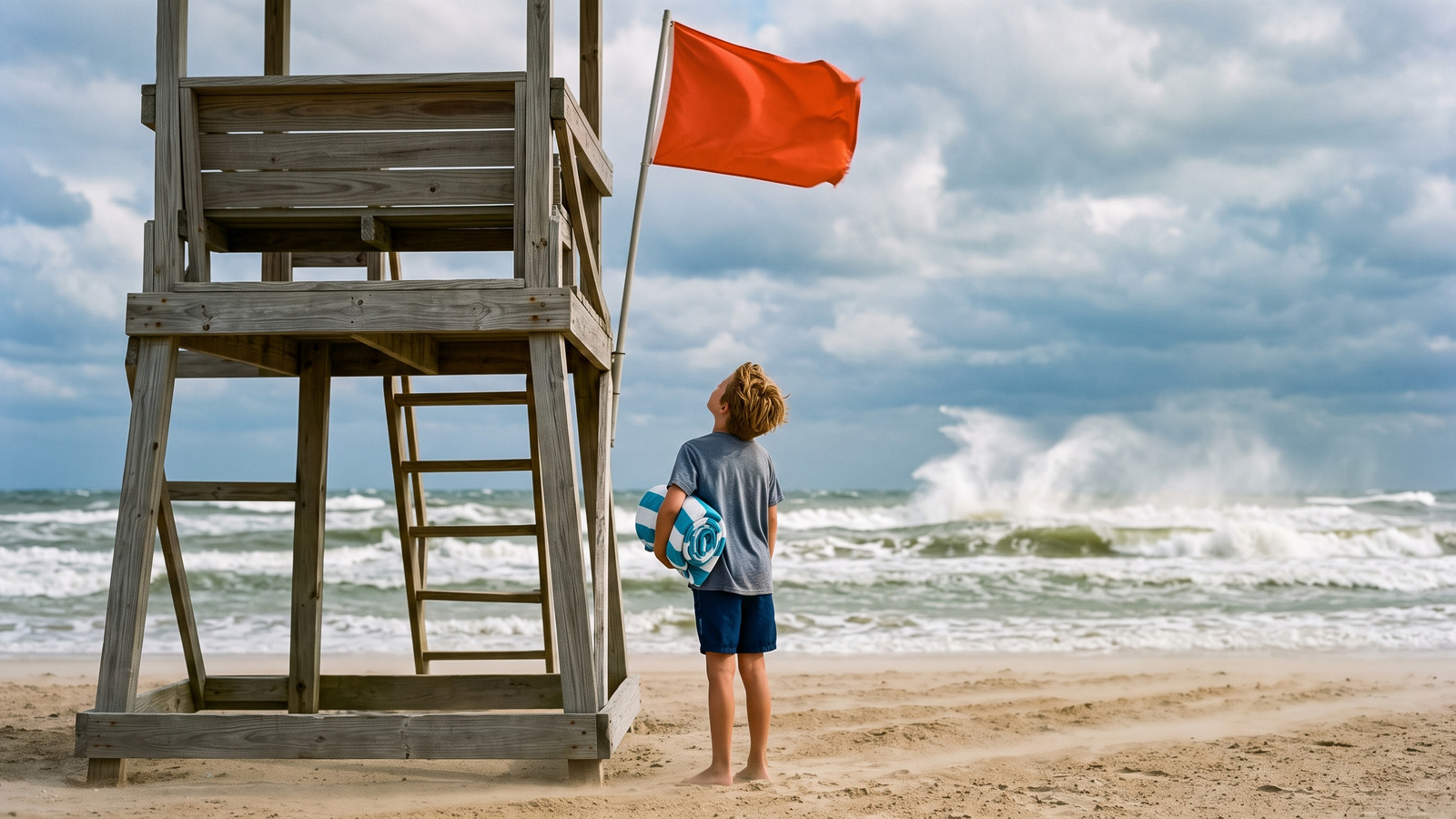
Your family already reads one traffic system without thinking: red means stop, green means go, and nobody sends a six-year-old into an intersection to check. The beach flies the same system on a pole beside the lifeguard tower, and yet every summer weekend, families march past it mid-conversation, drop the towels, and send the kids toward water they never looked at. The flag takes four seconds to read. It is the beach's entire safety briefing, condensed to one piece of colored fabric, and teaching your kids to read it first (before the towel spot, before the sunscreen argument) is the cheapest water-safety upgrade in Florida.
The five signals, one by one
| Flag | Meaning | The family translation |
|---|---|---|
| Green | Low hazard | Normal day, normal rules, eyes on kids anyway |
| Yellow | Medium hazard | Waist-deep max for young swimmers, adults in the water with them |
| Red | High hazard | Strong surf or current: little ones ankle-splash only, confident swimmers stay shallow and close |
| Double red | Water closed | Nobody in, full stop: sand day, backup-plan day |
| Purple | Dangerous marine life | Usually jellyfish or rays: shuffle feet, water shoes, look before you grab |
Two footnotes complete the fluency. Purple flies in combination (purple plus green is a calm day with jellyfish about, purple plus red is a day the gulf is being thoroughly itself), and the "dangerous marine life" in question is almost always the drifting kind: jellyfish, man-of-war, or stingrays in the shallows, for which the stingray shuffle exists. Sharks, the thing every kid asks, are handled differently: a credible concern clears the water entirely.
Why red days look so inviting
Here's the counterintuitive lesson that saves lives: hazard and appearance don't correlate the way kids assume. Red-flag days are often gorgeous (sunny, warm, dramatic surf that looks like the fun version of the beach), because the flag isn't grading the weather, it's grading the water's machinery: surf strong enough to knock down and hold, and the rip currents that strong surf powers. Conversely, a gray drizzly morning can fly green over water as safe as a bathtub. Teaching kids to trust the flag over their eyes is teaching them the difference between how conditions look and how they work, which happens to be the foundational skill of every mariner, meteorologist, and tide-reader this cluster is quietly raising.
The no-flag beach, and the honest gap
Plenty of local sand (quiet stretches, preserve islands, unstaffed access points) flies nothing at all, and the absence is information about staffing, not safety. The family protocol for unflagged water: check the surf zone forecast before leaving (the National Weather Service publishes a daily rip current outlook for gulf beaches), spend sixty seconds watching the water before anyone enters (look for the churned gaps between breaking waves that mark rips), keep the swim shallow and supervised, and prefer staffed beaches outright on higher-energy days. Lifeguarded sand is measurably, dramatically safer, and choosing it on rough days is not caution theater; it's the statistic that matters most.
Making flag-reading the kids' job
The system sticks when children own it: appoint the day's flag officer (rotating, naturally) whose duties are to spot the flag from the boardwalk, announce the color and its meaning to the family, and set the day's water rules accordingly. Kids enforce regimes they administer, a six-year-old announcing "YELLOW FLAG, WAIST DEEP, I'LL BE WATCHING" to a beach at large is a memory the family keeps forever, and the habit generalizes: the child who checks the flag grows into the teen who checks the forecast, who becomes the adult the rest of the group trusts near water. That pipeline is this whole cluster's actual product.
The Little Naturalist activity
Build the family flag kit: craft sticks, paper, and five minutes make a matching set of miniature warning flags for the sandcastle kingdom, and the game plays itself: kids fly the correct flag over the moat based on real conditions they assess (wave size, current, jellyfish sightings), updating as the day changes. It's condition-assessment practice disguised entirely as decoration, and visiting cousins get briefed by your kids without a parent saying a word: the collector's code ceremony gains a meteorological wing.
Questions families ask
Who decides the flag each day?
Lifeguard and beach patrol agencies, updated through the day as conditions shift: morning green can become afternoon yellow when wind builds. Which is why the flag officer's commission runs all day, not just at arrival: re-read on every walk back from the snack bag.
Do the same flags fly on the bay beaches?
Staffed bay and causeway beaches use the same statewide system where flags fly at all, though the gentler water means long green stretches. The flags matter most on the open gulf, where surf machinery lives, and that's exactly where your family should look for them hardest.
What about surf and boogie boards on red days?
Board sports have different risk math for experienced riders, and local rules vary; for family purposes the line is clean: red-flag water is no place for a child on a boogie board, whose flotation rides the exact currents the flag warns about. Yellow and green days make wave chasers plenty happy.
Is there an app or site instead of squinting at a pole?
Many beach towns post current flag status online and the NWS surf forecast covers the hazard outlook, so the night-before check can set expectations. But teach the pole anyway: conditions move faster than websites, and the flag beside the tower is the ground truth the whole system exists to display.
Questions families ask
What do the beach flag colors mean in Florida?
Green means low hazard (calm conditions, ordinary caution), yellow means medium hazard (moderate surf or currents), red means high hazard (strong surf or currents, weak swimmers stay out), double red means the water is closed to the public, and purple means dangerous marine life is present, usually jellyfish.
Does purple mean sharks?
Almost never. Purple flags typically fly for jellyfish, Portuguese man-of-war, or stingray activity. A confirmed shark concern closes the water outright, which is double red territory. Purple is the 'look before you step, maybe wear water shoes' flag.
Is it illegal to swim under a red flag?
Under a single red flag, swimming is strongly discouraged and lifeguards will keep weak swimmers close; under a double red flag, entering the water is prohibited and can carry a fine in many Florida beach towns. Either way, the family answer is the same: the flag outranks the vacation schedule.
What if there's no flag flying at all?
No flag doesn't mean no hazard; it usually means no lifeguard staffing that day or that stretch. Treat unflagged beaches with yellow-flag thinking, check conditions yourself (surf, current, the rip current outlook in the forecast), and swim near staffed towers whenever you can.
Sources
More from the Bae
 Explore
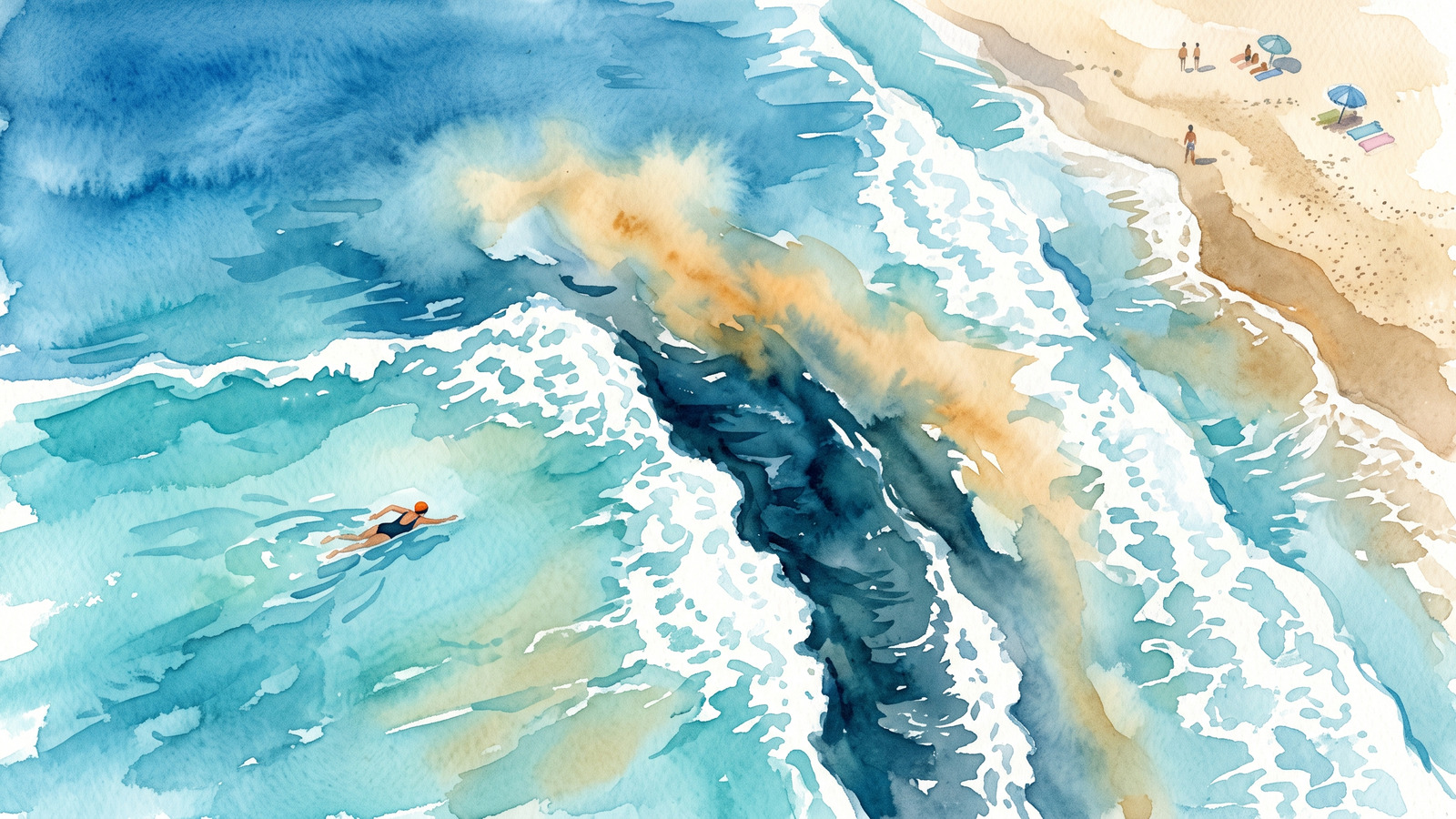
Rip Currents: The Two-Minute Lesson That Makes Your Family Beach-Safe
The two-minute rip current lesson: how to spot the gap between waves, why you swim parallel instead of fighting, and the flip, float, follow rule.
 ExploreCornerstone
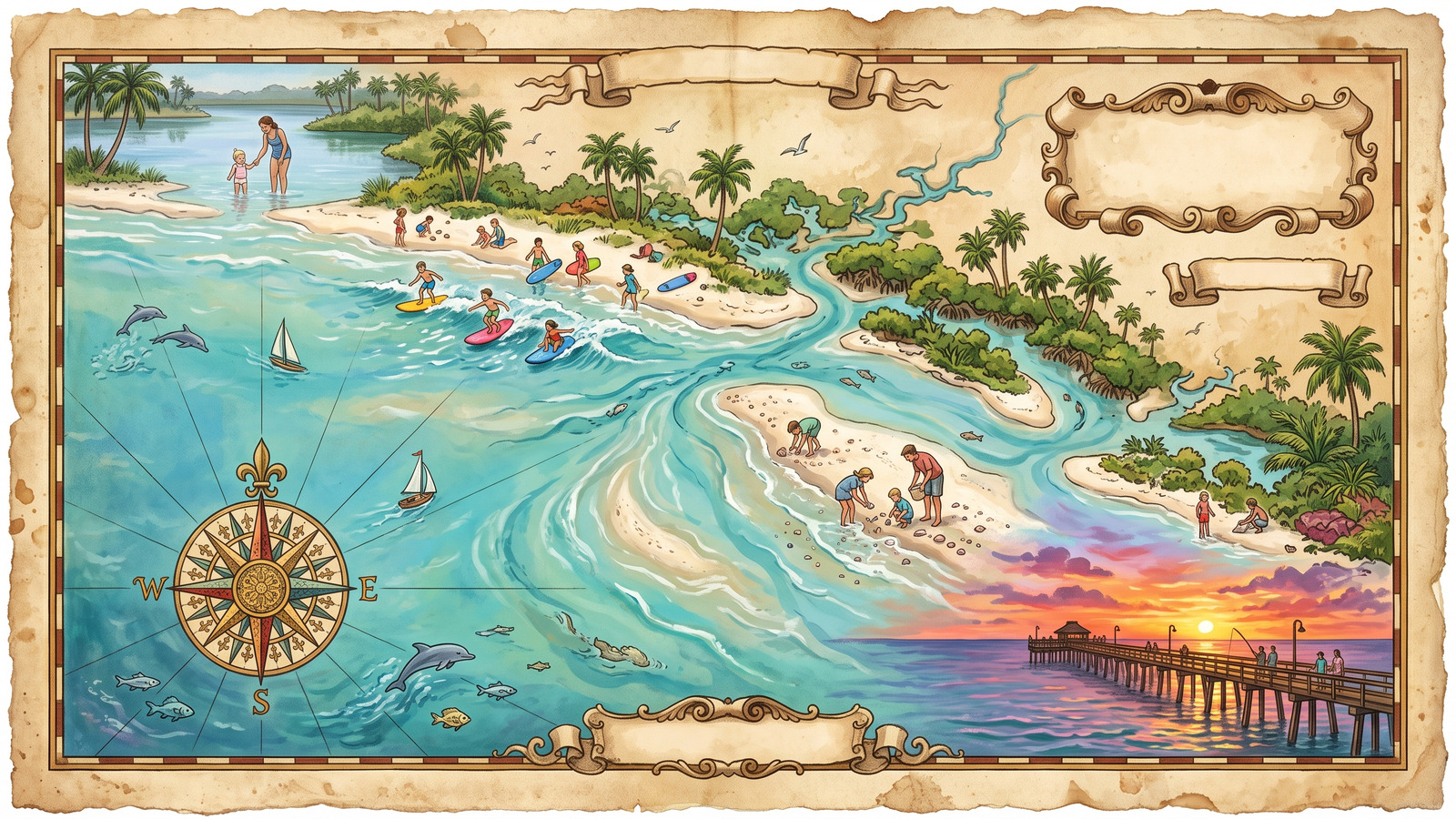
The Family Beach Matchmaker: The Right Tampa Bay Beach for Toddlers, Shellers, and Wave Chasers
The right Tampa Bay beach for your family: calm water for toddlers, shelling sands, tide pools, waves, dogs, and sunsets, matched honestly.
 Protect
Leave It Better: Teaching Kids the Leave No Trace Rules, Beach Edition
The seven Leave No Trace principles for Florida beach families: shells and sand dollars, dunes and sea oats, wildlife space, leaving it better.