
Rip Currents: The Two-Minute Lesson That Makes Your Family Beach-Safe
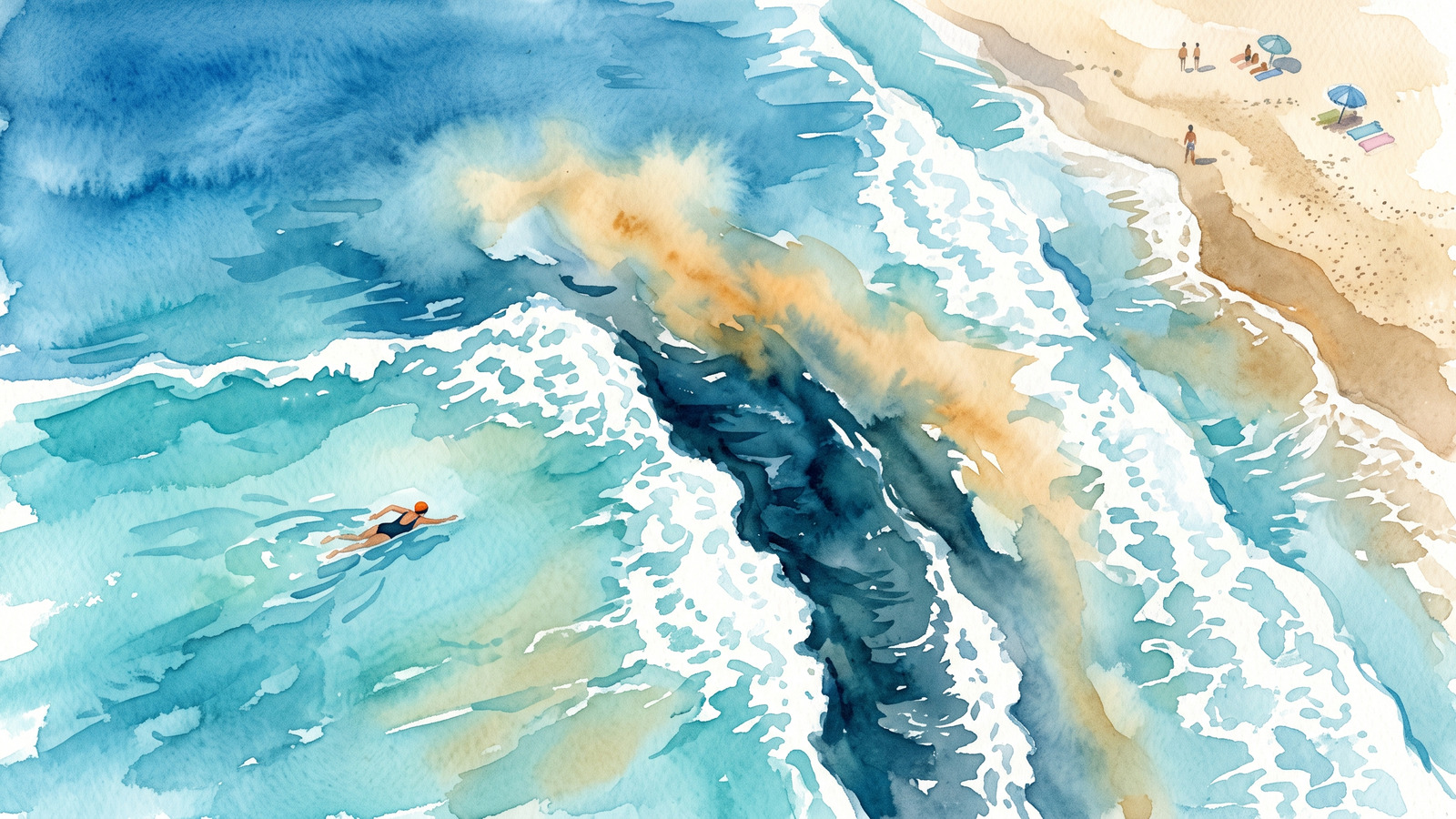
The gulf is a gentle teacher most days, which is exactly how it fools people. Our waves are modest, our water is warm, and so families who would drill their kids for a mountain trail or a busy street send them into surf with one instruction: "stay where I can see you." Here is the drill they're missing, and it genuinely takes two minutes: one fact (rips pull out, not under), one skill (spot the gap), and one rhyme (flip, float, follow). Taught once on a towel, it's the highest-value safety lesson on this entire site, and your kids will teach it to their kids on this same sand.
The one fact that changes everything
Say it to your kids until they finish the sentence for you: a rip current pulls you out, not under. It is not an undertow dragging swimmers below (that creature is largely myth); it's a horizontal conveyor, a river in the sea, and a floating person in a rip stays a floating person, just one moving away from the beach. Every part of rip survival flows from that fact: you cannot be pulled under by it, so the entire game is staying afloat and calm while you exit the river sideways. Panic (fighting the current head-on toward shore, exhausting yourself against water moving faster than any swimmer) is the actual mechanism of tragedy. The current doesn't drown people; the fight does.
Why the river exists is a satisfying piece of physics for the flag officer in your family: waves push water up the beach; gravity owes that water a way back; and where sandbars leave a gap, the return flow concentrates into a channel. Bigger surf, stronger conveyor, which is precisely what red flags are measuring.
Spot the gap: the towel-time skill
The cruel joke of rip currents is that they look like the invitation: while waves break white on the sandbars to either side, the rip channel between them reads as a calm, darker lane of "easy" water. Train the family eye from the dry sand, every visit, sixty seconds:
| The tell | What you're seeing |
|---|---|
| A gap in the line of breaking waves | Waves break on shallow bars; the deep rip channel doesn't |
| Darker water in a strip heading offshore | The deeper channel itself |
| Churning, sandy, rippled water unlike its neighbors | The conveyor at work |
| Foam, seaweed, or debris tracking steadily out | Cargo on the river |
| The "calm lane" between two whitewater zones | The classic trap; swim beside the whitewater, not the calm |
Make it the standing game: first kid to point out a candidate rip (from the sand, arm outstretched, lifeguard-style) earns the day's bragging rights. Children trained to see the gap choose their swimming lanes automatically, which is ninety percent of prevention.
Flip, float, follow: the rhyme that swims home
NOAA's survival sequence is built for a panicking brain, which is why it's three words. Flip onto your back: airway up, heart rate down. Float: you cannot be pulled under; floating turns a crisis into a wait, and a waving arm plus a yell brings the lifeguard the moment trouble starts, not after. Follow the escape route: swim parallel to the beach (the rip is a narrow river, rarely wider than a tennis court's length) until the seaward pull releases, then angle back to shore riding the breaking waves on the bar. If swimming parallel gains nothing against a diagonal current, flip and float again: many rips recirculate and hand floaters back toward the bar on their own. The one forbidden move stays forbidden: never sprint straight at the beach against the river. Sideways is home.
Parents get one more line, delivered soberly because the data says so: would-be rescuers drown in rips trying to save swimmers, regularly. The rescue protocol for an untrained adult is: alert the lifeguard, call 911, throw something that floats (the boat cushion earns its keep), and coach "flip, float, follow" from the sand. Going in after someone, without flotation, converts one emergency into two.
Where the odds actually live
The statistics sketch the fixable pattern: the majority of America's surf-zone deaths each year are rip drownings (33 of 46 tracked nationally by mid-August this season), the typical victim is male, 10 to 29, and the setting is overwhelmingly an unguarded beach in summer. Which yields the family's structural rules, cheaper than any heroics: swim near staffed towers (drowning odds near a lifeguard are a small fraction of the unguarded number), let the flag set the day's depth limit, keep weak swimmers and jacketed little ones inside the sandbar on energetic days, and treat the calm gulf's rough days with the respect the Atlantic demands every day. Our sea is gentle; the drill is for the exceptions.
The Little Naturalist activity
Run the current lab in a pool or calm shallows: one adult is "the rip," gently towing a floating kid seaward-ish by the jacket handle while the kid practices the sequence out loud: flip (onto the back mid-tow), float (three calm breaths), follow (roll and swim sideways out of the adult's lane, then in). Three rounds each and the rhyme lives in the body, not the memory. Land version for towel time: draw the beach in the sand (bars, gap, rip), and let kids walk a finger-swimmer through the escape, narrating. Rehearsed calm is real calm; that's the entire pedagogy.
Questions families ask
Do rip currents happen on our calm gulf beaches?
Yes, on higher-surf days (fronts, storms offshore, strong onshore winds), around passes and structures, and that's the trap: rarity breeds complacency. The NWS publishes a daily rip current outlook for gulf beaches; on moderate-or-high days, the drill graduates from theory to policy.
What about near jetties and piers?
Permanent structures make permanent currents: water moving along the beach funnels seaward beside jetties, piers, and groins, which is why lifeguards everywhere preach the buffer: swim well away from structures, always, even on green-flag days. Fishing families know those spots as fish highways for the same reason: moving water.
Can a rip pull you to the horizon?
No: rips dissipate just beyond the breaking waves, typically within tens of yards, which is why float-and-wait works. The scary sensation is speed, not distance: the river ends, and a calm floater at its end is a short parallel swim from the bar and an easy ride home.
At what age do we teach this?
Spotting and the rhyme: as soon as they swim without a grownup's hands, so roughly the swim-lesson graduation age. The pool drill: same season. The full solo-judgment package: that's a teen milestone, and the families who started at six get teens who treat surf the way pilots treat weather: informed, unafraid, and never casual.
Questions families ask
What is a rip current, simply?
A narrow river of water flowing away from the beach, back out to sea, through the surf. Waves push water ashore; that water has to leave somehow; where it funnels out, it can move faster than an Olympic swimmer. It pulls you out, not under: that one fact is the heart of surviving it.
How do you spot a rip current from the sand?
Look for the gap: a channel of darker, calmer-looking water between areas of breaking waves, often churning with sand, sometimes carrying foam or debris steadily seaward. Counterintuitively, the 'calm' lane that looks like the easy place to swim is often the rip itself.
What should you do if you're caught in a rip current?
Flip, float, and follow: flip on your back, float to keep breathing calmly and conserve energy (the current pulls out, not under), then follow your escape route: swim parallel to the beach out of the narrow current, then angle back in with the waves. Never swim straight against it, and wave and yell for help early.
How dangerous are rip currents really?
They're the surf zone's leading killer: the majority of the country's surf-zone deaths each year are rip current drownings (33 of 46 tracked nationally by mid-August this year), and the typical victim is a male between 10 and 29, in June or July, on an unguarded beach. The counterweight: the escape technique is simple, and lifeguarded sand changes the odds enormously.
Sources
More from the Bae
 Explore
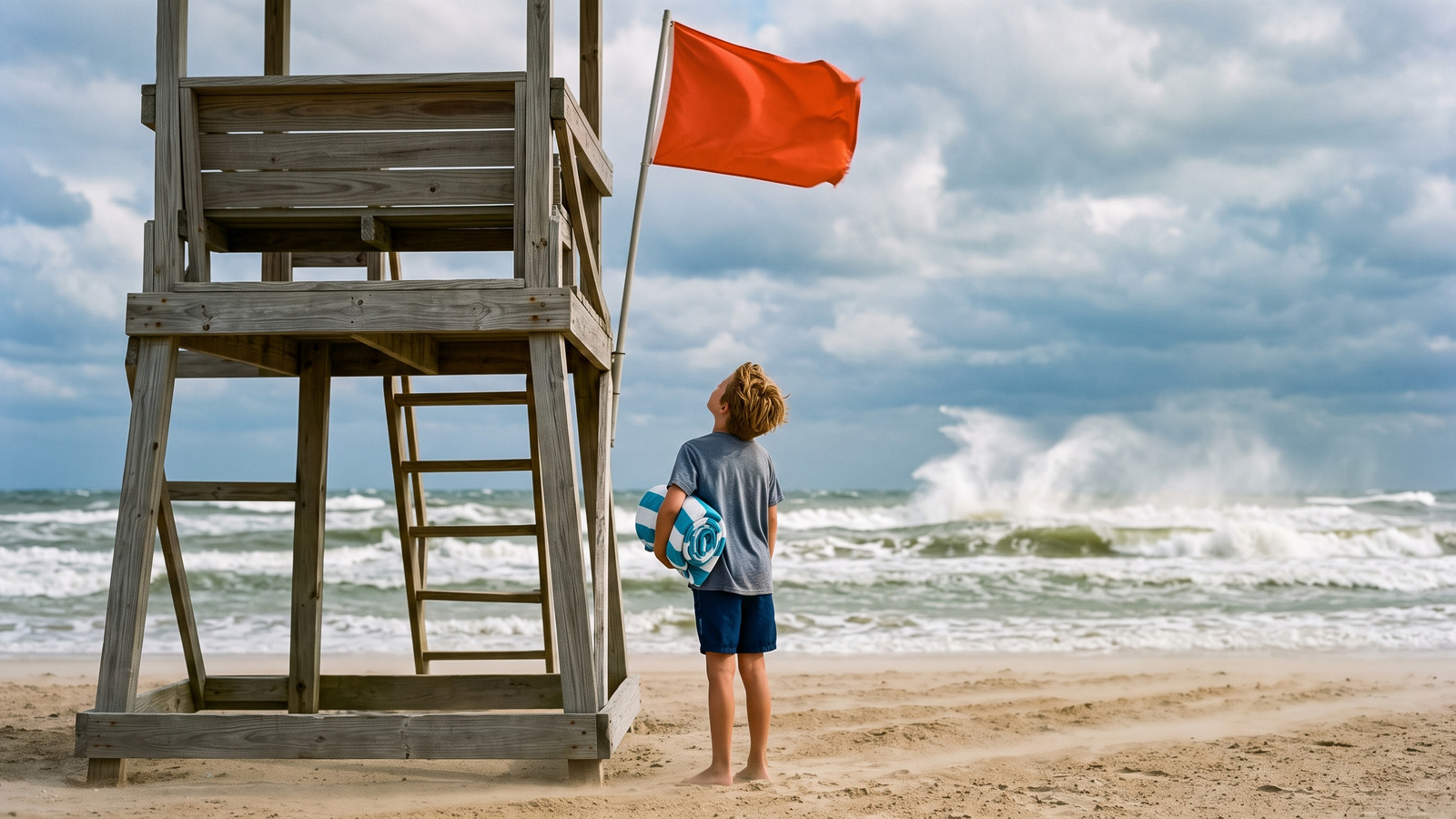
Reading the Beach Flags: What Red, Purple, and Green Mean Before Anyone Gets Wet
Florida's beach warning flags decoded: green, yellow, red, double red, and purple, and the family habit of reading them before the towels drop.
 Live Well
Raising Water-Confident Kids: Swim Lessons, Timing, and What the Data Says
Raising water-confident kids in Florida: when swim lessons start, what the drowning data says, and the layers of protection that let confidence grow.
 ExploreCornerstone
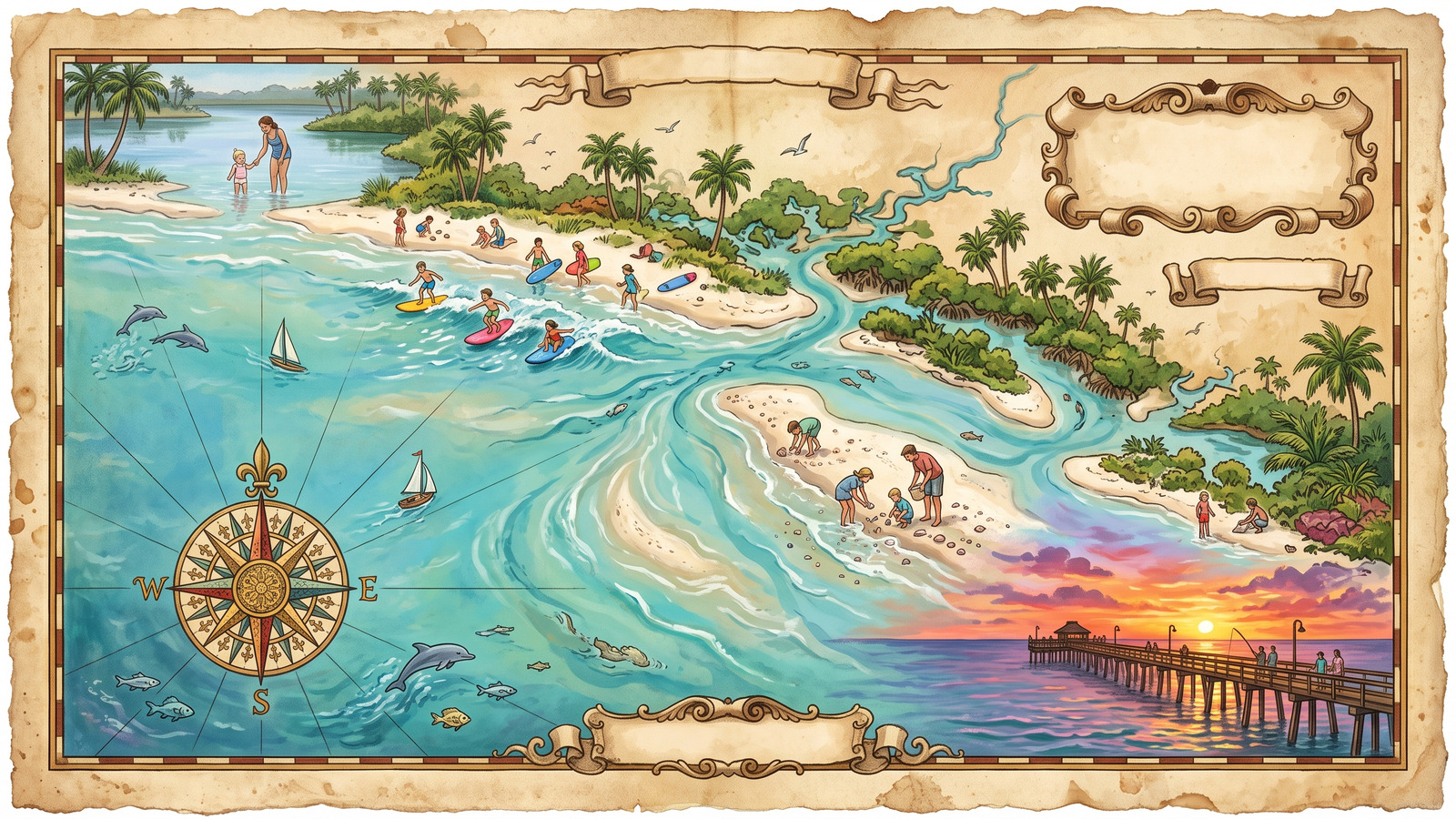
The Family Beach Matchmaker: The Right Tampa Bay Beach for Toddlers, Shellers, and Wave Chasers
The right Tampa Bay beach for your family: calm water for toddlers, shelling sands, tide pools, waves, dogs, and sunsets, matched honestly.