
Red Tide, Gently Explained: What It Is, How to Check the Beach, and How Kids Can Help Scientists
Sooner or later, every Florida family gets the phone call: relatives arriving next week, and someone up north just saw the words "red tide" on the news, delivered in the tone usually reserved for asteroid coverage. So here is the calm local briefing to give them, and your kids, once and for all. Red tide is real, it's ancient, it's occasionally miserable, it is checkable in thirty seconds, and it is not a reason to fear the gulf. Around here we treat it the way we treat summer storms: respect, a forecast, and a plan B.
The organism, at kid scale
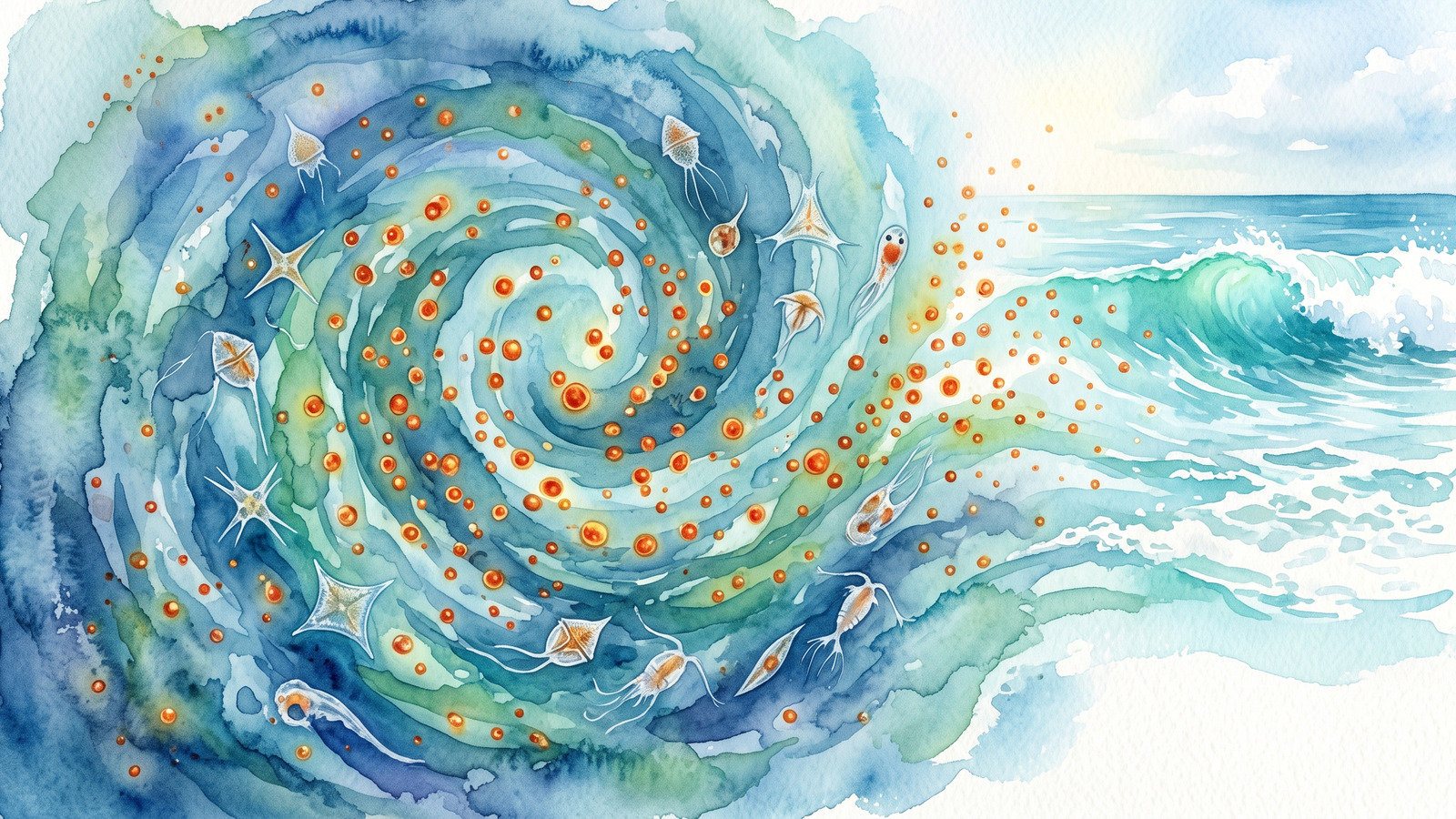
Karenia brevis is a single-celled alga so small that thousands fit in a drop, propelling itself with two tiny whips and, like a plant, running on sunlight. Most of the time it drifts offshore at harmless background counts, one plankton among thousands. Every so often (some years, not others, usually starting far offshore in late summer or fall) conditions align and it multiplies into blooms that can stretch for miles, sometimes tinting water rusty (hence the name, though color is unreliable). The trouble is chemical: brevetoxins, the organism's natural defense, which stun fish and, when surf shatters cells into spray, ride sea breeze as the throat-tickle beachgoers notice.
Two honest anchors for kids: it's natural (accounts of gulf fish kills go back to the earliest Spanish records, long before condos), and it's not permanent (blooms bloom and fade; the gulf spends most of its time clear).
What a bloom actually means for your family
| The effect | The family reality |
|---|---|
| Scratchy throat, cough near surf | Annoying, eases when you leave; asthma warrants extra care |
| Dead fish on the sand | Sad, smelly, temporary; look, don't touch |
| Swimming | Skip it in active bloom water; skin irritation is possible |
| Local shellfish | Regulators close harvest areas automatically; follow closures |
| Restaurant seafood | Fine: commercial supply is monitored and sourced accordingly |
| Pets on the beach | Keep dogs from eating dead fish or drinking foam |
| The rest of the coast | Blooms are patchy: ten miles away is often perfect |
That last row is the local wisdom the news never conveys: red tide is patchy, drifting with wind and current, so a bloom at one beach frequently coexists with clear water a short drive north or south. Which is why the map beats the headline, every time.
The thirty-second check, taught once
Bookmark two official pages on the family phone: FWC's red tide current status (a map built from continuous sampling by scientists and trained volunteers statewide) and the Protecting Florida Together dashboard, which layers in water quality broadly. The night before a beach day, thirty seconds tells you conditions at your target sand and every alternate. Teach older kids to run the check themselves alongside the tide chart and the weather: three tabs, one minute, and your family reads the coast like locals. On a bloom day, the answer is rarely "stay home"; it's usually "today is a backup-plan day" or simply a different stretch of coast.
The nutrient question, answered honestly
Older kids will eventually ask the sharp one: if it's natural, are we off the hook? The scientist's answer, delivered in this site's calm voice: blooms begin naturally offshore, and what happens when they ride currents inshore is where the human story may enter, because a bloom is hungry, and nutrient-rich coastal water (the same nitrogen story from the bay's comeback) can be part of what sustains one near shore. Research continues, scientists debate the size of that effect, and the practical takeaway doesn't wait for the debate: everything your family already does for clear water (fertilizer restraint, storm-drain sense) is also the red tide homework. Same villain, same chores.
How kids can genuinely help the science
Red tide science runs on samples and reports, and there's a real on-ramp at family scale: FWC's fish kill hotline and online reporting let anyone log observations that help map bloom effects (a kid spotting and reporting a fish kill is contributing data, not just noticing sadness), and volunteer sampling networks around the gulf train citizens who want to go deeper. Pair a report with the beach cleanup habit and a family can honestly tell relatives: we don't just check the map, we're on the staff.
The Little Naturalist activity
Run bloom forecaster week: each evening for a week, have kids check the FWC map and log conditions for three beaches (yours plus two alternates), then compare day-to-day movement against wind direction from the weather app. Patchiness, drift, and the wind connection reveal themselves in about five entries, and your children will grasp what most adults never do: red tide is not a switch that's on or off; it's weather, and weather can be read.
Questions families ask
Why do the fish die but dolphins usually don't?
Fish breathe the water directly across gills, taking toxin straight in; air-breathing dolphins and manatees face risk mainly through what they eat during long, severe blooms. Big marine mammal losses do occur in the worst events, which is part of why bloom tracking gets serious resources.
Should we cancel a beach vacation over red tide news?
Almost never sight-unseen: check the actual map for the actual beach, and know that conditions shift weekly and vary by the mile. Local visitor bureaus post current beach cams, too: thirty seconds of primary sources beats any headline.
What was the worst red tide here?
The 2017-2019 event was the modern benchmark: long, severe, and regionally heartbreaking, which is why locals of that era flinch at the phrase. Years since have ranged from clear to patchy, which is the honest pattern: most seasons mild or absent, occasional hard ones, monitoring always on.
Is red tide the same as the blue-green algae in the news?
Different organism, different water: blue-green (cyanobacteria) blooms hit fresh water like rivers and lakes, red tide is the gulf's marine event. Both trace back to the same family homework: what flows off our yards and streets feeds whichever bloom is nearest.
Questions families ask
What is red tide, in simple terms?
A bloom of a tiny native algae called Karenia brevis that sometimes multiplies offshore into huge patches. Its natural toxin can kill fish and irritate people's throats and eyes when waves break it into the air. It's a weather system of the sea: natural, occasional, and checkable.
Is red tide dangerous to my kids?
For most healthy people it's an irritant, not a danger: scratchy throat, coughing, itchy eyes near an active bloom, easing when you leave the beach. Kids with asthma deserve extra caution. The family move is simple: check the status map, and pick a different beach on bloom days.
How do we check red tide before a beach day?
Two official tools: FWC's current red tide status map, updated from constant water sampling, and the state's Protecting Florida Together water quality dashboard. Thirty seconds the night before tells you conditions beach by beach, the same way you'd check rain.
Did people cause red tide?
The organism is ancient and native: Spanish-era accounts describe fish kills centuries ago. Blooms start naturally offshore. The honest scientific discussion is about what feeds a bloom once it moves inshore, where human nutrients can be part of the buffet, which is one more reason the clean-water work continues.
Sources
More from the Bae
 ProtectCornerstone
The Tampa Bay Comeback: How Our Bay Nearly Died and Came Back to Life
By the 1970s Tampa Bay was nearly dead: algae mats, empty water, vanished birds. How laws, science, and neighbors brought it back, told for families.
 Protect
Seagrass, Explained for Kids: The Underwater Meadows Everything Depends On
Seagrass is the underwater meadow feeding Tampa Bay: nursery for most of our fish, manatee salad, and oxygen factory. The kid-level tour.
 Explore
Rainy Beach Day? The Backup Plan That's Better Than the Original
When Tampa Bay's 4 p.m. storms cancel the beach: the lightning rules, the wait-it-out math, and the indoor backup plans that outperform the original.