Seagrass, Explained for Kids: The Underwater Meadows Everything Depends On
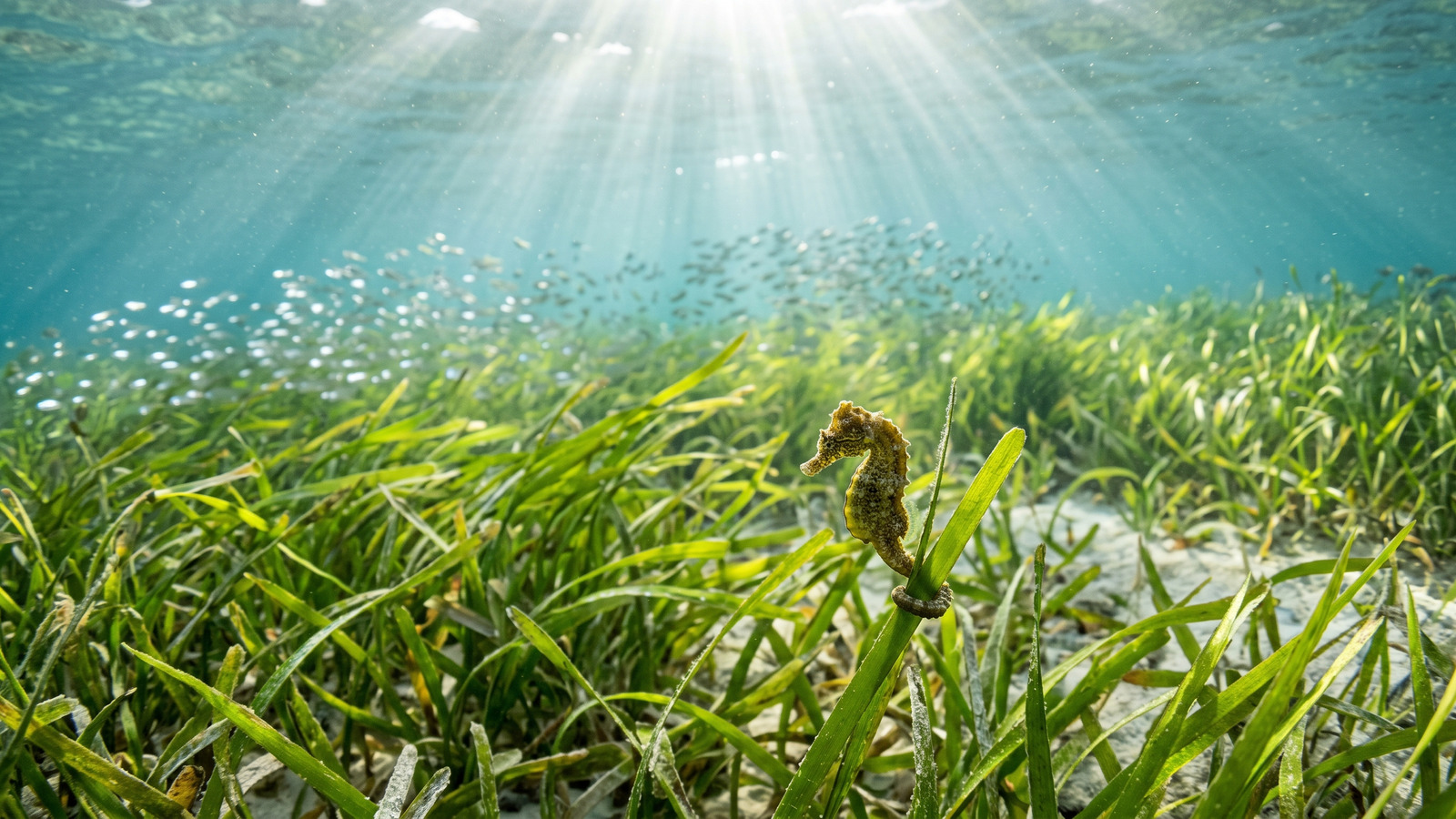
Float face-down over a Tampa Bay grass flat with a mask on, and the first surprise is that it looks exactly like what it is: a meadow. Blades bending in the tide the way pasture bends in wind, light falling in moving stripes, and traffic everywhere: a puffer trundling past like a wind-up toy, pinfish flickering, a crab conducting from a blade tip, maybe the slow gray blimp of a manatee mowing the lawn. Below your snorkel is the single most important habitat in the bay, the thing the whole food web stands on, and most people motor over it their entire lives without ever putting their face in.
A plant, not a seaweed, and why kids should care about the difference
Seaweed is algae: no roots, no veins, drifts where it likes. Seagrass is a true plant that returned to the sea, roots anchoring in sand, veins moving nutrients, flowers blooming and pollinating underwater (tiny crustaceans help carry the pollen, a fact that delights every child who hears it: the sea has bees). The difference matters because roots and blades do jobs algae can't: holding the seafloor still, baffling waves, and building a permanent three-dimensional neighborhood where drifting algae builds none.
The three locals are learnable in a minute. Turtle grass: wide flat ribbons, the classic meadow. Manatee grass: round blades like green spaghetti. Shoal grass: thin, tough, first to colonize bare sand, the pioneer species. Blades of each wash up in the wrack line at every beach, which turns any shore walk into an ID quiz.
The nursery that stocks the whole bay
Here's the number worth writing on the fridge: roughly 70 to 75 percent of Florida's commercially and recreationally important fish species depend on seagrass for some part of their lives, usually childhood. Baby snook, redfish, trout, grouper, shrimp, crabs: the meadow is where they hide from big mouths while being small mouths themselves, food and cover in one product. The dolphins working a grass flat edge, the herons stalking it at low tide, the ospreys overhead: everyone is really shopping the seagrass. That's why scientists treat meadow acreage as the bay's report card, and why the comeback story's scoreboard is measured in grass.
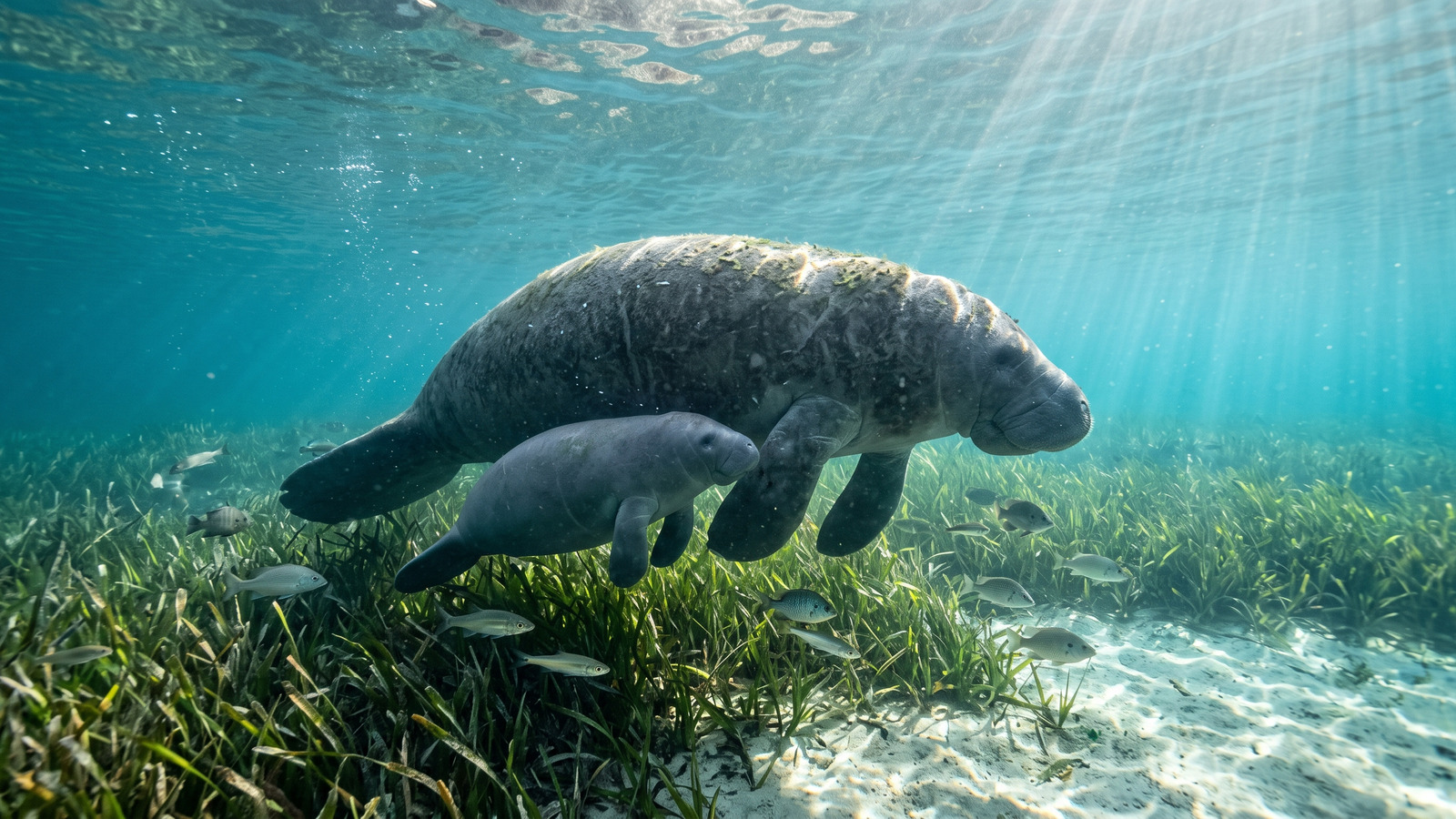
The direct customers are worth a line too: a manatee eats sixty to a hundred pounds of seagrass daily (its round-bladed namesake grass included), and sea turtles graze the ribbon blades their own namesake claims. State marine mammal, state saltwater reptile, both on the same salad.
What the meadow does while nobody watches
| The quiet job | What it means for your family |
|---|---|
| Runs on sunlight | Clear water is life; cloudy water starves meadows |
| Holds sand with roots | Calmer, clearer shallows; less erosion |
| Baffles waves and current | Gentler kid-swimming water inshore |
| Makes oxygen | The bay breathes through its lawn |
| Stores "blue carbon" | Meadows bank carbon in the seafloor for centuries |
| Feeds the food web | Your dinner grouper started in the grass |
The sunlight line is the hinge of everything. Nitrogen-fed algae clouds water; clouded water starves grass at depth; the meadow's deep edge retreats. That chain, run at city scale, is how the bay nearly died, and reversing it is how the meadows returned. Biennial mapping flights (the Southwest Florida Water Management District has flown them since 1988) keep the score, with the newest survey's results in analysis now.
Meadow manners for boating and wading families
Prop scars (bare gouges where a motor plowed the grass) take years to heal, and a flats-heavy region earns them daily. The family code: know your draft, read the water color (brown, brown, run aground: dark patches are grass, and shallow), tilt or pole across doubtful shallows, and honor the marked seagrass protection zones around the bay. Waders and snorkelers float over meadows rather than trampling through, and anchors go in sand patches, not grass. None of it costs a minute of fun; all of it is visible from the air for decades, one way or the other. The tides lesson your kids are learning is also seagrass protection: know the water's depth and schedule, and the meadow never meets your propeller.
The Little Naturalist activity
The mask-and-meadow float: pick a calm morning at a grassy shallow (Fort De Soto's protected flats and similar spots serve well), life jackets and buddy rules per the water code, and give each kid a five-item scavenger card: one blade of each grass type, one fish under a blade, one crab or urchin, one thing that surprised them. Ten minutes of floating turns "the bay" from scenery into a neighborhood with residents they've met. Follow with wrack-line blade ID so the lesson repeats free on every beach day after.
Questions families ask
Can we pick seagrass or take blades home?
Loose blades in the wrack line are fair game for the nature shelf; living meadow stays rooted, and in Florida, seagrasses in state waters are protected (uprooting them can carry penalties). Same shape as every rule in this series: dead and drifted, collect; alive and working, admire.
Is seagrass the same thing manatees follow in winter?
Winter manatees chase warm water first (the TECO gathering), then commute out to graze meadows nearby. A cold-snap manatee's whole day is warm refuge, salad run, repeat, which is why boat speed zones cluster exactly where refuges meet grass.
What was Piney Point, and did it hurt the grass?
A 2021 emergency release from an old fertilizer-plant site sent nutrient-loaded water into the bay: exactly the diet algae loves, and a hard setback in the very years meadows were already struggling. It's the cautionary chapter of the comeback story: old infrastructure can still tax the bay, which is why the watchdogs and the monitoring never clock out.
Where can kids see seagrass without swimming?
Low tide from any causeway shallows, the Weedon Island boardwalks, and kayak-clear water on calm days: blades visible from above, no mask required. The aquarium's habitat tanks close the loop, letting kids meet the nursery's graduates nose to glass at the Florida Aquarium.
Questions families ask
What is seagrass, in simple terms?
A true flowering plant that lives underwater, roots and all, growing in sunlit shallows like a meadow. It's not seaweed (that's algae); seagrass has roots, veins, flowers, and even underwater pollination. Tampa Bay's meadows are its single most important habitat.
Why does seagrass matter so much?
Because most of the bay's life starts there: roughly 70 to 75 percent of commercially and recreationally important fish species depend on seagrass at some life stage. It also feeds manatees directly, steadies the seafloor, cleans the water, makes oxygen, and stores carbon.
What are the seagrass types in Tampa Bay?
Three names worth knowing: turtle grass (wide ribbon blades), manatee grass (round spaghetti blades), and shoal grass (thin and tough, the pioneer that moves in first). Kids can tell all three apart on one snorkel or one wrack-line beach walk.
What hurts seagrass, and what helps it?
Cloudy, over-fertilized water is the big killer, because meadows run on sunlight; boat propellers scar them locally. Clean water laws brought Tampa Bay's meadows back. Families help by minding fertilizer, respecting shallow-water zones when boating, and floating rather than trampling on grass flats.
Sources
More from the Bae
 ProtectCornerstone
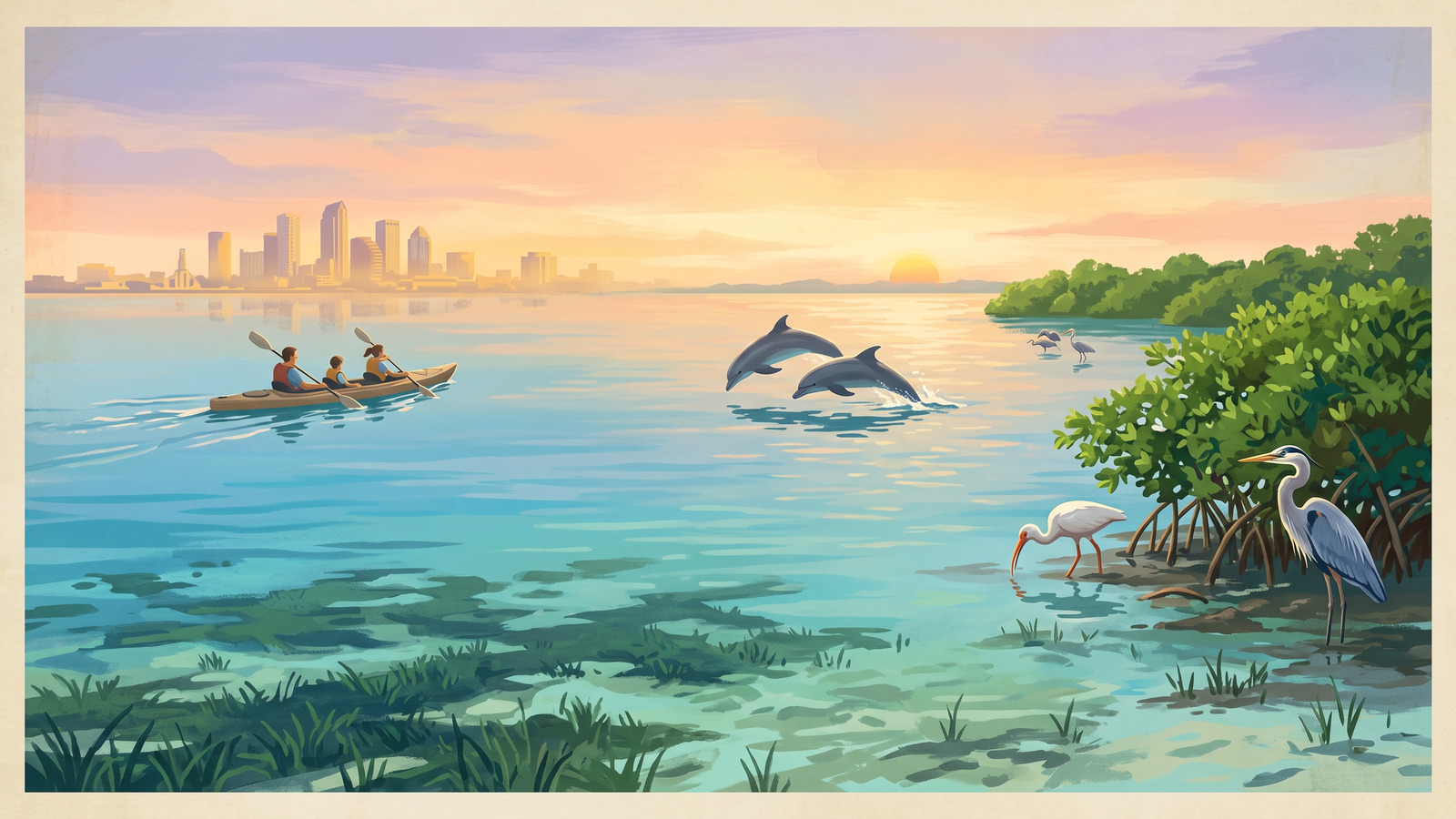
The Tampa Bay Comeback: How Our Bay Nearly Died and Came Back to Life
By the 1970s Tampa Bay was nearly dead: algae mats, empty water, vanished birds. How laws, science, and neighbors brought it back, told for families.
 Learn
LearnManatees for Families: Where to See Them Near Tampa Bay and the Rules That Keep Them Safe
Where to see manatees near Tampa Bay: the free TECO Manatee Viewing Center opens November 1, plus the look-don't-touch rules families should know.
 Explore
Tides 101 for Families: How to Read a Tide Chart and Plan a Better Beach Day
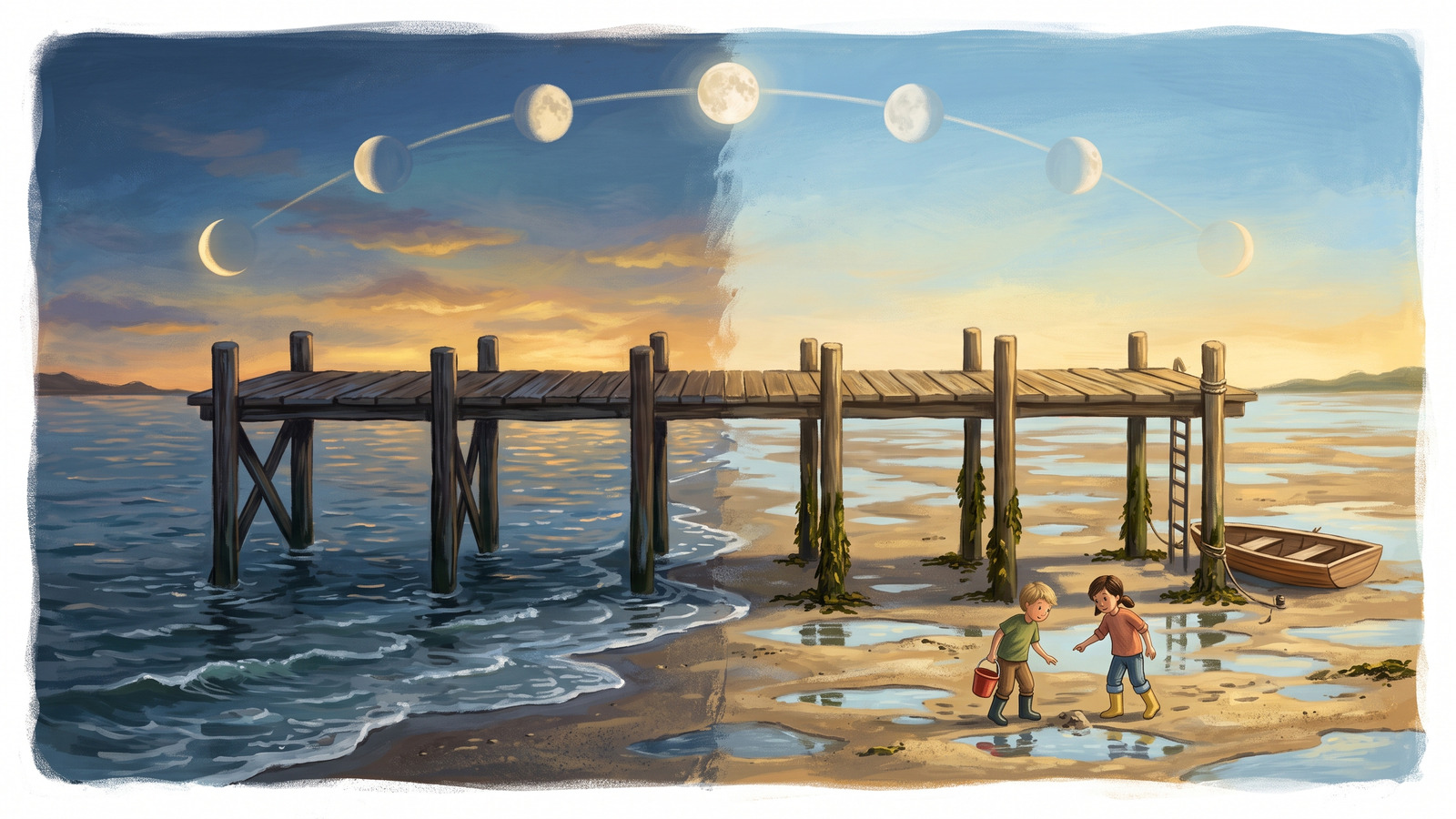
How to read a tide chart, why Tampa Bay's tides are quirky, and the family cheat sheet matching low tide, high tide, and moon phases to activities.