
Sea Turtle Season: The Family Beach Rules That Save Nests from May to October
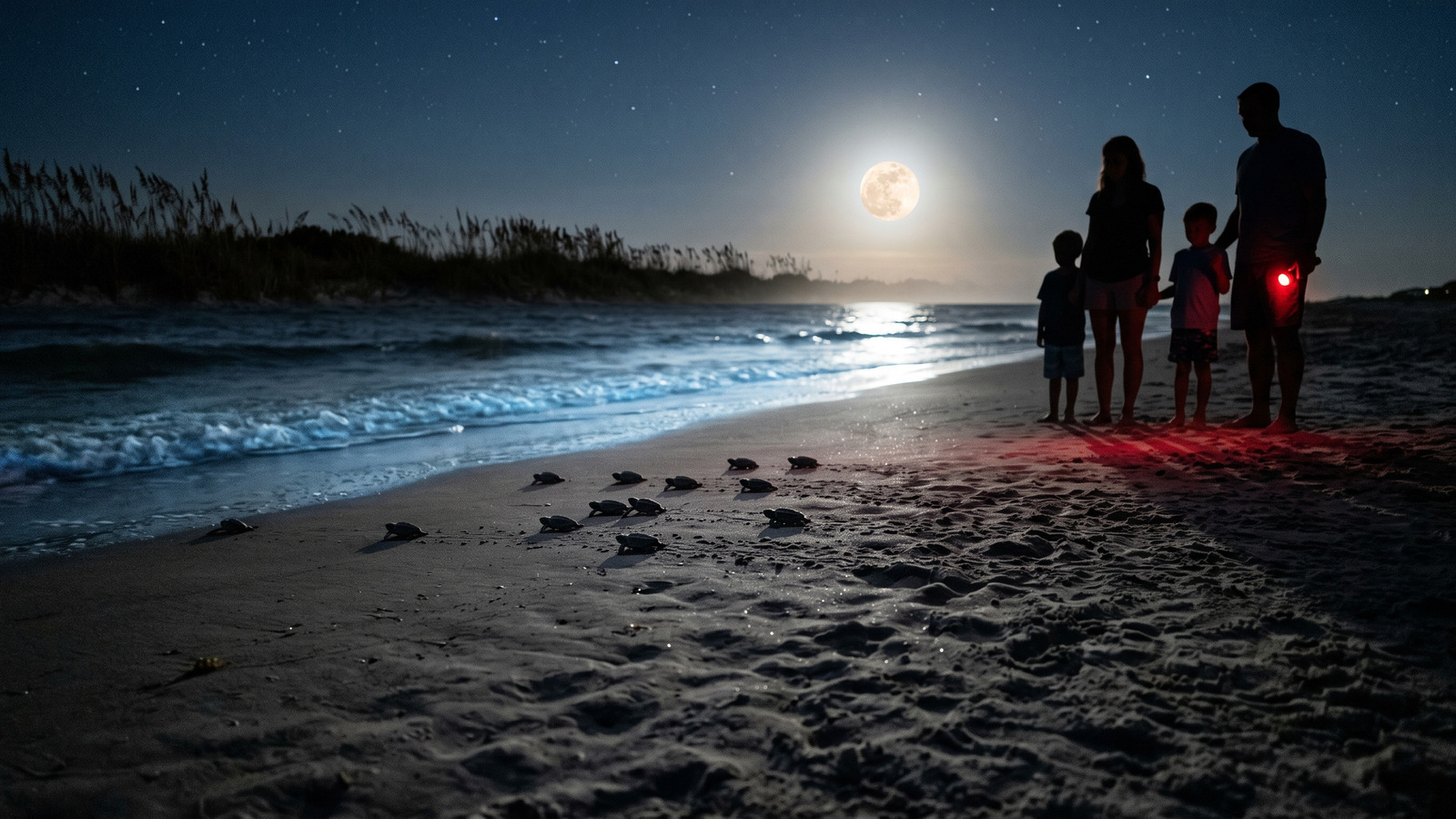
Somewhere under the sand your family walked today, a hundred eggs the size of ping-pong balls are quietly counting down. The mother came and went in the dark weeks ago, leaving tractor-like tracks the dawn patrol read like a note. Around day 60, on a night nobody can predict, the sand will boil and a crowd of hatchlings smaller than your palm will sprint for the brightest horizon. Whether that horizon is the gulf or a beachfront parking lot depends, in a very real way, on your family's beach habits.
Who's nesting on our sand
On Pinellas and Manatee county beaches, the mother in question is almost always a loggerhead: a reddish-brown sea turtle the size of a coffee table, named for a head built to crush conchs. She hauls out at night, digs a chamber with her rear flippers, deposits around a hundred eggs, disguises the site, and returns to the sea before sunrise, all in an hour or two of work she'll repeat several times a summer. Florida's beaches host one of the largest loggerhead nesting gatherings on Earth, and the loggerhead holds the title of state saltwater reptile, a fact your crew already knows if the symbols scavenger hunt is underway.
The eggs incubate about two months, and here's the fact that makes every kid gasp: the temperature of the sand helps determine hatchling sex, warmer sand producing more females. The nest your family walks past is running a program.
The four family rules, with the why attached
Fill the holes, flatten the castles. A nesting mother can't climb out of a deep hole, a hatchling can't climb out of a shallow one, and the permitted patrols that survey nests at dawn drive the tide line where craters hide. Make it the leaving ritual: last one off the towel checks the site like a campsite.
Dark beach after nine. Hatchlings navigate by light. Beachfront rentals close blinds during turtle season, and beach walkers skip white flashlights; if your family loves a night walk, a red-filtered light preserves both the magic and the compass. Local codes back this up along most of our gulf beaches.
Space for stakes and turtles. Those staked squares are nests, mapped each morning by permitted surveyors. If you're ever lucky enough to see a nesting mother or a hatchling scramble, the rule is distance, darkness, and silence: no photos with flash, no helping hands. It's a felony-grade protected moment, and also just a sacred one.
Leave nothing that snags. Chairs, canopies, and toys left overnight become turtle obstacles; trash and fishing line become worse. The beach resets to wild every night in summer. Leaving it clean is how we say so.
| Season marker | Date |
|---|---|
| Nesting begins | May 1 |
| Peak nesting | June and July |
| First hatchlings | Roughly July onward |
| Hatching continues | Through late fall |
| Season ends | October 31 |
If your family finds something
A hatchling wandering inland, a stranded or injured turtle, or a disturbed nest gets one response: call the FWC Wildlife Alert line at 888-404-FWCC. Don't put hatchlings in water or "help" them to the sea; patrols and rehabbers have permits and protocols, and the walk down the sand actually matters to a hatchling's development. Teaching kids that the right help is a phone call is its own small graduation.
Where to learn more around Tampa Bay
The Clearwater Marine Aquarium runs rescue and rehab your kids can see up close, Sea Turtle Trackers posts nest counts for St. Pete Beach and Shell Key each season, and many summer mornings you can watch dawn patrols at work if you're on the sand early. Pair the topic with a manatee winter and your family has both semesters of gentle giants covered.
The Little Naturalist activity
Adopt-a-stretch: pick your family's hundred yards of home beach, and every visit this season, end with a two-minute sweep: holes filled, castles flattened, trash out, one tally mark per staked nest you can count from a respectful distance. A season of tallies becomes your beach's nest chart, and your kids become the people the beach belongs to.
Questions families ask
Can we watch a nest hatch?
You can't schedule it; hatches come at night on their own clock. Some conservation groups host permitted public nest excavations a few days after a hatch, counting shells for science, and those are wonderful with kids. Never dig, wait, or shine lights at a staked nest on your own.
What are the odds for a single hatchling?
Long: commonly cited around one in a thousand to reach adulthood. Tell kids the flip side: a mother returns to nest near her own natal beach decades later, so every fixed hole and dark night is compounding interest on a turtle that may come home in 2056.
Do turtles nest on bay beaches or just the gulf?
Overwhelmingly the open gulf beaches: the barrier islands from Anna Maria through Clearwater. That's also where the rules bind hardest, so your gulf beach days are the ones to run the ritual.
Is it okay to build sandcastles at all?
Absolutely, and moats and holes are half of childhood. The season's only ask is that everything returns to flat before you leave. Build gloriously; strike the set.
Questions families ask
When is sea turtle nesting season in the Tampa Bay area?
May 1 through October 31 on Florida's gulf coast. Mothers, mostly loggerheads here, crawl ashore at night through summer, and hatchlings boil out of the sand roughly 60 days after each nest is laid, so hatching runs deep into fall.
What do the staked-off squares on the beach mean?
A marked nest. Trained, permitted surveyors find and stake fresh nests early each morning. The stakes and tape are the only barrier a nest gets, and everything inside is eggs. Give it space, keep dogs away, and never disturb the markers.
Why do we have to fill in holes on the beach?
Because a hole that swallows a toddler's afternoon can also trap a 300-pound nesting mother or a hatchling the size of a bottle cap, and it can stop the rescue vehicles that patrol at dawn. Flattening castles and filling holes before you leave is the single easiest conservation act in Florida.
Why do beach towns turn lights off for turtles?
Hatchlings find the sea by crawling toward the brightest horizon, which for millions of years was moonlight on water. A lit condo or a phone flashlight can point them the wrong way, and wrong-way hatchlings rarely survive. Dark beaches after 9 p.m., May through October, keep the compass honest.
Sources
More from the Bae
 LearnCornerstone
Florida's State Symbols, Explained for Kids: Every Animal, Flower, and Song, and the Stories Behind Them
Every Florida state symbol explained for kids: the panther, manatee, mockingbird, zebra longwing, and more, with the stories and the flamingo debate.
 Learn
LearnManatees for Families: Where to See Them Near Tampa Bay and the Rules That Keep Them Safe
Where to see manatees near Tampa Bay: the free TECO Manatee Viewing Center opens November 1, plus the look-don't-touch rules families should know.
 Learn
LearnThe Florida Panther: How Many Are Left, Where They Live, and How Kids Can Help
How many Florida panthers are left? Between 120 and 230. Where the state animal lives, why cars are its biggest danger, and how kids can help.