
Teaching Kids About Hurricanes Without the Fear: The Science and the Safety
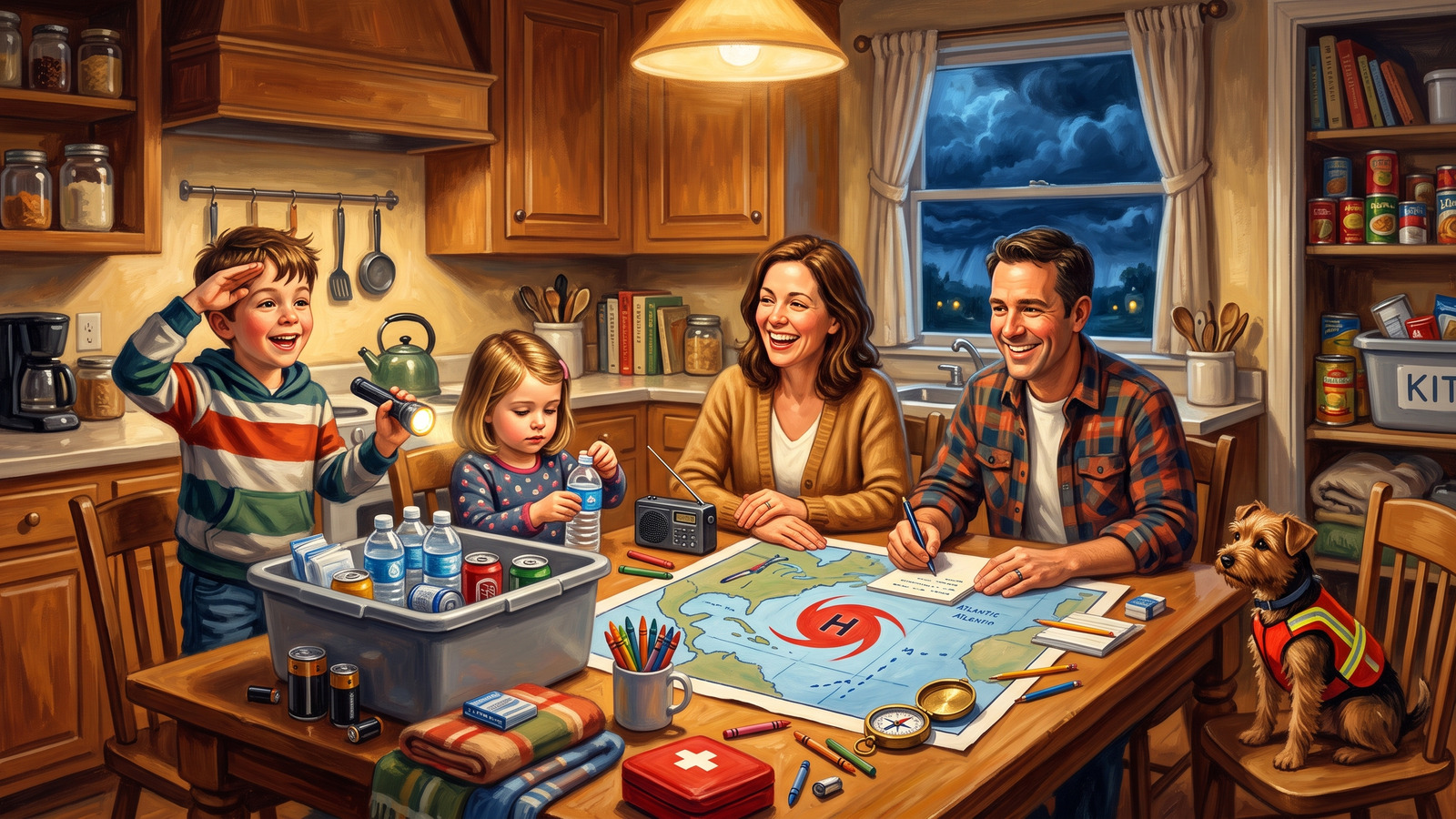
Two children watch the same forecast cone crawl across a July screen. One has heard adults whisper-argue about it in the kitchen and knows only that something big and unnamed is wrong. The other one knows the cone is a probability drawing, knows her job is the flashlights, and knows exactly which closet holds the water because she counted it herself in August. Same storm, same street: entirely different childhood. The difference isn't temperament: it's briefing. Florida kids are going to grow up with hurricane season either way; the family's choice is whether they grow up dreading it or fluent in it. This article is the fluency course: the science made friendly, the jobs by age, and the honest answers for the hard questions, in a season when the forecast itself is teaching a lesson.
The science, sized for the kitchen table
A hurricane is a heat engine: warm gulf water evaporates, rising moist air releases heat, the spin of the earth organizes the rising air into a wheel, and the machine runs as long as warm water feeds it: which is why storms weaken over land and why the gulf's bathtub-warm summers are the season's fuel gauge. Give kids the vocabulary as tools, not warnings: watch means conditions are possible (get ready), warning means expected (act), the cone shows where the center probably tracks (weather reaches beyond it; the edges are not walls), and categories measure wind, while the quieter number to respect is water: which is the setup for the evacuation lesson below. This year adds a beautiful teachable: a super El Niño (Pacific water running more than two degrees above average) is shearing Atlantic storms apart before they organize, which is why NOAA's August update trimmed the season to 7-13 named storms with 75 percent below-normal odds: one ocean reaching across a continent to calm another. Kids who track that idea have learned more real meteorology than a semester of worksheets: the planet is a connected machine, and the storm-glass sky over Tuesday's beach is part of it.
The family drill: competence by age
| The job | The age | What it quietly teaches |
|---|---|---|
| Flashlight officer: test, stage, own the batteries | 3-6 | The dark is equipment, not monster |
| Water and snack counter: inventory the tubs | 6-9 | Preparation is arithmetic |
| Records clerk: photograph rooms, build the document folder | 9-12 | Paperwork is protection |
| Radio and comms: program stations, charge the banks | 10-13 | Information is a supply |
| Shutter and fuel crew: assist the heavy prep | Teens | The family runs on their strength now |
Run the jobs in August, before any cone exists: prep done calm is education, prep done scared is contagion. The shopping trip itself teaches (Florida's sales tax exemption on many storm supplies: batteries, flashlights, tarps, radios, power banks among the categories: went permanent in 2025, and a kid comparing the receipt to the list learns civics and math in one aisle), and the packing-list doctrine transfers whole: a family that kits beach days kits storm season the same way. Then rehearse once: the hurricane dinner, lights off, lanterns on, radio murmuring, the good snacks. Children rehearse everything important (fire drills, sleepovers): a storm night should never be their first storm night.
The hard questions, answered honestly
When the direct questions come (will our house be okay, could we die, why do we have to leave), the method is honest-plus-plan, never dismissal: fear named is fear halved. "Our house is outside the water zones, and houses here are built for wind: our job is stay inside and be bored together." "People get hurt mostly when they skip the plan: that's why we have one, and you've seen it work at dinner." For evacuation-zone families: "we leave because the ocean visits that night, and we come back after: the house's job is to be a house; our job is to be somewhere dry." And keep the coverage off around young kids when a storm is anywhere in the gulf: wall-to-wall weather television is engineered adrenaline, the loop repeats without new information, and a child can't tell a Louisiana landfall from their own street. One parent checks updates on a schedule; the household lives at the rainy-day pace. After any storm, anywhere: point the kids at the helpers, then let them be helpers: the cleanup muscle this site has built all year is exactly what a neighborhood needs the week after, and helping is how children metabolize weather into citizenship.
The Little Naturalist activity
Build the storm tracker's kit: a printed hurricane tracking map (free from emergency management sites), the journal, and the family barometer ritual: pressure, sky, and wind noted daily during any named storm's life, positions plotted from the scheduled advisories. Tracking a fish storm (one that stays at sea, this El Niño year's likely specialty) is the perfect practice round: all the skills, none of the stakes: and the child who has plotted one storm on paper owns the cone forever after as a drawing they know how to make, not a shape that happens to them.
Questions families ask
Should kids help decide whether we evacuate?
No: that call belongs to the adults and the county's orders, and kids should hear it announced as settled ("our zone is leaving Tuesday morning; here's the plan"), not debated. What kids own is their jobs inside the decision: the go-bag, the pet's kit, the stuffed-animal manifest. Authority calm at the top, competence busy below: that's the architecture of a child's storm security.
What about pets in the plan?
Assign them to a kid formally: carrier staged, food bagged, vaccine records in the document folder, and the shelter question answered in August (pet-friendly options exist but require planning). A child responsible for the cat's hurricane kit has a job that matters and a worry converted into a checklist.
How do we handle school closures and the waiting?
Name the weirdness and structure it: closure days before a storm are for finishing prep (kids' jobs done first, then genuinely free time), and the waiting hours run best on the rainy-day playbook: boredom is a fine forecast. The family that treats a near-miss as a practice round ("we got a drill for free") banks calm for the year it isn't a drill.
Our kid is anxious every time rain starts. Now what?
Shrink the scale: most Florida rain is the 4 o'clock sea-breeze show, and teaching the difference (afternoon storms are the sky's daily commute; hurricanes are named, tracked, and announced days out) gives an anxious child the sorting tool. If storm fear is sticky and large, loop in the pediatrician: weather anxiety is common, treatable, and nothing a family should white-knuckle alone.
Questions families ask
How do I talk to my kids about hurricanes without scaring them?
Lead with competence, not reassurance: kids fear what they can't predict or affect, so teach the science (storms are heat engines that forecasters watch for days) and assign real prep jobs (flashlight officer, water counter). A child with a job and a plan experiences storm season as their family being ready, not the sky being dangerous.
What does the 2026 hurricane season forecast say?
NOAA's August 6, 2026 update holds the Atlantic season below normal: 7 to 13 named storms, 2 to 6 hurricanes, 0 to 2 major, with a 75 percent chance of a below-average season as a very strong El Niño suppresses development. Forecasters repeat the standing caveat: it only takes one storm to matter, so prepare identically every year.
What should kids know about evacuation?
The Florida rule of thumb, taught calmly: run from the water, hide from the wind. Families in surge evacuation zones leave when told because of ocean water, not wind; families outside them usually shelter at home. Knowing your zone, and letting kids look it up with you, converts the scariest word in the season into a map exercise.
What hurricane prep can kids actually do?
Real jobs by age: preschoolers test flashlights and count batteries, elementary kids inventory the water and snack tubs and photograph the house for records, tweens build the document folder and program radio stations, teens help with shutters and the fuel plan. The permanent sales tax exemption on many supplies makes the August shopping trip a good math lesson too.
Sources
More from the Bae
 Explore
Reading the Beach Flags: What Red, Purple, and Green Mean Before Anyone Gets Wet
Florida's beach warning flags decoded: green, yellow, red, double red, and purple, and the family habit of reading them before the towels drop.
 Explore
Rainy Beach Day? The Backup Plan That's Better Than the Original
When Tampa Bay's 4 p.m. storms cancel the beach: the lightning rules, the wait-it-out math, and the indoor backup plans that outperform the original.
 Explore
Tides 101 for Families: How to Read a Tide Chart and Plan a Better Beach Day
How to read a tide chart, why Tampa Bay's tides are quirky, and the family cheat sheet matching low tide, high tide, and moon phases to activities.