
Screen-Free Learning Days: A Week of Tampa Bay Plans That Don't Need a Tablet
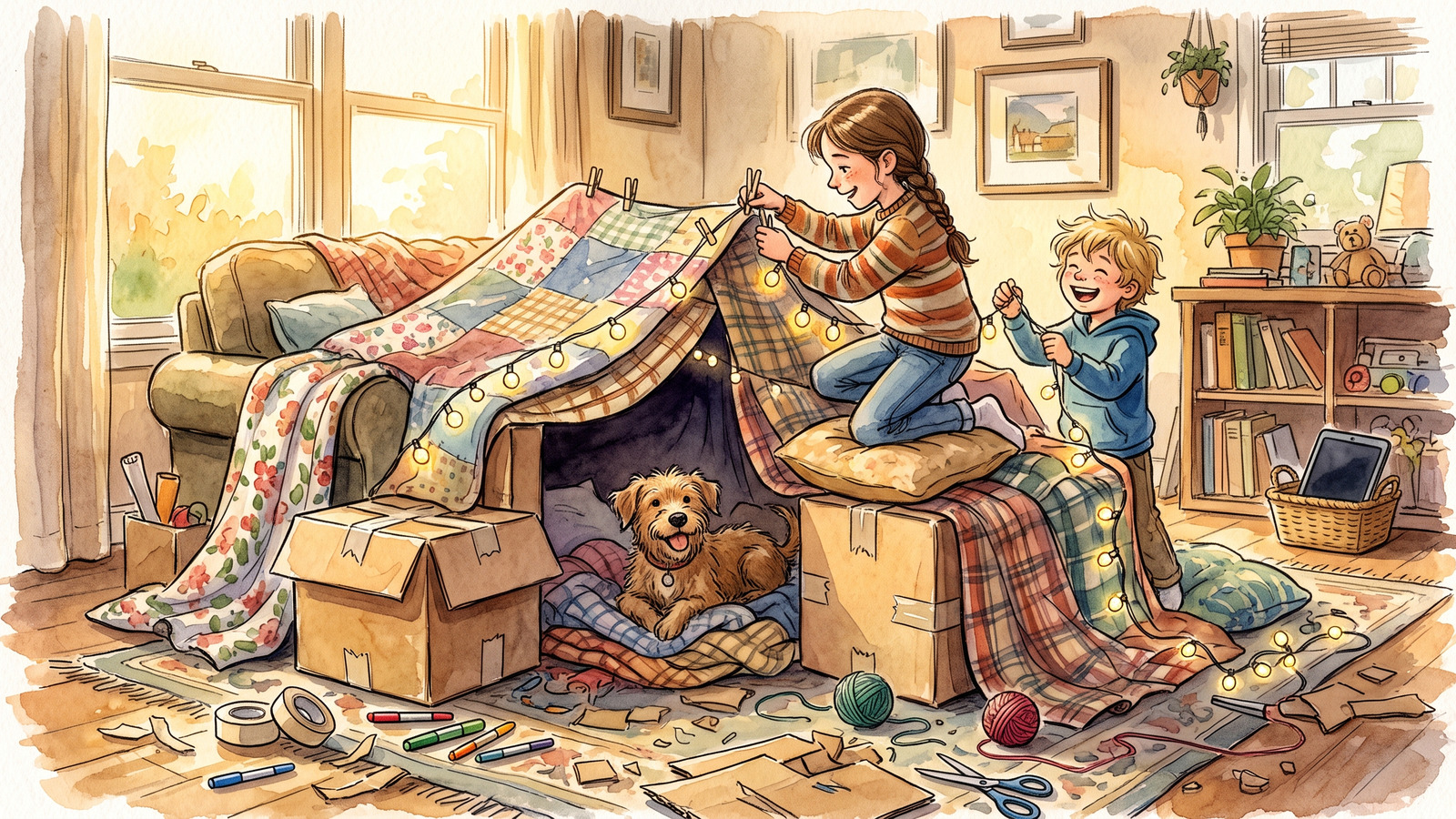
Here is a sentence no parent has ever said: "I wish the kids had spent more of their childhood on the tablet." And here is the sentence most of us say instead, some August evening when the house has gone quiet except for three separate soundtracks: "we should really do something about the screens." This article is the something: not a philosophy, not a purge, just a week of Tampa Bay days engineered to need no charger: because the honest secret of screen-free parenting is that abstinence doesn't run on willpower, it runs on better plans. A kid ankle-deep in a tide pool at a minus tide has not once asked for a device. The coast has been the alternative all along. Here's how to schedule it.
The week, planned
| The day | The anchor | The analog afterglow |
|---|---|---|
| Monday | Minus-tide morning on the flats | Finds drawn in the journal; saltwater nap |
| Tuesday | Library expedition: the big haul | Reading fort built from the couch's entire inventory |
| Wednesday | Build day: cardboard, tape, the recycling bin | The structure defended, revised, moved into |
| Thursday | Journal walk: one square foot studied | Kitchen-table field lab; specimens on the windowsill |
| Friday | Pier evening: bait, birds, sunset | The retell at dinner; the green-flash watch |
| Saturday | Cleanup hour, then the reward swim | The tally counted; the ice cream earned |
| Sunday | Porch morning: pancakes, board games, nothing | The nothing, defended like a fort |
Swap freely by season and tide chart: the architecture is what matters: one spine, wide margins, and the confidence to leave the margins empty.
The boredom-first method
The modern parental reflex treats a bored child as a service outage: something to be restored immediately, usually with a screen. The method flips it: boredom is the ignition sequence of self-directed play, and it has a documented arc: complaint (loud), wandering (aimless), and then: if no rescue arrives: invention: the fort, the game with rules nobody else will ever understand, the two-hour project made of rubber bands. Screens don't just fill the boredom; they prevent the arc from ever completing, which is why kids with infinite entertainment report being bored more, not less. The parent's whole job is to hold the line through stage one with the house's official response ("wonderful: something's about to happen") and a strategic supply line: the boredom-day cabinet stocked with cardboard, tape, string, the shell collection, binoculars, and the field guides: raw materials, never programming. Forty minutes. It has never once taken longer than the parent's nerve.
Making it a ritual, not a punishment
Screen-free fails when it arrives as sentence ("that's IT, everything OFF") and sticks when it arrives as culture: a named day (Analog Saturday has a ring), a fixed rhythm (same day weekly, so it's the water everyone swims in, not a rupture), the basket ceremony done cheerfully together (devices tucked in like it's their nap), and: this is the load-bearing clause: the parents fully in. Children run flawless hypocrisy detection: one parental scroll converts the day from "what our family does" to "what they do to me," and the whole enterprise dies of fairness. Most families report the same twist: the kids adapt by week two; the adults are the ones white-knuckling by ten a.m.: which is its own finding, worth sitting with on the Sunday porch. The analog day, it turns out, was for everyone.
The Little Naturalist activity
Build the boredom jar: on a screen-free evening, the kids themselves write twenty slips: things a person could do with hands, feet, paper, sand, or siblings ("teach the dog a trick," "map the backyard," "make a tide-pool viewer," "invent a cookie"), fold them into a jar, and grant the jar sole authority on future bored afternoons: pull one, do it or pull once more, no third pull. The authorship is the trick: kids obey their own past selves with a loyalty no parental suggestion earns, and the jar quietly archives the family's era: someday the slip that says "check if the burrowing owl is home" will be worth more than the phone it replaced.
Questions families ask
Is homework or a school device an exception?
Yes, treated like a dentist appointment: necessary, scheduled, contained: done at the table, closed when done, no drift. The day's spirit survives functional use; it dies of recreational leak. Same rule for the audiobook in the car: analog days are anti-scroll, not anti-story.
What about rain?
Rain is the best analog weather in Florida: the rainy-day playbook runs entirely unplugged (museums by library pass, the build day, the fort economy), and a porch thunderstorm watched from blankets is the finest programming the region airs: the 4 o'clock show, no subscription required.
Our teens say this is a human rights violation.
Negotiate like a diplomat, hold like a parent: teens get advance notice, a voice in picking the anchor (the pier evening and the sandbar run poll well), and social accommodations agreed beforehand: then the basket applies. Most teen resistance is proxy war for autonomy, so hand them autonomy inside the frame: let them plan the entire day once and watch the constitutional objections quiet down.
One day a week seems small. Does it matter?
It's the dose that survives, which makes it the dose that works: fifty-two analog days a year is a childhood's worth of forts, pools, piers, and page-four photographs, installed without a single family civil war. Start with one. The day will argue for its own expansion better than this article ever could.
Questions families ask
How do you run a screen-free day that doesn't end in mutiny?
Three rules: announce it the night before (ambush breeds revolt), put every device in one basket including the parents' (the double standard is the actual battle), and front-load one real outing so the day has a spine. The whining window runs about forty minutes; on the other side of it is the kid you remember.
What is the boredom-first method?
The deliberate refusal to program every minute: after the day's one anchor activity, nothing is scheduled, and the famous 'I'm bored' is answered with 'wonderful, something's about to happen' rather than entertainment. Boredom is the ignition system of self-directed play; screens are why it never fires.
Do screen-free days actually help learning?
The mechanism is attention: sustained, undivided stretches are when kids build deep play, long reading, and real observation, and those stretches simply don't occur next to an available screen. A weekly analog day rebuilds the muscle without requiring a family philosophy war.
What about the parents' phones?
In the basket, full stop: kids read the rule as fake the moment a parent scrolls, and most families discover the adults' withdrawal is the loudest. Designate one phone as the camera-and-emergencies device, kept in a pocket on airplane mode, touched only for those two jobs.
Sources
More from the Bae
 Explore
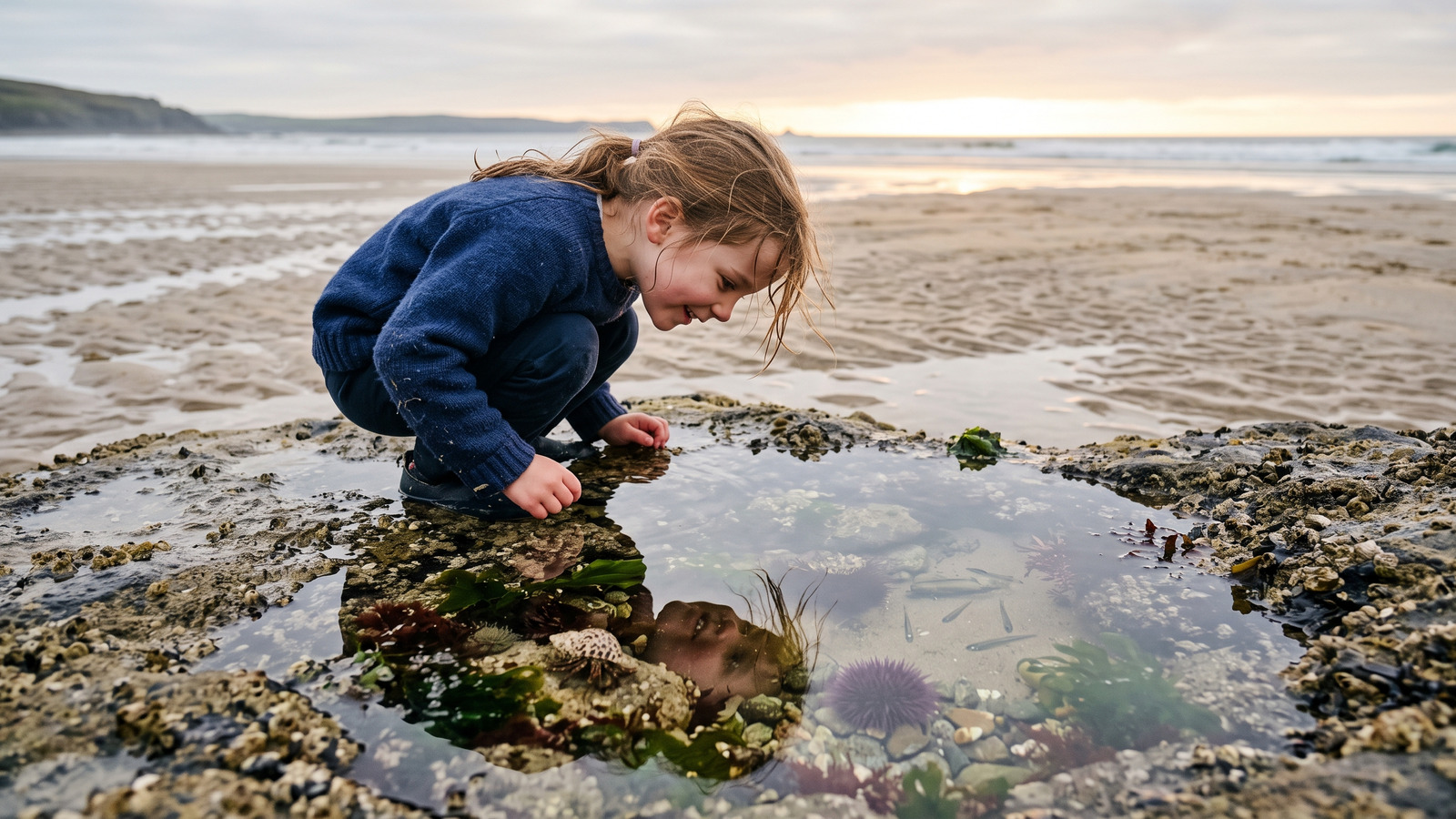
Tide Pooling Around Tampa Bay: Where Kids Can Meet Sea Stars and Hermit Crabs
Tide pooling around Tampa Bay: winter's negative low tides, the best flats at Fort De Soto and Honeymoon, and the wet-hands manners that protect the pools.
 Protect
Beach Cleanups with Kids: Where to Join One and How to Start Your Own
Beach cleanups with kids around Tampa Bay: Keep Pinellas Beautiful events, September's International Coastal Cleanup, and the DIY family kit.
 Learn
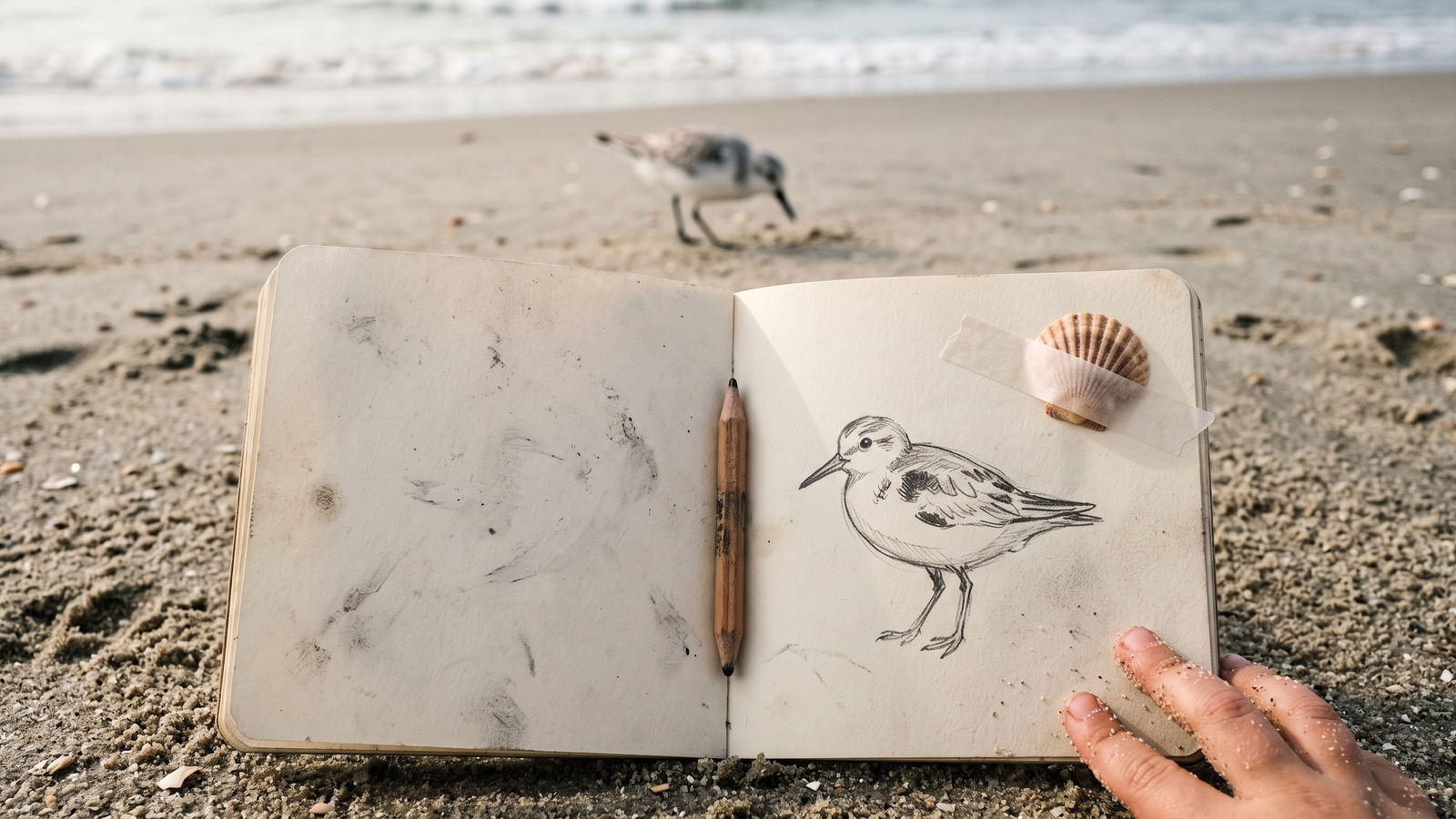
LearnNature Journaling for Kids: The One-Notebook Habit That Changes Every Walk
Nature journaling for kids: the one-notebook habit, prompts by age, and why writing down three observations changes every Tampa Bay walk.