Ybor City with Kids: Cigars, Cuban Bread, and the Immigrant Story of Tampa
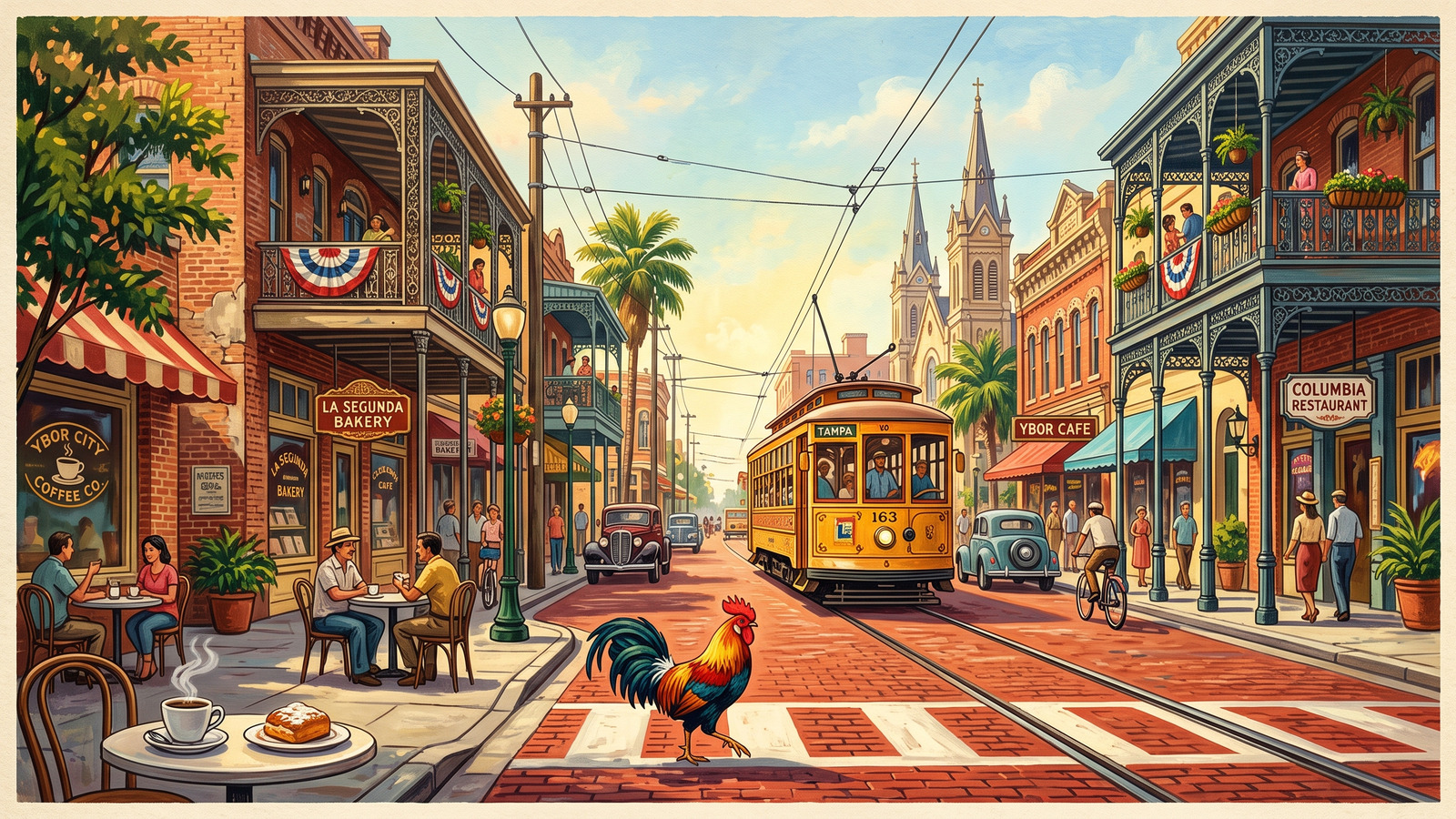
Here's a morning your kids will misremember, in the best way, as a trip to another country: brick streets, iron balconies, roosters crossing at the light, pastries whose names roll like drum fills, and a museum where they'll learn that this neighborhood once employed a man whose entire job was reading novels out loud to a room of people rolling cigars. Ybor City is fifteen minutes from downtown Tampa and one hundred and forty years from everywhere else, and it's the immigrant chapter of Old Florida told at streetcar speed.
A city built on purpose
Most towns accumulate; Ybor was decided. Martinez-Ybor, a Spanish-born cigar manufacturer, had already moved his business once, from Cuba to Key West, chasing calm and good tobacco logistics. In 1885 he bought forty acres of palmetto scrub northeast of the little port of Tampa, and built not just a factory but the whole apparatus of a town: hundreds of small worker cottages, called casitas, sold on installment to employees, an audacious loyalty scheme for the era. The factory opened in 1886; rival manufacturers followed; and the trains and steamships brought the workforce: Cubans with the craft in their hands, Spaniards, Sicilian Italians, and others, tens of thousands strong within a generation. Tampa, a struggling village of a few hundred when Ybor bought land, became a city because of it.
The factory floor: skill, smoke, and literature
The work itself deserves the kids' respect: a skilled roller (tabaquero) turned whole tobacco leaves into perfect cigars by hand, hundreds a day, a craft trained over years and paid by the piece. And over the rolling floors presided the detail that makes every child's eyes widen: the lector. Workers pooled their own wages to hire a trained reader who sat on an elevated platform and performed, hours a day: newspapers and political essays in the morning, novels in the afternoon, Cervantes, Hugo, Dickens, delivered chapter by chapter to hundreds of listeners at their benches. Factories of workers, many of whom never had formal schooling, could discuss world politics and great literature fluently. When your kids groan at read-aloud time, you now hold the ultimate counterexample: grown adults once paid from their own pockets for exactly that, daily, at work.
Around the factories grew the mutual aid societies, the era's other marvel: immigrant clubs (Centro Español, Centro Asturiano, L'Unione Italiana, Círculo Cubano among them) whose members' dues funded clubhouses, dances, libraries, and, remarkably, their own hospitals and clinics: cooperative healthcare decades before the country at large attempted it. Several of the grand clubhouses still stand along the district's streets, worth pointing out as you pass: palaces built by dues of workers, for workers.
What to actually do with kids
| The Ybor morning | The move |
|---|---|
| Arrive | Ride the TECO streetcar in from downtown; the ride is half the show |
| First stop | Ybor City Museum State Park: the story, a preserved casita, garden |
| The walk | Seventh Avenue's bricks and balconies; count chickens as you go |
| The bakery | La Segunda (est. 1915): Cuban bread, guava pastries, café con leche |
| Lunch option | The Columbia (est. 1905), Florida's oldest restaurant, 1905 salad tableside |
| The rule | Daytime is family time in Ybor; be gone by dinner |
The chickens merit their own line item: the neighborhood's free-roaming flocks descend from the backyard birds of the immigrant era and are protected by local ordinance, patrolling the bricks like feathered docents. Kids may count, follow at polite distance, and photograph; feeding and chasing are both against the house rules, the same wild-neighbor code they already run everywhere else.
The bread your kids can time-travel by
Food is Ybor's most accessible archive. Cuban bread, the long loaf with the palmetto leaf pressed down its spine, has been baked at La Segunda since 1915 and ships to restaurants everywhere from that same block; the Cuban sandwich (with salami, Tampa's Italian signature inside a Cuban-Spanish frame, a delicious argument with Miami) assembles the whole immigrant story between crusts; and a guava-and-cheese pastelito outperforms any textbook on the subject of cultural fusion. Eat the history; it's the orange grove lesson all over again: Florida's past keeps being something you can taste.
The Little Naturalist activity
Revive the lector at home: for one week, appoint a family reader at dinner, ten minutes a night, newspapers-then-novel, exactly as the factories ran it (kids rotate the platform role; standing on a chair is traditional and encouraged). Then discuss what the workers understood: that stories shared aloud build a room into a community. It's the cheapest civics-and-literature unit ever devised, tested on thousands of cigar rollers, and it pairs suspiciously well with screen-free evenings.
Questions families ask
Is the cigar industry still active there?
A handful of small shops still roll by hand for visitors, which lets kids watch the craft itself (watching is free; the product is for the grown-ups' souvenir shelf, and the visit needs no purchase). The industrial era ended decades ago as machines and changing tastes moved production on; the buildings, clubs, and food carry the story now.
How do we explain cigars to kids without endorsing smoking?
The way the museum does: as craft, labor, and economics history. The marvel is the hands, the lector, and the city the work built, and kids compartmentalize that cleanly, the same way they learn whaling history without endorsing harpoons. The health conversation, if it arises, is a fine one to have plainly.
Why did the factories decline?
Machines that rolled cheaper, the Depression, changing tastes toward cigarettes, and the end of the immigrant-craft economy, roughly in that order through the 1930s. The neighborhood struggled for decades before preservation and reinvestment; that arc (boom, bust, rebirth) is itself a lesson older kids can carry to every historic district they'll ever visit.
Is the streetcar worth it with a stroller?
It's the best value in Tampa transit: frequent, cheap, stroller-manageable, and it turns the logistics of parking downtown into part of the outing. Kids consistently rank the ride alongside the chickens, which around here is elite company.
Questions families ask
What is Ybor City famous for?
Cigars, and the immigrant city they built. From 1886, Vicente Martinez-Ybor's factory town drew thousands of Cuban, Spanish, and Italian workers, and by the early 1900s Tampa's factories rolled hundreds of millions of hand-made cigars a year, earning the title cigar capital of the world.
Is Ybor City appropriate for a family visit?
By day, very: the historic district's museum, brick streets, wild chickens, century-old bakery and restaurants, and the streetcar make an excellent family morning. Seventh Avenue changes character after dark; go for breakfast through lunch and you get the history at its best.
What was a lector in the cigar factories?
A professional reader: workers pooled wages to pay someone to sit on a platform above the rolling tables and read aloud all day, newspapers in the morning, novels in the afternoon. Factories full of workers knew Dickens, Cervantes, and the day's politics by ear. It's many kids' favorite fact in all of Tampa history.
Why are there chickens walking around Ybor City?
They're descendants of the yard flocks immigrant families kept a century ago, now protected as a living link to the neighborhood's past. Kids can look, count, and follow at polite distance; feeding and chasing are both off the menu.
Sources
More from the Bae
 Learn
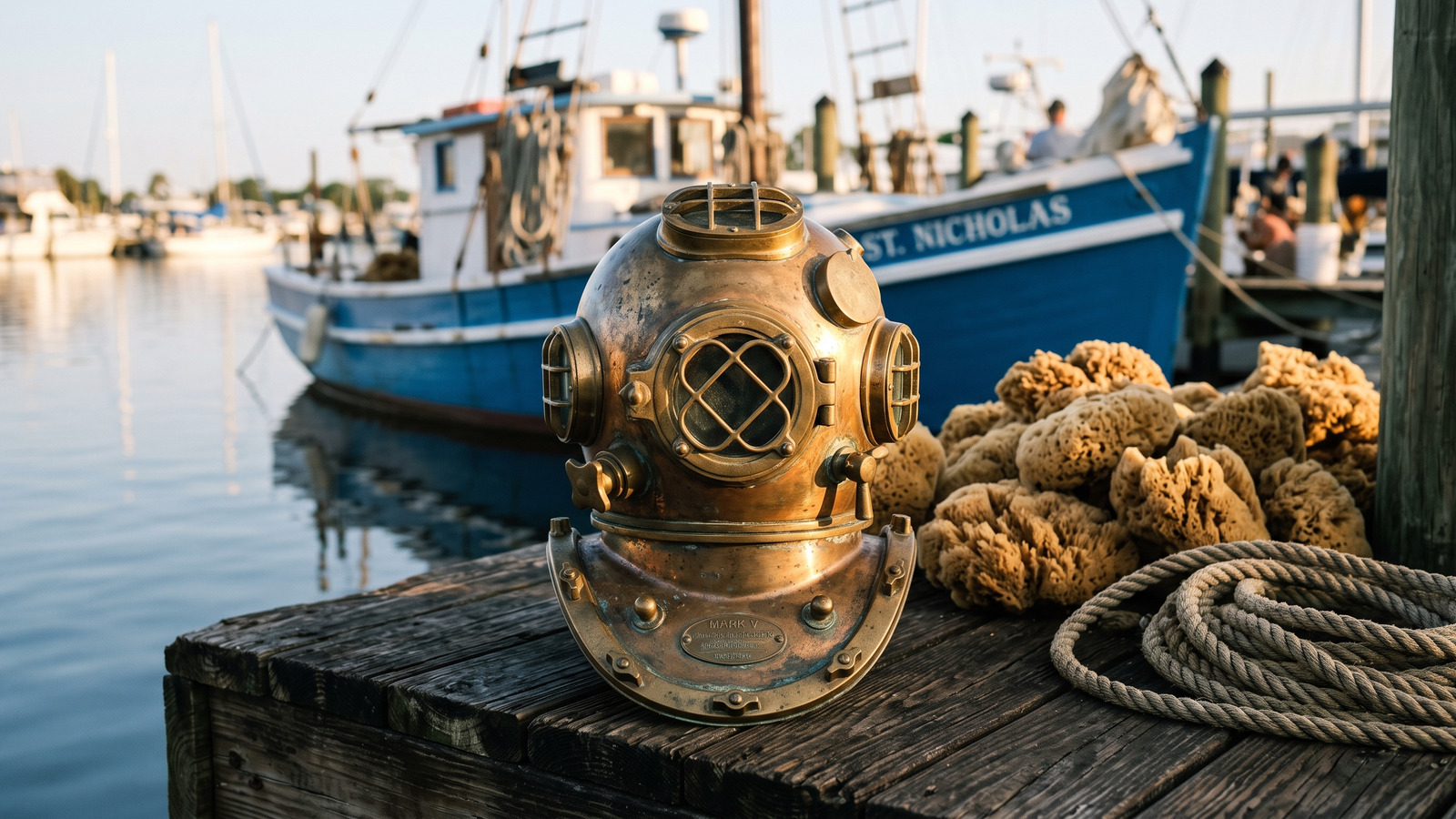
LearnThe Sponge Divers of Tarpon Springs: How Greek Families Built a Florida Town
In 1905, Greek divers from the Dodecanese islands turned Tarpon Springs into the sponge capital of the world. The story, and the family day at the docks.
 Learn
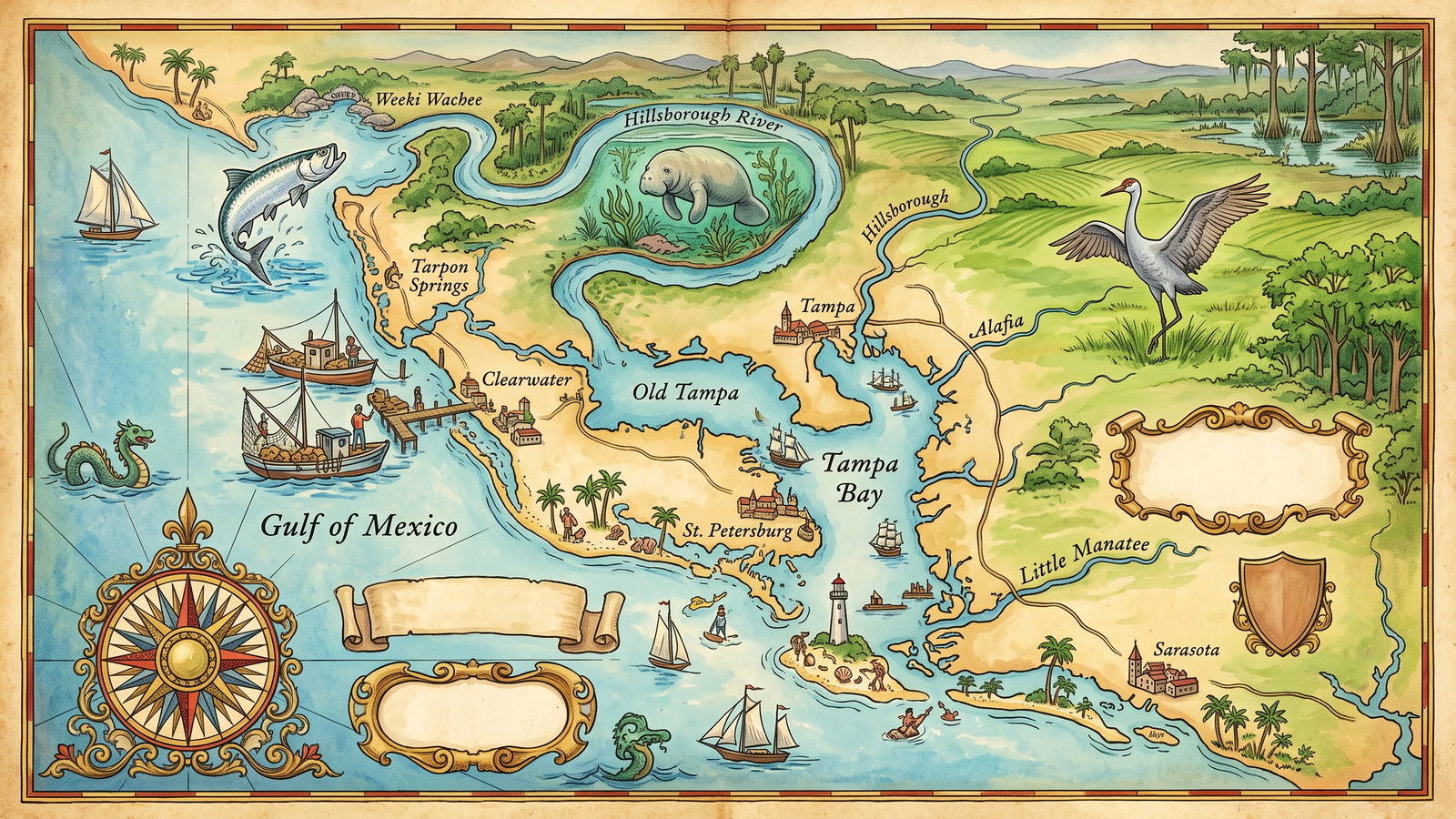
LearnOld Florida Words: Why It's Called Tampa, Pinellas, Manatee, and Pass-a-Grille
Tampa may mean sticks of fire, Pinellas is Spanish for point of pines, and Pass-a-Grille honors grilling fishermen. Local place names, decoded for kids.
 Learn
LearnThe Orange Groves That Built Florida: A Sweet History Kids Can Taste
Oranges built Florida: Spanish seeds, Odet Philippe's grapefruit, the Great Freeze, and a 95 percent decline kids can still taste the last chapters of.