
Florida Life Jacket Laws for Kids, in Plain English (and the Fit Test That Actually Matters)
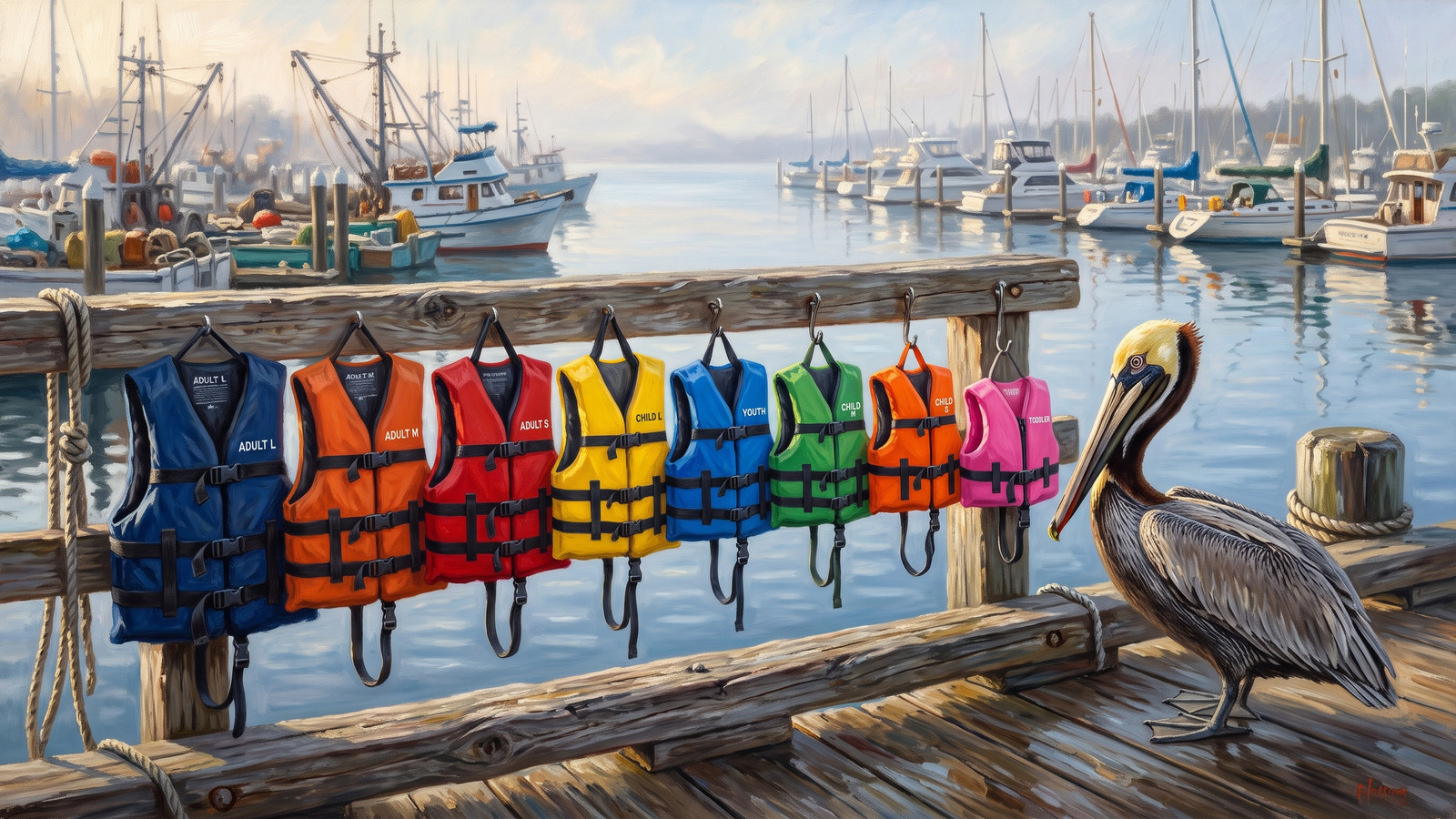
Every boat ramp in Florida hosts the same small drama on Saturday mornings: a parent holding a life jacket in one hand and a negotiating four-year-old in the other. Here's the sentence that ends the negotiation forever, and it's true: the jacket is the boat's seatbelt, the law says little kids wear it while we're moving, and captains don't argue with the Coast Guard. What the law can't do is make the jacket actually fit, float the right way up, or stay on a slippery kid, and that part (the two-second test almost nobody runs) is where this article earns its keep.
The law, translated to one table
| The rule | Plain English |
|---|---|
| One wearable per person, all vessels | A jacket exists aboard for every single body, sized to that body |
| Under 6 wears it, vessels under 26 ft, underway | Moving boat, small kid, jacket on: no exceptions, no "just this once" |
| "Underway" defined | Anchored, moored, docked, or aground doesn't count; motion does |
| 16 ft and longer: add a throwable | The cushion or ring, reachable, not buried under the cooler |
| PWC riders and anyone towed | Wearing, always, and not an inflatable |
| Condition and fit | Serviceable, legible approval label, matched to weight and chest |
Two translation notes worth saying aloud. First, "one per person" means sized per person: six adult jackets aboard with two kids on the boat is a violation waiting for a checkpoint, and more importantly it's four useless jackets and two unprotected children. Second, the labels are mid-transition from the old Type I-V system to plain "wearable" and "throwable" language, so don't panic at mismatched vocabulary on older jackets: look for the Coast Guard approval and the weight rating, which never went away.
The lift test: two seconds, every season
Kids grow; foam doesn't. The test that catches the mismatch: buckle the jacket completely, then lift the child gently by the jacket's shoulders. Pass: child rises with the jacket, chin and ears clear. Fail: the jacket slides up past the chin (too big, too loose, or missing its crotch strap), which in real water means a jacket floating helpfully beside a swimmer instead of under them. Run it at the start of every season and after every growth spurt, and let kids administer it to each other, since nothing installs a safety standard like deputizing the inspectors. While you're there, check buckles, straps, and fabric: sun-rotted jackets retire to the garage wall of honor.
The buying guide for the small crew compresses to three features: head-support collar (floats a tired or unconscious little one face-up), grab handle (converts an adult's panic into one clean hoist), and crotch strap (defeats ride-up, the failure mode the lift test screens for). That configuration, Coast Guard approved and weight-matched, is the gold standard for boat days; swim-aid styles like puddle jumpers have their place at the pool and beach, but the collared vest rules the boat.
The family standard above the law
The statute sets the floor; boats that run happy set their own weather deck rules, and this site's recommended set is short: young kids and non-swimmers wear jackets dockside and at anchor too (the law's "underway" clause knows nothing about a toddler's relationship with gravity), everyone wears them on paddlecraft regardless of age (a kayak capsize is a when, not an if, and it's a delight when dressed for it), and adults wear theirs in rough water, at night, and whenever they'd like the kids to believe the rules are real. That last one is the quiet engine of the whole system: children study what captains do, not what they announce.
Comfort is the secret compliance technology: a jacket that fits, in a color the kid chose, worn until it's forgotten, beats any lecture. Let each child pick their own (within the collar-handle-strap spec for the little ones), write their name inside, and hang them where boat days start. Gear that belongs to a kid gets worn by that kid.
The Little Naturalist activity
Run float lab in a pool or calm shallows: with jackets properly fitted, let kids feel what the equipment actually does: float on their backs motionless (the jacket's whole argument, experienced), then try the huddle position together for warmth, then an adult demonstrates the shoulder-lift rescue with the grab handle. Ten supervised minutes converts the jacket from parental imposition to personal equipment they've tested, and a child who has floated calmly in one will never fight it at the ramp again. Finish with the flip, float, and follow drill, which the jacket makes nearly automatic.
Questions families ask
Are inflatable belt-pack jackets okay for parents?
For competent adult swimmers on calm days, inflatables are approved and popular, with two carve-outs the law names: not on personal watercraft, not for towed sports, and (our addition) not on the adult responsible for a small child, who wants foam that works without a rip cord if both of you are suddenly swimming.
Do the rules apply on rented boats and tours?
Fully: rentals must supply proper jackets (counter staff will size kids if you ask, so ask), and reputable tour operators brief them. Your family habit travels too: run the lift test on rental jackets exactly as you would your own, because foam doesn't know who owns it.
What about babies on boats?
The Coast Guard's guidance is candid: an infant shouldn't ride until they can properly fit an approved infant jacket (rated from 8 pounds or more, tested in the collar style). Practically, many local families wait out the first months and start with short, calm, shaded morning trips: the bay is patient.
Is there ever a checkpoint that actually checks?
Yes: FWC and local marine units run routine safety stops, and jacket violations are their bread and butter. But reframe it the captain's way for kids: we don't wear jackets to pass inspections; we pass inspections because we're the kind of boat that wears jackets. The difference is the whole lesson.
Questions families ask
What is Florida's life jacket law for children?
Children under six must wear a Coast Guard approved life jacket whenever a vessel under 26 feet is underway (moving, not anchored or docked). Beyond that, every vessel must carry one approved wearable jacket per person aboard, sized to fit them, and boats 16 feet and longer add a throwable device.
Do kids need life jackets on paddleboards and kayaks?
Kayaks and paddleboards count as vessels: each person needs an approved jacket aboard, children under six wear theirs, and anyone on a personal watercraft or being towed (tubing, skiing) must wear one, no inflatables for those uses. This site's family standard is simpler: on paddlecraft, everyone wears, always.
How do I know if a life jacket fits my child?
Check the label first (jackets are rated by weight and chest size), then run the lift test: with the jacket fully buckled, lift the child gently by the shoulders of the jacket. If it slides up past the ears or chin, it's too big or too loose. A fitted jacket moves the kid, not the jacket.
What kind of life jacket is best for young kids?
A Coast Guard approved child jacket with a head-support collar, a grab handle, and a crotch strap: the collar floats a small child face-up, the handle lets an adult hoist them from the water, and the strap stops ride-up. Puddle-jumper styles are approved for some uses; for boats, the collared vest is the standard.
Sources
More from the Bae
 ExploreCornerstone
Your Family's First Boat Day on Tampa Bay: Rentals, Routes, and the Rules That Matter
Your family's first boat day on Tampa Bay: rental options and costs, the license rule, a calm first route, and the safety habits that make it easy.
 Explore
Rip Currents: The Two-Minute Lesson That Makes Your Family Beach-Safe
The two-minute rip current lesson: how to spot the gap between waves, why you swim parallel instead of fighting, and the flip, float, follow rule.
 Live Well
Raising Water-Confident Kids: Swim Lessons, Timing, and What the Data Says
Raising water-confident kids in Florida: when swim lessons start, what the drowning data says, and the layers of protection that let confidence grow.