
Dolphin Tours from Clearwater and St. Pete: Which Boat Fits Your Crew
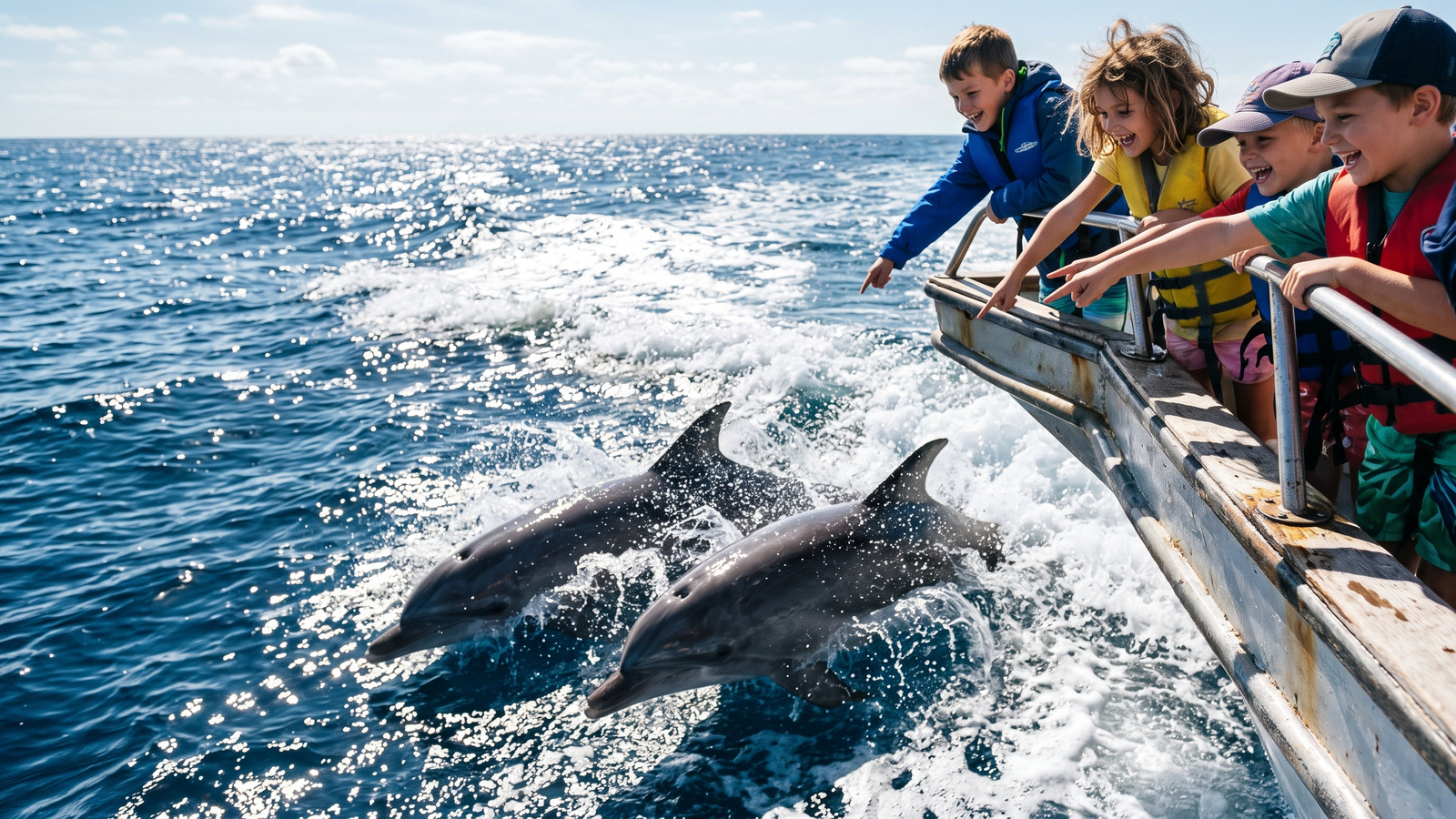
At some point every Tampa Bay family faces the boardwalk gauntlet: five dolphin tour booths, five grinning mascots, five departure times, and a kid vibrating at a frequency only boat horns answer. They're not all the same boat. The right pick depends on your crew's ages, your appetite for spray, and one question most families never think to ask at the booth: how does this captain behave around the animals? Here's the local's decoder for all of it, so the gauntlet takes five minutes and the memory takes permanent residence.
The fleet, sorted by family
| The boat | The experience | Best crew |
|---|---|---|
| Big catamaran / double-decker | Shade, restrooms, snack bar, room to roam; steady and social | Babies, toddlers, grandparents, mixed mobs |
| Mid-size tour boat | Closer to the water, some spray, higher energy | Grade schoolers through teens |
| Speedboat-style tours | Fast, loud, wind-in-teeth; spotting plus thrill ride | Older kids who asked for exactly this |
| Private / small-group charter | Your schedule, your pace, quiet decks, captain converses | Multi-generation days, photographers, birthday crews |
| Combo trips (Shell Key, snorkel, sunset) | Dolphins plus a destination | Families stacking the island day |
Departure geography is mostly convenience: Clearwater Beach's marina and the boards at John's Pass and St. Pete Beach all launch into equally dolphin-rich water, so pick the dock nearest your day and spend the decision-energy on boat type and operator ethics instead.
The responsible-operator test
Your family already knows the one rule: fed dolphins die of friendliness, so feeding and harassment are federal offenses under the Marine Mammal Protection Act. The tour version of that ethic is observable from the booth, and it's a three-question test worth teaching your kids to run: What's promised? ("See wild dolphins" is right; anything hinting at feeding, touching, or guaranteed swimming-with is a walk-away.) What's the distance talk? (Good crews brief NOAA-style viewing manners: stay back, parallel course, never surround, let animals approach or leave freely.) What happens at the sighting? (The tell of a quality captain: engines to idle or neutral, no chasing, no circling back repeatedly on the same animals, and narration that treats dolphins as neighbors, not props.) Operators who advertise their local knowledge, their years running the same waters, and their watching-only ethic are advertising exactly the right things; reviews that praise a captain for "getting so close" are, counterintuitively, the yellow flag.
The bonus of the ethical boat is better viewing, not worse: undisturbed dolphins keep doing the interesting things (herding mullet, teaching calves, surfing wakes by choice), and a boat they trust gets the show a chasing boat never sees.
Booking it like a local
Morning departures win on every axis with kids: flattest water (small stomachs thank you), coolest decks, feeding-active dolphins, and photographer's light. Book the first or second trip of the day in summer, midday in winter's mild sun, and the sunset run when your crew is old enough to trade a nap for a sky. Reserve ahead on spring break and summer weekends, ask one practical question when you do ("how much shade on board?"): it's the question veteran parents ask first, and arrive early enough to claim rail spots near the bow quarter, where spotting is best and the narration reaches. Seasickness planning for the big boats is mostly unnecessary (protected waters, steady hulls); for the fast boats, seat queasy-prone kids aft and feed everyone light beforehand per boat-day doctrine.
Make the crew part of the crew
The difference between passengers and participants is a job, and dolphin boats hand them out free: appoint your spotters before boarding (port watch and starboard watch, ranks negotiable), teach the professional call ("dolphin, three o'clock, two hundred feet" beats shrieking, though shrieking is traditional), and run the fin-notch game: distinctive dorsal fins are how the Sarasota researchers have tracked six generations, and kids sketching fins from the rail are doing baby science, not just riding a boat. Many local captains, hearing a kid call marks correctly, will hand over trade secrets unprompted: where the mullet are running, which resident mother has a new calf. Crews that look get shown things.
The Little Naturalist activity
Run the behavior bingo: before boarding, make quick cards with six squares (traveling in formation, feeding rush, tail slap, calf beside mother, wake surfing, spy-hop: a head periscoping up for a look), and have kids mark what they witness with time and place noted. Post-trip, the debrief writes itself: which behaviors, what was the group doing, why might the tail slap have happened? It converts a boat ride into an ethology field session, and the card goes in the ship's log as the day's data page.
Questions families ask
Are we allowed to swim with dolphins here?
No local tour offers it because none legally can: wild dolphin swim-withs aren't a Florida gulf coast product, and operators promising them are the walk-away flag. The magic here is wild animals at their own liberty, which, once your kids have seen a hunting rush at thirty yards, out-charms any staged encounter anyway.
Kayak dolphin tours: better or worse with kids?
Different: paddle-height encounters are breathtaking for confident kayak families, with the same no-chase, paddles-up manners as manatee meetings. For first tours and younger crews, the boat's height, shade, and narration win; graduate to paddle encounters as skills grow.
What should we bring aboard?
The short kit: sun layers and hats, water bottles, the binoculars if you own them (rails render them optional), motion-comfort candy for the fast boats, and a strap for any phone leaning over rails: the bay's collection of sacrificed phones grows weekly. Most boats sell drinks; few sell sunscreen you forgot.
Is winter dolphin touring worth it?
Some of the year's best: crisp light, active feeding, calm seas between fronts, and thin crowds: layer the kids and take the mid-morning run. The residents don't migrate: this is their address, every month of the year, which is rather the whole point of being their neighbors.
Questions families ask
Will we actually see dolphins on a tour?
Odds are excellent: Tampa Bay's resident bottlenose population works the same channels and passes daily, and experienced local captains know the routes. Most operators run sighting rates high enough to offer return trips on the rare blank day. Mornings and moving tides stack the odds further.
What kind of dolphin tour is best with young kids?
Match the boat to the crew: big catamarans and double-deckers offer shade, restrooms, and room to wander (best under 5), mid-size speedboat tours trade comfort for excitement (grade schoolers' favorite), and private or small-group charters give flexibility and quiet (best for mixed ages and grandparents).
How do we pick a responsible dolphin tour operator?
Apply the three-question test: Do they promise viewing, not feeding or swimming? (Feeding wild dolphins is illegal.) Do they talk about keeping distance and letting dolphins choose the encounter? Do they cut or idle engines around animals rather than chasing? Yes to all three books the boat.
When is the best time of day for a dolphin tour?
Morning trips: calmer seas, cooler decks, glare-free spotting light, and dolphins actively feeding. Sunset cruises trade a little spotting efficiency for the show in the sky, a fair deal with older kids. Midsummer midday is the toughest ticket for small children regardless of dolphins.
Sources
More from the Bae
 Learn
LearnThe Dolphins of Tampa Bay: What Your Kids Are Seeing Out There, and the One Rule That Protects Them
Tampa Bay's bottlenose dolphins live here year-round, have names for each other, and are protected by one big rule: never feed a wild dolphin.
 ExploreCornerstone
Your Family's First Boat Day on Tampa Bay: Rentals, Routes, and the Rules That Matter
Your family's first boat day on Tampa Bay: rental options and costs, the license rule, a calm first route, and the safety habits that make it easy.
 Explore
Shell Key by Ferry or Paddle: The Wild Island Afternoon Your Kids Will Remember
Shell Key Preserve: an undeveloped barrier island reached by shuttle from Pass-a-Grille or by paddle, with world-class shelling and zero buildings.