The Dolphins of Tampa Bay: What Your Kids Are Seeing Out There, and the One Rule That Protects Them
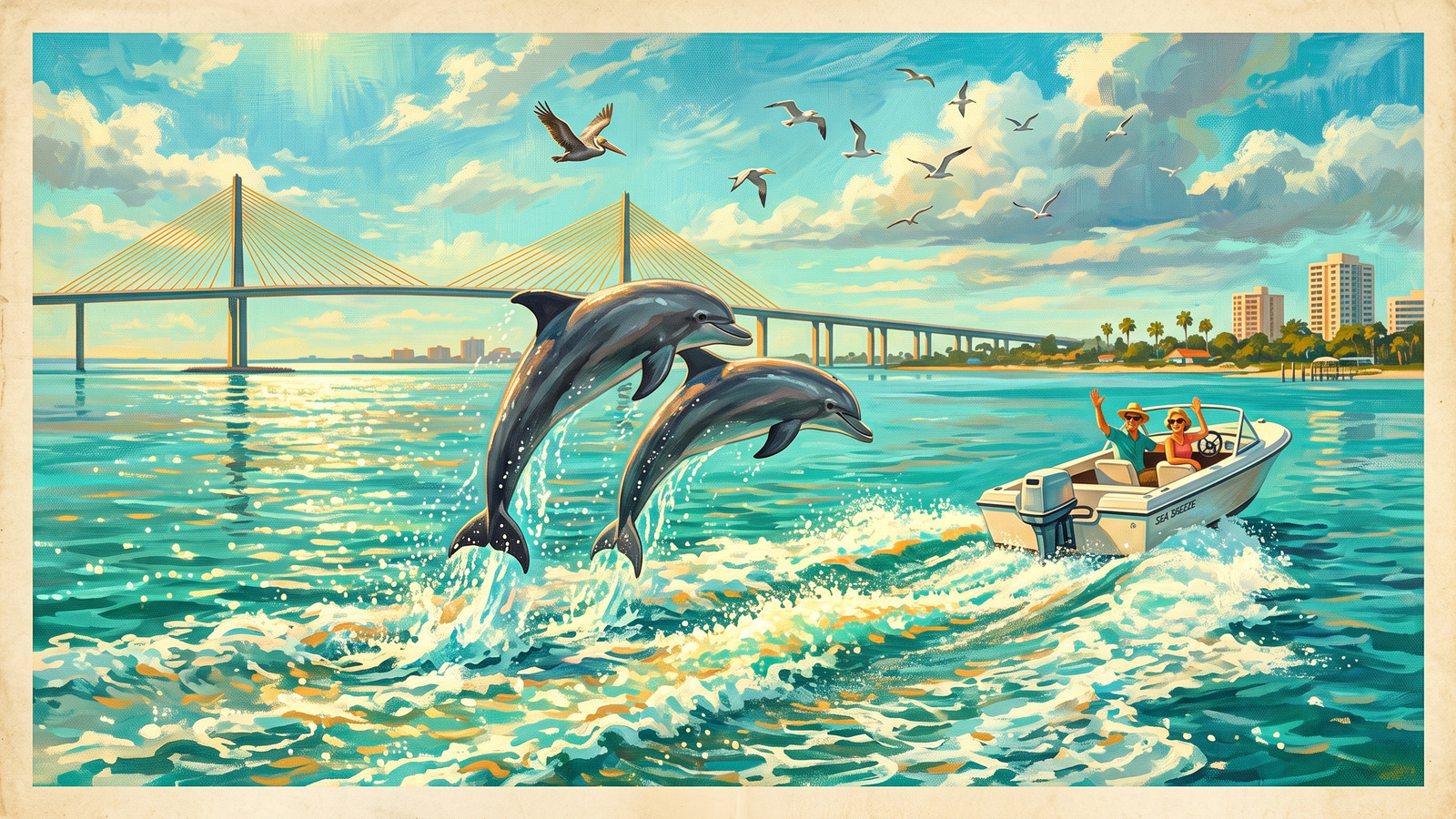
Every ferry to Egmont Key carries the same drama: a shout, a stampede of small sneakers to the rail, and a gray fin slicing the wake exactly where a child is pointing. The captain has seen it a thousand times and still slows down. Dolphins do to a boat full of kids what nothing on a screen can do, and around Tampa Bay the show is local, year-round, and free.
Who's actually out there
Bottlenose dolphins live in Tampa Bay every month of the year: mothers with calves in the quiet bayous, bachelor pairs working the channel edges, old veterans whose dorsal fins carry notches like signatures. They eat fish (mullet is a favorite, especially during fall's bait runs), hunt in coordinated teams, and sleep one brain-half at a time, which is the fact your kids will repeat at dinner for a week.
And they are neighbors in a documented way. Just south in Sarasota Bay, the Sarasota Dolphin Research Program has followed one resident community continuously since 1970, the longest-running study of a wild dolphin population on Earth, now tracking its sixth generation of known individuals. That research is why we can say with confidence what local dolphins do: they stay, they remember, and they pass places down from mother to calf, the way human families pass down beach traditions.
The name thing is real
Within its first year, each bottlenose invents a signature whistle all its own. Other dolphins learn it, use it to call that individual, and answer with their own. Researchers, cautious people by training, describe it as the closest thing to a name found outside human beings. Try that on an eight-year-old and watch the bay change in front of them: it stops being water with animals in it and becomes a town with residents.
The one rule, and why it's the whole ballgame
Feeding a wild dolphin is illegal under the federal Marine Mammal Protection Act, and Florida waters are exactly where that law earns its keep. A fed dolphin learns that boats mean food. It starts begging, trailing fishing boats, snatching bait, teaching its calf to do the same. Begging dolphins get struck by propellers, hooked, and entangled at rates wild-behaving dolphins don't. The kindest-feeling gesture on the water is quietly one of the cruelest.
So the family code, teachable in one breath: we're the boring boat. No tossed snacks, no circling back to chase, no reaching out. If a dolphin chooses to surf your wake (they do it for fun), you've been chosen, and the memory is better than any fed trick.
| See dolphins like a naturalist | Why it works |
|---|---|
| Watch tide lines and channel edges | Moving water concentrates fish |
| Scan behind shrimp and mullet boats | Dolphins work the leftovers |
| Look for birds diving | Same fish, seen from above |
| Go at moving tide, morning light | Calm glare-free water shows fins |
| Count fin notches | It's how scientists tell individuals apart |
Where to watch around Tampa Bay
No boat required: the Egmont Key ferry ride is practically a dolphin tour with a lighthouse attached, the Fort De Soto piers and ferry channel produce daily sightings, the St. Pete Pier gives height and patience a chance, and Pass-a-Grille's seawall at outgoing tide is a local secret hiding in plain sight. With a boat or a tour, the bay's channel markers and grass-flat edges deliver; choosing a responsible operator (one that never feeds or crowds) is its own lesson in voting with your dollars.
The Little Naturalist activity
Start a family fin book. Photograph or sketch dorsal fins you see this season, noting date, place, and any notches or scars, exactly how the Sarasota researchers built their catalog. Matching a fin across two different outings is a genuine scientific thrill, and it converts boat rides and beach walks into one continuing story.
Questions families ask
What's the difference between a dolphin and a porpoise?
Around here it's academic: Florida's gulf coast dolphins are bottlenose dolphins, and true porpoises don't live in our bay. If it surfaced near your boat in Tampa Bay with a curved fin and a visible beak, it was a dolphin.
Do sharks and dolphins fight?
They mostly avoid each other, though large sharks do take calves, which is one reason mothers keep nursery groups in shallow, protected bayous. Seeing dolphins doesn't mean sharks are absent; it means the bay is healthy enough to feed everybody.
Are dolphin populations here okay?
Resident communities are stable and well-studied, and their biggest risks are human ones: feeding, entanglement, boat strikes, and water quality, since dolphins sit atop the bay's food web. Every seagrass and cleanup story on this site is secretly a dolphin story too.
My kid wants to be a dolphin scientist. Where do we start?
With the fin book above, then the researchers' public talks and citizen science days that surface around the bay each year. The world's longest wild dolphin study happens one county south of us; growing up here is a head start.
Questions families ask
Are the dolphins in Tampa Bay wild?
Completely. Tampa Bay and the waters just south host resident bottlenose dolphins that live their whole lives here, raising calves in the same bays their mothers and grandmothers used. The dolphins your kids spot from the Skyway or a ferry are locals in the truest sense.
Is it illegal to feed dolphins in Florida?
Yes. Feeding or harassing wild dolphins violates the federal Marine Mammal Protection Act, and it can bring real fines. Fed dolphins learn to beg around boats, which puts them near propellers and hooks. Loving dolphins means keeping the snacks in the cooler.
Do dolphins really have names?
Effectively, yes. Each bottlenose develops a signature whistle in its first year, a unique sound others use to call and answer it, which researchers describe as functioning like a name. It's one of the strongest cases for animal names anywhere in nature.
Where's the best place to see dolphins with kids without a boat?
Any high vantage over moving water: the ferry to Egmont Key, the piers at Fort De Soto, the St. Pete Pier, and the seawalls along Bayshore or Pass-a-Grille at moving tide. Look for fins where the water is working: tide lines, channel edges, and behind shrimp boats.
Sources
More from the Bae
 Learn
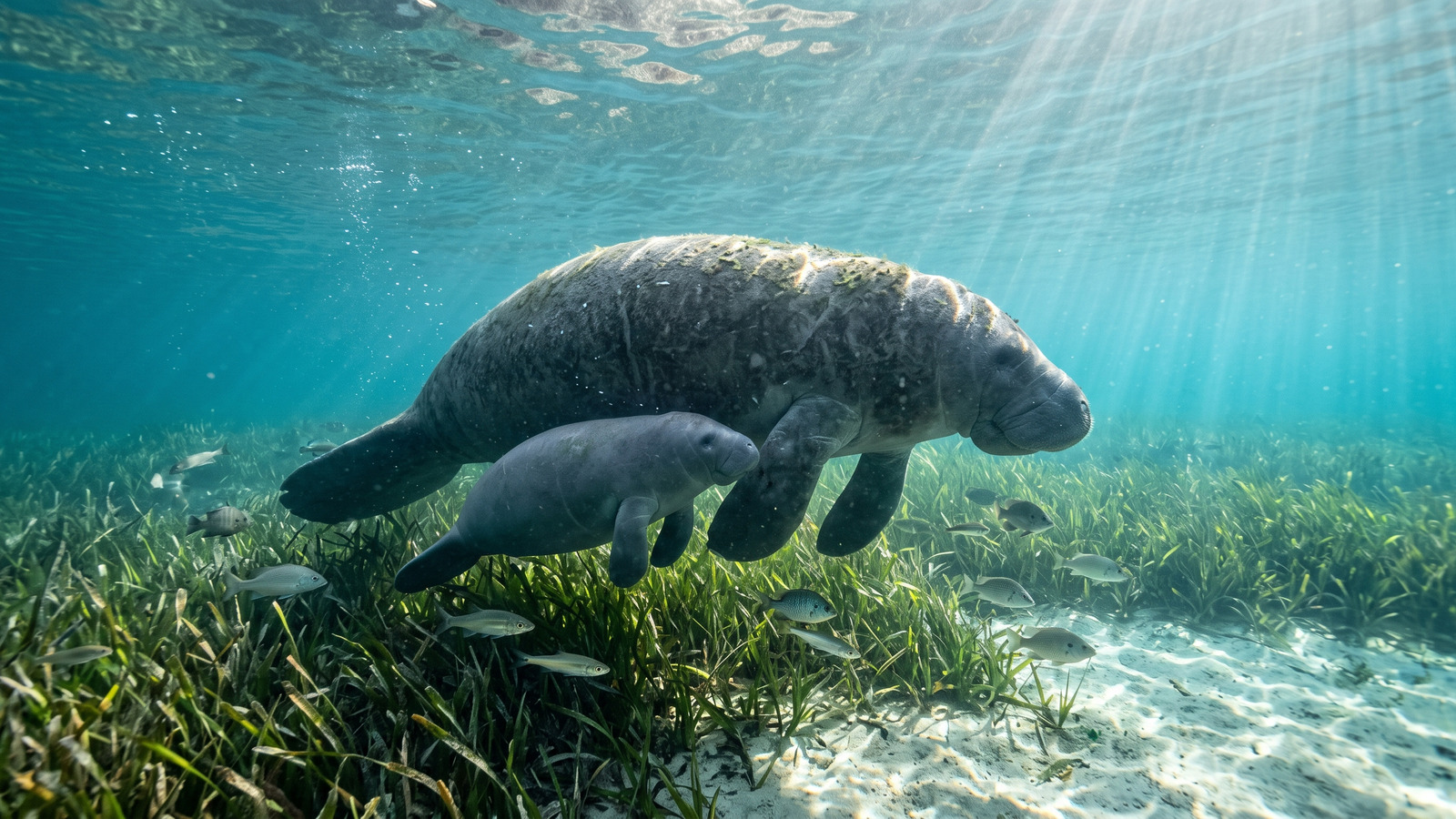
LearnManatees for Families: Where to See Them Near Tampa Bay and the Rules That Keep Them Safe
Where to see manatees near Tampa Bay: the free TECO Manatee Viewing Center opens November 1, plus the look-don't-touch rules families should know.
 Learn
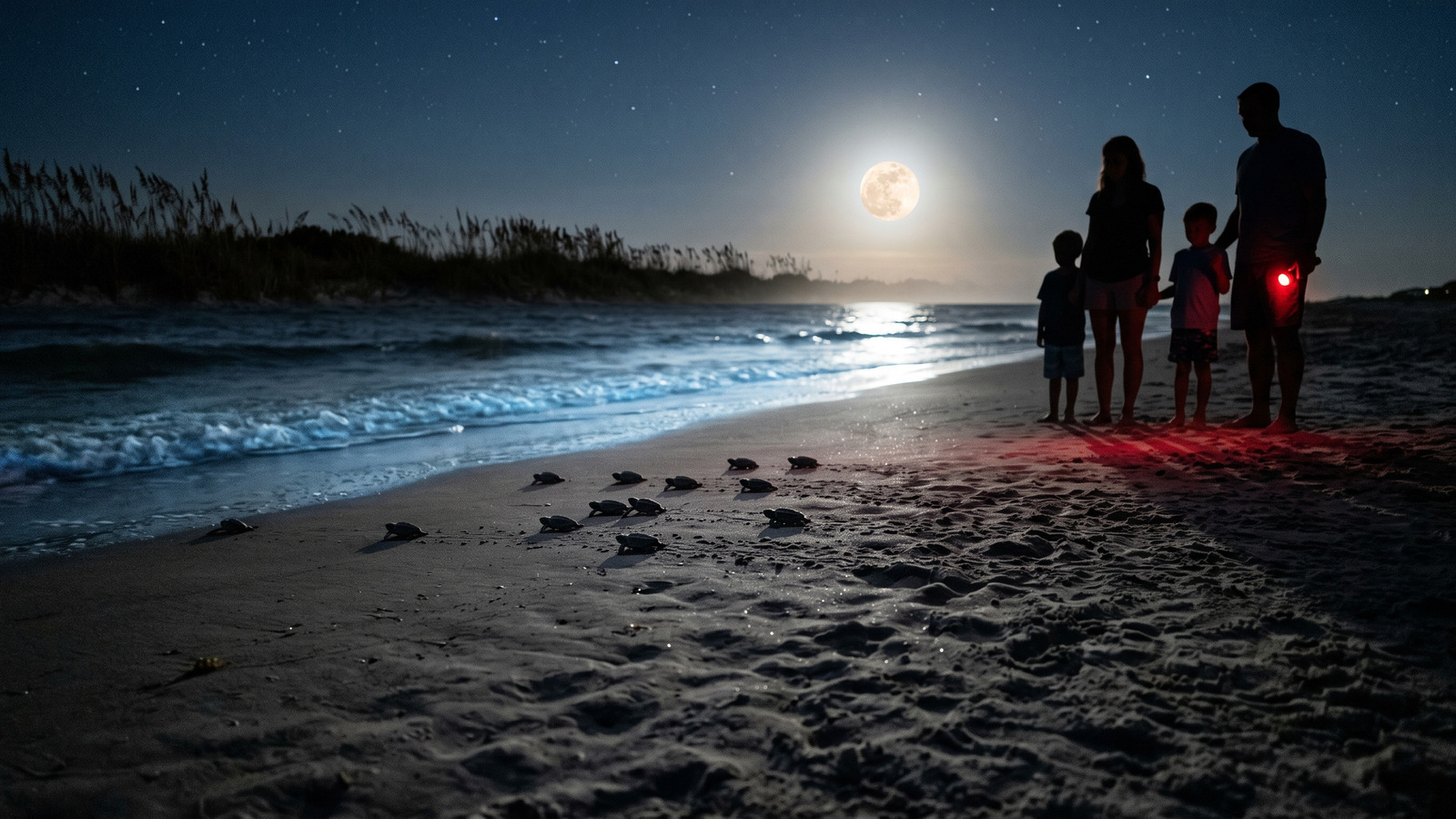
LearnSea Turtle Season: The Family Beach Rules That Save Nests from May to October
Sea turtle nesting season runs May through October on Tampa Bay beaches. The family rules: fill holes, flatten castles, lights out, and let nests be.
 LearnCornerstone
Florida's State Symbols, Explained for Kids: Every Animal, Flower, and Song, and the Stories Behind Them
Every Florida state symbol explained for kids: the panther, manatee, mockingbird, zebra longwing, and more, with the stories and the flamingo debate.