Manatee Zones and Slow Wakes: How Boating Families Protect the Gentle Giants
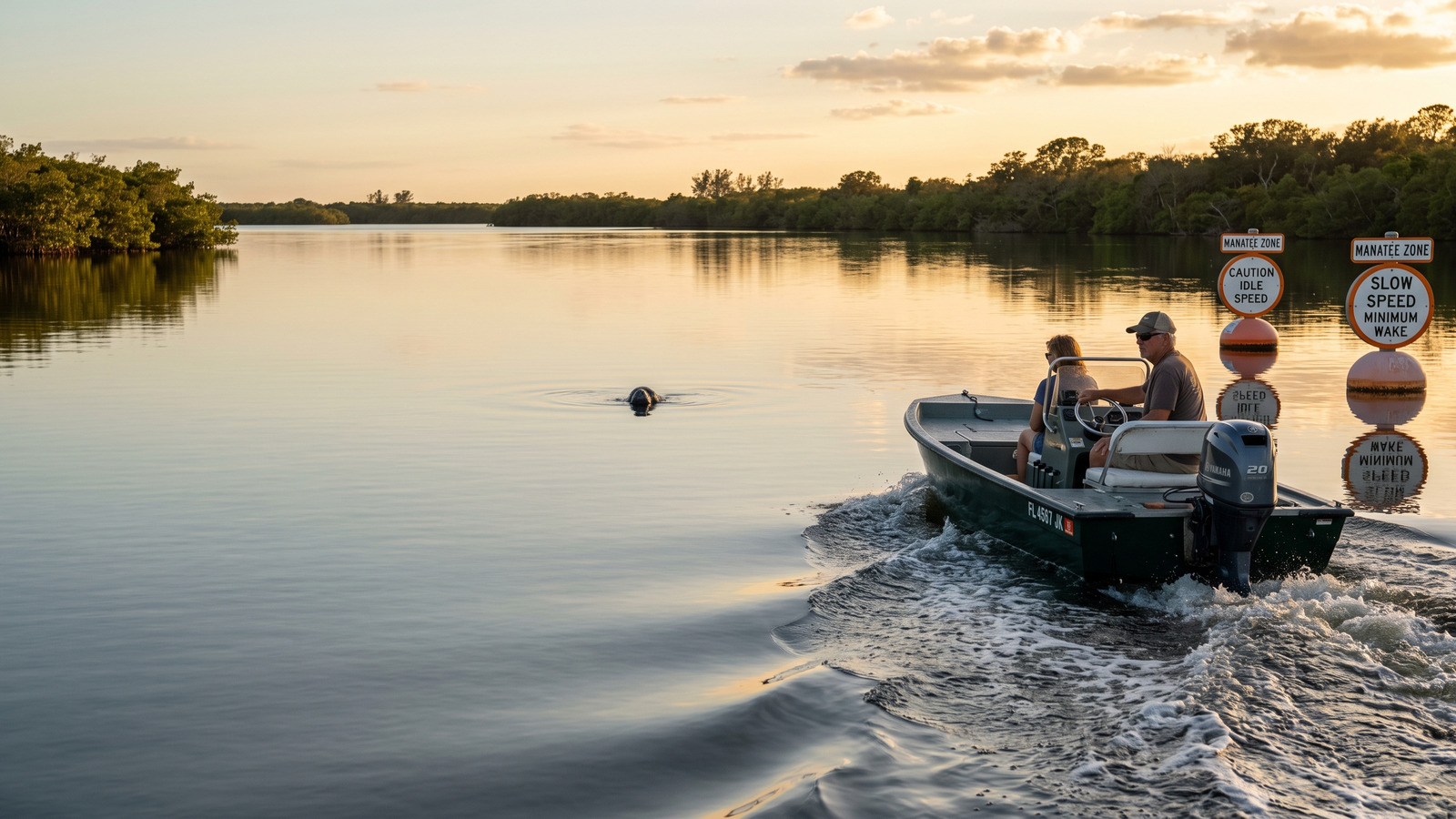
Every winter, somewhere on the Intracoastal, a rented pontoon full of new boaters grumbles through its fourth consecutive slow-speed zone, and somebody aboard asks the reasonable question: why is half this bay a school zone? Then a gray back the size of a dining table rolls up beside the hull, exhales like a startled bagpipe, and sinks: and the grumbling stops for good. The signs weren't slowing you down for nothing. They were introducing you. This article is that introduction, delivered before the bagpipe: what the zones mean, when they bind, and how a family boat becomes the kind manatees survive.
Why the bay is posted like a school zone
The collision problem is geometric: manatees are slow, must surface to breathe every few minutes, and spend their days grazing seagrass meadows in three to seven feet of water: exactly the depth and exactly the flats that recreational boats cross. Add gray coloring in green water and you get the grim statistic your kids half-know already: boat strikes are a leading cause of manatee deaths, and researchers identify individual manatees by their propeller scar patterns, because most adults have them. The TECO boardwalk lesson taught your family what that looks like; the zones are the bay's answer: where manatees concentrate, boats slow to speeds that give both parties time to miss each other. The data behind the map is decades deep: aerial surveys, telemetry, and carcass recovery locations, which is a sober sentence worth saying to older kids: the signs are placed where the lessons were learned.
Reading the signs like a captain
| The sign | What your boat does | The feel |
|---|---|---|
| Idle Speed No Wake | Slowest speed that still steers | A fast walk; conversation at normal volume |
| Slow Speed Minimum Wake | Fully off plane, settled, bow down | A jog; your wake wouldn't tip a kayak |
| Seasonal small print | Dates on the sign (commonly Nov 15 - Mar 31) | Winter rules; check the placard |
| All year | No dates: always in force | Usually refuges, marinas, tight channels |
| Resume normal safe operation | Zone ends | Throttle up gradually, eyes still forward |
Two habits complete the fluency. First, zones are corridors with boundaries: the sign faces you at entry and exit, and the water between is all zone, including the tempting open stretch in the middle. Second, the county-by-county rules differ in detail (Hillsborough, Pinellas, and Manatee counties each carry their own zone maps under the state's Manatee Sanctuary Act), so the rental briefing and the posted signage outrank memory: when in doubt, slow is never the wrong answer, and around here it's rarely a long delay.
The bow watch: spotting before the prop does
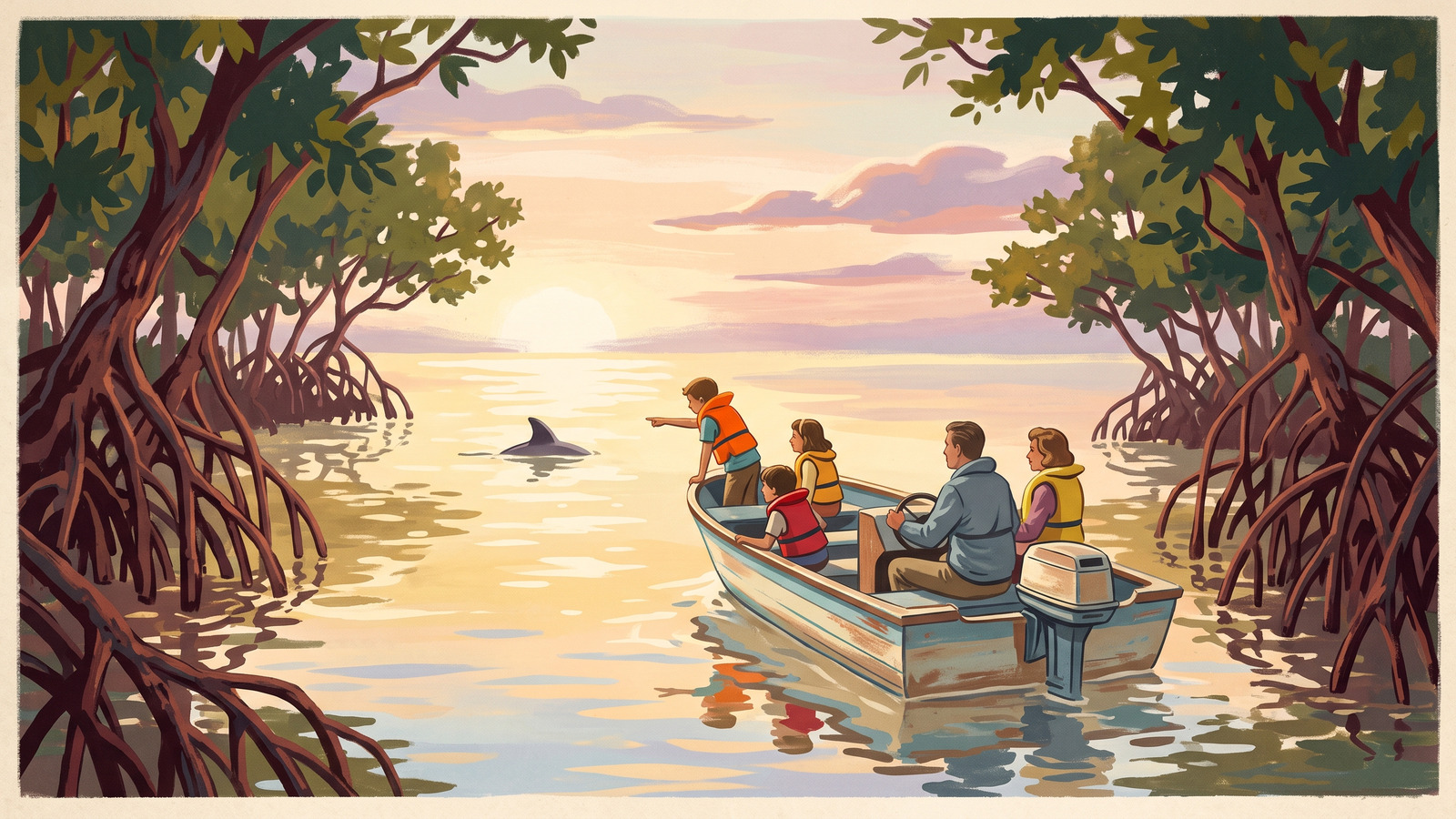
Compliance is the floor; craft is the fun part, and kids make superb manatee radar with three teachable tells. The footprint: a swimming manatee's tail pushes flat, round swirls to the surface: a trail of glassy dinner plates on choppy water, readable from a surprising distance. The snout: a breath every two to five minutes, nostrils only, easy to miss and unmistakable once seen. The shadow over grass: on sunny days over flats, a gray-brown submarine shape that resolves the moment it moves. Equip the commissioned bow watch with polarized sunglasses (the single best manatee-spotting technology ever sold at a gas station), teach the call ("MANATEE, TWO O'CLOCK": pointing included), and the captain's response: neutral, drift, and everyone enjoys the audience until the animal moves on. Never steer toward one for a better look: passive observation rules afloat exactly as it does at the boardwalk.
The paddle and swim rules
Kayaks and boards owe manatees the same manners at closer range: no chasing, no touching, no offering water or lettuce (all illegal harassment), and no blocking a manatee's path or separating a cow from her calf. If a curious manatee approaches your kayak (they do: young ones investigate paddles like puppies), the drill is paddles up, hands in, let the meeting run at the manatee's pace, and file it under best-day-ever. Swimmers who find themselves sharing water follow the same law: float calmly, no pursuit, no hands: which around Tampa Bay effectively means enjoy the miracle and let it leave. The Crystal River exception (permitted, guided in-water encounters) lives ninety minutes north with its own rulebook.
The Little Naturalist activity
Chart the family's manatee map: on a paper chart (or a hand-drawn bay), have kids log every sighting across the season: date, location, count, behavior (grazing, traveling, breathing swirls), building the household's own distribution survey. By spring, compare their map against the posted zones and let them discover the correlation themselves: the signs sit where their dots cluster. Finding that the law matches their own data is the civics-of-science moment this whole cluster aims at: rules, at their best, are just observations with authority.
Questions families ask
What's the fine for speeding in a manatee zone?
Real money and real points: violations run from civil fines into criminal territory for egregious cases, enforced on the water by FWC and county marine units, especially in winter. But sell the standard, not the fine: boats that idle through the flats are the reason the comeback's manatee chapter is still being written.
Do the zones actually work?
The evidence says yes where they're respected: strike deaths drop in well-enforced zones, and decades of protection are a core reason manatee numbers climbed from the few hundreds counted in the early surveys to the thousands of today. The threatened-not-doomed status your kids learned is, in real part, a speed limit's achievement.
Winter is zones season, but summer boating hits manatees too?
Correct: manatees spread bay-wide in warm months, which is why grass flats carry the assume-manatees rule all year and why some zones never expire. The seasonal window concentrates protection where winter concentrates manatees; the bow watch never takes a season off.
What do we do if we see an injured or stuck manatee?
One number, taught to the whole crew: FWC's Wildlife Alert, 888-404-3922 (FWCC), with location, photos if easy, and no touching or towing while you wait: trained responders handle rescues. Your family's report is the same phone-call heroism this series keeps teaching: around wildlife, the pros do the hands, and the good families do the dialing.
Questions families ask
What do the manatee zone signs actually mean?
Two main flavors: 'Idle Speed No Wake' means the slowest speed that keeps steering (a fast walk), and 'Slow Speed Minimum Wake' means fully settled in the water, bow down, making minimal wake. Signs mark where zones start and end, and some apply seasonally while others run all year.
When are the seasonal manatee zones in effect?
The classic seasonal window is November 15 through March 31, matching winter manatee gatherings, with exact dates and boundaries varying by county rule. Around Tampa Bay, expect enforcement to tighten in winter, especially near warm-water refuges and grass flats.
How do you spot a manatee from a moving boat?
Look for the swirl: manatees push round 'footprints' of flat water to the surface as they swim, and a snout appears for a breath every few minutes. Polarized sunglasses, a posted bow watch, and slowing down over grass flats find most of them. Assume seagrass equals manatees, always.
Why are boat strikes such a big deal for manatees?
Because manatees are slow, surface to breathe, and graze in exactly the shallow grass flats boats cross: collisions are a leading cause of manatee deaths, and most adults carry propeller scars (it's how researchers tell them apart). The zones exist because slowing down demonstrably saves them.
Sources
More from the Bae
 Learn
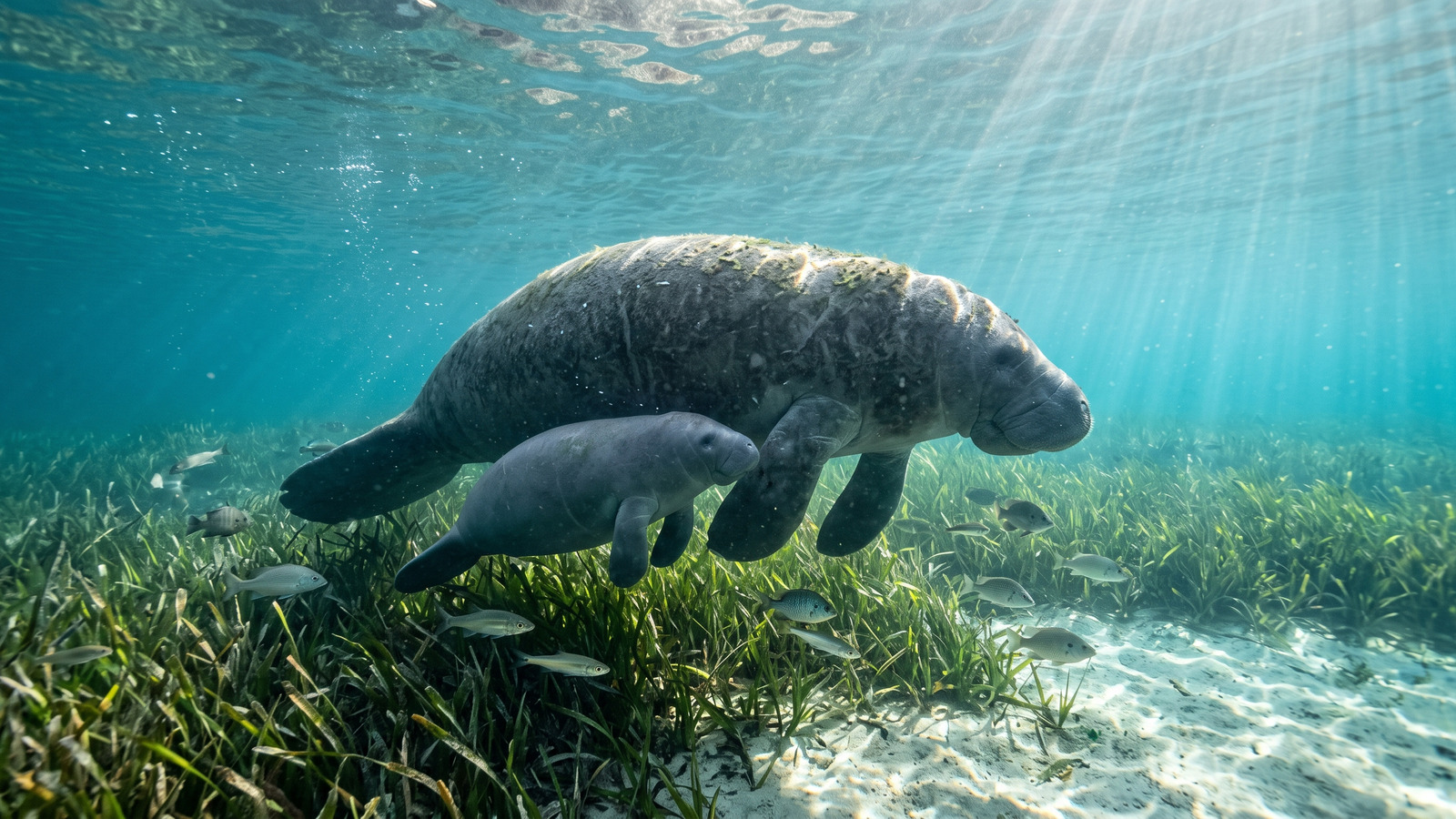
LearnManatees for Families: Where to See Them Near Tampa Bay and the Rules That Keep Them Safe
Where to see manatees near Tampa Bay: the free TECO Manatee Viewing Center opens November 1, plus the look-don't-touch rules families should know.
 Protect
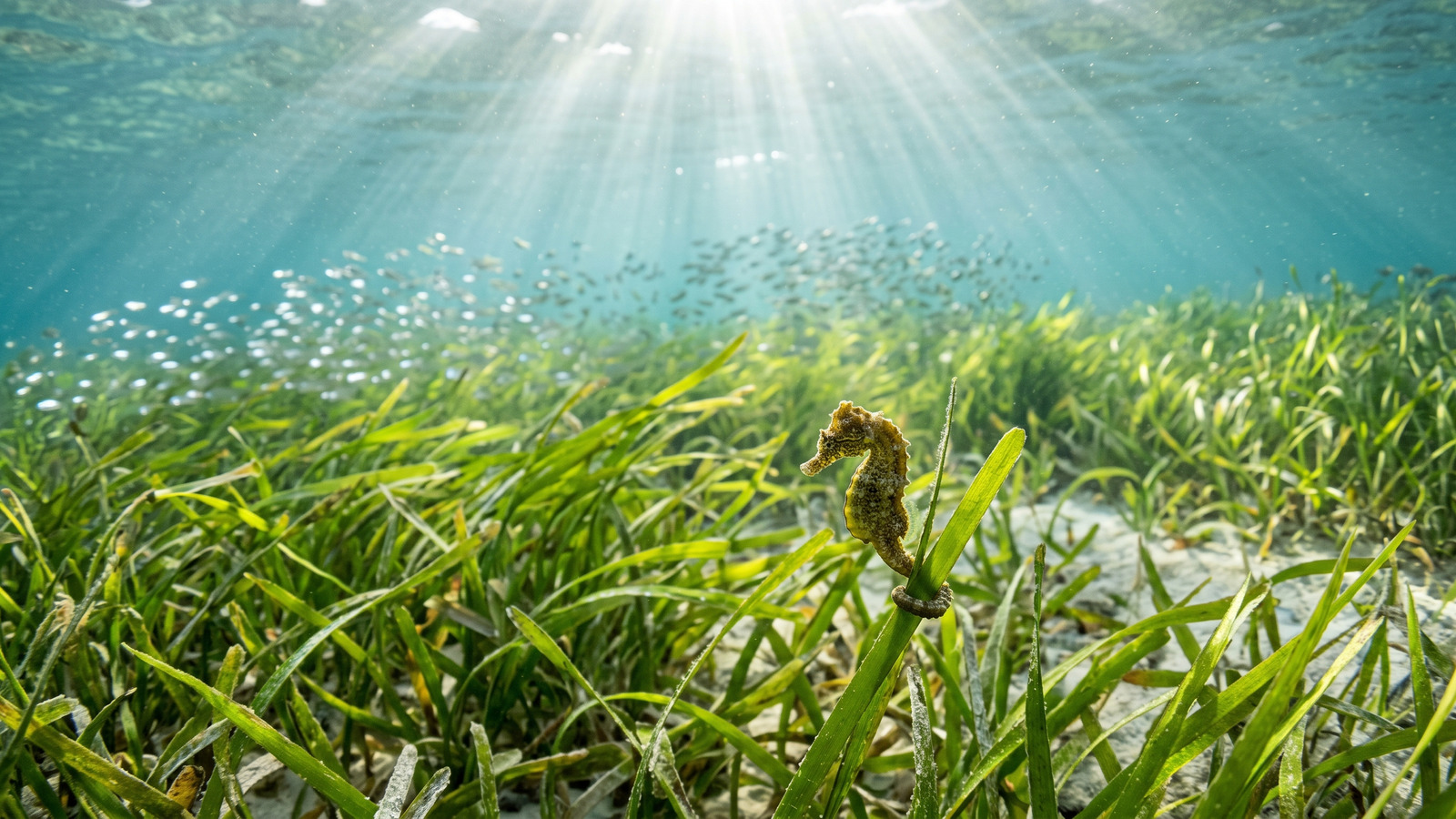
Seagrass, Explained for Kids: The Underwater Meadows Everything Depends On
Seagrass is the underwater meadow feeding Tampa Bay: nursery for most of our fish, manatee salad, and oxygen factory. The kid-level tour.
 ExploreCornerstone
Your Family's First Boat Day on Tampa Bay: Rentals, Routes, and the Rules That Matter
Your family's first boat day on Tampa Bay: rental options and costs, the license rule, a calm first route, and the safety habits that make it easy.