Who Lived Here First? The Tocobaga of Tampa Bay, Told for Kids
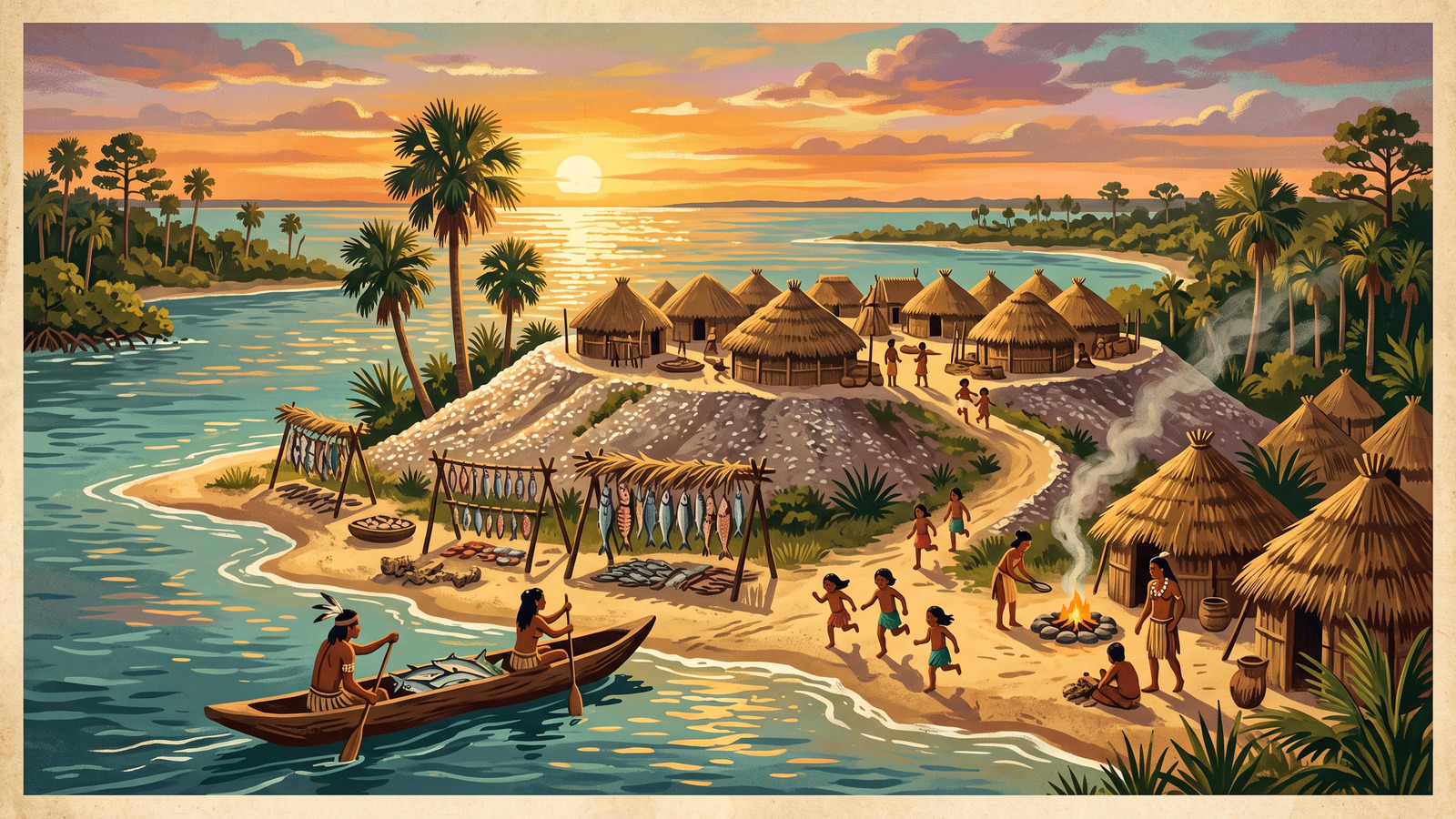
Every Florida kid learns the state's history starts in 1513 with a Spaniard looking for a fountain. Stand your family at the base of the great mound in Philippe Park and that date collapses: by the time any European sail crossed the horizon, people had been building, fishing, governing, and burying their grandparents on this exact shoreline for centuries. The mound under your sneakers is older than the printing press. The question "who lived here first?" has a real answer, with a name, and your kids should get to say it correctly: the Tocobaga.
A city made of dinner
Here's the detail that makes the Tocobaga real to a seven-year-old: their capital was built, in large part, out of dinner. Centuries of oyster, clam, and conch shells, the leftovers of a fishing nation, were layered with sand into engineered mounds, the greatest of which still rises at Philippe Park: the largest surviving mound in the Tampa Bay region, once topped by a temple or the chief's great house, with a ramp descending to a town plaza. Around it spread a village archaeologists estimate at anywhere from 400 to 2,500 people, plus the kitchen midden, a trash mound that scientists read today like a diary: what was eaten, what was traded, what broke and got tossed.
Kids should hold both meanings at once. A midden sounds like garbage; it's actually memory. And a temple mound sounds like a hill; it's actually architecture, raised basket-load by basket-load, without wheels, metal tools, or draft animals, by people who decided their leaders and their ceremonies should stand above the flat coast where everyone could see.
Lords of the estuary
The Tocobaga were not farmers gambling on rain; they were heirs to the bay itself. Mullet and redfish, oysters and scallops, deer from the pine woods, roots and berries in season: the same waters your family fishes and paddles fed whole towns, which is why every major Tocobaga site sits where the seafood was. They traveled the bay in dugout canoes, traded along the coast, and inherited traditions from the earlier Weeden Island culture, the mound-and-pottery world your kids already brushed against at Weedon Island Preserve, whose very shoreline named it.
Their pottery is how archaeology knows them: distinctive designs found at the Philippe Park site became the reference collection for an entire era, which is why the site is the "type site" of the Safety Harbor culture. Translation for the car ride: our local park is the example the textbooks point to.
The Spanish arrive, and the hard chapter
In 1567, the Spanish governor Pedro Menéndez de Avilés sailed into the bay, met the Tocobaga chief at the capital, and left behind a small garrison and mission. It lasted months, not years. The deeper story ran for a century: European contact brought fighting, slaving raids, and above all diseases (smallpox, measles) against which the Tocobaga had no defenses. Town by town, the bay's first nation was hollowed out, and by the late 1600s the capital stood empty. Survivors likely merged into other peoples to the south and, later, some of Florida's native story continued through the Seminole nations, whose own hard chapters touch Egmont Key.
Tell it the way this site tells every hard thing: honestly, calmly, and with the why. The Tocobaga didn't fade mysteriously; something happened to them, it was a tragedy, and the mounds are not ruins of a lost people so much as monuments of a remembered one. Respect is the family rule at these places: stay on paths, take nothing, and treat mounds as what they are, which in several cases includes burial grounds.
Where to stand in the story
| Place | What kids see |
|---|---|
| Philippe Park, Safety Harbor | The great temple mound itself, climbable by path, with the bay view the chiefs chose |
| Safety Harbor Museum | The pottery and tools from the capital, kid-scaled exhibits |
| Weedon Island Preserve | The earlier chapter: boardwalks over the shoreline the Weeden Island culture named |
| Tampa Bay History Center | The full 12,000 year timeline, dugout canoe included |
| Jungle Prada site, St. Pete | The mound where the 1528 Spanish story crashed ashore |
The Little Naturalist activity
Run the midden game at dinner: for one week, have kids imagine the family's food scraps fossilizing into a mound, then list what a scientist in the year 3000 could correctly deduce about your household from it. Then flip it: at the Safety Harbor Museum, have them reverse-engineer real Tocobaga meals from the actual shell and bone evidence. Reading trash as truth is the entire discipline of archaeology, and children are naturals at it.
Questions families ask
Is it okay to climb the mound?
At Philippe Park, yes, on the maintained path; that's what it's there for. The broader rule at any archaeological site: paths yes, digging never, artifacts stay where they lie. State and federal law protects these places, and so, more importantly, does the family code your kids are building through this whole series.
How do we pronounce Tocobaga?
Toh-koh-BAH-gah. Kids get it in two tries, and using the real name, rather than "the Indians who lived here," is the simplest act of respect available to a nine-year-old.
Were the Tocobaga related to the Calusa my kid read about?
Neighbors and sometimes rivals: the Calusa ruled the coast south of Charlotte Harbor with an even larger shell-built world, while the Tocobaga held Tampa Bay. The name Tampa itself likely came through Calusa territory, a thread we pull in our place-names story.
What happened to the mounds that aren't in parks?
Many were lost: hauled off decades ago for road fill before laws protected them, a fact worth telling older kids straight, because it explains why the surviving mounds matter so much. Protection came late; the ones we have are the ones we keep.
Questions families ask
Who were the Tocobaga?
The people who ruled the Tampa Bay area when Spanish ships first arrived: town-building, seafaring communities of the Safety Harbor culture, centered on a capital at today's Philippe Park. Archaeology suggests people lived at that site from roughly 900 AD until the late 1600s.
What did the Tocobaga eat and how did they live?
The bay fed them: fish, shellfish, and everything a rich estuary offers, plus deer and plants from the land. The mountains of discarded shells became building material, raised into mounds that held temples and chiefs' houses above the flat coast. No farming empire; a fishing one.
What happened to the Tocobaga?
European contact brought warfare and, far deadlier, new diseases the Tocobaga had never met. Over the 1600s their towns emptied, and survivors likely joined other groups. It's a hard chapter, told honestly: the bay's first nation didn't vanish by magic, it was devastated, and remembering them truthfully is part of living here.
Where can kids see Tocobaga history today?
The great temple mound at Philippe Park in Safety Harbor, the largest mound remaining in the region; the Safety Harbor Museum beside it; the mounds and center at Weedon Island Preserve; and the Tampa Bay History Center, which sets the whole 12,000 year story in order.
Sources
More from the Bae
 Learn
LearnA Family Guide to Weedon Island: Boardwalks, Herons, and a Thousand Years of History
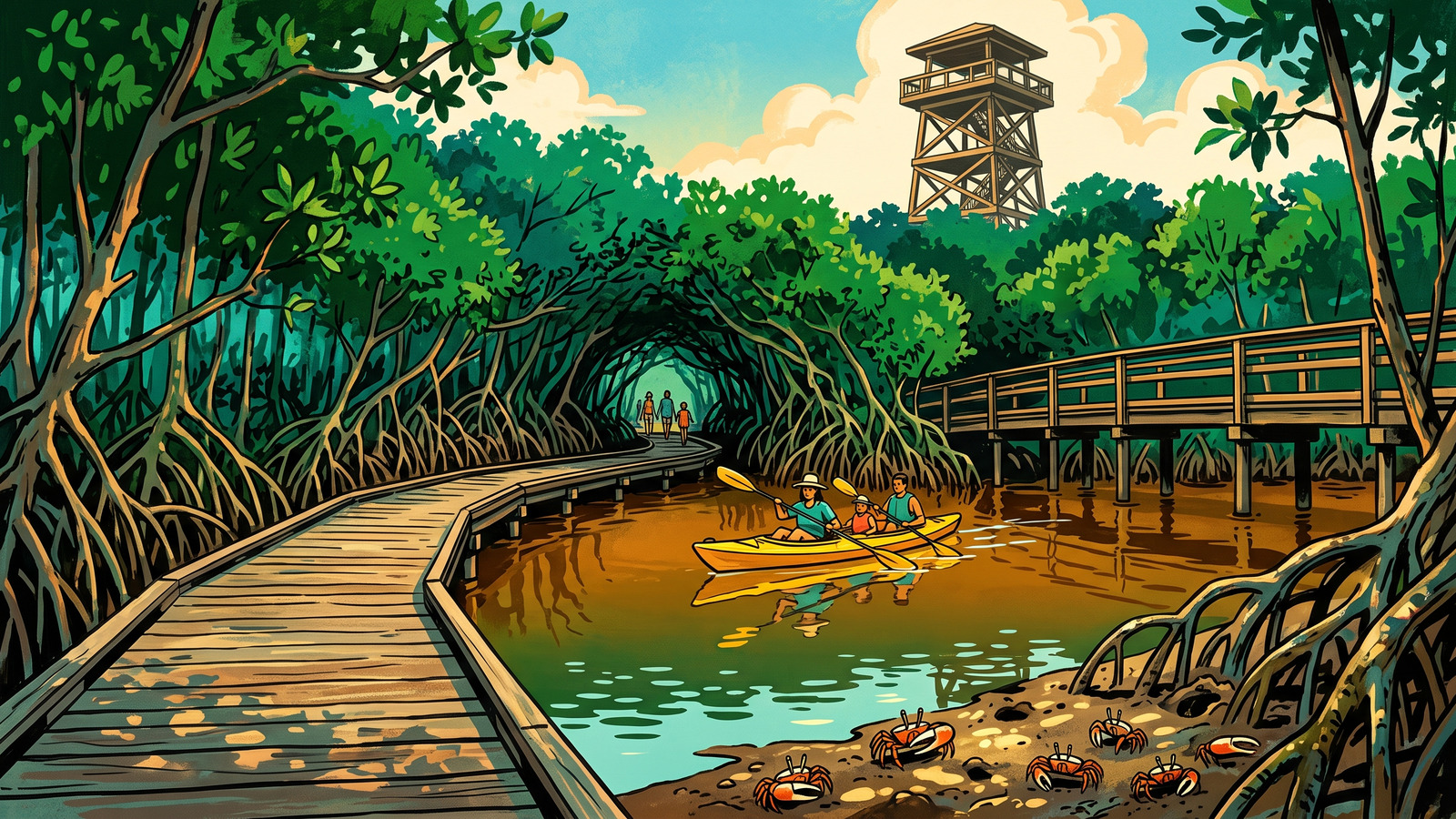
Weedon Island Preserve packs boardwalks, an observation tower, mangrove paddling, and a thousand years of Tocobaga history into one free St. Pete morning.
 Learn
LearnThe Mounds at Philippe Park: A Walk Through 1,000 Years in One Afternoon
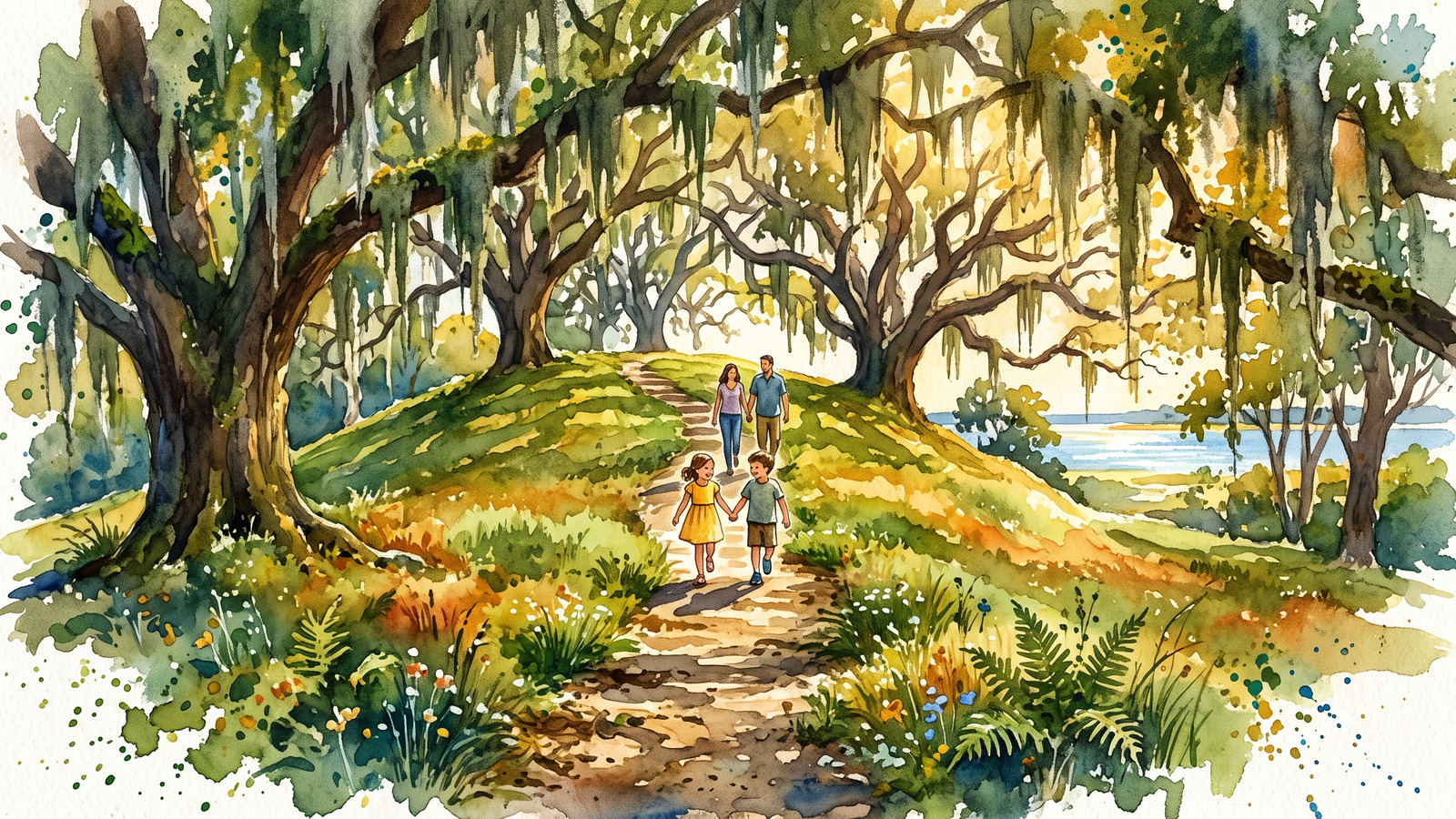
Philippe Park in Safety Harbor holds the Tampa Bay region's largest temple mound, Florida's first grapefruit grove, and a free afternoon of real history.
 Learn
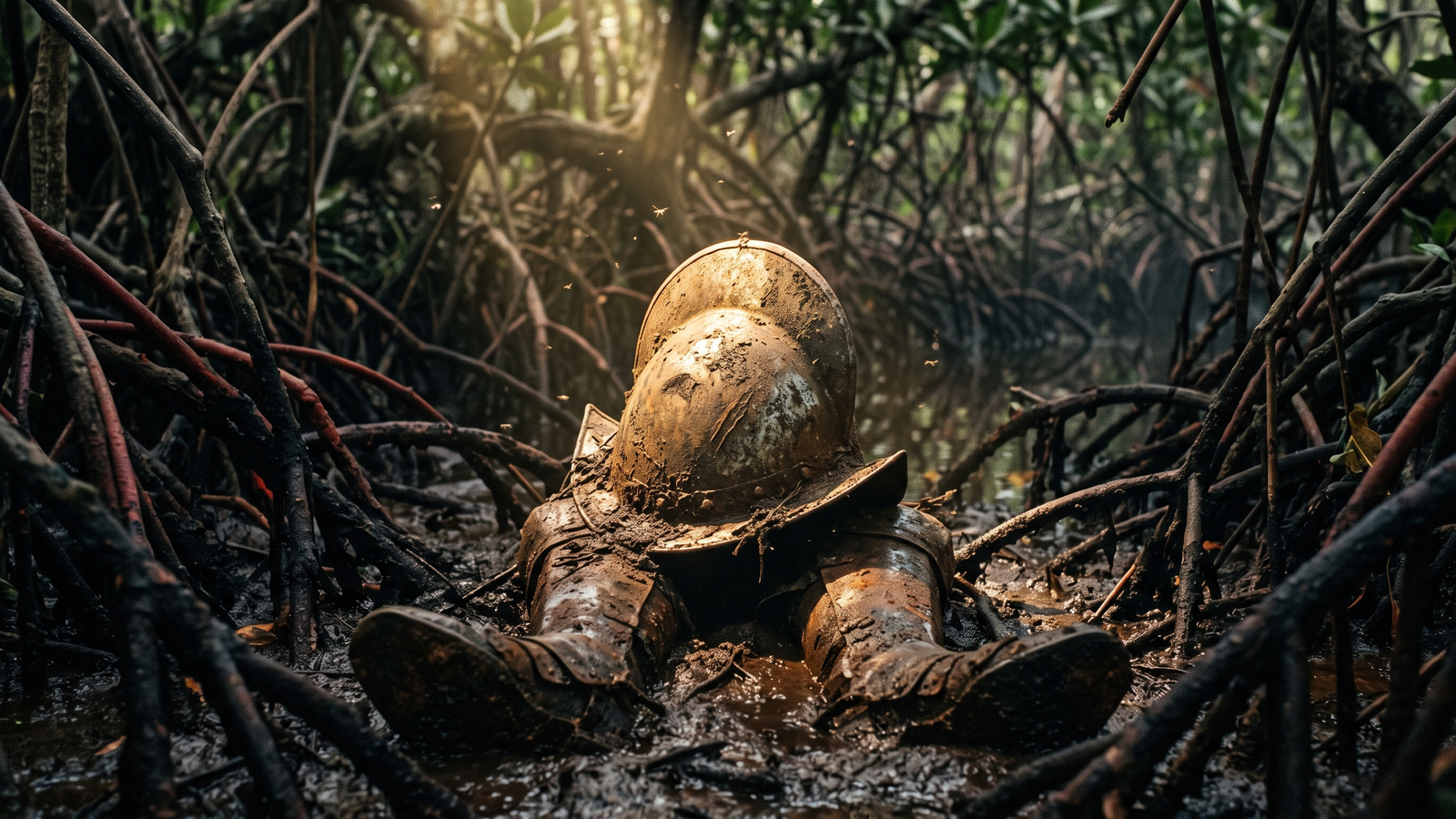
LearnWhen Conquistadors Landed Here: The 1528 Expedition That Began at Our Bay
In 1528, the Narváez expedition landed near today's St. Petersburg with 300 men. Four survived. The astonishing story that began on our shoreline.