
Backyard Bird Feeding in Florida: Who Shows Up, What to Offer, and What to Skip
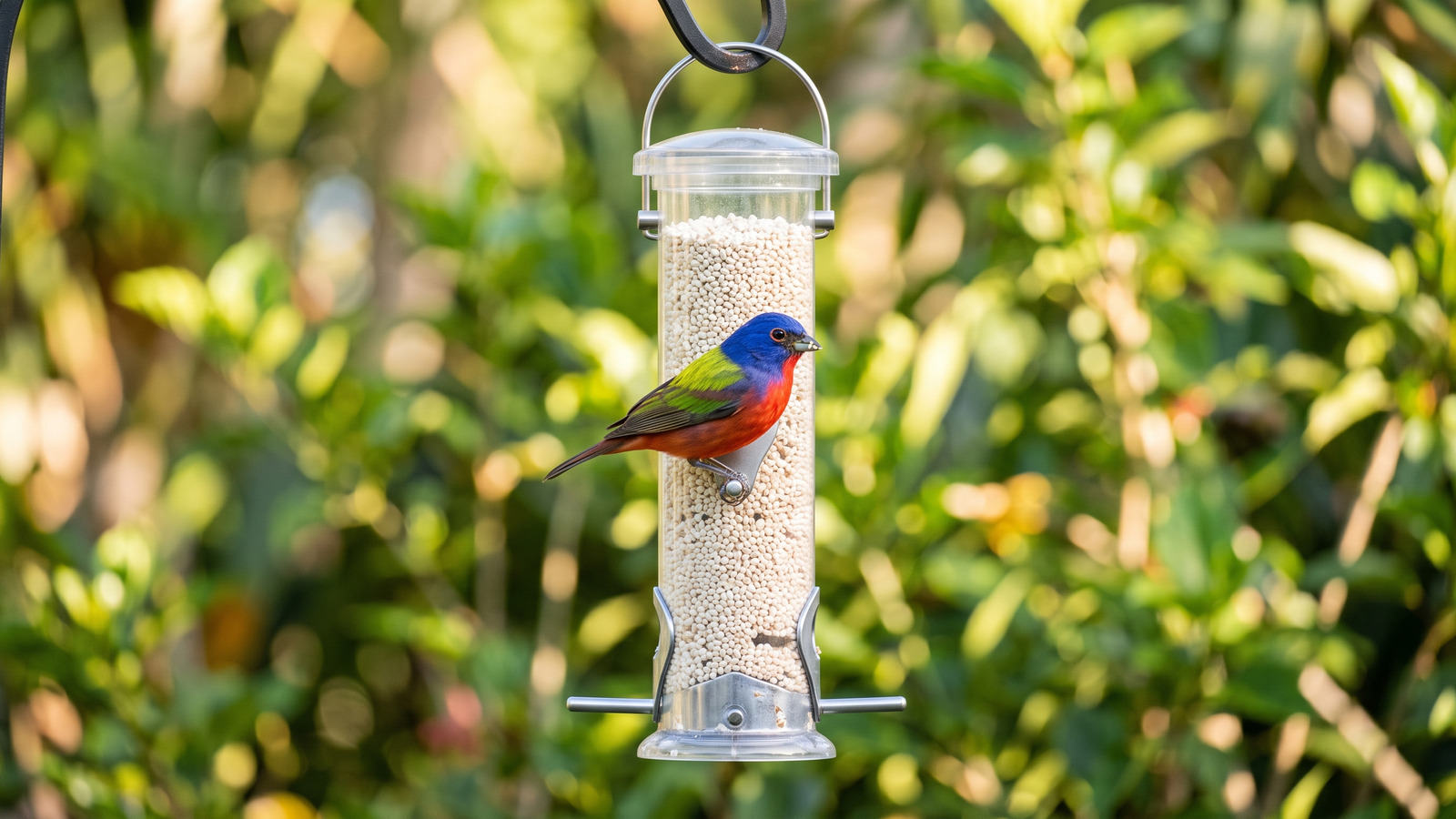
There is a bird that looks like a first grader colored it: blue head, red chest, green back, all at maximum crayon. It's called a painted bunting, it winters quietly in Florida shrubbery, and most families live their whole lives here without learning that the right two-dollar bag of seed, offered the right way, can bring one to the kitchen window. Backyard feeding in Florida is like that generally: a few smart choices separate a window full of theater from a pole full of squirrels.
The regulars, and how to book them
Florida feeders host a smaller cast than northern ones (our birds have year-round wild buffets), which makes each arrival more legible for kids. Black-oil sunflower seed is the universal ticket: cardinals at dawn and dusk, blue jays announcing themselves like deliveries, red-bellied woodpeckers (misnamed; watch the zebra back and red cap) commuting between feeder and palm. Suet cakes add wrens and warblers in the cooler months. A shallow water dish or dripper often outdraws every feeder in the yard, especially for mockingbirds and warblers that ignore seed entirely. And placement is half the game: feeders near shrubs or a brush pile give small birds the escape cover their nerves require, while a feeder marooned mid-lawn feeds mostly pigeons and courage.
| The setup | The draw |
|---|---|
| Black-oil sunflower in a tube or hopper | Cardinals, jays, titmice, chickadees |
| Suet cake (fall through spring) | Woodpeckers, wrens, warblers |
| White proso millet in a caged feeder | Painted buntings, winter sparrows |
| Nyjer sock in winter | Goldfinch flocks in their subtle traveling clothes |
| Sugar water 1:4, no dye | Hummingbirds, spring and fall especially |
| Shallow water, refreshed | Everyone, including the seed-ignorers |
The painted bunting project
Treat this one as a family quest. Painted buntings winter in Florida from roughly October to April: males in full circus color, females in an elegant green that's its own ID badge. They're timid, routine-loving, and bullied off open feeders, so the recipe is specific: white proso millet (not mixed seed) in a tube feeder inside a wire cage that excludes jays and doves, hung near dense shrubs, filled consistently, and watched from a respectful indoor distance. Success rates are honest-to-goodness luck-dependent, which is what makes the first sighting a family holiday. Log it on the life list in ink and expect the bird, a creature of habit, to keep appointments all winter.
The rules that keep feeding kind
Feeders concentrate birds, which concentrates responsibility. Wash feeders with hot soapy water (a dilute bleach rinse periodically), every couple of weeks and immediately if seed cakes or any bird looks sick; dirty feeders spread disease efficiently, and taking feeders down for a while during regional outbreaks is the responsible move. Rake spilled hulls. Position feeders either within three feet of windows or beyond ten (the in-between zone produces the worst window strikes), and break up big reflective panes with screens or decals.
Then the Florida-specific list, which your kids already half-know from this series: no bread anywhere, no feeding ducks at the pond, absolutely nothing for sandhill cranes (illegal, full stop), and nothing that trains any wild animal to approach people, the principle that runs from gators to dolphins to this feeder pole. Feeding songbirds at a maintained station is the legal, kind exception precisely because it keeps the wild ones wild everywhere else.
The zero-maintenance upgrade: plant the buffet
The best feeder never needs refilling. Native firebush and salvias run a hummingbird program all warm season; beautyberry's purple clusters feed mockingbirds and catbirds through fall; hollies and wild coffee carry winter; and a corner left un-manicured (seed heads standing, leaf litter working) feeds the insect base that feeds everything, including the zebra longwings next door in the butterfly garden. A yard that pairs one clean feeder with native plantings out-birds a pole festooned with every gadget at the garden center.
The Little Naturalist activity
Run the window census: pick one fifteen-minute slot (breakfast works), same time daily for a month, and have kids tally species and counts on a fridge chart. Patterns emerge fast: cardinal rush hours, the jay's schedule, the exact cold front that delivers the goldfinches. That chart is real data (Project FeederWatch runs on exactly this method, and joining it turns breakfast into contributed science), and it's the gateway to December's Christmas Bird Count, where the family standard: count what you see, write it down, becomes part of a 126-year record.
Questions families ask
Do feeders make birds dependent or stop them migrating?
No on both, per decades of research: feeders supply a convenience fraction of wild birds' diets, and migration is triggered by daylight, not snack availability. The real obligations are cleanliness and cat management, not guilt about the buffet.
What about squirrels?
Budget for their genius: a baffled pole placed ten feet from launch surfaces solves most of it, and the caged bunting feeder is squirrel-annoying by design. Families who reframe the squirrel as the feeder's recurring villain enjoy the show considerably more than families who declare war.
Can we feed year-round in Florida heat?
Yes, with summer adjustments: smaller seed quantities so nothing sits and molds, nectar changed every two to three days, and water stations doubled, which in August out-attract everything else. Many local families run seed lightly in summer and fully October through April, matching the bunting calendar.
A hawk staked out our feeder. Did we do something wrong?
You built a working ecosystem, and a Cooper's hawk noticed. It's legal protection for the hawk and standard drama for the yard; if it lingers daily, take feeders down for a week and the songbirds' schedule (and the hawk's) will reset. Then explain food webs at dinner, because the yard just taught the lesson for you.
Questions families ask
What birds come to feeders in the Tampa Bay area?
The reliable cast: northern cardinals, blue jays, mourning doves, red-bellied woodpeckers, Carolina wrens, chickadees, and titmice, with goldfinches in winter and, for the lucky and prepared, wintering painted buntings. Mockingbirds visit fruit and water more than seed.
How do you attract painted buntings in Florida?
White proso millet in a caged tube feeder near shrubby cover, kept quiet and consistent from fall through spring. Painted buntings winter in Florida, they're shy, and the cage (which excludes bigger birds) plus nearby escape cover is what makes them comfortable enough to stay.
What is the correct hummingbird nectar recipe?
One part plain white sugar to four parts water, no red dye ever, changed every few days in Florida heat (more often in summer) and the feeder washed each refill. Ruby-throated hummingbirds pass through in numbers each migration, and some winter here.
What should you never feed backyard wildlife in Florida?
Bread and human food scraps (poor nutrition, attracts problems), anything for sandhill cranes (illegal), ducks at ponds, and any feeder left moldy or crusted, which spreads disease. When in doubt, plant natives instead: berries and blooms feed birds with no maintenance schedule.
Sources
More from the Bae
 Learn
LearnThe Zebra Longwing: Meet the State Butterfly and Plant a Garden It Will Visit
Florida's state butterfly, the zebra longwing, eats pollen, lives for months, and sleeps in family groups. How to plant a garden it will visit.
 Learn
LearnSandhill Cranes in the Neighborhood: Why They're Here and Why We Give Them the Sidewalk
Sandhill cranes stroll Florida neighborhoods like they own them. Why the four-foot birds are here, why feeding them is illegal, and how families coexist.
 LearnCornerstone
Birding with Kids Around Tampa Bay: The Starter Guide (Binoculars Optional)
How to start birding with kids around Tampa Bay: the big easy birds, the free Merlin app, five starter spots, and habits that make it stick.