
Sun Safety Without the Battle: What Pediatricians Want Florida Parents to Know
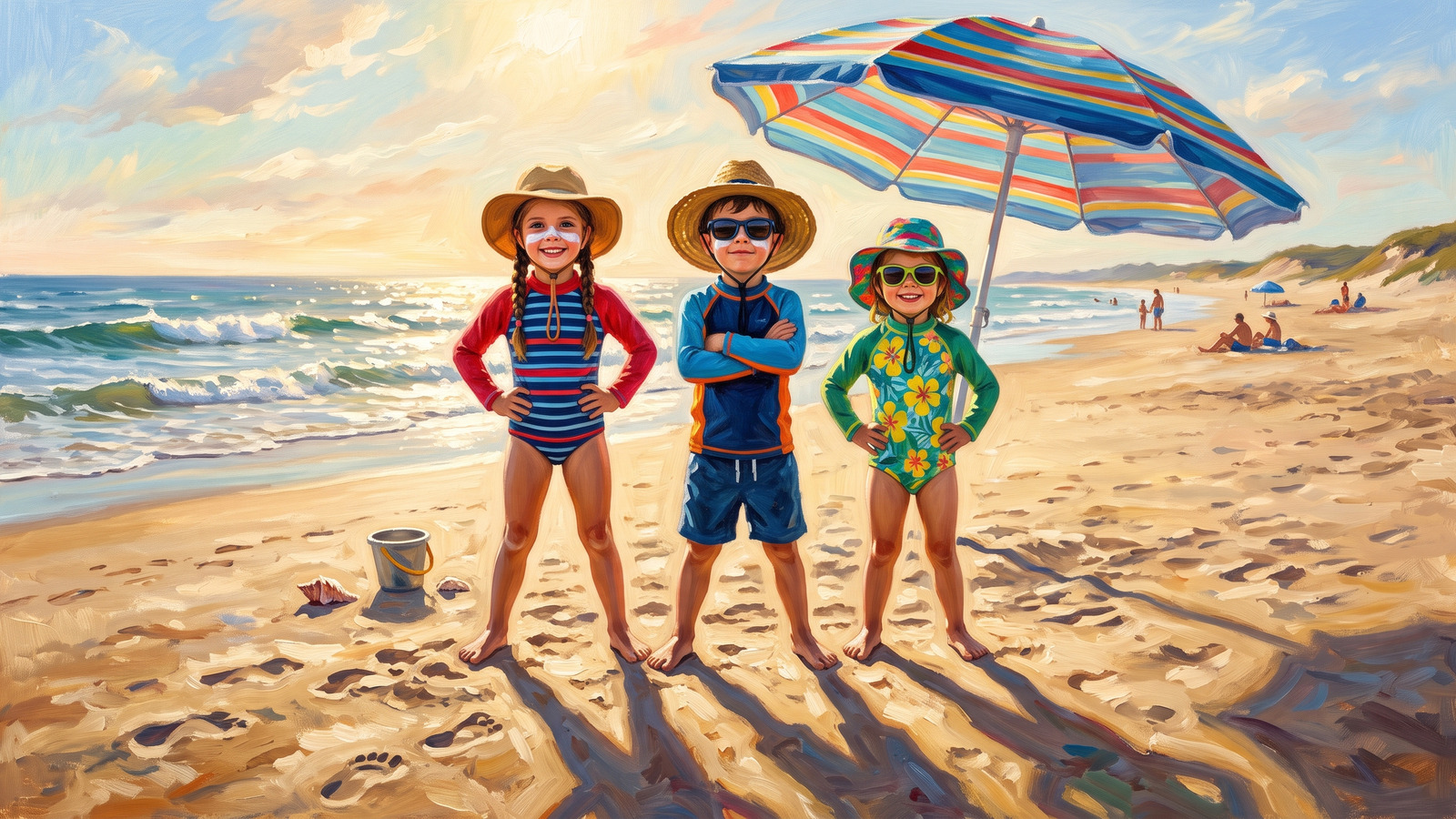
Every Florida parent knows the beach-bag standoff: the squirming child, the white-lotion hands, the negotiation conducted at volume while the good morning hours tick away. Here's the reframe this article exists to deliver: sun safety is not a daily debate to win, it's a system to install: and the best systems barely involve lotion. The pediatric guidance is clear and surprisingly parent-friendly, the gear has gotten wonderful, and the families who've ended the battle all did it the same way: they made protection the default costume of the coast, not a negotiation that reopens every morning. What follows is the doctors' actual guidance, translated into habits that survive contact with a four-year-old.
The gear does most of the work
The quiet revolution in kid sun safety is textile: a long-sleeve rash guard covers the torso and arms at protection levels no reapplication schedule matches, swim leggings or board shorts extend it, a 3-inch-brim hat (the pediatric spec: all-around brim, not a cap) shades the face, ears, and neck where childhood burns concentrate, and sunglasses with 99-percent-plus UV protection guard eyes that take in more sun in childhood than they will in adulthood. Dress a kid in the full kit and the sunscreen conversation shrinks to a face-ears-hands-feet perimeter: ninety seconds, done to a countdown song. The kit also solves the reapplication problem (fabric doesn't wash off in the lagoon), the sensory-kid problem (many lotion-refusers accept fabric without a blink), and the packing-list problem: the rash guard lives in the beach kit, so the system travels itself. Shade completes the wardrobe: the umbrella or canopy is summer-rhythm equipment anyway, and the beaches with rentable shade and the accessible-mat entries make the base camp easy to pitch.
The lotion rules, exactly
| The rule | The spec |
|---|---|
| The formula | Broad-spectrum, SPF 15-50; 30 is the family standard |
| Sensitive skin + faces | Mineral: zinc oxide or titanium dioxide |
| The timing | 15-30 minutes before sun; it needs the head start |
| The rhythm | Every 2 hours, plus after swimming, sweating, toweling |
| The amount | More than feels right: thin coats underperform |
| Babies under 6 months | Shade first; dabs on exposed spots only when cover fails |
| The misses | Ears, part lines, tops of feet, backs of hands, lips (SPF balm) |
Two habits carry the whole table: the anchor-tie (reapplication happens at the snack ritual and the storm-clock check: existing rhythms, so nobody's tracking minutes) and the self-serve ladder: around five, kids apply their own under inspection: ownership converts the fight into a competence, the same flip this site runs on everything from flags to life jackets.
When the burn happens anyway
Because it will, once, despite the system: the response is calm and standard: fluids, cool compresses or a cool bath, and age-appropriate pain relief if needed: with the two call-the-pediatrician lines drawn clearly: any sunburn on a baby under 1, and blistering, fever, or serious pain at any age. Then the family debrief without blame (which layer failed: the missed reapplication, the forgotten hat?), a patched system, and back to the beach: the goal was never a childhood indoors, it's the region's outdoor childhood with the dose managed. Worth saying plainly in a sunshine state: the doctors' message is not "avoid the sun": it's that the same coast enjoyed at the edges of the day, dressed right, delivers everything summer promises with a fraction of the exposure: the 9 a.m. rule was sun safety all along.
The Little Naturalist activity
Run the UV detective kit: a strip of UV-color-changing beads (craft-store cheap) on a zip tie becomes the family's exposure meter: kids test it in full sun, under the umbrella, in open shade, at 9 a.m. versus noon, behind a rash guard versus bare: and journal the color results. The beads make the invisible visible (the whole difficulty of teaching sun safety is that the hazard can't be seen), and the child who watched the beads stay pale under the canopy at ten but blaze at noon has learned the 10-to-4 rule as a personal discovery: which, as every article in this series knows, is the only way rules actually install.
Questions families ask
Spray, stick, or lotion?
Whatever gets applied generously and evenly wins: sticks excel for faces and squirmers, lotion delivers the most reliable coat, and sprays: the convenience king: need rubbing in and a wind-aware aim, never near faces directly. Many families run stick-face, lotion-body, spray-for-the-teen: the format war matters less than the every-two-hours rhythm.
Do darker-skinned kids need the same system?
Melanin offers some built-in protection but not immunity: burns, eye exposure, and long-term risk cross every skin tone, so the guidance holds family-wide: same broad-spectrum habit, same hats, same hours. The system's beauty is that it runs uniformly: no child is singled out, the costume is just what the family wears.
What about vitamin D?
The pediatric position is that incidental exposure and diet cover it: no doctor prescribes sunburn as a supplement. Families with specific concerns ask their pediatrician about diet and drops rather than trading skin damage for vitamins: the sunshine state provides plenty through the system's normal margins.
Is a base tan protective?
No: a tan is the skin's damage response, not armor, and the "base tan" is retired folk wisdom. The protective base layer is the rash guard: same color all summer, no cellular cost, and it comes in sharks.
Questions families ask
What sunscreen do pediatricians recommend for kids?
Broad-spectrum SPF 15 to 50 (SPF 30 is the family sweet spot), applied 15 to 30 minutes before going out and reapplied every two hours and after swimming, sweating, or toweling. For faces and sensitive skin, mineral formulas with zinc oxide or titanium dioxide are the gentle pick.
Can babies wear sunscreen?
Under 6 months, the guidance is shade first: keep infants out of direct sun with canopies, umbrellas, and clothing, using a small amount of sunscreen only on exposed spots like the face when shade and clothing can't cover. And a baby under 1 who sunburns warrants a call to the pediatrician.
How do you get kids to accept sunscreen without a fight?
Shrink the negotiable surface: rash guards and brimmed hats cover most of the body without a single squeeze of lotion, the remaining skin gets done to music or a countdown ritual, and kids who self-apply with supervision from age 5 or so fight it far less. Systems beat standoffs.
What hours should Florida kids avoid the sun?
The strongest UV runs 10 a.m. to 4 p.m.: which is why this site's whole summer rhythm already lives at the edges of the day. Shade, umbrellas, and indoor middles aren't just comfort: they're the biggest single dose reduction available.
Sources
More from the Bae
 Explore
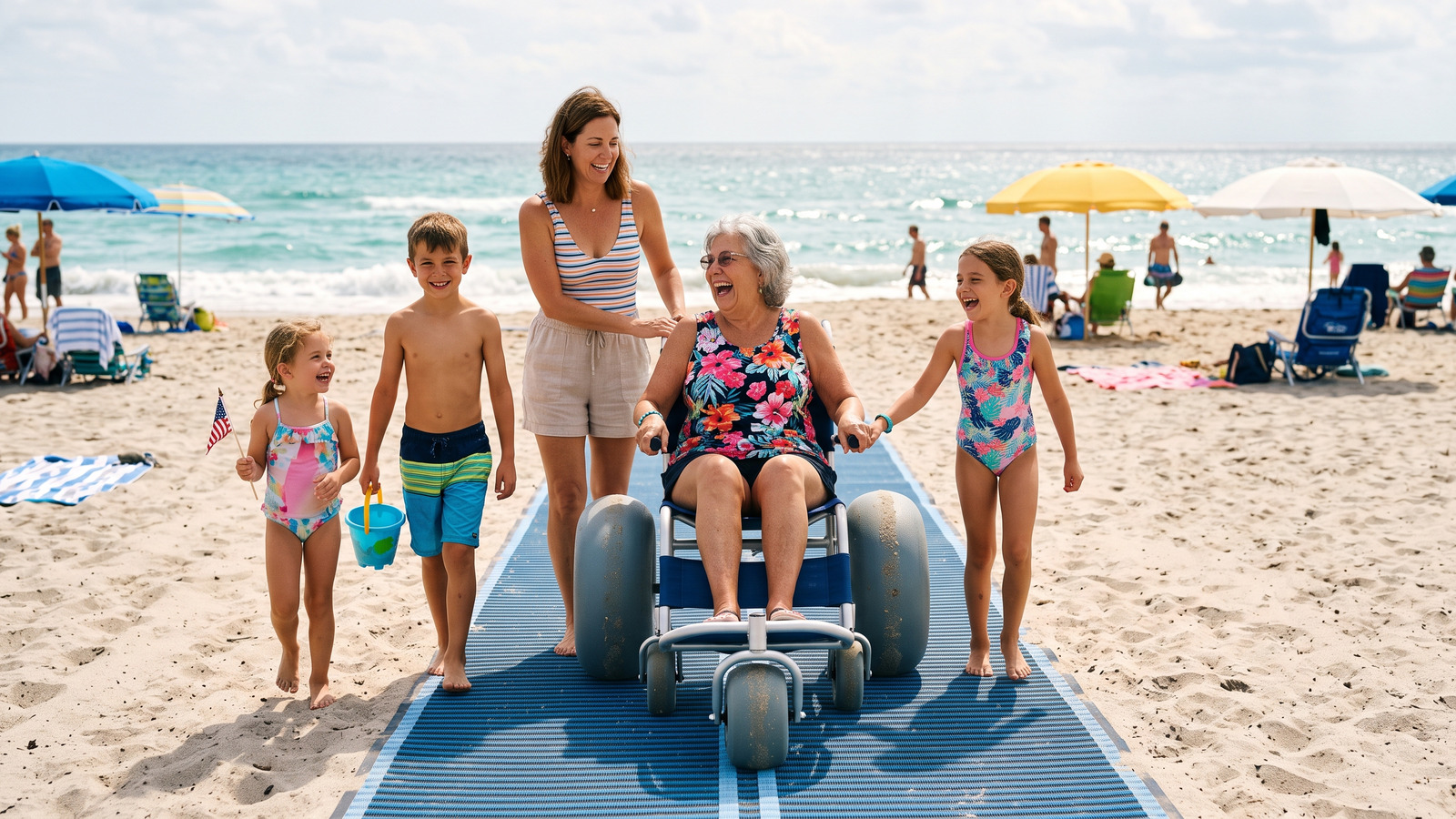
Accessible Beach Days: Mobility Mats, Beach Wheelchairs, and Where to Find Them
Accessible beach days around Tampa Bay: free beach wheelchair loans, Mobi-Mat locations from Clearwater to Pass-a-Grille, and the planning that works.
 Explore
Summer Survival: Splash Pads, Shaded Parks, and the 9 a.m. Rule
Summer survival for Tampa Bay families: the 9 a.m. rule, splash pads and shaded parks, and the daily rhythm that beats the heat without leaving town.
 Live Well
Hydration, Heat, and Little Bodies: Florida Summer Health, Simply Put
Hydration and heat for little bodies: the Florida summer health rules, warning signs pediatricians flag, and the water habits that prevent it all.