
Oyster Reefs: The Bay's Living Water Filters and the Volunteers Rebuilding Them
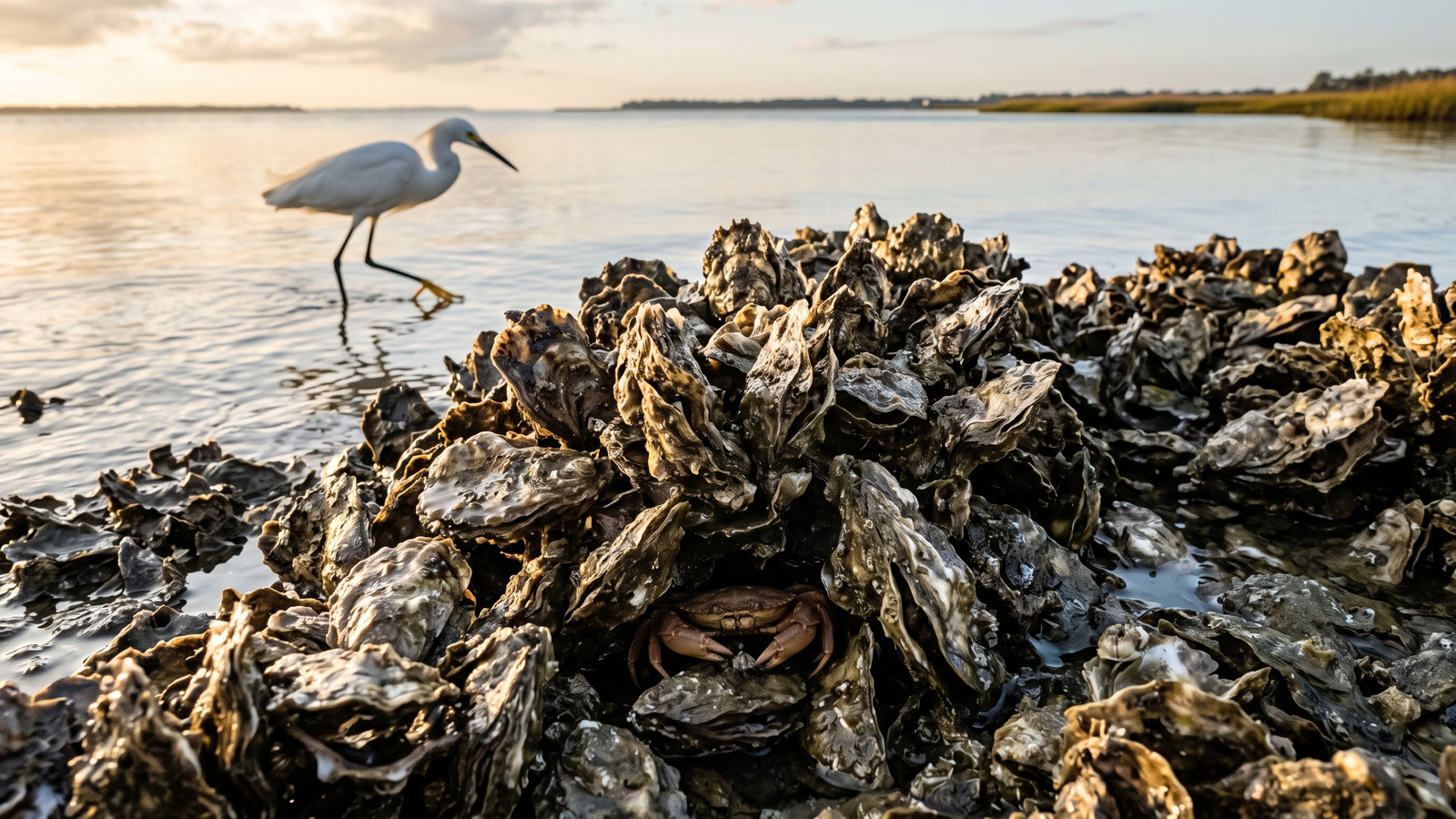
Somewhere in Tampa Bay right now, an animal with no brain, no eyes, and no plans is doing more for water quality than any machine humans have installed: drawing in cloudy bay water, keeping the food, and releasing it cleaner, two gallons an hour, all day, for years. Now multiply by a reef. The oyster is the bay's maintenance department, it works for free, and here's the part that should straighten every kid's spine: we lost 85 percent of them, and ordinary families are the workforce hauling them back, one recycled restaurant shell at a time.
The filter, explained at kitchen scale
An oyster eats by pumping water across its gills and keeping the plankton and particles: a living strainer. The workhorse number: up to two gallons an hour per oyster, which at reef scale means a healthy oyster bar processes its neighborhood's water continuously, pulling out exactly the algae-feeding cloudiness that nearly killed the bay. Clearer water lets sunlight deeper; deeper sunlight grows more seagrass; more seagrass nurseries more fish. The oyster sits at the start of that chain like a pump at the head of a garden.
And the reef is more than its filtering: the jumbled shell structure is an apartment complex (crabs, anemones, blennies, juvenile snapper in every crevice), a wave-break that shields shorelines from erosion and boat wake, and a feeding station for the oystercatchers and wading birds whose names admit their loyalties.
How we lost 2,000 acres
The numbers deserve one clear-eyed paragraph: Tampa Bay held roughly 2,000 acres of oyster reef in the 1940s; about 217 acres remain, an 85 percent collapse. The causes stack like the bay's other losses: dredge-and-fill construction that buried bars outright, decades of harvest, and the water quality crash that starved and smothered what remained. Unlike seagrass, oysters couldn't simply regrow when the water cleared, because of a catch built into their biology: baby oysters (spat, the best vocabulary word in this series) drift until they find hard surface, and they prefer old oyster shell above all. No shell, no settlement, no reef: a housing shortage measured in generations. Which is exactly the gap the recycling loop fills.
The loop: from raw bar to reef
Here's the system your family can join at three levels, told in order of commitment:
| The role | What it looks like |
|---|---|
| Shell diner | Restaurants in the recycling program save shucked shells from your dinner; the shells cure ashore, then head bayward |
| Build-day family | Volunteer events: bag cured shell into mesh, brigade-line the bags along a shoreline, build the bar; kids are welcome muscle at programs like Tampa Bay Watch's CORE |
| Dock gardener | A vertical oyster garden: cured shells strung and hung from a dock, where spat settle and a mini-reef filters under your feet |
The vertical oyster garden deserves its own sentence for waterfront families: a strung column of recycled shells, hung off a dock, recruits live oysters within months and becomes a demonstration reef your kids can lift, inspect, and show visitors: the bay's whole restoration story, suspended from twine. Local programs supply them ready-made from the restaurant shell stream.
Build-day, from a family's-eye view
A community reef build is the rare volunteer event engineered like a kid's ideal morning: outdoors, muddy, purposeful, and heavy in the satisfying way. Crews bag shell, pass bags hand to hand down a line (children are natural brigade links and know it), and lay them along an eroding shoreline where the new bar will break waves and catch spat. Everyone leaves tired, salted, and able to point at a structure that exists because of them: a sentence few field trips can offer. Watch the calendars of Tampa Bay Watch and the estuary program for family-friendly dates, sign the waiver, bring closed water shoes and the cleanup-day rules, and expect your crew to talk about it for weeks.
The Little Naturalist activity
Run the filter race: two clear jars of the same cloudy water (pond water, or water clouded with a pinch of flour), one left alone, one gently stirred every few minutes to simulate filtering circulation, timed and photographed at intervals. Then the reveal: a real oyster does the second jar's job continuously, two gallons an hour, without being asked. Finish with spat math: if one oyster filters 2 gallons hourly, what does the family's 50-shell vertical garden process in a day? (The answer, in the thousands of gallons, is why kids remember oysters forever.)
Questions families ask
Can we eat oysters from the restored reefs?
No: restoration reefs are infrastructure, not harvest, and local waters are managed accordingly (harvest areas are regulated separately statewide). The restaurant oysters your family enjoys come from managed fisheries and farms; the rebuilt bars stay on duty, filtering.
Are oyster shells on the beach fair game for collecting?
Loose single shells in the wrack, sure, within leave-it-better sense. But note the twist this article installs: your kids may now prefer donating shells to collecting them, and a family shell bucket destined for a recycling drop-off is a completely reasonable new tradition.
Do oysters clean pollution like chemicals, or just cloudiness?
Their specialty is particles and algae: the cloudiness economy. They're not a chemical treatment plant, and badly polluted water harms them too, which is why reefs and clean-water habits are teammates, not substitutes. The oyster maintains the recovery; it didn't cause it.
Why do the bagged reefs look so messy compared to a seawall?
Because habitat is lumpy: every crevice in that "mess" is an address, and the rough face breaks wave energy a smooth wall just reflects onto the neighbor's shoreline. Living shorelines (reef plus mangrove plus marsh grass) are the modern engineering standard precisely because messy works. Tell the kids: the bay prefers texture, and so does everything living in it.
Questions families ask
What do oysters actually do for the bay?
They're living water filters: a single oyster pumps and cleans up to two gallons an hour, straining algae and particles, and reefs of them clarify whole shorelines. The reef structure itself shelters crabs, shrimp, and baby fish, and blunts waves that would otherwise eat the shoreline.
What happened to Tampa Bay's oyster reefs?
Mostly gone: from roughly 2,000 acres in the 1940s to about 217 acres today, an 85 percent loss to dredging, harvest, and water quality decline. That collapse is why restoration groups treat every rebuilt reef and every recycled shell as real infrastructure.
How does oyster shell recycling work?
Restaurants save their shucked shells, groups like Tampa Bay Watch collect and cure them, and volunteers bag the shells and place them in the bay, where baby oysters (spat) need old shell to attach and grow. Yesterday's dinner literally becomes next year's reef.
Can kids really help build a reef?
Yes, and it's one of the region's best family volunteer days: community reef events involve bagging shells, passing them brigade-style, and placing them along shorelines, with programs like Tampa Bay Watch's CORE built around exactly this. Dock-owning families can even hang a vertical oyster garden.
Sources
More from the Bae
 ProtectCornerstone
The Tampa Bay Comeback: How Our Bay Nearly Died and Came Back to Life
By the 1970s Tampa Bay was nearly dead: algae mats, empty water, vanished birds. How laws, science, and neighbors brought it back, told for families.
 Protect
Seagrass, Explained for Kids: The Underwater Meadows Everything Depends On
Seagrass is the underwater meadow feeding Tampa Bay: nursery for most of our fish, manatee salad, and oxygen factory. The kid-level tour.
 Protect
Beach Cleanups with Kids: Where to Join One and How to Start Your Own
Beach cleanups with kids around Tampa Bay: Keep Pinellas Beautiful events, September's International Coastal Cleanup, and the DIY family kit.