The Orange Groves That Built Florida: A Sweet History Kids Can Taste
Peel an orange in front of your kids and you're holding most of Florida history in one hand: Spanish ships, pioneer fortunes, freezes that moved a whole industry south like a chess piece, the reason half the subdivisions around you are named for groves that aren't there, and a present-day scientific fight worthy of a thriller. The state bird may be contested and the state pie may be lime, but the orange is Florida's autobiography, and this chapter of Old Florida Stories is the only one your family can eat.
Seeds off a Spanish ship
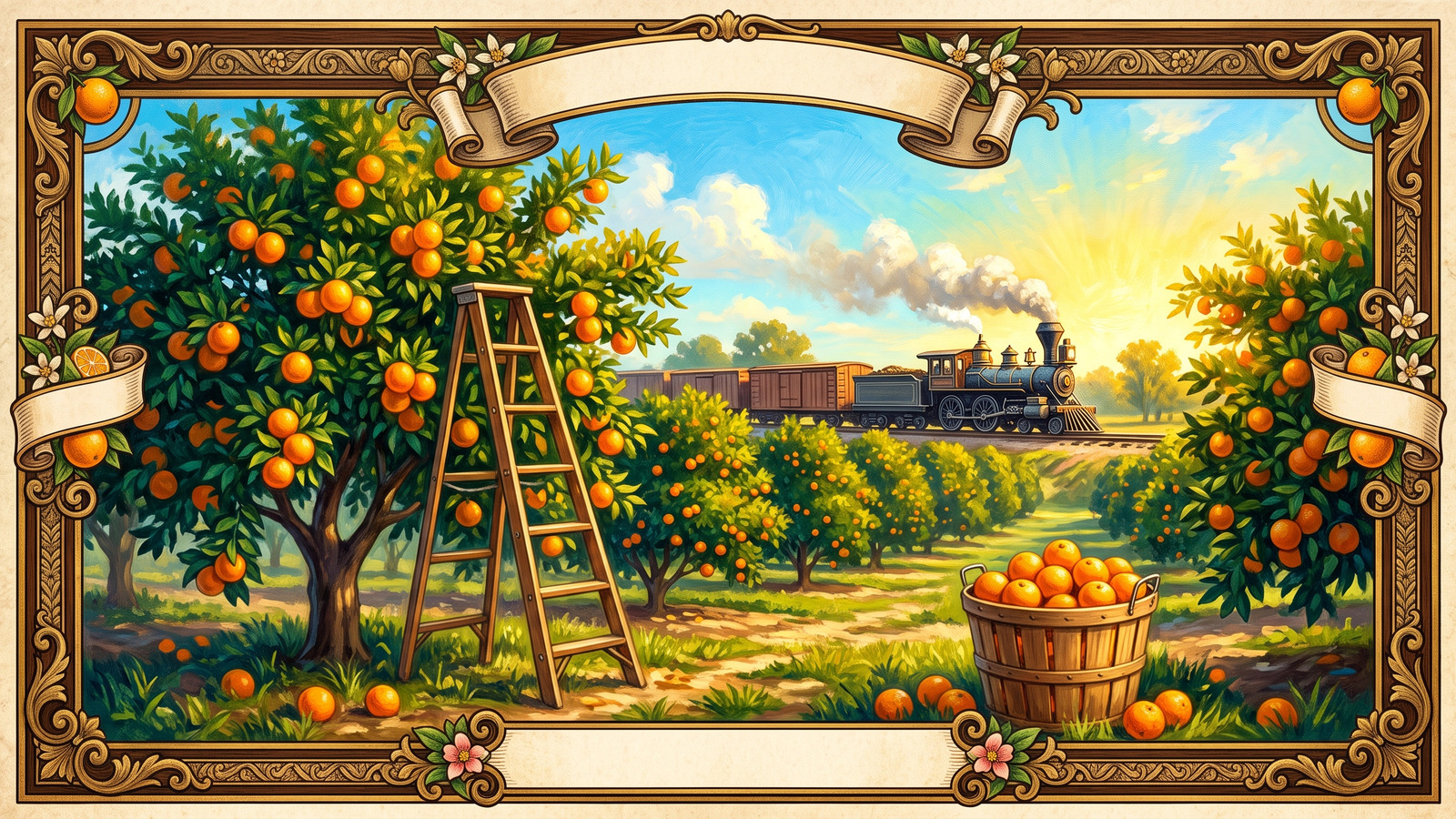
Citrus is not native to Florida: it's an immigrant that assimilated spectacularly. Spanish expeditions and settlers carried seeds in the 1500s (standard practice: sailors planted food sources along routes), and Florida's climate received the orange like a homecoming. Trees naturalized along rivers and around old settlements, so thoroughly that later American arrivals found "wild" sour orange groves waiting, ghost orchards marking where people had been. Early growers grafted sweet varieties onto those hardy wild roots: a gardening trick your kids can see demonstrated at any u-pick grove today, and the exact foundation the whole industry literally grew on.
Our county owns a proud page of this chapter: Odet Philippe, the pioneer of Philippe Park, planted what's credited as Florida's first grapefruit grove on the shores of Old Tampa Bay in the 1830s. Every Florida grapefruit traces its family tree, in spirit, to the park where your kids climb the mound.
The freeze that moved an industry
Ask your kids how cold it has to get to redraw a map. In the winter of 1894-95, two brutal freezes weeks apart (the second catching trees in tender new growth the warm spell between had coaxed out) killed citrus across north and central Florida in a matter of nights. Fortunes evaporated; whole towns built on groves emptied. Growers who replanted did it farther south, beyond the frost's usual reach, and the industry's center of gravity slid down the peninsula, a migration you can still read in place names and old packing houses. The event deserves its place beside the hurricanes in the Florida lesson every child eventually assembles: here, weather is history's co-author.
What followed the move south was the golden century: rail cars of fruit heading north, roadside stands with mermaid murals, the frozen-concentrate boom that put Florida orange juice on every American breakfast table, and a peak, in the 1990s, near 225 million boxes of oranges a year. The orange blossom had been named state flower back in 1909; by mid-century the orange wasn't a crop so much as the state's brand.
The villain small enough to miss
The modern chapter turns on an insect the size of a grain of rice. The Asian citrus psyllid, arriving around three decades ago, spreads a bacterial disease called citrus greening (huanglongbing), which starves trees, greens and embitters fruit, and has no cure yet. Add hurricanes through the groves and land sold to development, and the numbers tell the steepest story in Florida agriculture: from that 225 million box peak to a 2026 forecast around 12 million, a decline near 95 percent. Growers describe fleets of harvest trucks parked since 2021; a fourth-generation farmer told reporters the hardest loss is knowledge retiring with his generation.
And yet the chapter isn't closed, which is the part kids should carry: scientists are breeding and testing greening-tolerant trees, growers inject and shield and experiment (screened groves, new rootstocks), and an industry still worth billions employs tens of thousands who have not surrendered. Your family's winter fruit stand purchase is, at this point in the story, a small act of preservation: heritage you can buy by the bag.
| The orange timeline | |
|---|---|
| 1500s | Spanish ships bring citrus; trees go wild |
| 1830s | Philippe plants Florida's first grapefruit grove on our bay |
| 1894-95 | The Great Freeze pushes the industry south |
| 1909 | Orange blossom named state flower |
| Mid-1900s | Juice boom; peak near 225 million boxes by the 1990s |
| ~2005 onward | Citrus greening spreads |
| 2026 | Forecast near 12 million boxes; the fight continues |
Tasting season: the field trip
From roughly December through April, working groves and farm stands within an easy drive still deliver the real thing: tree-ripened fruit that makes supermarket oranges taste like the rumor of oranges. January's honeybell tangelos are a genuine seasonal event (sweet, seedy, requiring a bib and worth it), u-pick operations toward Dade City, Dundee, and the Ridge welcome families, and Plant City's winter strawberries share the same farm-stand circuit for the full taste-your-region curriculum. Smell an orange blossom in bloom season (late winter into spring) and your kids will understand, in one breath, why a state chose it as its flower.
The Little Naturalist activity
Run the citrus taste lab: one supermarket orange, one farm-stand Florida orange, one grapefruit (toast Mr. Philippe), and if the season allows, one honeybell. Blind taste-test with scorecards: sweetness, tang, juiciness, and "would you plant a tree of it." Then the science kicker: save the seeds, sprout them in a wet paper towel, and pot the winner. A windowsill orange tree grown from a tasting is this whole article in a pot, and it will outlive the assignment by decades.
Questions families ask
Will Florida oranges disappear completely?
The industry is fighting hard, and greening-tolerant trees plus new growing methods offer real hope, but nobody serious promises outcomes. What's certain: the era your kids can taste, groves, stands, honeybells, is here now, which is the best argument for making it a family season this winter.
Why is so much orange juice from Brazil now?
As Florida's production fell, Brazil's massive industry filled American cartons; check a label together and the geography lesson reads itself. It's a fair springboard to talk about where food comes from and what "Florida orange juice" meant for a century.
Are backyard citrus trees still possible here?
Yes, with realism: greening pressures backyard trees too, but many local families still grow productive oranges, kumquats (nearly indestructible and kid-perfect), and lemons. A nursery-grafted tree in a sunny corner is a living history unit with an annual harvest, and kumquats, eaten whole, peel and all, are the gateway.
What happened to all the roadside citrus stands?
They followed the groves: fewer, farther, and mostly toward the central Ridge, though survivors thrive in winter. Treat a classic stand like the endangered heritage it is: stop, buy the bag, take the photo under the hand-painted sign. Some history you preserve with respect; some you preserve with appetite.
Questions families ask
How did oranges get to Florida?
Spanish ships brought seeds in the 1500s, and the trees went happily feral: by the time Americans arrived, wild sour oranges grew along rivers and around old native and Spanish sites. Two centuries of breeding and grafting turned those survivors into the sweet industry that named our streets and painted our license plates.
What was the Great Freeze?
Back-to-back killer freezes in the winter of 1894-95 that destroyed most of north and central Florida's citrus overnight. Growers who lost everything replanted farther south, which is how the industry marched down the peninsula and why old freeze lines still explain where groves stood.
Why are Florida oranges declining now?
Citrus greening, a bacterial disease spread by a tiny insect, has cut Florida's orange production about 95 percent from its 1990s peak, roughly 225 million boxes then to around 12 million forecast in 2026, with hurricanes and development pushing the same direction. Scientists and growers are fighting back with resistant trees and new methods.
Where can kids still experience real Florida citrus?
Winter is tasting season: u-pick groves and farm stands within a day trip still sell tree-ripe fruit roughly December through April, honeybell season in January is a genuine event, and the state's roadside-stand tradition survives where the groves do. Go while the going is sweet.
Sources
More from the Bae
 Learn
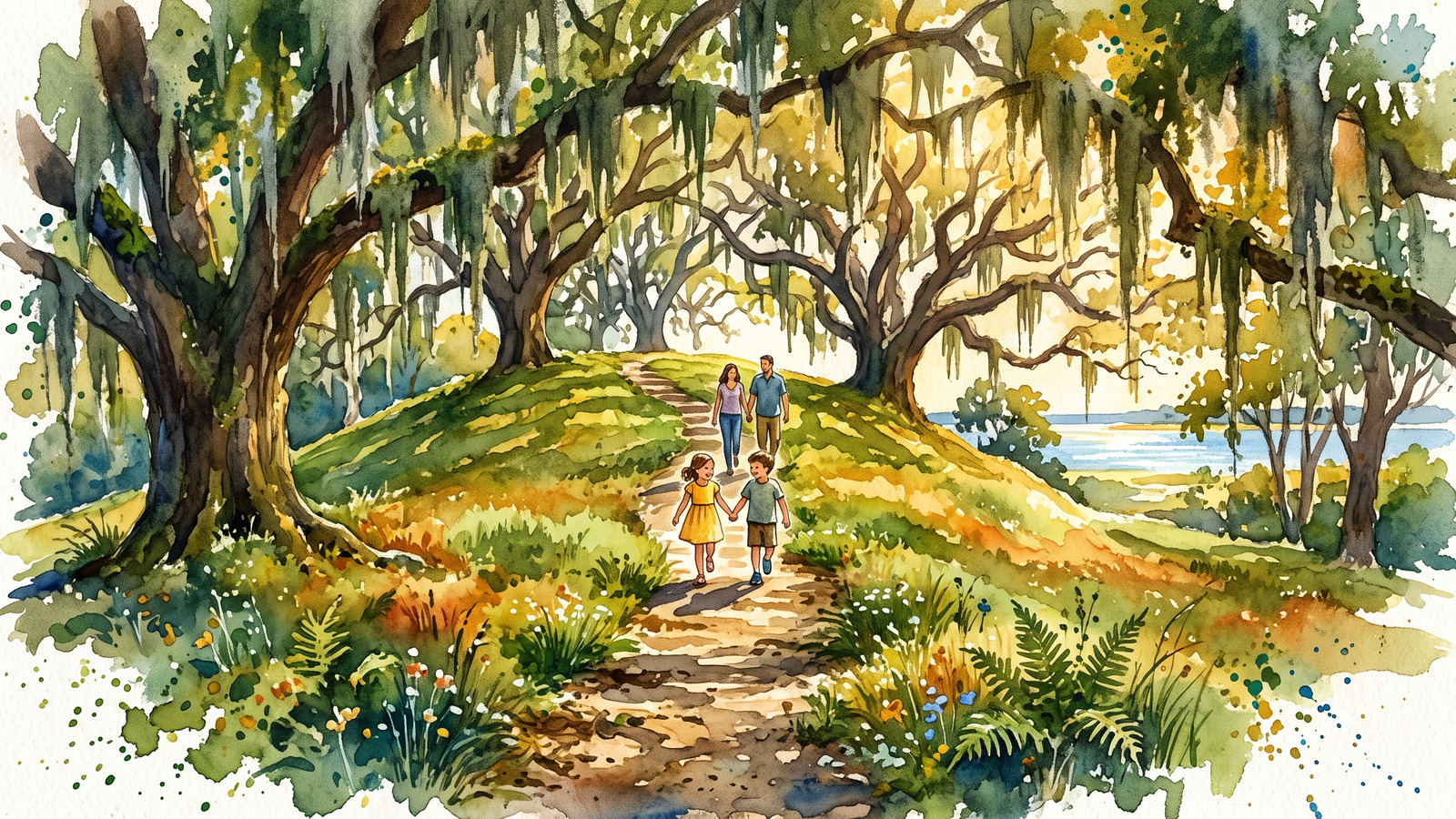
LearnThe Mounds at Philippe Park: A Walk Through 1,000 Years in One Afternoon
Philippe Park in Safety Harbor holds the Tampa Bay region's largest temple mound, Florida's first grapefruit grove, and a free afternoon of real history.
 Learn
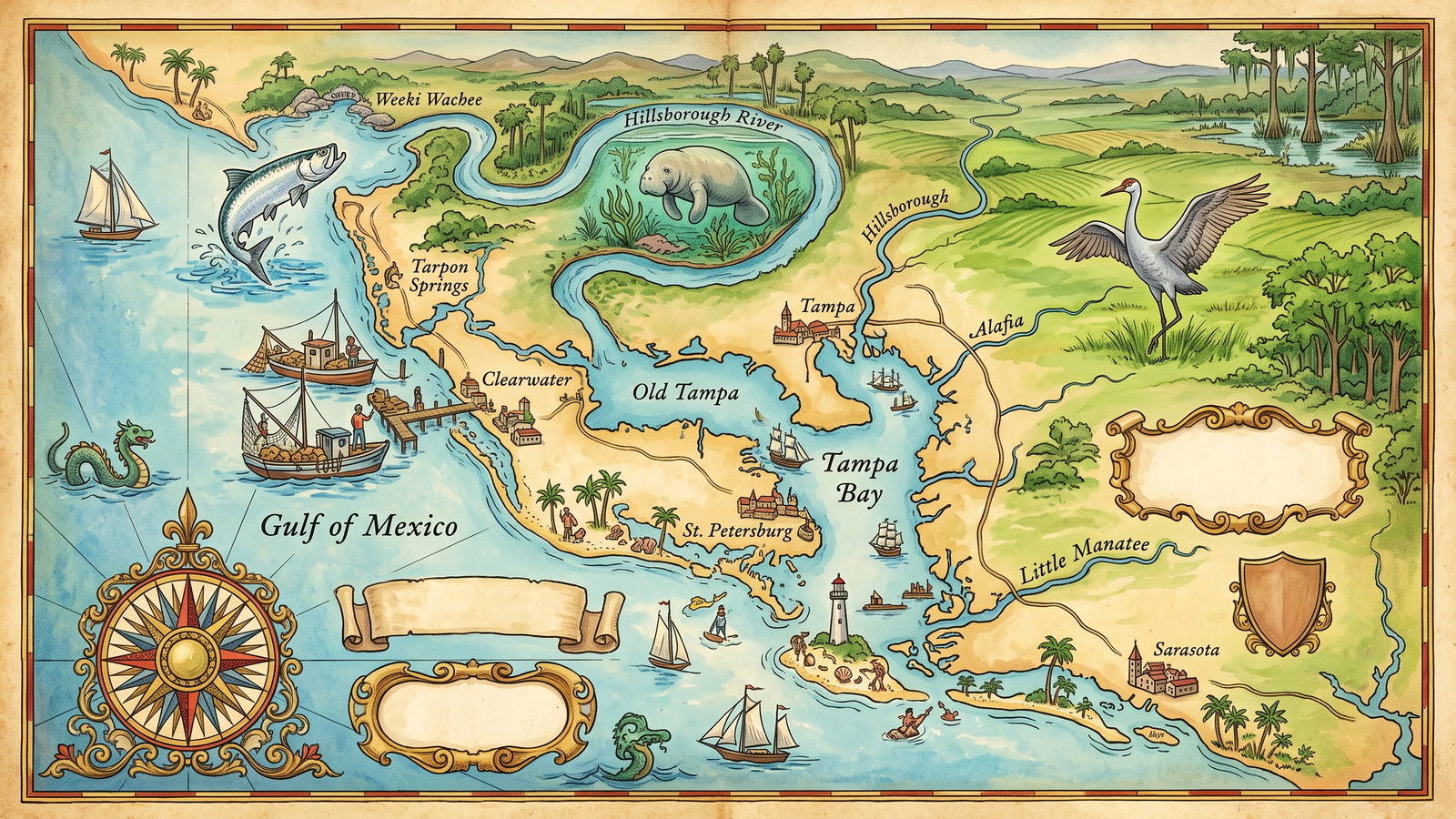
LearnOld Florida Words: Why It's Called Tampa, Pinellas, Manatee, and Pass-a-Grille
Tampa may mean sticks of fire, Pinellas is Spanish for point of pines, and Pass-a-Grille honors grilling fishermen. Local place names, decoded for kids.
 LearnCornerstone
Florida's State Symbols, Explained for Kids: Every Animal, Flower, and Song, and the Stories Behind Them
Every Florida state symbol explained for kids: the panther, manatee, mockingbird, zebra longwing, and more, with the stories and the flamingo debate.