The Sponge Divers of Tarpon Springs: How Greek Families Built a Florida Town
Ask your kids what a sponge is and they'll describe a rectangle from under the sink. Now drive forty minutes north and correct the record forever: a sponge is an animal, it grows on the floor of the gulf, and a hundred and twenty years ago the harvesting of it built the most Greek town in America, complete with brass diving helmets, boats named for saints, and bakeries whose recipes crossed the Atlantic steerage-class and never left. Tarpon Springs is the rare history lesson that smells like garlic and sounds like bouzouki, and it's the best cultural field trip in the region.
An animal, an island people, and an idea
Three threads braid into this story, and kids can hold each one. First, the animal: natural sponges are simple sea creatures whose soft skeletons, cleaned and dried, became the world's cleaning and bathing standard before synthetics, and Florida's gulf beds held them in fortune-making quantity. Second, the people: for centuries, the men of Kalymnos and its neighbor islands in Greece had dived for sponges in the Aegean, first on held breath, then in the famous scaphandro suits, work so central that whole island cultures ran on its rhythms and its risks. Third, the idea: Cocoris, seeing Florida's beds harvested clumsily by hook from the surface, knew what Kalymnian divers could do, and sent for them. Five hundred divers and crews arrived within a couple of years. The gulf, from Tarpon Springs' docks, was about to be worked properly.
The bravest job in Florida
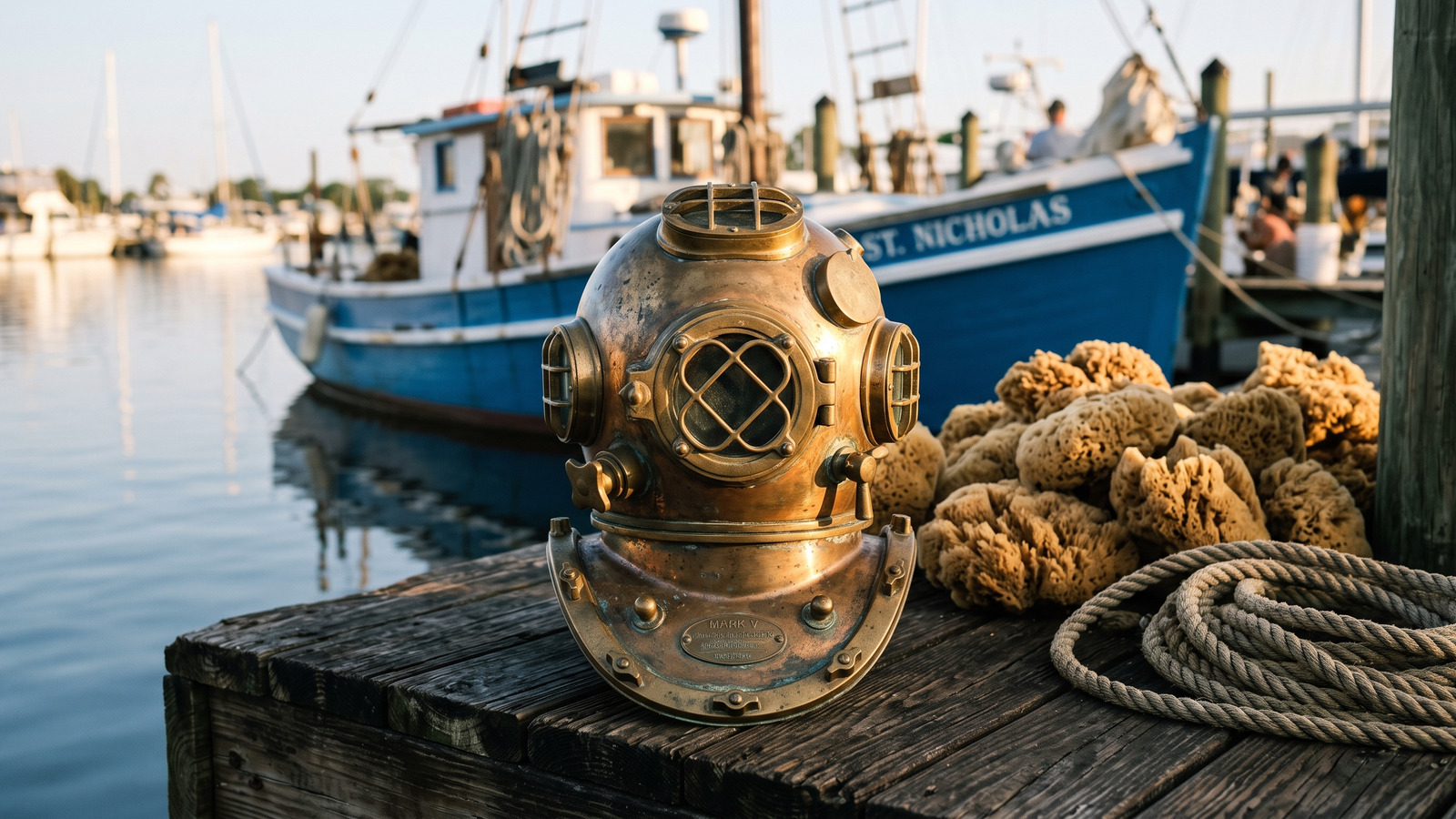
Center the kids on the diver, because he's the heart of it. Down he went in a suit of rubberized canvas, lead-weighted boots, and a brass helmet bolted at the collar, his air arriving by hand-cranked pump through a hose from a boat rolling far above. On the bottom, in green light, he walked, sometimes for hours, cutting sponges into a net bag, reading his own body for the diver's disease (the bends, then barely understood) that crippled or killed too many. Boats stayed out for weeks. The fleet's returns filled warehouses, and the auctions on the docks set prices for the nation. By the 1920s and 30s, sponge revenue made Tarpon Springs's waterfront among the most valuable working waterfronts in Florida, and the town around it was thoroughly, deliciously Greek: church, language, feast days, and all.
The industry took its blow in the 1940s, when a blight and red tide devastated the gulf beds just as synthetic sponges arrived. The fleet shrank; the town held. The beds recovered over decades, and boats work them still, smaller in number, identical in method's spirit.
The docks today: real, not staged
What your family visits on Dodecanese Boulevard is a working street with a tourist smile, not a replica: sponge boats tied where sponge boats have tied for a century, warehouse displays where kids can handle wool sponges, finger sponges, and vase sponges (each one, remind them, a former animal), and demonstration cruises where a diver in the full traditional rig goes over the side and brings up a sponge before your kids' eyes. The short boat trip plus the helmeted splash is, for most children, the single stickiest history demonstration on this coast.
| The Tarpon Springs day | The move |
|---|---|
| Morning | Docks first: boats, sponge warehouses, demonstration dive cruise |
| Lunch | A taverna on the boulevard; order the saganaki for the flame and the gasp |
| Early afternoon | St. Nicholas Greek Orthodox Cathedral, quiet and glorious |
| The detour | The old downtown and Spring Bayou, where manatees idle in winter |
| Departure | Bakery box: baklava, kourabiedes, and a loaf for tomorrow |
| January option | Epiphany (Jan 6): the archbishop tosses a cross into the bayou; local boys dive for it before enormous crowds |
The Epiphany, and why it matters
If your family can manage one January 6 in Tarpon Springs, take it: the town's Epiphany celebration, held for over a century, culminates when a white cross is tossed into Spring Bayou and dozens of local teenagers dive for the honor (and blessing) of retrieving it, cheered by tens of thousands. It is faith, heritage, and cold-water courage in one morning, and it explains the town better than any plaque: the diving never really stopped here; it just changed what it was diving for.
The Little Naturalist activity
Sponge science at the kitchen sink: buy one real wool sponge at the docks (a few dollars, lasts ages) and one synthetic rectangle, then have kids run trials: absorption by weight, dry-out time, durability, feel. Log results like a lab. Then the discussion question: the natural one was an animal from the gulf; the synthetic one is plastic from a factory; which should the family use, and for what? There's no single right answer, and that's the point: it's the same resources-and-choices conversation the whole Protect cluster keeps teaching, staged in a sink.
Questions families ask
Is the demonstration dive worth it with young kids?
It's the anchor of the visit: short, narrated, and climaxing in an actual brass-helmet dive. Toddlers wobble at the boat part; everyone five and up tends to file it permanently.
Why Kalymnos specifically?
The Dodecanese islands, Kalymnos foremost, were the Aegean's sponge-diving heartland, with generations of technique and boat-craft. When Florida's beds needed experts, there was exactly one labor market on Earth to call, and it answered by the boatload. Many dock families today trace straight back to it.
How Greek is Tarpon Springs really?
By repeated census measures it carries among the highest Greek-ancestry shares of any American city, and the culture is lived, not performed: the cathedral parish, the bakeries' third generations, the Epiphany crowds. Kids hear Greek spoken on the boulevard most visits.
Can we see manatees there in winter?
Spring Bayou, the town's old crescent waterfront, draws wintering manatees on cold snaps, watchable from the seawall paths, a quiet bonus that pairs the manatee rules your kids know with a Greek pastry in hand. Winter stacks this town's wonders conveniently.
Questions families ask
Why is Tarpon Springs so Greek?
In 1905, businessman John Cocoris introduced crewed diving to Florida's sponge beds and recruited experienced divers from Greece's Dodecanese islands, especially Kalymnos. Whole families followed the work, and within a generation Tarpon Springs was a Greek town on a Florida river. It still claims among the highest shares of Greek heritage of any U.S. city.
What did sponge divers actually do?
They walked the gulf floor in canvas suits and brass helmets, air pumped down a hose from the boat, cutting natural sponges loose by hand for hours at depths that made the work genuinely dangerous. The boats stayed out for weeks, and the divers' courage built the town's fortune.
Is there still a real sponge industry at the docks?
Yes: boats still work the gulf beds, sponges still come home to the docks, and auctions and warehouses still trade them. It's smaller than the boom years, but it's authentic working waterfront, not a theme set, which is what makes the visit land with kids.
What should a family do at the Sponge Docks?
Watch the boats and sponge displays along Dodecanese Boulevard, take a short sponge-diving demonstration cruise where a helmeted diver goes down before your eyes, meet the sponges (kids can hold them), then eat: Greek bakeries and tavernas are half the field trip. Add St. Nicholas Cathedral for the full story.
Sources
More from the Bae
 Learn
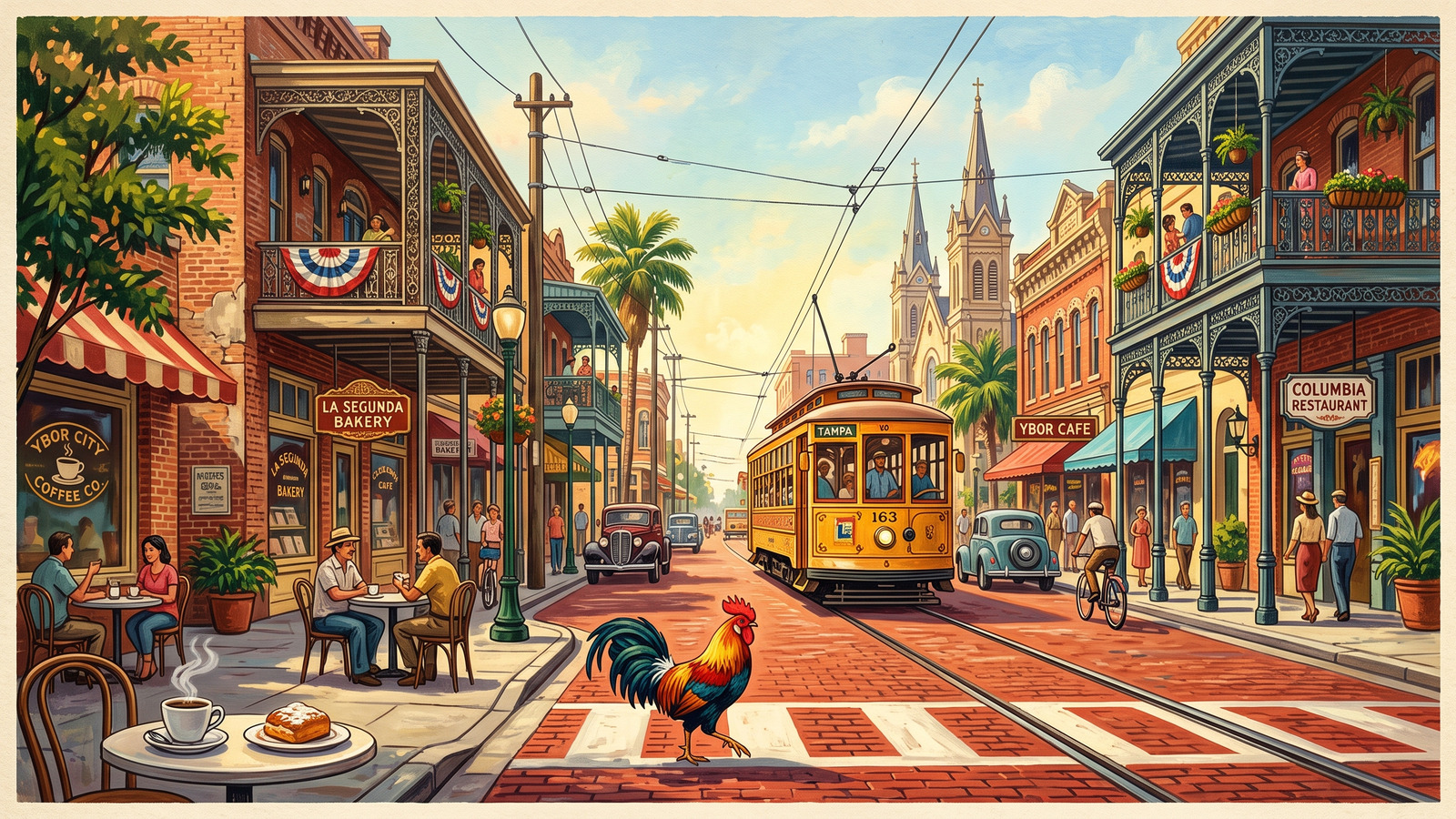
LearnYbor City with Kids: Cigars, Cuban Bread, and the Immigrant Story of Tampa
Ybor City was the cigar capital of the world, built by Cuban, Spanish, and Italian immigrants. The family version: lectores, Cuban bread, and chickens.
 Learn
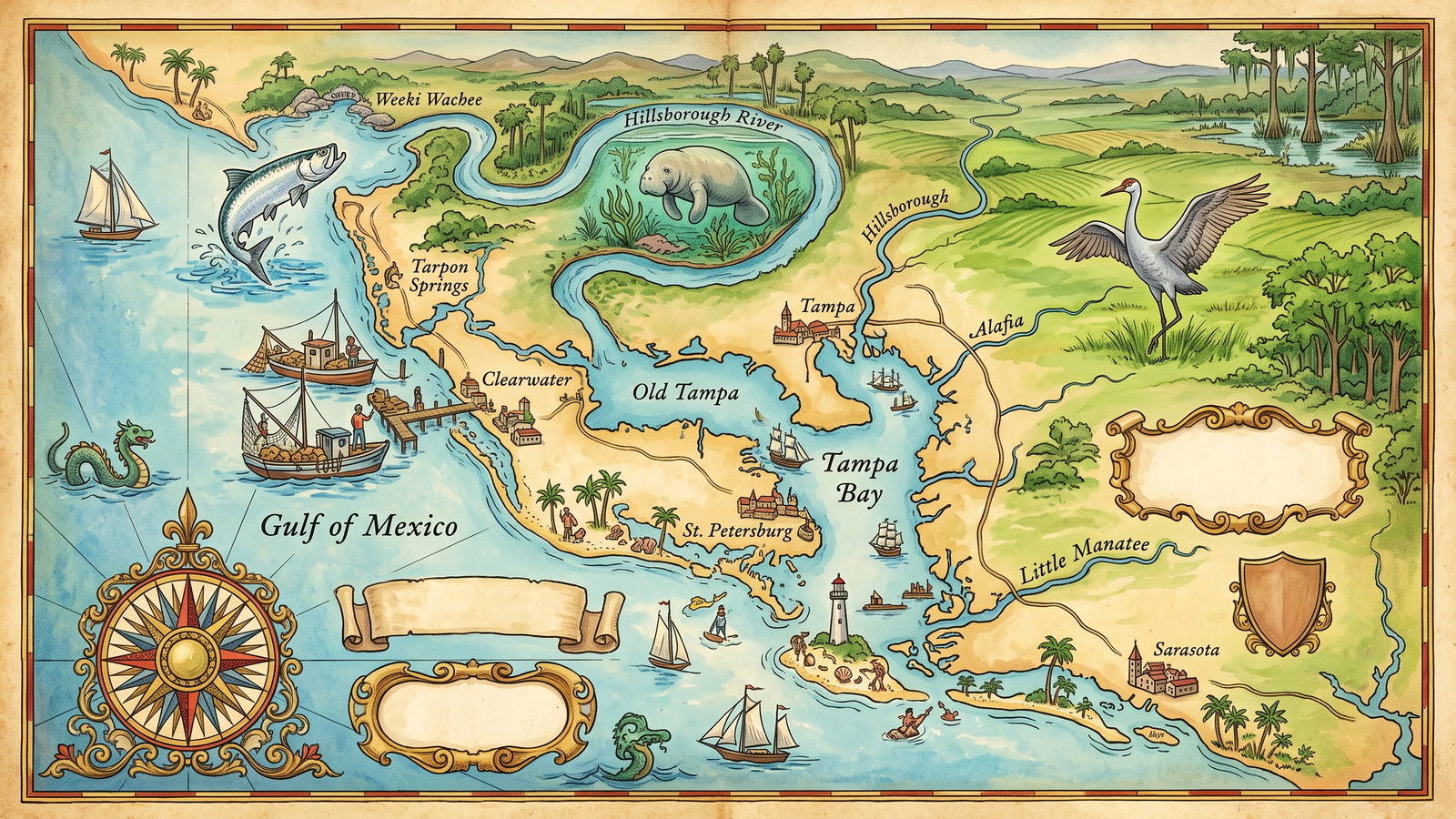
LearnOld Florida Words: Why It's Called Tampa, Pinellas, Manatee, and Pass-a-Grille
Tampa may mean sticks of fire, Pinellas is Spanish for point of pines, and Pass-a-Grille honors grilling fishermen. Local place names, decoded for kids.
 LearnCornerstone
Who Lived Here First? The Tocobaga of Tampa Bay, Told for Kids
The Tocobaga built shell-mound towns around Tampa Bay for centuries before Europe arrived. Their story, told for kids, and where families can stand in it.