
Gasparilla, the Pirate Who Probably Never Was: Legend vs. History for Kids
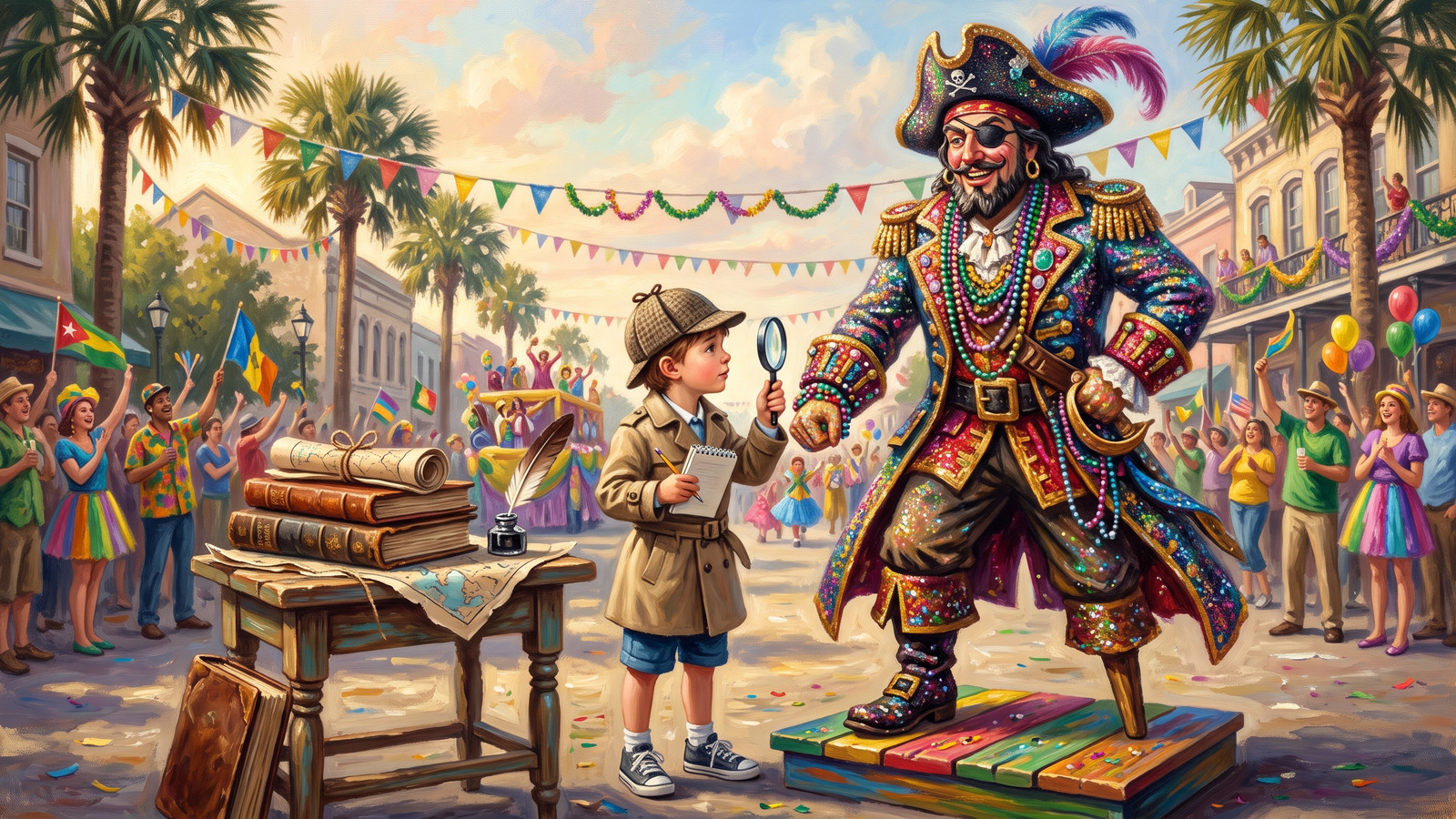
Every January, a fully rigged pirate ship sails into Tampa's harbor, cannons thumping, escorted by hundreds of boats, to demand the key to the city from a mayor who always surrenders. Hundreds of thousands cheer. The football team is named for it. And here is the delicious secret your kids get to be in on: the pirate at the center of it all, José Gaspar, terror of the Gulf, almost certainly never existed. Not exaggerated. Not embellished. Invented. Which raises the question every child asks immediately, and it's the best question in this whole cluster: then why is his flag flying over the whole city?
The legend, told properly first
Give the tale its due before the fact-check, because it's a good one: José Gaspar, a dashing Spanish naval officer wronged by his own crown, turns pirate around 1783, plunders the Gulf for decades from hideouts along this coast, buries treasure up and down the barrier islands, and in 1821, cornered at last by a U.S. Navy warship, wraps himself in anchor chain and leaps into the sea rather than be taken. Islands bear his name today (Gasparilla Island is real, even if its namesake isn't). It has everything: villainy, romance, defiance, and unfound treasure conveniently located wherever the listener happens to be standing.
The historian's toolkit: how we know he wasn't
Now hand your kids the tools, because this is the teachable heart. How would you check whether a famous pirate was real? Historians did exactly what your kids would guess: they searched Spanish naval rosters for an officer named Gaspar (nothing), court and prison records of the era (nothing), newspapers and shipping reports from decades of his supposed raids (nothing: piracy was news then, and a terror of the Gulf would have generated headlines), and the U.S. Navy's own records from 1821, which contain no such final battle. The earliest written traces of Gaspar appear around 1900: tall tales attributed to an old fisherman named Juan Gómez, a teller of legendarily flexible autobiography, and a promotional brochure for a railroad hotel that found a resident pirate excellent for business. From there, the story was simply too good to stay small.
| The claim | The check | The result |
|---|---|---|
| Spanish officer turned pirate | Spanish naval and court archives | No record |
| Decades of Gulf raids | Newspapers and shipping records of the era | Silence |
| Final battle with U.S. Navy, 1821 | Navy action reports | No such engagement |
| Buried treasure on local islands | Two centuries of digging | Zero chests |
| First written appearances | Archive trail | Circa 1900, promotional |
1904: the invention becomes real
Here's the turn that makes the story great rather than just debunked. In 1904, Tampa civic leaders borrowed the legend for a surprise: costumed "pirates" crashed the city's May festival on horseback, founded Ye Mystic Krewe of Gasparilla, and an annual tradition ignited. The mock invasion grew a real ship (the José Gasparilla, purpose-built), a flotilla, parades, krewes by the dozen, and eventually a football franchise flying the skull and crossed swords. More than 120 years on, Gasparilla is genuine, documented, photographed history: generations of Tampa families measuring their lives in parade seasons. The pirate is fiction; the tradition is fact. Kids can hold both, and the ones who do have learned what historians mean by the difference between history and heritage.
The family entry point, for the record, is the Children's Gasparilla Parade, the kid-scaled weekend that precedes the main invasion each season, all beads and air cannons and early bedtimes, which our spring season guide will point you toward when the calendar comes around.
The real pirates, briefly, for the skeptical kid
Was the Gulf ever pirate water? Truly yes: privateers and pirates worked Florida's straits and coasts into the early 1800s, enough that the U.S. Navy based an anti-piracy squadron in Key West in the 1820s to sweep the sea lanes. The reality ran to smuggling, prize courts, and yellow fever rather than buried chests, and the era was ending right around the years the fictional Gaspar was supposedly peaking. For the child who feels cheated by the debunking, that's the consolation prize: real pirates existed, just less glittery ones, and the fort your family climbs at Egmont guarded against threats considerably better documented.
The Little Naturalist activity
Run the legend laboratory: have each kid invent a local legend on purpose (a ghost lighthouse keeper, a golden tarpon, a pirate of their own), write its "promotional brochure," and plant three fake pieces of evidence. Then swap and let siblings fact-check each other using the historian's toolkit above: where are the records? Who profits from the story? When does the paper trail actually start? A child who has manufactured a legend can never again be fully fooled by one, which might be the most practical media-literacy lesson this site will ever smuggle inside a pirate flag.
Questions families ask
Should we tell young kids the pirate isn't real?
Around the same age they handle other beloved fictions, and gently: lead with "the fun part is real, the pirate is a story Tampa tells." Most kids find being trusted with the truth more thrilling than the legend itself.
Why is the island called Gasparilla if he's made up?
The name appears on old charts likely from a different source entirely (possibly a Spanish missionary's name, per historians), and the legend later borrowed prestige from the map rather than the reverse. Names outliving their origins is the running theme of our place-names story.
Is there any chance he was real and the records were lost?
Historians leave the door open a crack, as good historians do, but the silence is vast: an entire career of famous crimes generating zero paper in an era that documented piracy enthusiastically. The verdict "almost certainly invented" is about as confident as history gets.
What about the treasure hunters?
Two centuries of digging along this coast have produced exactly no Gaspar treasure, though the hunting itself became part of local lore. If your crew must dig, the shelling flats pay out far more reliably.
Questions families ask
Was José Gaspar a real pirate?
Almost certainly not. Historians have searched Spanish naval records, court documents, and newspapers of his supposed era and found no trace of him. The tale traces to campfire stories and an early 1900s promotional brochure, then took glorious flight when Tampa's Ye Mystic Krewe staged its first pirate invasion in 1904.
Why does Tampa celebrate Gasparilla if the pirate is made up?
Because the celebration itself became real history: more than 120 years of parades, krewes, and a fully rigged pirate ship invading the bay each winter. Tampa isn't fooled; it's in on it. The festival honors a story the city chose to tell about itself, which is its own fascinating lesson.
Is there a kid-friendly version of Gasparilla?
Yes: the Children's Gasparilla Parade, a family-scaled preview weekend with air cannons instead of chaos, bead towers, and early hours. It's the right first Gasparilla for young kids, and we cover the timing in our seasonal guides.
Were there real pirates in Florida?
Genuinely yes: the Gulf and the Straits of Florida saw real piracy and privateering into the early 1800s, and the U.S. Navy ran anti-piracy campaigns from Key West in the 1820s. The real story has fewer buried chests and more smuggling, which is still excellent material for a curious kid.
Sources
More from the Bae
 Learn
LearnEgmont Key by Ferry: Lighthouse, Fort, and Tampa Bay's Best History Field Trip
Egmont Key packs an 1858 lighthouse, Fort Dade's ruins, brick ghost-town streets, and a ferry ride with dolphins into Tampa Bay's best history field trip.
 Learn
LearnOld Florida Words: Why It's Called Tampa, Pinellas, Manatee, and Pass-a-Grille
Tampa may mean sticks of fire, Pinellas is Spanish for point of pines, and Pass-a-Grille honors grilling fishermen. Local place names, decoded for kids.
 Learn
LearnFort De Soto's Hidden Batteries: A Spanish-American War Walk Kids Actually Love
Fort De Soto's Battery Laidley holds the last four 12-inch seacoast mortars of their kind in the continental U.S. The kid-approved history walk.