Why Is Our State Bird a Mockingbird? The Flamingo Question, Answered for Curious Kids
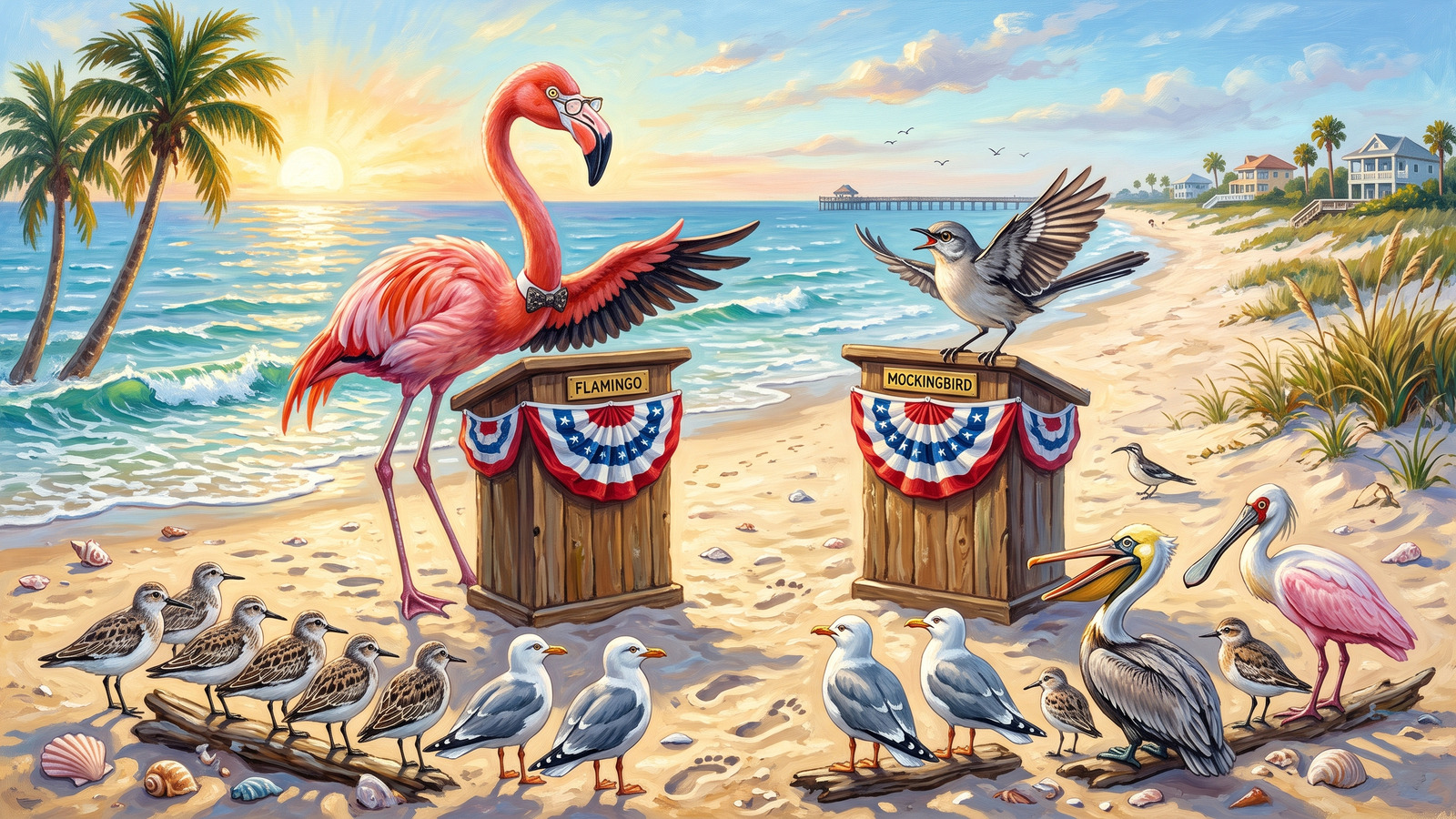
Here's a dinner-table fight your family can have on purpose: Florida's official bird, the one on the wildlife posters for almost a hundred years, is a gray songbird that four other states also claim. Meanwhile the bird on every Florida towel, lottery ticket, and pool float holds no title at all. In February 2026, the Florida House voted 112 to 1 to fix that, and the question is now live in a way it hasn't been in generations: mockingbird or flamingo?
The case for the mockingbird
Start fair: the incumbent earned the job. The mockingbird has represented Florida for nearly a century, and unlike most state symbols, it reports for duty daily, in every neighborhood, singing from streetlights and chimney caps. A single male can learn up to 200 songs, borrowing from cardinals, car alarms, and squeaky gates, then remixing them at 2 a.m. in spring, which every Florida parent has experienced through a bedroom window. It's fearless (ask any cat), it thrives from Pensacola to Key West, and it's the bird your children can actually find today. The knock: Texas, Tennessee, Arkansas, and Mississippi all claim it too. Florida, argue the challengers, deserves a bird nobody shares.
The case for the flamingo
For decades, the standard line was that flamingos were just lawn ornaments and zoo escapees, tourist kitsch with no wild claim. The record says otherwise: wild flamingos historically lived and fed in Florida by the thousands until the plume-hunting era of the 1800s wiped them out, the same slaughter that nearly took the spoonbill. And they've been coming back. Small numbers now appear regularly in South Florida, including a famous flock carried in by a 2023 hurricane that simply stayed. Supporters, including Audubon Florida, frame the crown as a restoration story: put the real, wild, returning flamingo on the state's shoulder and fund the wetlands that welcome it home. Also, let's be honest with the kids: it's the bird everyone already thinks is the state bird.
The quiet winner either way: the scrub-jay
Tucked into the same bill is the title your budding naturalists should care about most. The Florida scrub-jay is the only bird species that lives in Florida and nowhere else on the planet: a crestless blue jay of the ancient sand-ridge scrublands, where it lives in extended families, older siblings babysitting the new chicks, one bird always standing sentinel while the others forage. Scrub-jays bury thousands of acorns each fall and remember most of the hiding spots, accidentally planting the next generation of oaks. Their scrub habitat has shrunk to fragments, which makes the songbird title real conservation marketing, not just a ribbon. Kids who want to meet one can: managed scrub preserves in central Florida host guided walks where curious jays sometimes inspect the visitors right back.
Where the vote stands
| The player | The move | Status |
|---|---|---|
| Florida House | Passed HB 11, flamingo + scrub-jay | Done, 112 to 1, Feb 11, 2026 |
| Florida Senate | Must pass the same measure | The open question |
| The governor | Signs or vetoes | Waiting on the Senate |
| The mockingbird | Holds the title meanwhile | Singing about it at 2 a.m. |
We'll keep this page current as the process moves, because half the value of a question like this is teaching kids that symbols are decisions, made by people, revisable by people. The full symbols list is stocked with proof, including a state gem from the moon.
The Little Naturalist activity
Hold the family election properly. Assign each kid a candidate (mockingbird, flamingo, scrub-jay, or a write-in with a case behind it), give everyone one week to gather three facts and one field observation, then stage the debate and vote. Mail the results to your state senator if the house is feeling civic; children's ballots have picked Florida symbols before, and legislators genuinely answer kid mail at a higher rate than anyone's.
Questions families ask
If the bill passes, when would the flamingo take over?
The version passed by the House carried a July 1, 2026 effective date, which has now passed without Senate action completing, so any final version would carry its own date. Practically: the switch happens when both chambers and the governor agree, and not before.
Has Florida tried to change the state bird before?
Multiple times across recent decades, with past campaigns for the scrub-jay and even FWC-era suggestions of the osprey. The 2026 effort got further than any before it, which is why this round feels different.
Are there really wild flamingos to see now?
Yes, mostly in South Florida wetlands and occasionally elsewhere after storms; sightings are tracked eagerly and still make local news. Around Tampa Bay, the pink bird you'll see this weekend remains the spoonbill, which is its own excellent story.
What should my kid say if a teacher asks the state bird?
"The mockingbird, though there's a bill to change it to the flamingo." That answer is accurate, current, and will quietly astonish the teacher, which is this site's favorite kind of homework outcome.
Questions families ask
What is Florida's state bird right now?
The northern mockingbird, as it has been for nearly a century. A 2026 bill to replace it with the American flamingo passed the Florida House 112 to 1 in February, but until the Senate and the governor act, the mockingbird keeps the job.
Would the flamingo really become the state bird?
That's the proposal in House Bill 11: flamingo as state bird, with the Florida scrub-jay named the official state songbird alongside it. Supporters argue both are true Florida natives with comeback stories; the bill's fate now rests with the Senate and governor.
Why do some people want to keep the mockingbird?
It's the bird Floridians actually hear every day, a virtuoso that can sing up to 200 borrowed songs, and it has held the title for generations. Traditionalists also note the flamingo, while native and returning, is still rarely seen by most Floridians.
What's so special about the Florida scrub-jay?
It's the only bird species found in Florida and nowhere else on Earth. Scrub-jays live in family groups where older siblings help raise the chicks, they can cache and remember thousands of acorns, and their scrub habitat is among the state's most endangered.
Sources
More from the Bae
 LearnCornerstone
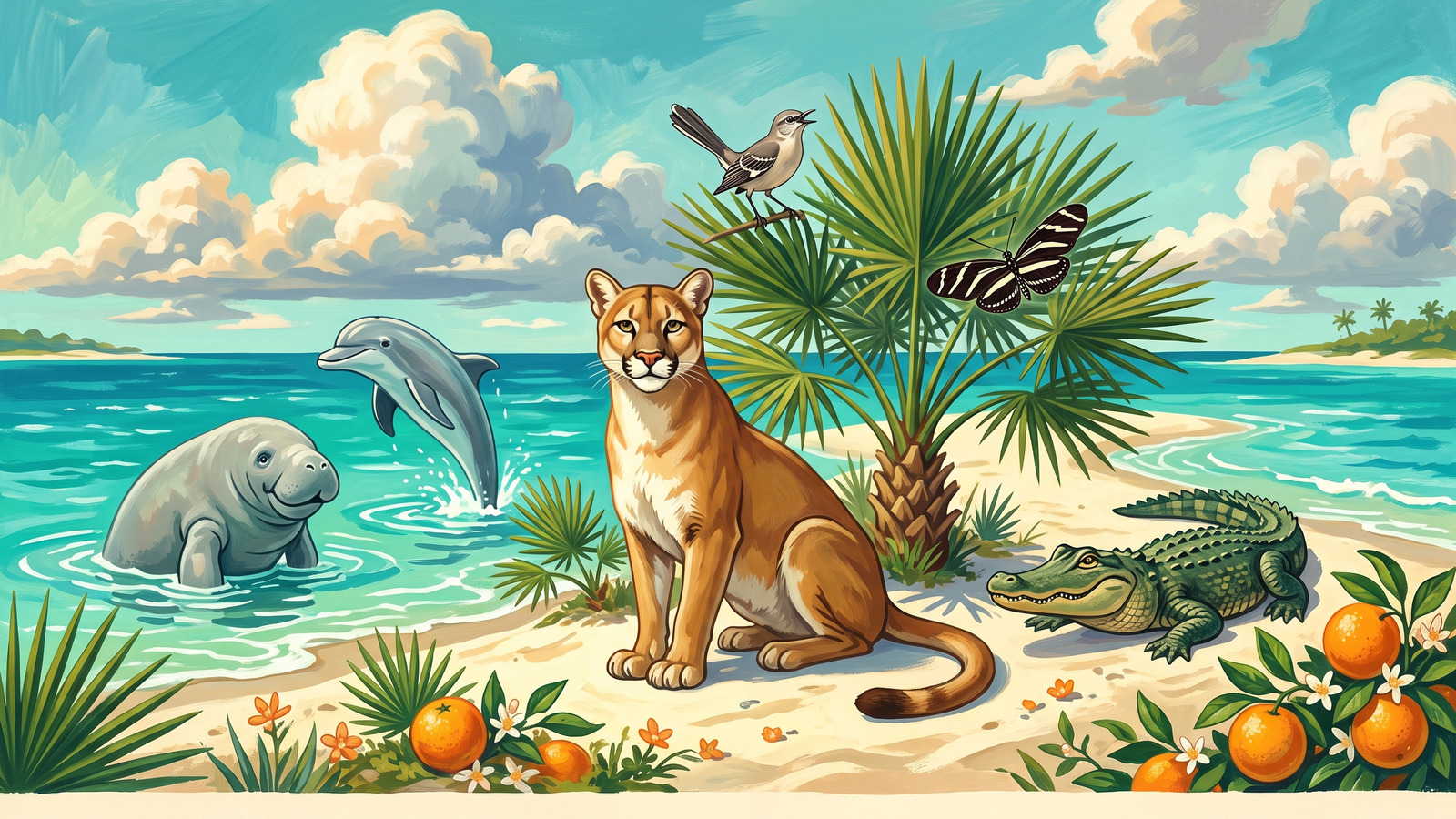
Florida's State Symbols, Explained for Kids: Every Animal, Flower, and Song, and the Stories Behind Them
Every Florida state symbol explained for kids: the panther, manatee, mockingbird, zebra longwing, and more, with the stories and the flamingo debate.
 Learn
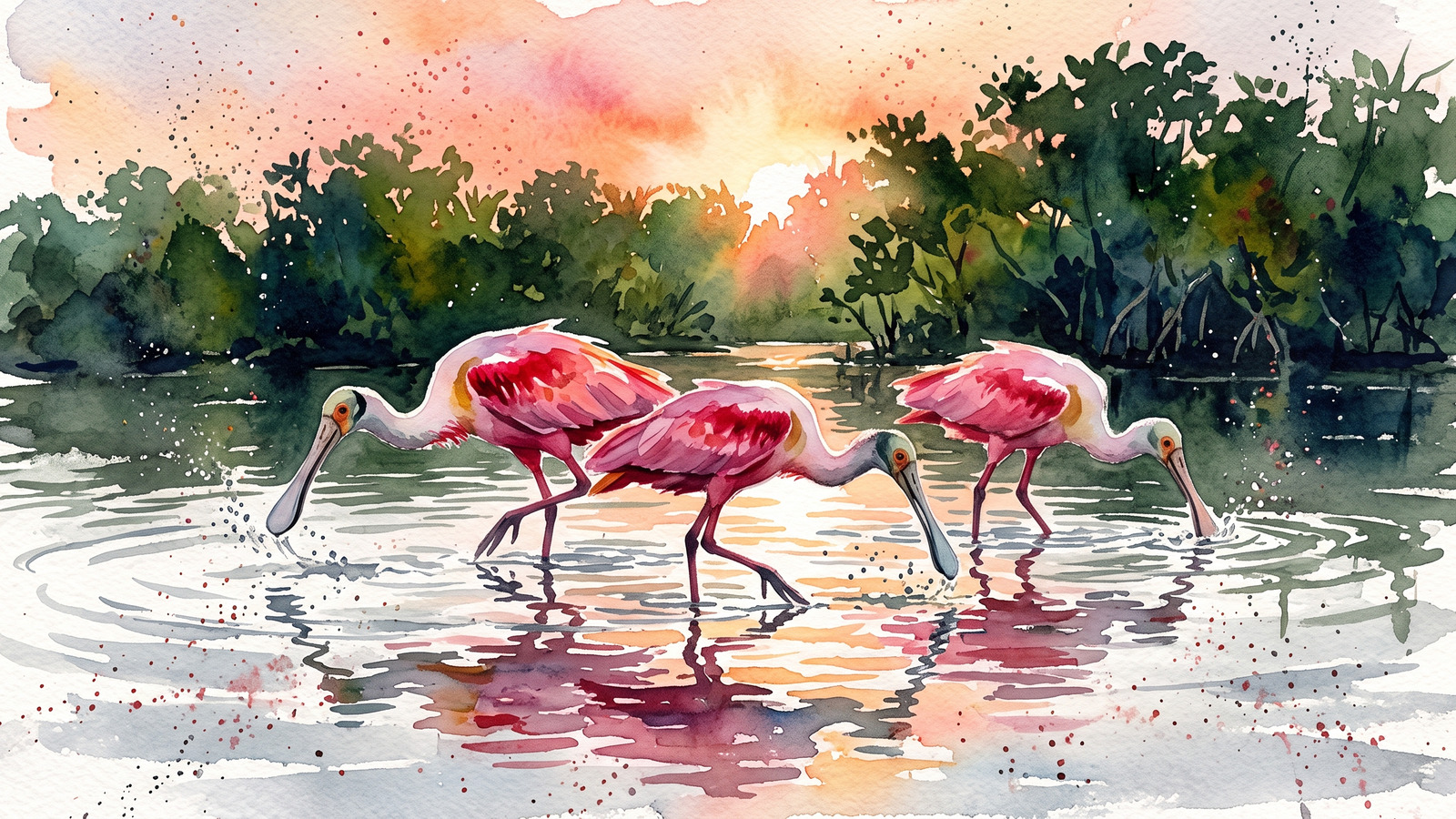
LearnRoseate Spoonbills: Florida's Pink Surprise and Where to Find One This Week
Roseate spoonbills are Tampa Bay's real pink birds. Why they're pink, how they nearly vanished for hats, and where families can see one this week.
 Learn
LearnThe Florida Panther: How Many Are Left, Where They Live, and How Kids Can Help
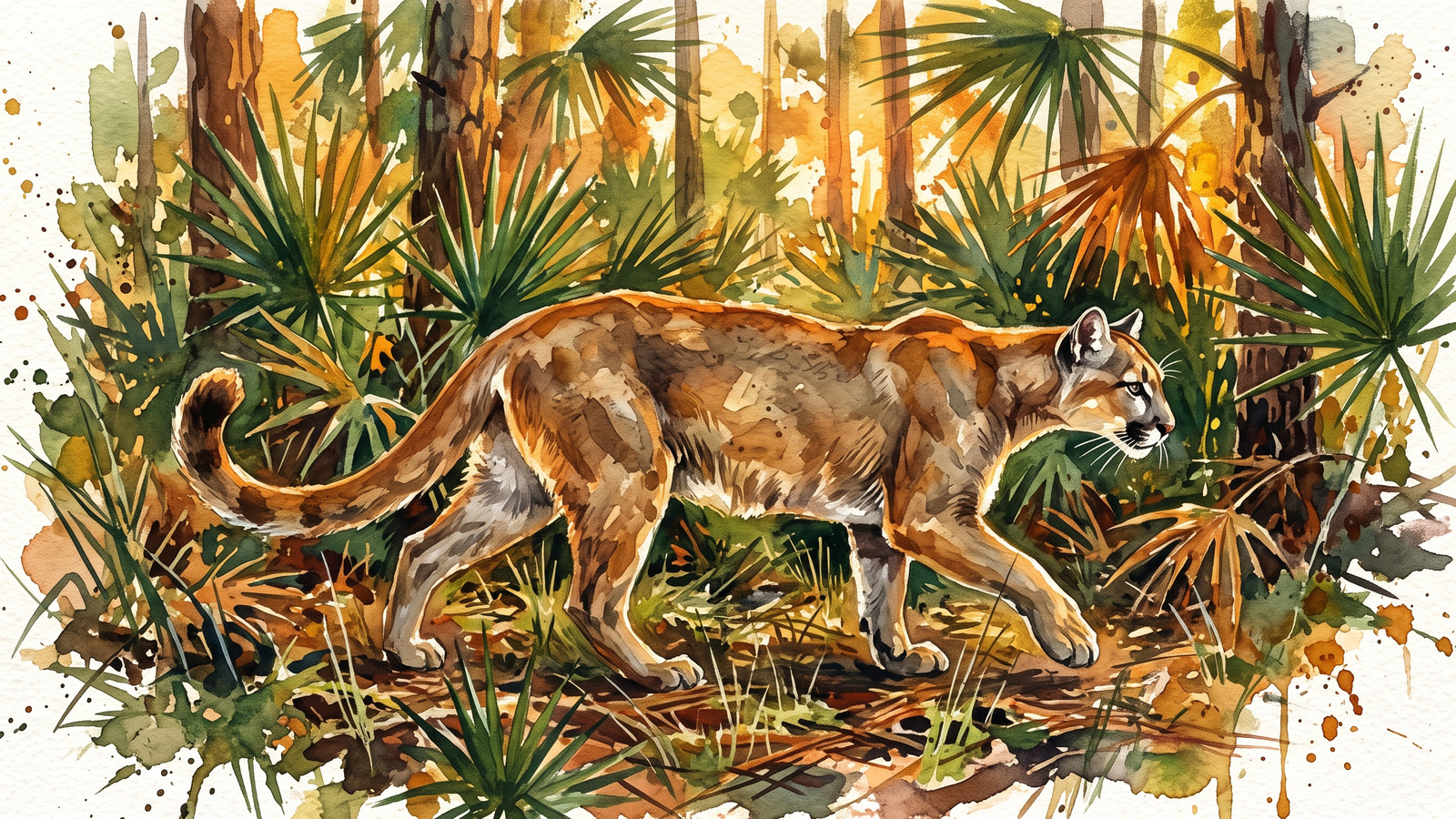
How many Florida panthers are left? Between 120 and 230. Where the state animal lives, why cars are its biggest danger, and how kids can help.